© Magnific
November 5, 2026
Marianne Waldenfels
Blueberries, apples, or kiwis: which fruits are best for your heart? Clinical studies show how different fruits affect blood pressure, cholesterol, and blood vessel function. One berry emerges as a clear favorite – while an unexpected combination of two fruits delivers a surprising result.
Fruit is widely regarded as good for the heart. But which fruits actually have a measurable impact on blood pressure, cholesterol, and blood vessels? The answer turns out to be surprisingly varied. While apples perform especially well for cholesterol and kiwis can lower blood pressure, another fruit shows multiple positive effects on vascular health.
Large population studies show that a diet rich in fruit and vegetables is linked to a lower risk of cardiovascular disease. A meta-analysis led by Dagfinn Aune from Imperial College London analyzed 95 studies. At a daily intake of around 800 grams of fruit and vegetables, the risk of cardiovascular disease was roughly a quarter lower compared to very low consumption. Apples, pears, and citrus fruits were among the varieties that stood out most favorably.
Observational studies, however, cannot conclusively prove whether fruit itself is responsible for this difference. More informative are controlled trials in which participants deliberately consume specific fruits. These reveal that certain varieties can produce remarkable effects – and one is particularly compelling.
Among the fruit varieties studied, blueberries stand out. They are one of the few fruits for which particularly interesting results from longer-term controlled studies are available.
A research team led by Peter Curtis and Aedín Cassidy from the University of East Anglia studied 115 adults with metabolic syndrome – a cluster of risk factors including obesity, elevated blood pressure, and unfavorable blood lipid levels. For six months, participants received freeze-dried blueberry powder daily in an amount equivalent to either 75 or 150 grams of fresh berries. A third group received a placebo.
The results, published in the American Journal of Clinical Nutrition, were striking: at the higher dose of around 150 grams per day, the ability of blood vessels to dilate improved, while arterial stiffness decreased. In participants who were not taking statins, HDL cholesterol – often called "good" cholesterol – also increased.
The smaller amount of 75 grams, however, showed no comparable effects. Insulin sensitivity also did not change significantly.
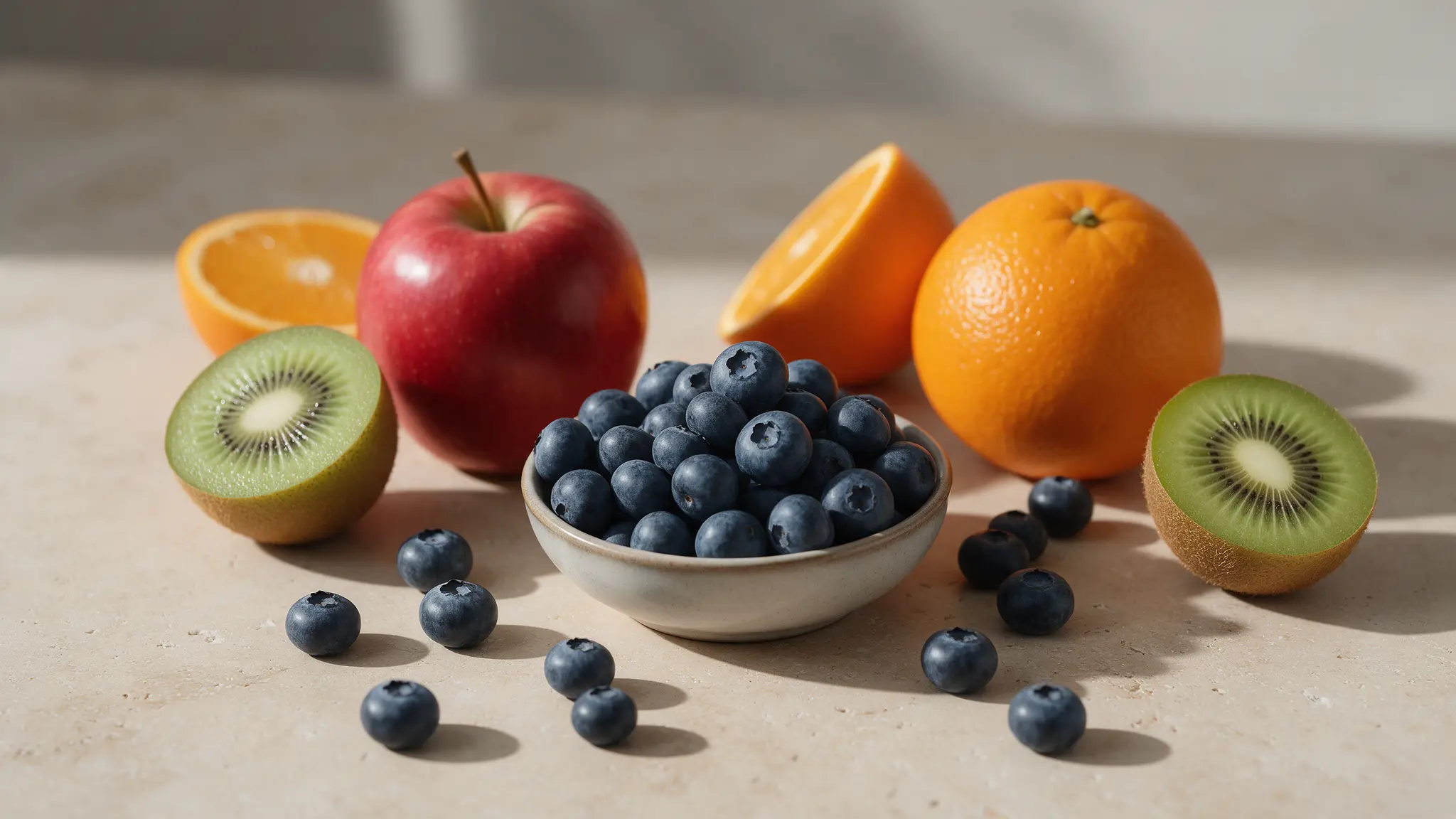
Why might blueberries be so beneficial? They contain anthocyanins, plant pigments responsible for their deep blue color. These compounds are transformed in the body and may influence processes that are important for healthy blood vessel function.
Gut bacteria may also play a role. Experimental studies suggest that they produce biologically active breakdown products from the plant compounds in the berries. How much this mechanism contributes to the observed effects in humans has not yet been established.
The fact that blueberries improved multiple vascular markers over six months makes them a particularly convincing candidate in this comparison. Whether they actually prevent more heart attacks than other fruit varieties, however, was not investigated.
Apples are a staple of any healthy diet – and when it comes to cholesterol, they can point to concrete study evidence.
Researchers at the University of Reading, led by Athanasios Koutsos and working alongside Italian scientists, studied 40 adults with mildly elevated cholesterol. For eight weeks, participants ate two Renetta Canada apples daily. In a separate phase of the study, they drank an apple-based beverage instead, which contained the same amount of sugar and calories.
After the apple phase, both total cholesterol and LDL cholesterol were lower than after the phase with the comparison drink. The response of small blood vessels also improved. The results were published in the American Journal of Clinical Nutrition.
One likely explanation lies in the combination of fiber and polyphenols. The two apples provided a combined total of around 8.5 grams of fiber and just under 1,000 milligrams of polyphenols – substances that were barely present in the comparison drink.
Those who eat apples for their nutritional benefits should, where possible, eat the skin as well. A significant proportion of the polyphenols are concentrated there.
For blood pressure in particular, another fruit stands out: the kiwi. A team led by Mette Svendsen from Oslo University Hospital studied 118 men and women with mildly elevated blood pressure. For eight weeks, one group ate three green kiwis daily, while the other ate one apple. Blood pressure was measured over 24 hours.
The result: by the end of the study, systolic blood pressure in the kiwi group was 3.6 mmHg lower than in the apple group, and diastolic blood pressure was 1.9 mmHg lower. Both differences were statistically significant. The study was published in the journal Blood Pressure.
A few millimeters of mercury may seem unimpressive at first glance. Yet even small differences in blood pressure can be meaningful at the population level. It is also worth noting that kiwi was not compared with a fruit-free diet, but with one apple per day.
In addition to vitamin C, kiwis provide potassium and various plant compounds that may be involved in regulating vascular function. The study cannot determine which specific component is responsible for the observed effect.
Oranges, mandarins, and grapefruits supply a range of flavonoids alongside vitamin C. Particularly noteworthy is hesperidin, a plant compound found mainly in citrus fruits.
A French research team led by Christine Morand from the agricultural research institute INRA investigated how orange juice and isolated hesperidin affect blood pressure and vascular function.
The controlled study involved 24 healthy, slightly overweight men. For four weeks at a time, they drank 500 milliliters of orange juice, a hesperidin-enriched drink, or a placebo daily.
Both the orange juice and the hesperidin drink lowered diastolic blood pressure compared to the placebo, and the response of small blood vessels improved after consumption. However, this effect on vascular function could not be demonstrated in fasting measurements. The findings suggest that hesperidin may play a role in the beneficial vascular effects of orange juice.
In everyday life, whole oranges or mandarins remain a more sensible choice than large quantities of juice. They also provide fiber and are more filling. In large observational studies, citrus fruit consumption has also been associated with a lower cardiovascular risk.
Mango is not usually considered a top choice for people with elevated blood sugar, given its sweetness. However, a study published in 2026 suggests that, combined with avocado, it can have promising effects on vascular health.
A team led by Britt Burton-Freeman from the Illinois Institute of Technology studied 82 adults with prediabetes and excess weight. For eight weeks, one group followed a calorie-controlled diet that included one Hass avocado and one cup of fresh mango daily. The control group followed a diet with a comparable calorie content but lower amounts of fiber and fat.
The results, published in the Journal of the American Heart Association, were surprising: in the avocado-mango group, the ability of blood vessels to dilate improved, while it deteriorated in the control group. The difference between the two groups was statistically significant.
In the male participants, diastolic blood pressure also developed more favorably. For the other metabolic values examined – including blood sugar and cholesterol – there were largely no statistically significant differences between the two diets.
Which of the two fruits was responsible for the improvement in vascular function remains an open question, as only the combination was studied.
In this comparison, blueberries come out on top. The six-month controlled study showed improvements across multiple measures of vascular health. Apples, meanwhile, perform especially well for cholesterol, and kiwis for blood pressure. The combination of mango and avocado produced a surprising finding: even in people with prediabetes, vascular function improved without any rise in blood sugar levels.

A Hamburg orthopedic surgeon harvests tiny cartilage samples from the ear and injects them into arthritic knees. In this interview, Dr. Hans Olaf Baack explains who may benefit, what early studies show and why he avoids making promises
Christine Bürg & Marianne Waldenfels
An interview with
Dr. med. Hans Olaf Baack

Burning or watery eyes despite regular use of eye drops? Ophthalmologist Dr. Christine Heun explains what causes the symptoms, why women are more frequently affected, and which new treatments are available.
Christine Bürg & Marianne Waldenfels

An interview with
Dr. Christine Heun

When fingers tingle or go numb at night, carpal tunnel syndrome may be to blame. Hand surgeon Prof. Dr. Helen Abel explains when a splint is sufficient, why waiting too long can cause permanent nerve damage, and what the chances of recovery are after surgery.
Christine Bürg & Marianne Waldenfels

An interview with
Prof. Dr. med. Helen Abel