© Getty/Unsplash
November 2, 2026
Marianne Waldenfels
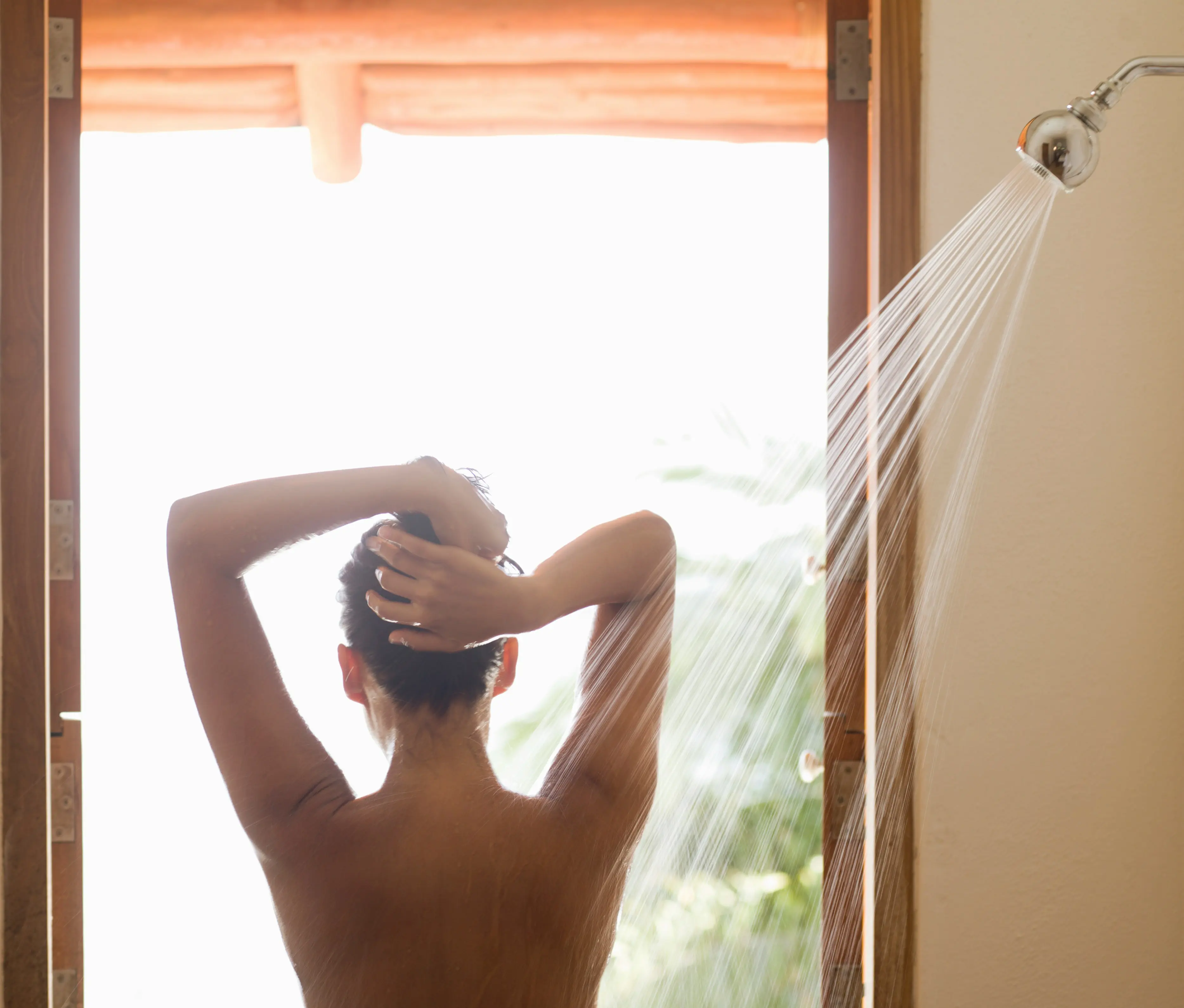
People who regularly take cold showers reported 26 percent fewer days of feeling sick in a new University of Basel study involving 719 participants. What explains this effect — and how long do you need to stand under cold water to benefit?
Cold water in the morning is an ordeal for many people. Yet a growing number swear by the daily cold stimulus — for more energy, a better mood, and a stronger immune system. But what does this unpleasant ritual actually deliver?
A new study from Switzerland offers an interesting answer. It builds on a large Dutch study that had already identified a health benefit of cold showers ten years ago — but the new findings go further in one crucial respect.
Back in 2016, a large Dutch study identified a health benefit of cold showers. The new study now goes beyond that in one crucial respect.
Psychologist and psychotherapist Dr. Lena Glaser examined, for her doctoral dissertation at the University of Basel, how people can be motivated to adopt more environmentally friendly behavior. She chose cold showering as her example: a simple everyday change that saves energy but is initially unpleasant.
The study involved 719 healthy adults between the ages of 18 and 65. Participants in the cold-water group were asked to shower as cold as their shower allowed for twelve weeks. Anyone who already showered cold regularly was excluded. The control group kept their usual showering habits.
The results, reported by the University of Basel in late October 2026, went beyond the environmental question the study had originally set out to answer.
Participants in the cold-water group reported feeling sick on 26 percent fewer days than the control group. Their sick days at work were even 31 percent lower.
Overall well-being also improved. Those who stuck with it felt progressively better — both physically and mentally — over the course of the twelve weeks. Immediately after showering, many described a feeling of alertness and freshness.
Participants found the initial phase particularly challenging. In the first two weeks, many dropped out of the experiment; after that, the dropout rate fell sharply. Glaser attributes this to an acclimatization effect.
The results have so far been published as part of her dissertation rather than as a standalone peer-reviewed journal article. In addition, participants self-reported how often they felt sick — medically confirmed infections were not recorded.
The idea that cold showers might offer health benefits is not new. Back in 2016, a Dutch research team led by physician Dr. Geert Buijze investigated the effect in 3,018 adults.
Participants were randomly assigned to one of four groups. Three groups ended their warm shower with 30, 60, or 90 seconds of cold water every day for 30 days. The fourth group showered as usual. Afterward, participants were free to decide for themselves over two months whether to continue cold showering.
The result of the study published in PLOS ONE published study was clear: participants who took cold showers called in sick 29 percent less often. Whether they stood under cold water for 30 or 90 seconds made no difference.
There was, however, one notable detail: the number of days on which participants felt sick did not differ between the groups. Cold-shower takers were therefore absent from work less often, even though they felt ill just as frequently.
The researchers suspected that participants may have perceived their symptoms as less debilitating, or that they simply felt more capable overall.
When the body comes into contact with cold water, it reacts immediately. The sympathetic nervous system is activated, heart rate and breathing speed up, stress hormones are released, and the blood vessels in the skin constrict. At the same time, the distribution of certain immune cells can shift in the short term.
Whether these reactions protect against infections has been investigated in several smaller studies. A Czech research team led by physiologist Lubomír Janský observed slightly elevated levels of individual immune cells and signaling substances in young, athletic men after six weeks of regular cold-water baths. The researchers described a modest activation of the immune system, though its significance for health remained unclear.
A widely noted study from Radboud University Nijmegen published in 2014 also showed that immune responses can be deliberately influenced. Twelve men trained in the Wim Hof Method, a combination of breathing exercises, meditation, and cold exposure. When the researchers then triggered an inflammatory response using a bacterial component, the trained men produced more anti-inflammatory signaling substances and developed significantly milder flu-like symptoms than the comparison group.
However, it is impossible to determine what role the cold alone played, since participants were simultaneously practicing special breathing techniques.
Anyone wanting to try cold showers does not need to stand under ice-cold water for several minutes right away. The Dutch study offers a practical reference point: just 30 seconds of cold water at the end of a warm shower was associated with fewer sick days at work. A longer duration provided no additional benefit in that study.
The Basel study also suggests making the initial phase as easy as possible. Most participants who dropped out did so within the first two weeks. After that, sticking with the routine apparently became much easier.
Psychologist Lena Glaser recommends gradually working toward lower temperatures. The water does not need to be equally cold every day. The key, she says, is to choose a temperature that feels manageable on any given day.
British physiologist Prof. Mike Tipton from the University of Portsmouth describes this so-called cold shock response as one of the most important immediate effects of sudden cold exposure.
For healthy people, a brief cold shower is generally well tolerated. For those with cardiovascular conditions, however, the abrupt change in temperature can be problematic.
Anyone who suffers from cardiac arrhythmias, heart disease, uncontrolled high blood pressure, or significant circulatory problems should seek medical advice before starting.
Regular cold showers could well be worth the effort. Two large studies show that people who shower cold miss fewer days of work due to illness, and the new Basel study also points to fewer sick days overall. For healthy people, there is little reason not to give it a try — just 30 seconds of cold water at the end of a shower is a perfectly good place to start.

Burning or watery eyes despite regular use of eye drops? Ophthalmologist Dr. Christine Heun explains what causes the symptoms, why women are more frequently affected, and which new treatments are available.
Christine Bürg & Marianne Waldenfels

An interview with
Dr. Christine Heun

When fingers tingle or go numb at night, carpal tunnel syndrome may be to blame. Hand surgeon Prof. Dr. Helen Abel explains when a splint is sufficient, why waiting too long can cause permanent nerve damage, and what the chances of recovery are after surgery.
Christine Bürg & Marianne Waldenfels

An interview with
Prof. Dr. med. Helen Abel

A nasal spray containing synthetic mebufotenin, a psychedelic also found in toad secretion, has shown promising results after just one dose in patients with treatment-resistant depression. Psychiatrist Prof. Dr. Andreas Menke explains what makes the substance different from other psychedelics and how significant the findings really are.
Christine Bürg & Marianne Waldenfels

An interview with
Prof. Dr. med. Andreas Menke