© Freepik
February 23, 2026
Oliver Lüder
Why proper breathing is so important: From the nasal airflow fingerprint to breathing techniques and the philosophy of breath – an overview of what we do millions of times a day but hardly understand.
A pat on the back causes a newborn baby to take its first breaths. Breathing is the first independent action in a person's life – and it will also be their last.
Yet we still pay too little attention to breathing. We just do it. Even if we didn't want to – we have to. We cannot stop breathing, only slow it down. A few can do this deliberately, such as freedivers or yogis. Unconsciously, we hardly notice our breath. In the silence of the sea, it becomes loud when diving. Those who suffer from sleep apnea also hear it – framed by snoring before and after the breathing pauses. The majority of people only become fully aware of their breath when it becomes difficult.
Perhaps this is why it took so long for scientists to discover that a person's breath is almost as individual as a fingerprint. A research team at the Weizmann Institute of Science in Israel was able to identify 97 people, young healthy adults, based on their nasal breathing patterns with an accuracy of 96.8 percent – and this was also the case in repeat tests conducted two years later.
The researchers speak of the "nasal airflow fingerprint." It reflects the autonomic nervous system, which regulates breathing, heartbeat, and digestion. The breathing pattern even allows conclusions to be drawn about psychological traits: Increased values for susceptibility to depression or anxiety can be read from the breath. For example, more anxious people inhale shorter and their breathing pauses vary greatly during sleep.
Even body weight and the so-called body mass index can supposedly be reliably determined from the breathing pattern, especially from the cycle in which the left and right nostrils alternate during breathing, as one side of the nose always dominates.
The nasal cycle is controlled by a part of the brainstem, considered an interface between breathing and neural activity, where the autonomic nervous system resides. Unlike other autonomic functions, we can control our breath. We cannot command the heart to beat slowly, nor the stomach to stop digestion, but we can – with some effort or practice – breathe slower or faster. And thus influence the heartbeat through breathing, which otherwise cannot be influenced at all.
How we breathe shows how we feel, but just as well, incorrect breathing can make us anxious and depressed. And sick. But this has been known for a long time: Snoring hinders recovery phases during sleep, and in apnea, irregular breathing pauses during sleep even increase the risk of suffering a stroke.
There are some diseases where we don't get enough air. People whose lungs are too weak to breathe on their own were long placed in an "iron lung," a chamber like a hollow cylinder that encloses the body, seals airtight at the neck, and creates atmospheric pressure that forces air through the patient's nose and mouth into the lungs.
Exhalation then occurs through the build-up of positive pressure in the chamber. Polio sufferers whose lungs were paralyzed could survive for a while thanks to these devices. Such horrific images remind us how important breathing is.
We quickly forget that most people breathe incorrectly – namely too much, too quickly, and too often through the mouth. A healthy baby breathes through the nose into the belly, and never shallowly upwards. As an adult, it is often difficult to breathe into the belly just once.
So there is such a thing as healthy breathing, and if we could learn or relearn this, breathing might even heal us and alleviate asthma, high blood pressure, depression, anxiety disorders, and even various autoimmune diseases such as colitis. This is what Israeli researchers hope, and what many breathing trainers promise.
American science journalist James Nestor wrote the bestseller "Breath: The New Science of a Lost Art" about the forgotten art of breathing four years ago. He wanted to learn how to breathe properly himself and therefore visited researchers, therapists, breathing instructors, yogis.
From the researchers he found out: "We have huge nasal sinuses that correspond to the volume of a billiard ball. When you breathe through your nose, you warm the air, pressurize it, humidify it, and direct it. This way, the air can be absorbed by the lungs much more easily. We get 20 percent more oxygen when we breathe through the nose than when we breathe through the mouth.
And if you think that makes no big difference over the course of a day – then you are greatly mistaken. Almost all animals in the wild, even those running and hunting at 50, 60 miles per hour, breathe through their noses.
Even newborn children do this as a rule. So we are actually made to use our noses, but many do not. This causes a lot of health problems and diseases of civilization."
Most people breathe in too much, but you don’t need that much oxygen. On the contrary: Too little carbon dioxide is rather the problem because you exhale too much when you inhale too much.
Patients with anorexia, panic attacks, or obsessive-compulsive disorders consistently have low carbon dioxide levels in the body and are very afraid of holding their breath. To avoid attacks, they breathe too much, become increasingly hypersensitive to carbon dioxide, and panic as soon as they notice that this gas is rising in the body. They are afraid because they breathe excessively – and they breathe excessively because they are afraid.
Asthma attacks can also be alleviated by consciously breathing more slowly to increase the carbon dioxide level in the blood. The method also helps with panic attacks.
An athletics coach named Carl Stough told Nestor about enormous performance increases in runners who, when waiting for the starting shot, did not hold their breath as usual but breathed deeply and slowly, and always exhaled at the starting shot. This would make the first inhalation deep and full and provide them with energy to run faster and longer.
After just a few sessions, the runners he trained reported that they could breathe better and needed only half as long recovery periods between races – but above all, they had been able to improve their best times.
There are several methods to practice slowing your breath, the most well-known being Buteyko breathing. Konstantin Buteyko was a Ukrainian doctor whose methods gained wide popularity in the 1980s.
Nestor visited many breathing therapists and tried their exercises; in some cases, he was supposed to practice for half an hour daily over a period of four weeks to breathe less and thus "correctly." Another therapist taped his nose shut for three weeks to deter him and make him experience firsthand the health-damaging consequences of constant mouth breathing.
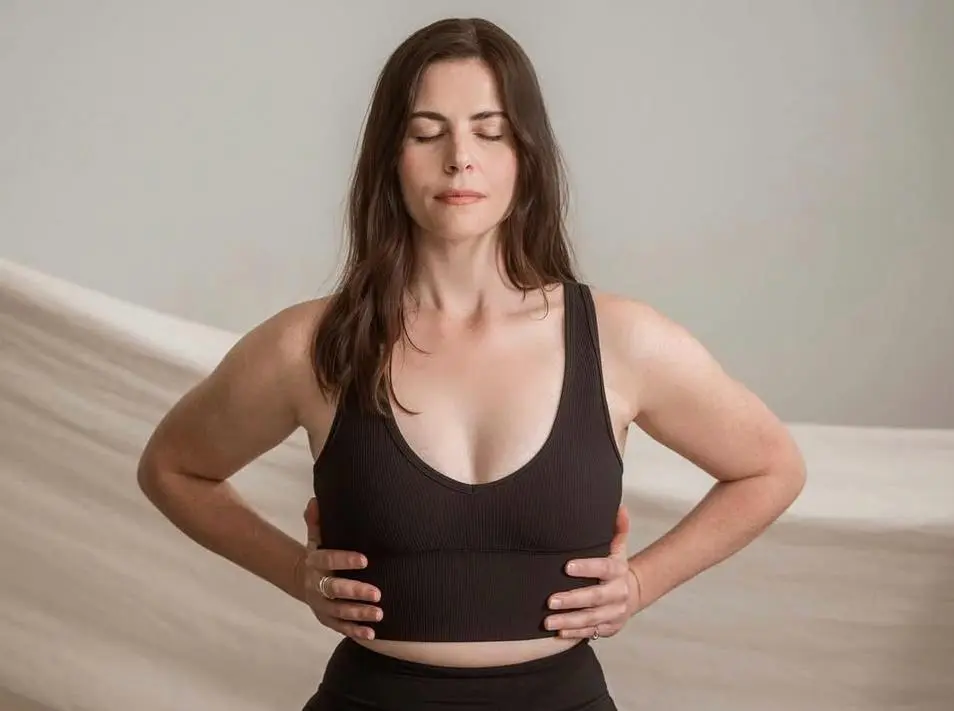
A simple exercise for proper breathing is the so-called "4-6-10 Method," where you inhale for four seconds and exhale for six seconds, for ten minutes. In stressful situations, simply holding your breath can also help, agree breath teachers.
Holding your breath can also be trained. When relaxed, you consume less oxygen. The breathing stimulus primarily sets in because the body wants to release CO2, not due to a lack of oxygen.
You can train your body to go without new oxygen for a while. Freedivers report that they make their respiratory muscles twitch to suppress the breathing stimulus; the world record for men has been 11.35 minutes since 2009, and for women, 9.02 minutes. Trained freedivers achieve an extremely low resting pulse of about six to seven beats per minute – with the help of special breathing and yoga exercises.
Michael Bordt is a philosopher and Jesuit. He teaches executives and occasionally also imparts meditation. The breath is the anchor, he says. For Bordt, meditation means coming to rest, shutting off the constant commentator in the brain, and fully entering the present moment. According to classical yoga and meditation techniques, this should succeed with a lot of practice and patience through breathing.
According to Bordt, you can meditate anywhere and focus your awareness on your breath. Even in the dentist's chair. But if you want to practice it seriously and make progress, you should treat meditation as a daily exercise, and a quiet place is recommended—not necessarily the subway or a queue. And the phone should also be better turned off.
Twelve to 15 breaths per minute add up to about 20,000 breathing movements a day. With each breath, about half a liter of air enters the lungs, so a person inhales at least 10,000 liters of fresh air per day and exhales the same amount as a kind of exhaust. More than 500 million times in an average lifetime.
Breathing and smelling are twins. Even people with bad breath are connected to us, if you follow Emanuele Coccia's thinking: The Italian philosopher has written a book about the plant world: The Roots of the World. A philosophy of plants, published in some European countries.
In it, he unfolds a pantheistic worldview in which everything is reborn and all share in everything, because humans share the air with plants and animals, and all atoms must have already wandered through humans, plants, and animals. We are all just reborn.
Therefore, according to Coccia, all matter is alive. It is nonsensical to separate things and people as strictly as we do. The air connects us. With the breath, we reach out to each other and to the world. It is actually quite foolish to keep forgetting that.