© Freepik
February 18, 2026
Marianne Waldenfels
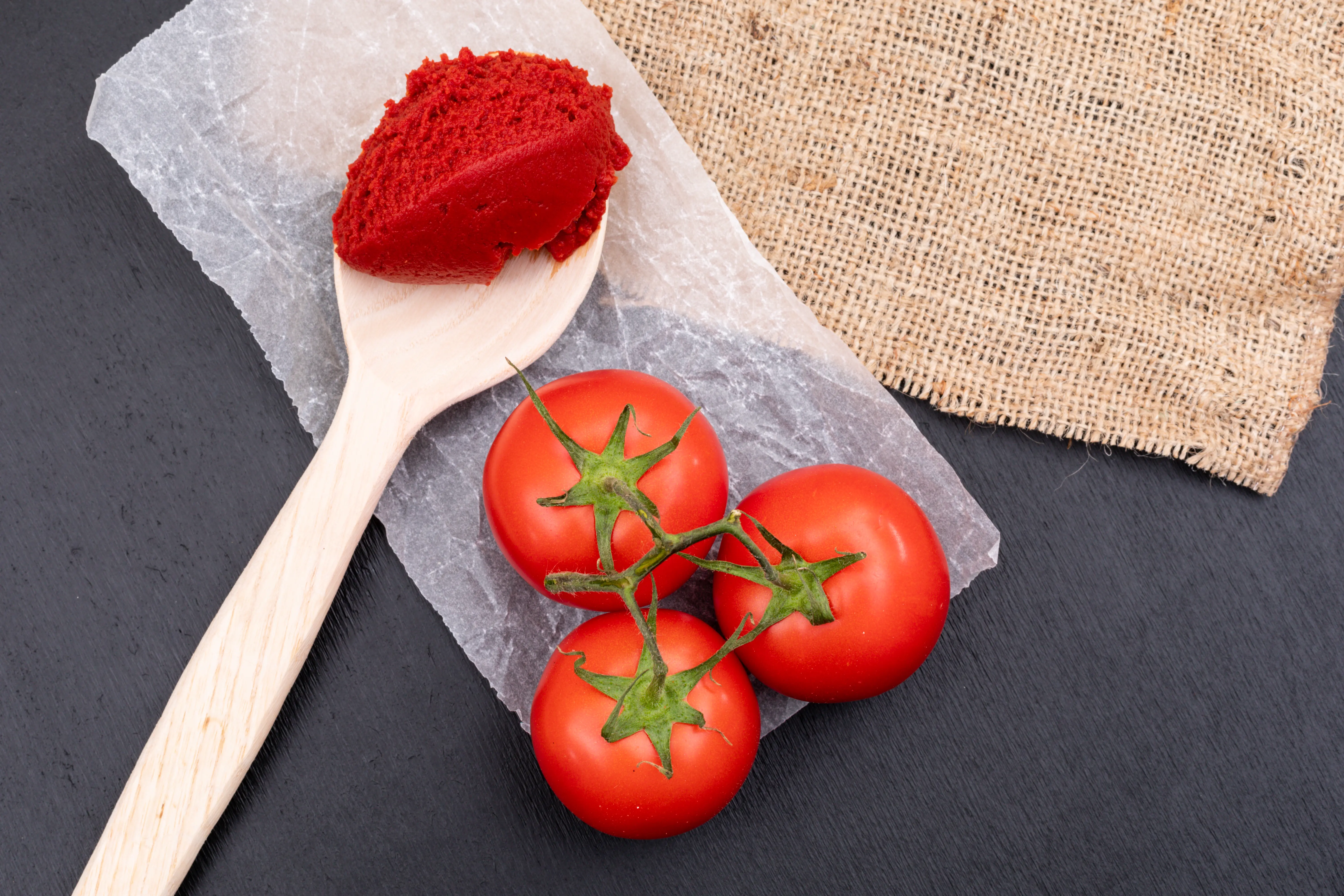
1–2 tablespoons of tomato paste daily can measurably improve blood pressure, skin, and vessels. Why tomato paste is considered one of the most efficient foods is explained by the current state of research.
Tomato paste – also called tomato concentrate or tomato puree – is a true powerhouse in the kitchen. It is not only a practical base for countless dishes but also provides one of the strongest natural antioxidants in concentrated form: lycopene.
The industrial processing (thickening with heat) not only increases the lycopene content but, above all, its bioavailability – lycopene from tomato paste is absorbed by the body up to about 2.5 times better than from fresh tomatoes. Meta-analyses and umbrella reviews in recent years show that regular consumption can protect the cardiovascular system, reduce oxidative stress, protect the skin from UV damage, and possibly lower the risk of cancer.
Lycopene is a carotenoid (not a provitamin A) that gives tomatoes their intense red color. It is one of the most potent antioxidants and neutralizes free radicals more effectively than many other plant compounds. Fresh tomatoes contain an average of about 3–5 mg of lycopene per 100 g, with particularly ripe specimens up to around 10 mg.
Tomato paste, on the other hand, provides – depending on concentration and quality – about 30–150 mg of lycopene per 100 g. What matters is not only the quantity but the form: Heat treatment partially converts lycopene from the rigid all‑trans form into more flexible cis isomers, which are much better absorbed in the gut. When tomato paste is combined with a little fat (e.g., olive oil), absorption increases further – making tomato paste one of the most efficient natural sources of lycopene, often cheaper and more synergistic than isolated dietary supplements.
In addition, there are relevant amounts of potassium (about 1,200 mg/100 g), vitamin C (about 20–50 mg), vitamin E, fiber (4–6 g), and various polyphenols – a Nutrient compound, which works together against inflammation and oxidative stress.
Cardiovascular diseases remain the number one cause of death worldwide. This is where tomato paste shows impressive effects.
A recent umbrella review based on systematic reviews and meta-analyses suggests: A daily intake of about 5–30 mg of lycopene – corresponding to approximately 50–100 g of tomato paste depending on the product – measurably lowers blood pressure and moderately improves overall cardiovascular risk, especially in people with hypertension. In intervention studies, tomato paste improved endothelial function (measured, among others, via flow-mediated dilation), reduced LDL oxidation, lowered total and LDL cholesterol, and sometimes increased HDL.

How reishi, cordyceps, and other medicinal mushrooms can ease the pollen season
Marianne Waldenfels
After high-fat meals, tomato paste could mitigate postprandial inflammatory processes and an increase in vascular stiffness. Meta-analyses from recent years report that high lycopene consumption is associated with about a 14% lower risk of cardiovascular diseases and around a 23% reduced risk of stroke. Observational data from large cohorts (e.g., Mediterranean diet studies) also suggest that higher tomato consumption may be associated with a significantly lower risk of hypertension.
Mechanistically, lycopene acts anti-atherosclerotically, anti-inflammatory, and vascular-protective, thereby supporting the elasticity the arteries.
Chronic oxidative stress promotes aging processes and numerous diseases of civilization. Lycopene has been shown to increase endogenous antioxidant enzymes such as superoxide dismutase and catalase and reduce markers of lipid peroxidation.
A large meta-analysis of over 120 studies with nearly 2.7 million participants showed that high blood lycopene levels are associated with an approximately 5–11% lower overall cancer risk and up to 16–24% lower cancer-related mortality risk – particularly clear in prostate, lung, and upper digestive tract tumors.
Noteworthy: Pure tomato consumption did not always show a strong preventive effect, whereas higher lycopene intake did – tomato products often perform better than isolated lycopene, suggesting synergistic matrix effects.
Intervention studies with tomato paste also report a reduction in inflammatory markers such as CRP, IL‑6, and TNF‑α, which could be particularly clinically relevant in metabolic inflammation – for example, in overweight or insulin resistance.
UV radiation is a central driver of photoaging, erythema, and in the long term, skin cancer. Tomato paste offers a measurable "internal sun protection."
In a classic randomized study, daily consumption of about 40–55 g of tomato paste (equivalent to around 16 mg of lycopene) over 10–12 weeks reduced UV-induced skin redness by up to about 40%. At the same time, levels of the collagen-degrading enzyme MMP-1 decreased, while procollagen in the skin increased. Meta-analyses of recent years confirm: lycopene can reduce erythema, pigmentation, and inflammatory markers after UV exposure while positively affecting skin thickness and density.
Tomato paste does not replace sunscreen, but it can be a supplemental strategy that is particularly useful for outdoor-active people or those with high UV exposure.
The microbiome is increasingly becoming the focus of preventive medicine. Initial studies suggest that tomato products – including tomato paste – promote the growth of beneficial gut bacteria such as bifidobacteria and lactobacillus. At the same time, the production of short-chain fatty acids (SCFA) increases, which are considered important signaling molecules for the gut barrier, immune system, and metabolism.
Shifts towards a more favorable Bacteroidetes/Firmicutes ratio have also been observed, which may be associated with an improved metabolic profile. Exploratory data suggests that tomato polyphenols and lycopene could modulate the gut-brain axis – with potentially positive effects on inflammation, metabolism, and possibly cognitive functions. It remains a young field of research, but the signals are promising.
In addition to the heart, vessels, skin, and intestines, there are indications of additional effects:
Tomato paste is well tolerated by most people, but there are a few points to consider:
If you have corresponding symptoms, you can switch to low-histamine alternatives like paprika paste or other vegetable pastes and test individual tolerance.
For a measurable health effect, it's enough to incorporate tomato paste into small daily routines. About 1–2 tablespoons daily are recommended – depending on the product, this corresponds to roughly 5–15 mg of lycopene. Ideally combined with a fat source, such as in:
For those who are sensitive, start with small amounts and increase slowly to test individual tolerance.
The current evidence suggests that tomato paste is one of the most efficient foods for cardiovascular health, oxidative stress, inflammation modulation, skin protection, and possibly cancer prevention – with a product that is affordable, readily available, and versatile. In a Mediterranean-oriented diet, it plays a central role.