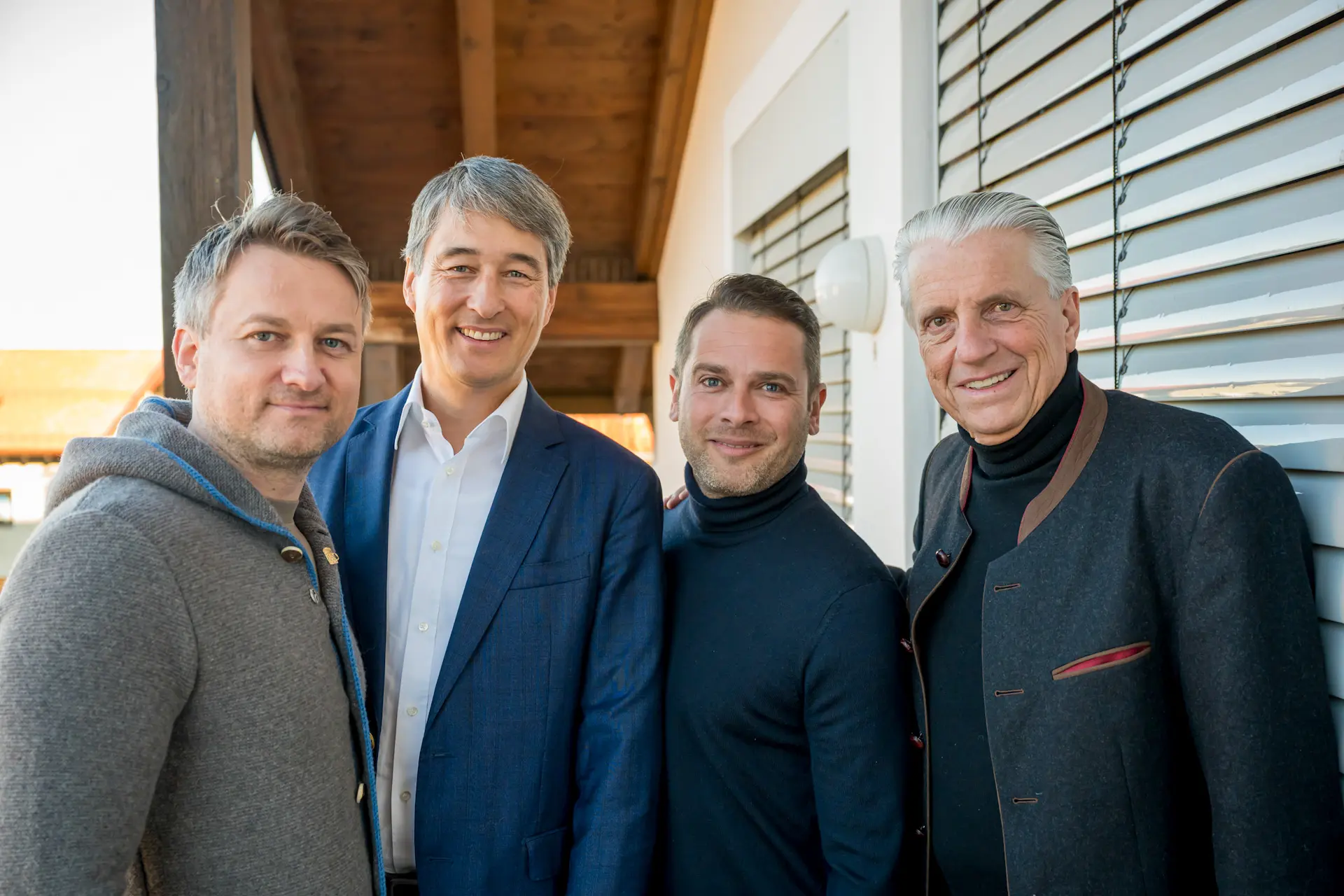
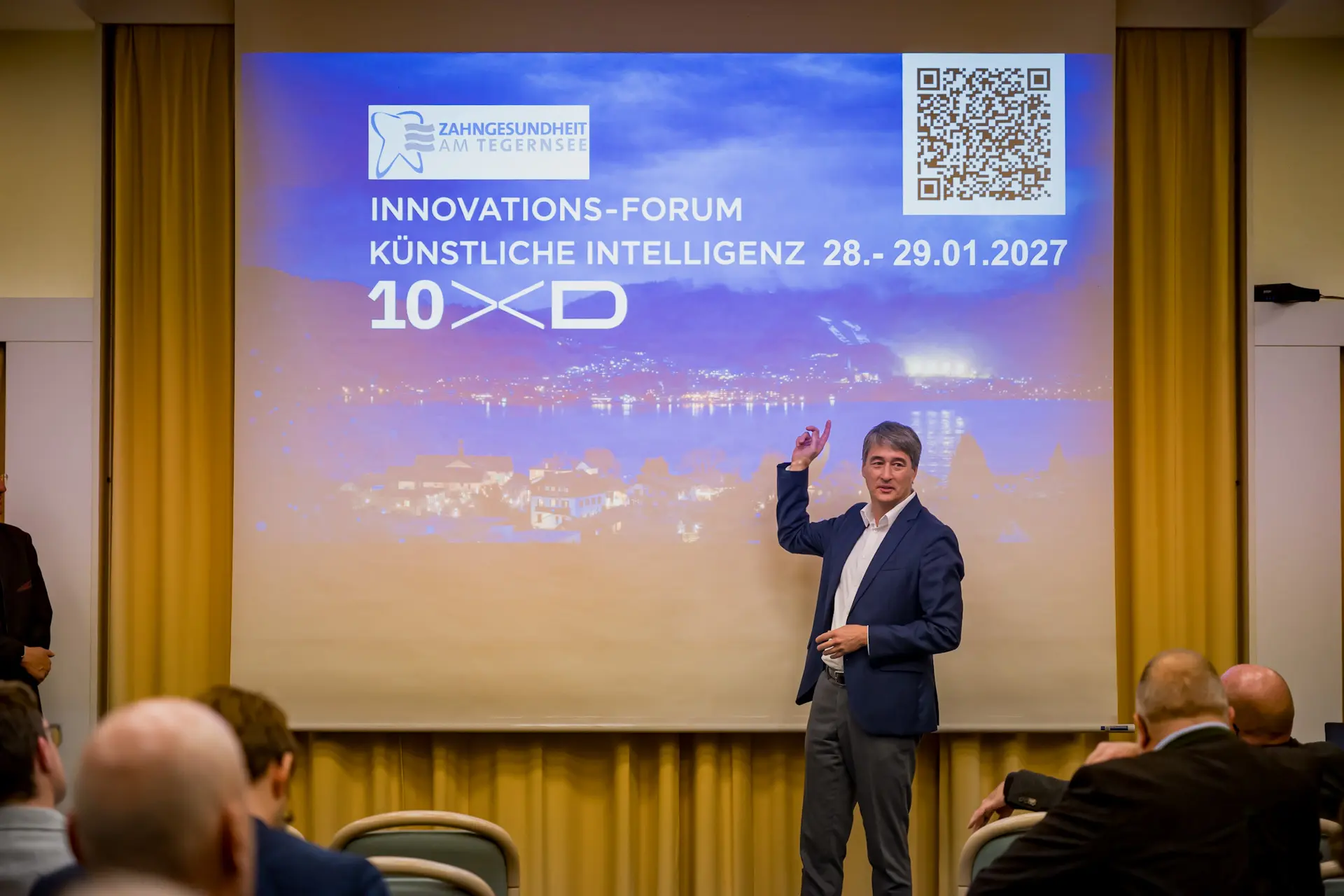
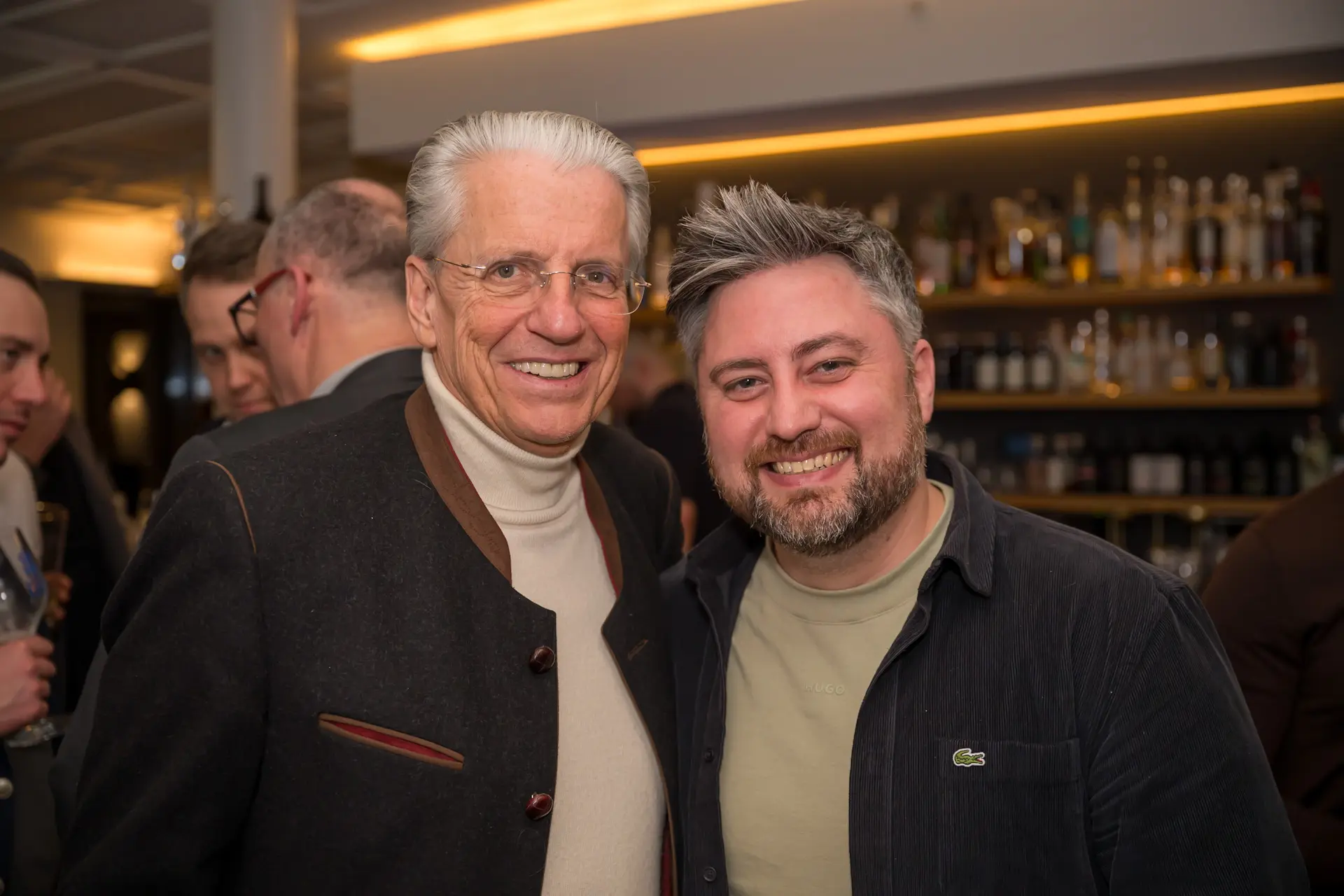
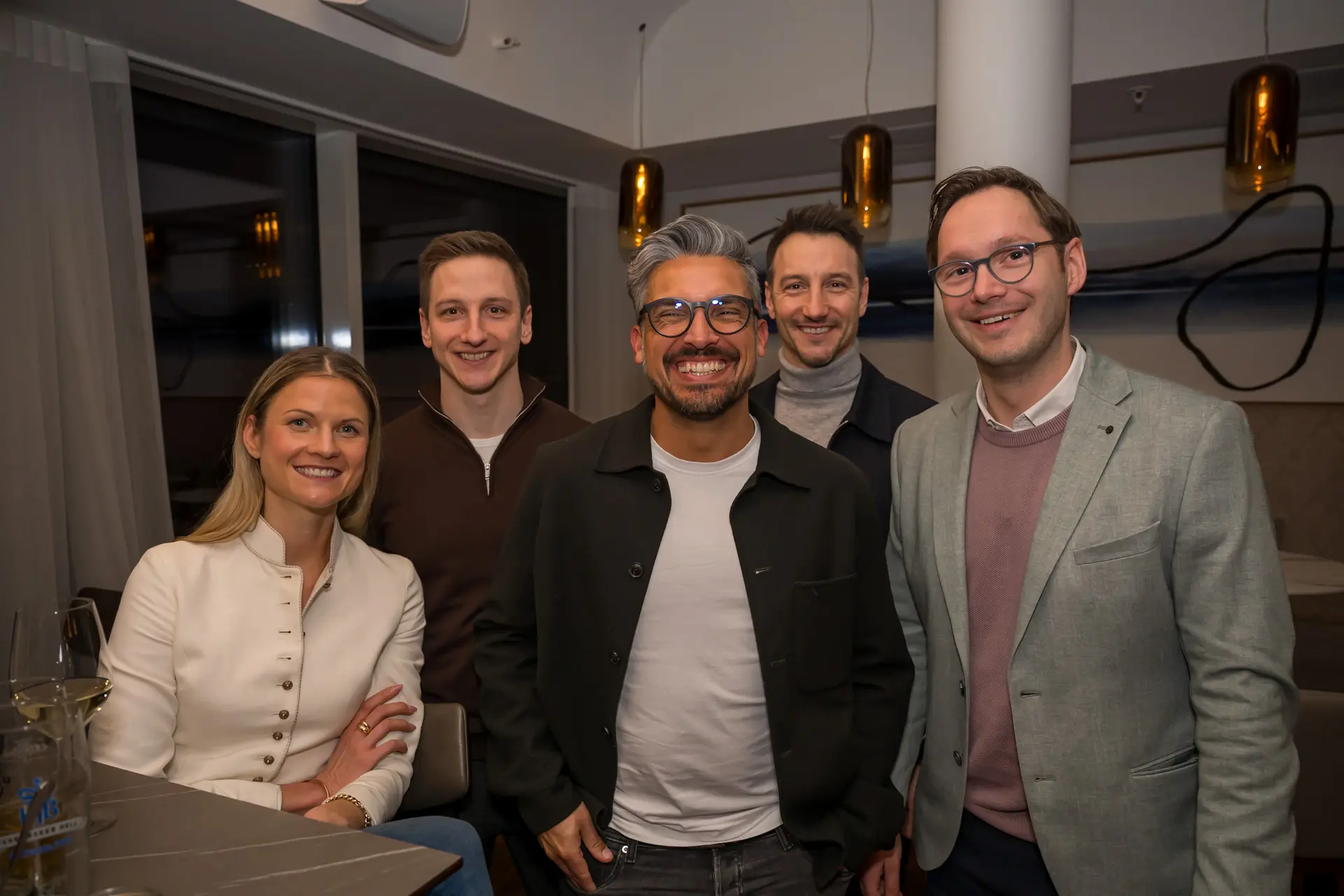
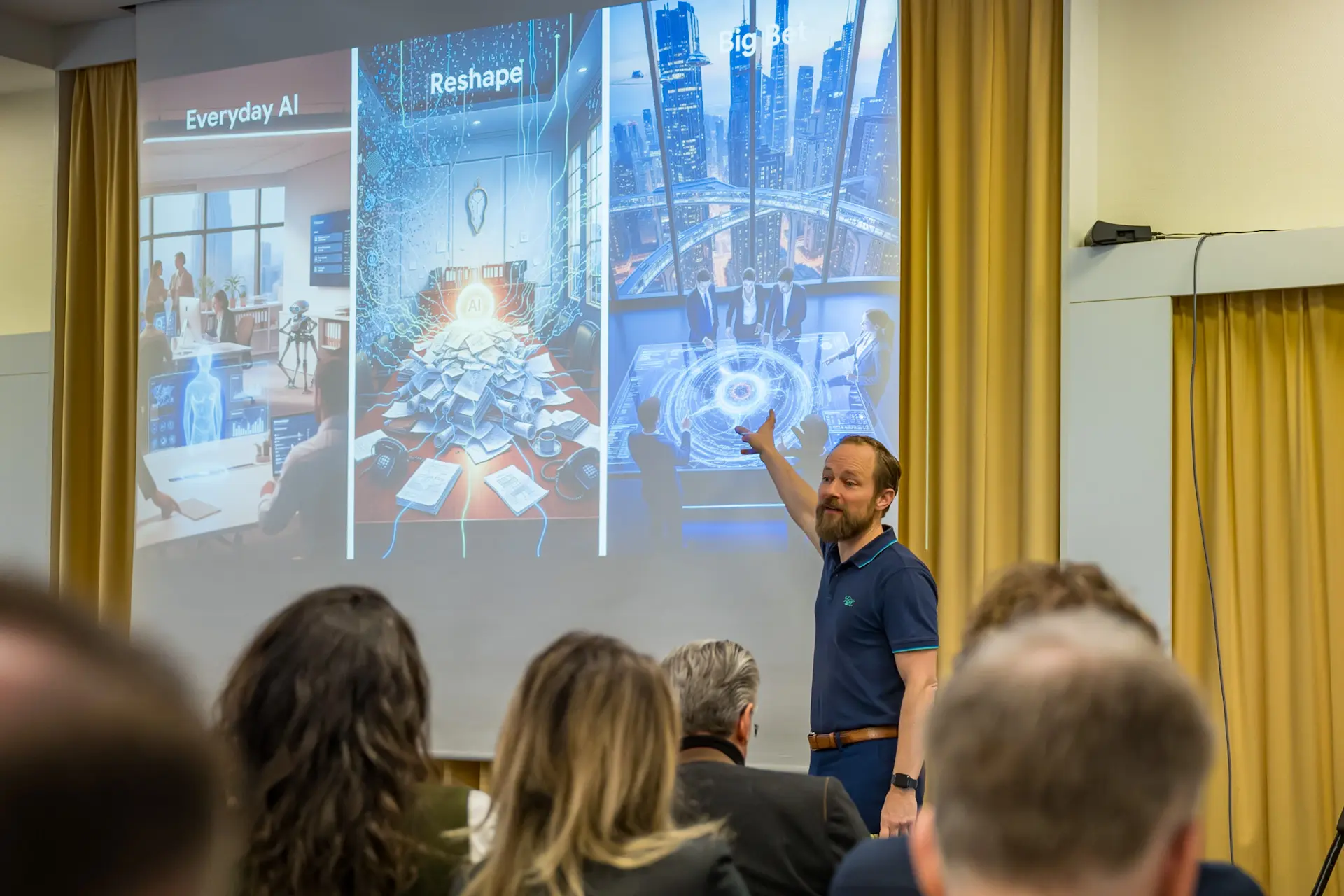
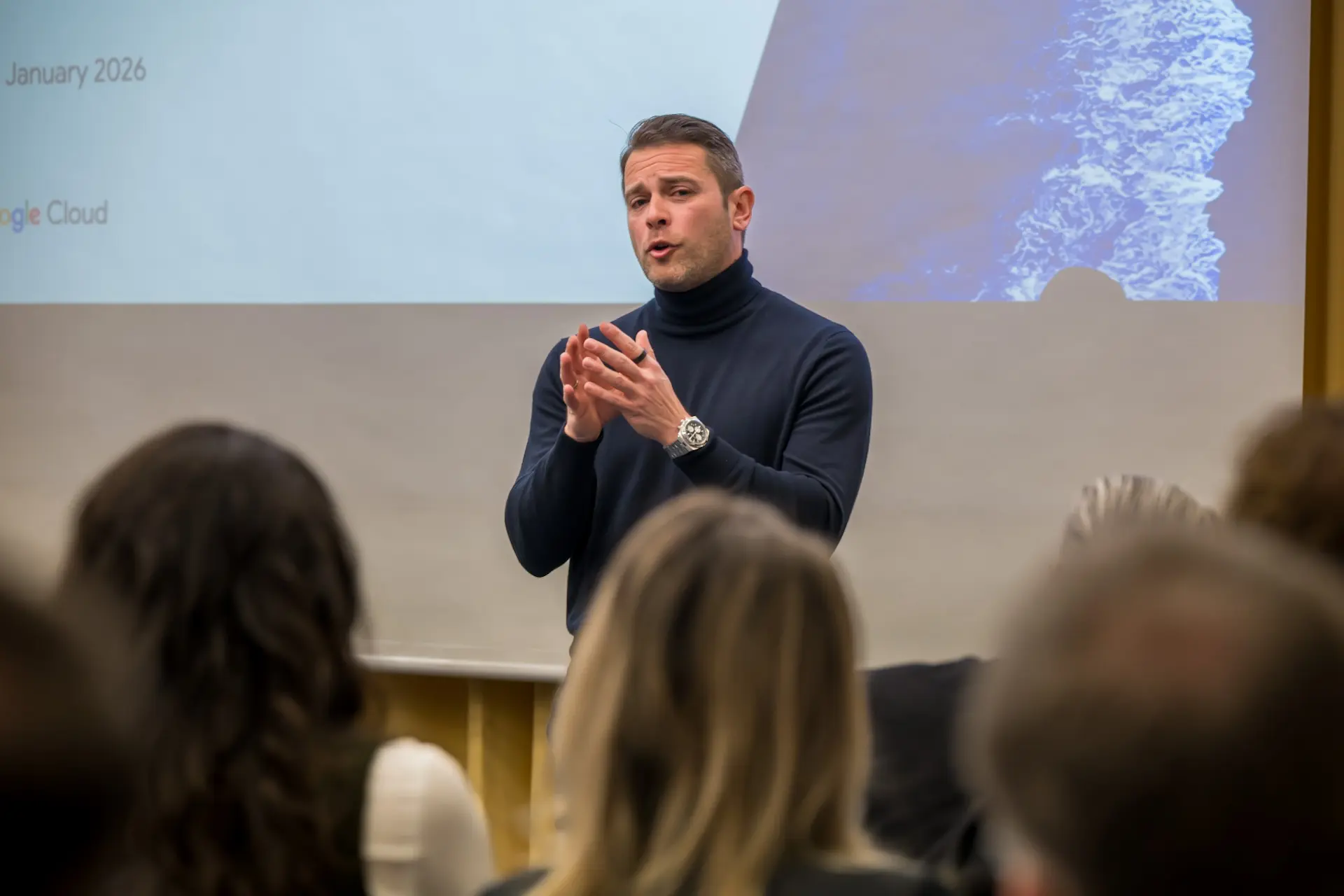
At the end of January, Lake Tegernsee once again became a place for forward-thinking dialogue. At the AI Innovation Forum at Lake Tegernsee, initiated and hosted by the Dental Health at Lake Tegernsee and 10xD, decision-makers from healthcare, technology, business, and science met to discuss the real impact of artificial intelligence – beyond the hype, but with clear future orientation.
The event's ambition was clear from the start: AI should not be negotiated abstractly but should be concretely categorized and thought of responsibly. This attitude shaped the entire program – from keynote speeches to workshops and intense discussions on the sidelines.
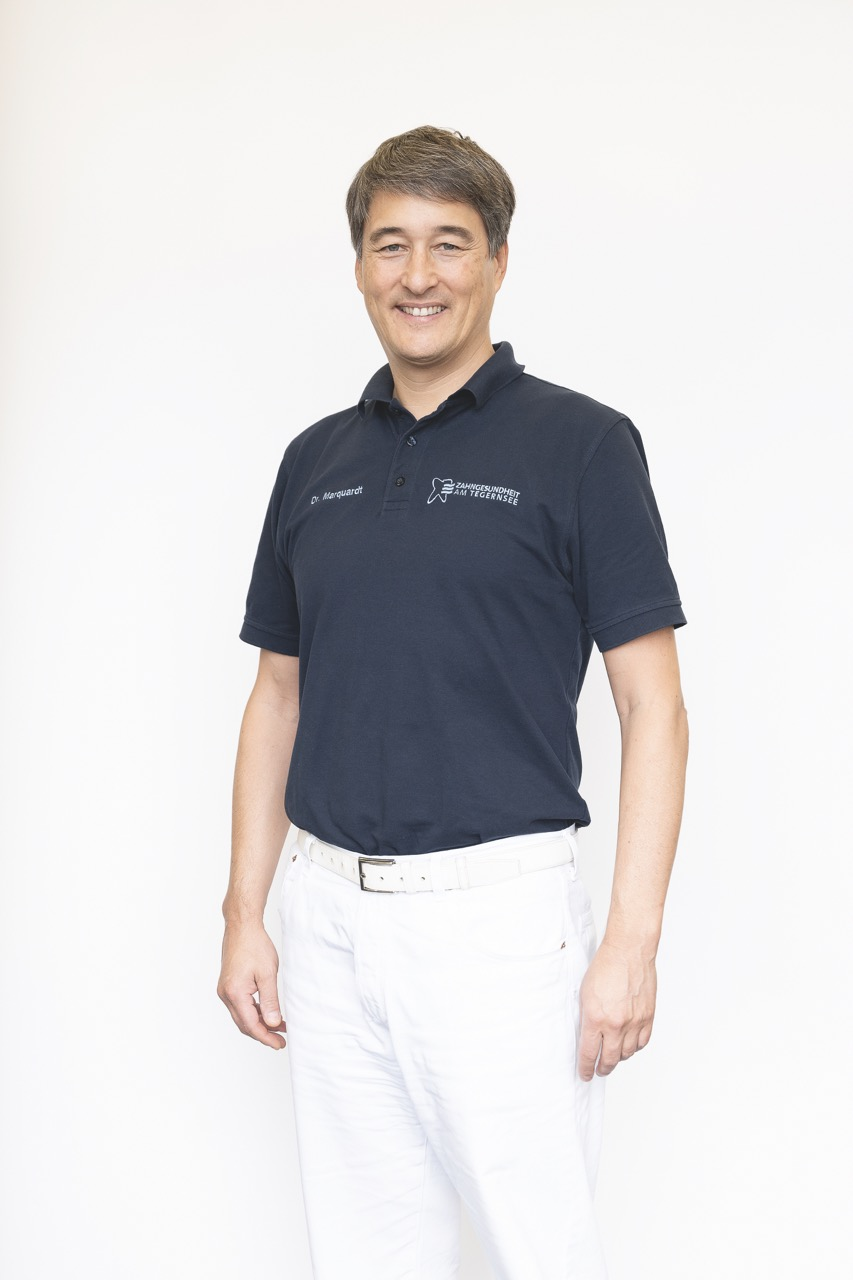
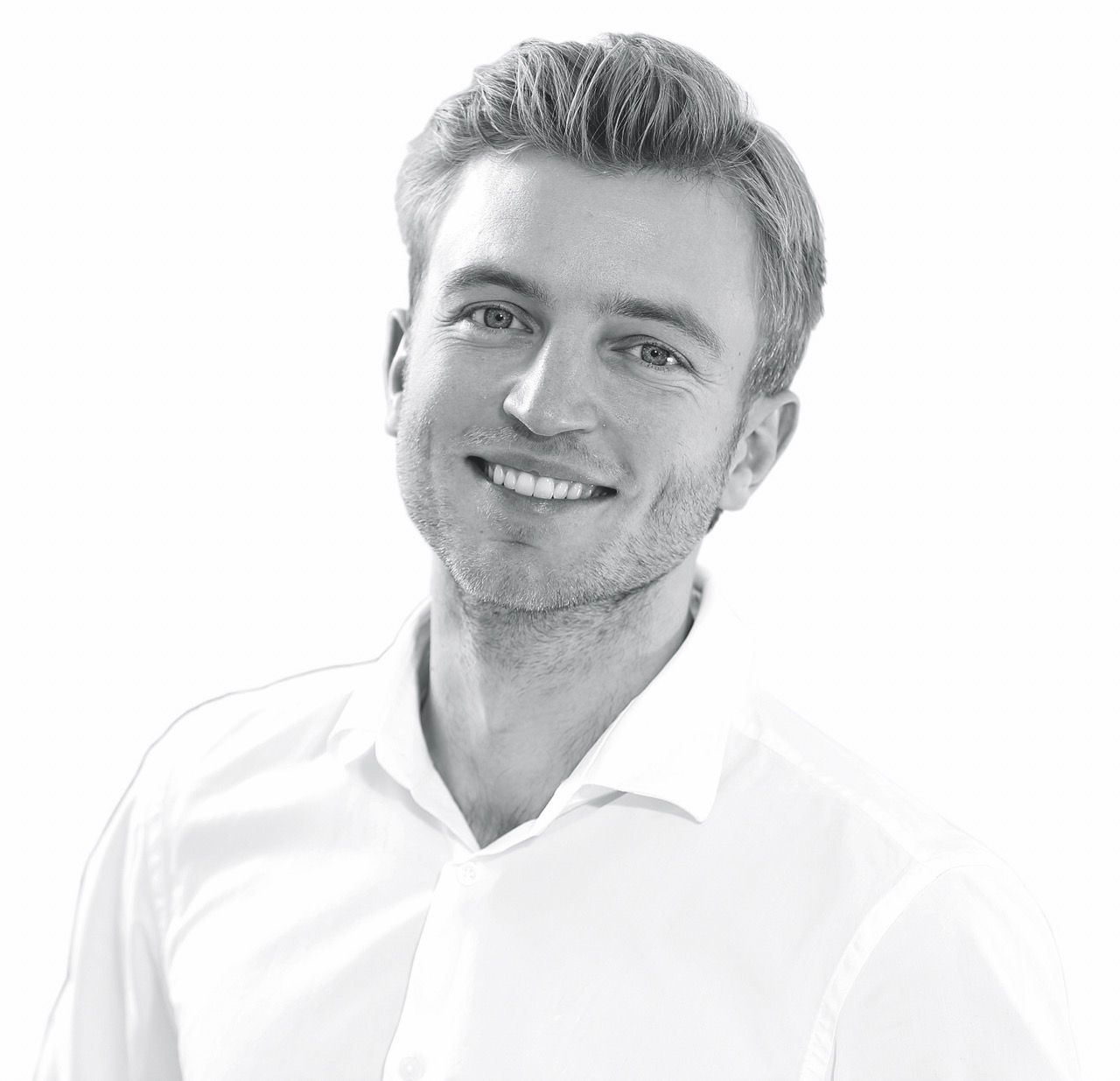
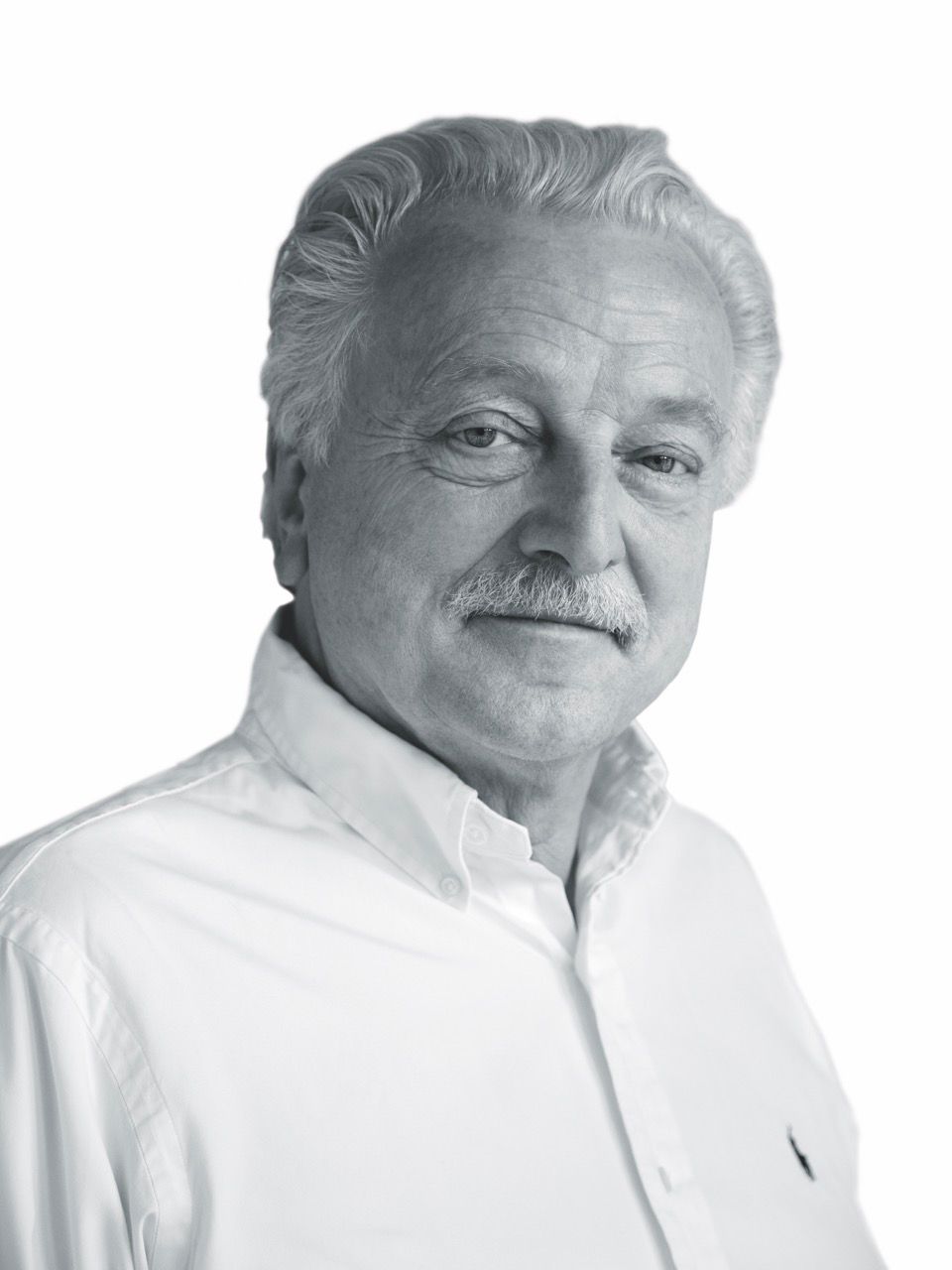
The hosts Dr. Siegfried Marquardt and Prof. David Matusiewicz emphasized right at the beginning the relevance of AI as a transformative engine for various industries.
Especially the healthcare context gave the forum a special depth: AI was not seen as an end in itself, but as a tool to improve processes, relieve professionals, and benefit patients.
The around 80 participants quickly agreed: health in Germany and Europe does not need another 'whitepaper'. It needs implementation, structure, and empowerment.
AI in practice and application
Nikolay Kolev (CEO Doctolib) introduced an AI-based consultation assistant – an example of how AI relieves routine processes and makes patient care more efficient. 'The real progress does not lie in the technology itself, but in how it gives time back to people,' said Kolev.
Dr. Stefan Ebener (Google) provided an overview of next-level AI technologies from a global perspective and the rapid developments. 'Not every innovation needs to be used immediately – but every one should be understood,' explained Ebener.
Heinz Wiendl (Prof. Valmed GmbH) reported on the development of a CE-certified AI platform in the medical field: "The development of a CE-certified AI platform shows how demanding the path from idea to safe application in healthcare is and that regulation in Germany is currently still the biggest brake."
Dr. Roxana Mittler-Matica (FormMed HealthCare GmbH) spoke about AI-supported prevention and personalized micronutrient strategies. "Individualized, AI-supported micronutrient strategies will determine the market in the future and make patients healthier."
In-depth formats
Marcel Pesch (academy4ai) led a hands-on workshop on AI agents – "build your own employee", Daniel Nierhauve (9elements) showed specific AI application examples from business practice. Dr. Maximilian Hahn (Daiichi Sankyo Europe) focused on strategic integration instead of uncontrolled AI growth, warned against uncoordinated AI use, and advocated for clear guidelines. "AI only unfolds its benefits when it is part of an overarching strategy."
Strategic, ethical, and legal & societal perspectives
Prof. Dr. Jochen A. Werner (10xD) reflected on the co-evolution of AI and humans – a call to shape technology-driven development humanely. "The crucial question is not what AI can do, but what we want to do with it." Prof. Dr. med. Dr. med. dent. Bernd Stadlinger (ETH Zurich) provided insights into the transformation of dental professions through AI and its scientific relevance.
Friedrich Overkamp (OncoConsult Overkamp GmbH) discussed AI and the Vision Zero in cancer medicine: "The Vision Zero will become a reality in oncology within the next 5 years."
As host and representative of the practice, Dr. Siegfried Marquardt (Dental Health at Tegernsee) together with Daniel Echouafni (Align Technology) brought in the perspective of dental care. They highlighted how AI is already making its way into diagnostics, planning, and patient communication. “AI will not replace dentistry – but it will make it more precise, predictable, and human.”
Expert panel: AI in society and health
An open discussion format with Dr. Alexandra Farfsing (Roche), Tim Jäger (Blackout) and Dieter Weisshaar (myneva) focused on societal challenges, opportunities, and risks of AI in health and everyday life:
Moderated by Max Klopsch (The Pioneer) the conclusion was particularly clear: Technological progress requires societal acceptance – and this only arises through open dialogue.
Conclusion & Outlook
The forum concluded with a reflection on the key insights and an outlook on upcoming events like the Ludwig Erhard Summit. On April 28, 2026, the hosts Dr. Siegfried Marquardt with Prof. Dr. David Matusiewicz will host a dedicated Health Stage at the LEG and further explore the discussed topics.
Conclusion
The AI Innovation Forum at Tegernsee 2026 was more than a technical event. It was an appeal for conscious design, interdisciplinary thinking, and the courage to critically reflect on technological possibilities.
In the discussions around the conference, it became clear: "AI is here to stay. The crucial point is how we use it." Several contributions emphasized that "AI only unfolds its value when people consciously shape it" — and that true progress ultimately "lies not in the technology itself, but in how it gives time back to people."
AI is no longer a vision of the future, but a practical tool that must be shaped across industries. Decision-making processes, working methods, and services are changing – and only in the interplay of technology and human responsibility does AI unfold its full potential. The next event is already on the 29th of January 2027 set.