© Freepik
January 29, 2026
Dr. Andrea Gartenbach
Dr. Andrea Gartenbach is a specialist in Internal and Functional Medicine and an expert in Longevity. In her current column for Premium Medical Circle, she explains the role the liver, intestines, and genetics play in detox cures—and what truly keeps you healthy in the long term.
The beginning of the year is the time for good resolutions. Accordingly, there is a high demand for detox cures. They promise cleansing, lightness, and a quick restart. From a medical perspective, caution is advised here. The term detox often promises more in the wellness context than it can medically deliver.
Detox is not a wellness concept. Detox is a highly complex biological process. And complexity cannot be outsmarted by simple short-term interventions. Medically correct, one should speak of biotransformation: conversion, neutralization, transport, and excretion. For reasons of understandability, I will stick to the term detox in this text, but not in the popular sense, rather as a description of a precisely regulated system.
At this point, we need to briefly clarify what actually happens biologically when we "detox." The body does not work like a container that slowly fills with dirt and then needs to be "cleaned." It is an active system, continuously converting, neutralizing, and excreting substances. These processes – the "detox" – do not occur sporadically and short-term, but permanently, day by day.
The detoxification process is not the task of a single organ. It only works because several systems work closely together. You can imagine it as a series of work steps where each organ takes on a clearly defined role.
The liver is the central conversion station. Many burdensome substances are fat-soluble and cannot leave the body in this form. The liver chemically alters them so that they become water-soluble. Only then can they be further transported. This conversion is necessary, but it often makes the substances more reactive and potentially more burdensome than before. Therefore, these intermediate products must be quickly further processed and intercepted.
This is where the kidney comes into play. It filters the blood and removes the water-soluble breakdown products through the urine. Only if this filtration works reliably will the liver's conversion process actually be relieving. If excretion is slowed down or restricted, the converted substances remain in the body longer and can cause stress again.
The skin complements this system to a lesser extent. Water-soluble substances are also excreted through sweat. More important, however, is its role as a regulatory and barrier organ, influencing blood flow, fluid balance, and thermal balance, thereby indirectly supporting detoxification.
The key to successful detox is a well-coordinated interaction. Only when conversion, transport, and excretion work together, the system is truly relieved.
Many people experience more lightness, better sleep, improved digestion, and a clearer mind after a detox weekend or a short fasting phase. These effects are real.
However, the cause is usually not that harmful substances are actively “flushed out.” The decisive effect arises because the daily burden is significantly reduced for a short time.
When alcohol, sugar, highly processed foods, and late meals are omitted, the system often calms down quickly. Blood sugar stabilizes, inflammatory processes decrease, the digestive system is relieved, and sleep quality improves. The body no longer has to constantly counter-regulate and gets a real break from continuous compensation.
This is perceived as a “detox” effect. In this sense, detox is not an elimination but an interruption of chronic overstrain.
Another common myth is: The worse you feel during a detox, the better it works. Fatigue, headaches, inner restlessness, or irritability are then interpreted as so-called "initial worsening" and as a sign that the body is working intensively.
Medically, however, this conclusion is risky. Let's remember: The detox process takes place in several coordinated steps. First, substances are chemically converted. In doing so, intermediate products often arise that can be more burdensome in the short term than the original substance. These intermediates must then be neutralized, transported, and reliably excreted.
If this first step is strongly stimulated, for example through fasting, without the subsequent processes being able to keep up, the system comes under pressure. The result can be exactly those symptoms that are mistakenly interpreted as a positive sign: exhaustion, headaches, nervousness, or sleep disturbances.
From a scientific point of view, such reactions are therefore not proof of effectiveness. They show rather that individual detoxification and regulatory mechanisms are overloaded. A sensible detox strategy therefore avoids measures that strongly stimulate detoxification processes without simultaneously ensuring removal and excretion.
What is often forgotten in popular detox narratives: The body itself continuously produces substances that need to be broken down again after fulfilling their function. These include hormones after their effect, breakdown products of neurotransmitters in the nervous system, inflammatory mediators, and numerous metabolic intermediates.
These molecules are necessary and biologically meaningful as long as they act within a limited time. However, if they remain in the system too long or are not sufficiently broken down, they can disrupt regulatory processes. Detox is thus not a "cleanse" but an organizational principle: a remodeling and transport system that decides which substances remain in the body, how they are chemically altered, and how they leave it again.
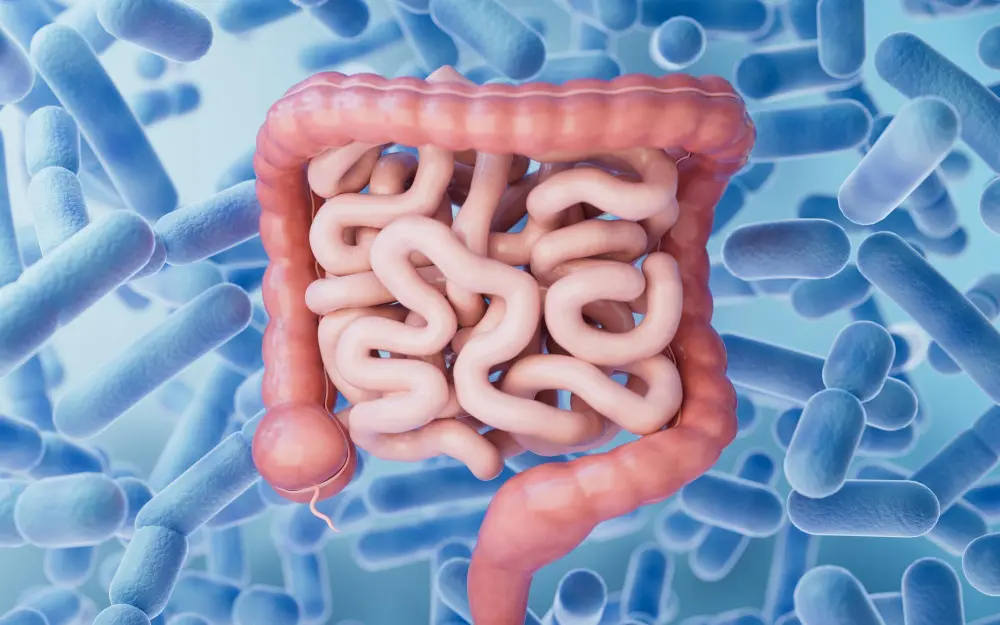
Not all substances that the body wants to eliminate are excreted directly through the kidneys. A large part is first chemically converted in the liver and then released into the intestine via bile.
However, the detoxification process is not yet complete. In the intestine, it is decided whether these substances actually leave the body or re-enter the circulation. If the intestinal contents are quickly transported and excreted, the process is complete. However, if the substances remain in the intestine longer, there is a possibility that they will be reabsorbed into the blood through the intestinal lining.
Whether this happens depends on several factors. Slowed intestinal movement prolongs contact time. A weakened intestinal lining facilitates reabsorption. The microbiome also plays a role, as certain bacteria can alter converted substances again, promoting their reabsorption.
The processes by which the body breaks down and excretes substances do not work the same for everyone. Genetic differences influence how quickly these processes occur, how well they withstand additional stress, and how sensitively the body reacts to them.
This is exactly why different people experience the same detox measure very differently. Precision medicine instead of blanket therapy.
The popularity of detox infusions is easy to explain. They convey precision and medical control. Above all, they bypass what is exhausting in everyday life: changes in sleep, diet, or stress. Instead, they promise a direct intervention in the body.
These are usually infusions with amino acids, B vitamins, and glutathione. There is a logical biochemical rationale for this. Amino acids are needed for remodeling and binding processes. B vitamins act as cofactors in central metabolic reactions. Glutathione plays a key role in neutralizing reactive substances. Vitamin C and trace elements are often added to support antioxidant systems.
This logic is plausible but not sufficient. And this is precisely where the scientifically correct attitude begins, as it is found for good reasons in evidence-based longevity medicine: Plausibility does not replace evidence. There is no robust data to legitimize detox infusions as a general concept for healthy people, if we understand “detox” as a measurable medical outcome.
Perhaps detox in its most meaningful form is the ability to shape everyday life so that the organism does not constantly need to compensate and counteract.
The burdens of the modern world do not only consist of pollutants. They also arise from chronic stress, irregular eating, lack of sleep, and a constantly active metabolism. The body usually does not get out of balance because a single substance becomes too much, but because recovery phases are missing and regulatory systems are permanently under pressure.
So the question is: How do I create conditions in which the body can keep itself stable in the long term?
This perspective is less spectacular than short-term cures or trends. But it corresponds to biological reality. And that is precisely why it is the form of detox that works in the long run.
That may sound less spectacular than the exotic promises of short-term detox wonders. But it is sustainable.