Sleep and Recovery: What Elite Sports Can Teach Us
Sports physician Dr. Lutz Graumann explains why sleep is the most overlooked performance factor—with insights from the German Armed Forces, ice hockey, and professional soccer. Practical tips for better recovery
He spent two seasons in the Basketball Bundesliga without standing a single minute on the field – and still became German champion. Dr. Lutz Graumann likes to tell this story because it gets to the heart of the matter: In competitive sports, it's not always about being the loudest. But the most rested.
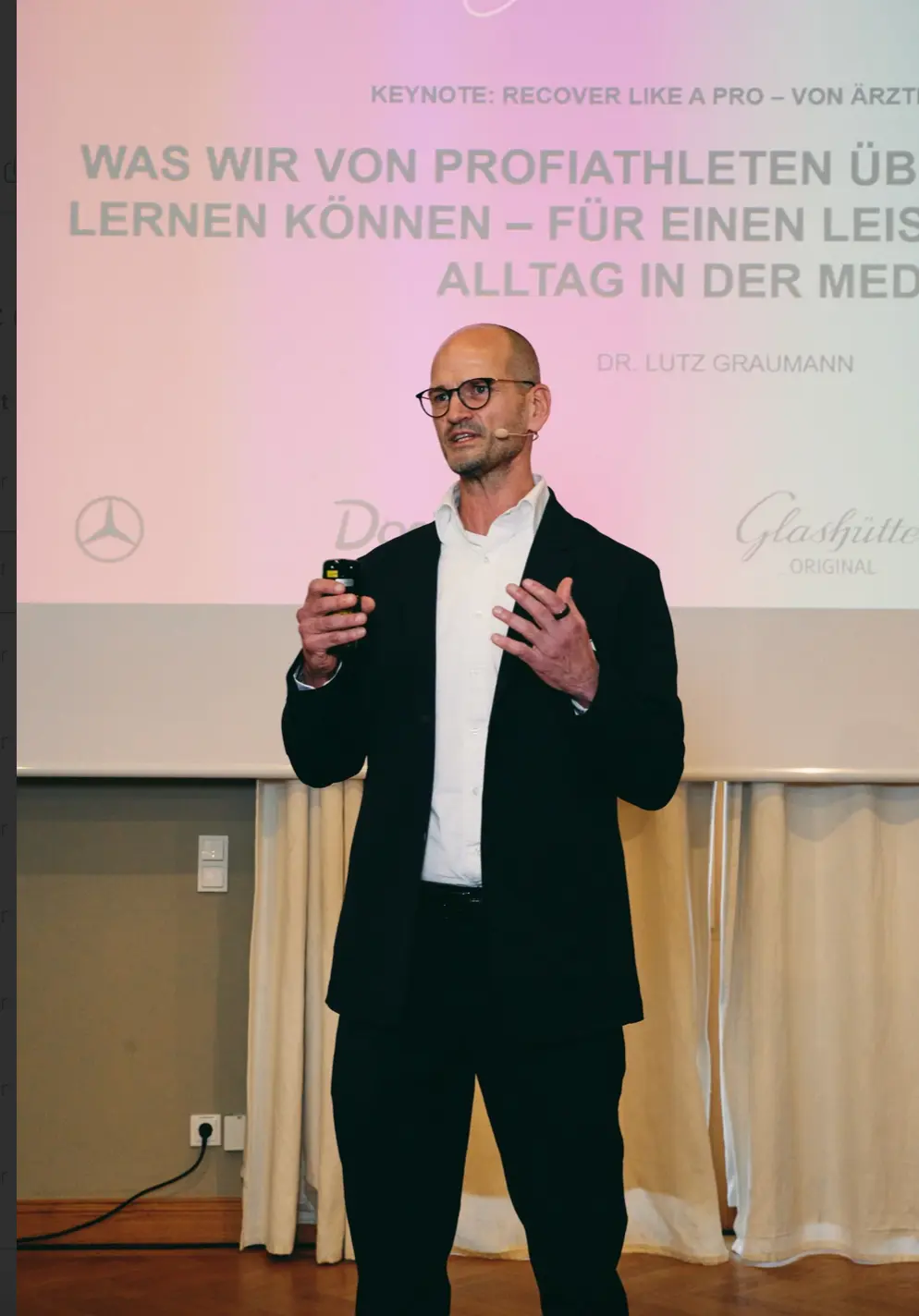
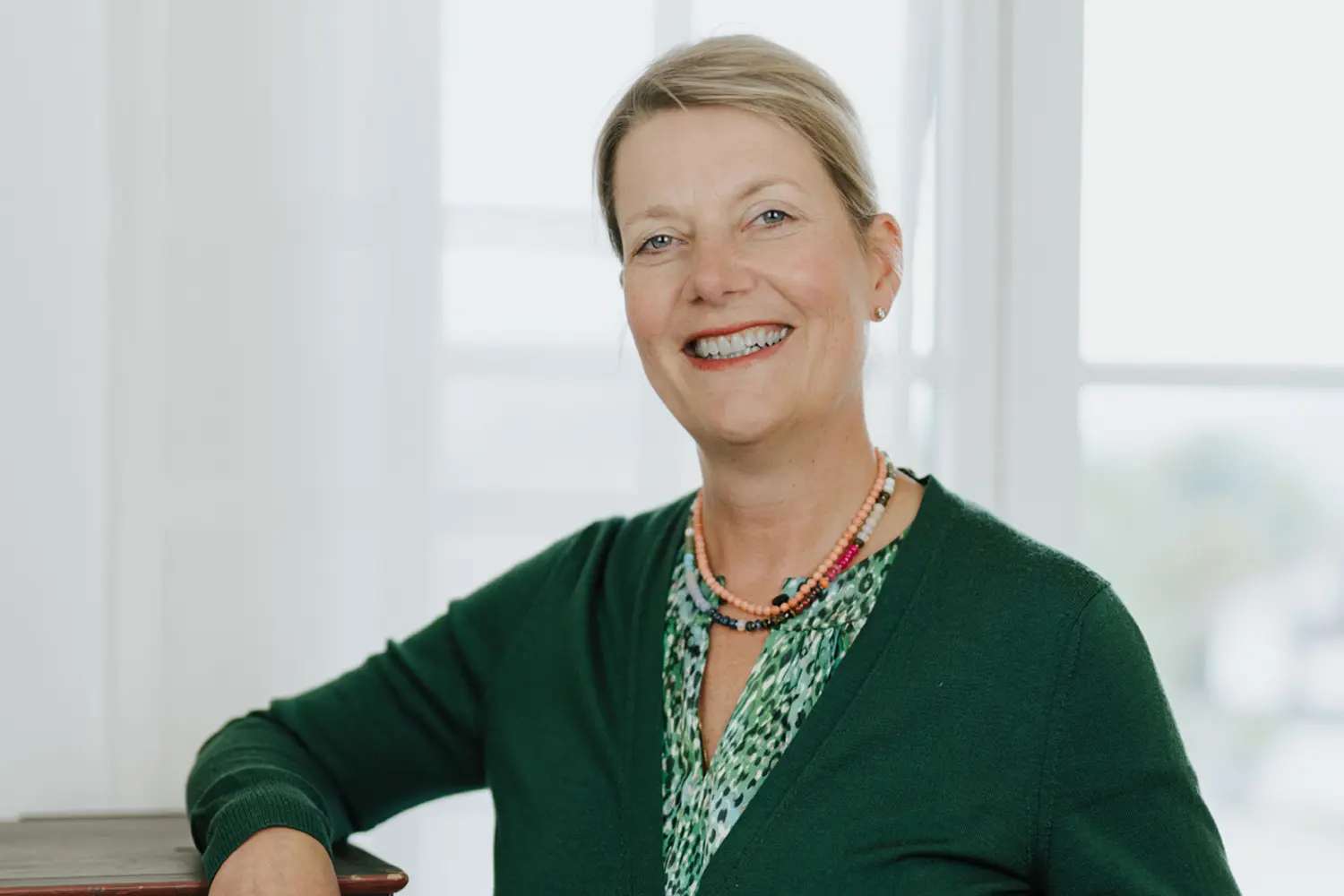
Graumann is a sports physician. He led the Bundeswehr's sports medicine for ten years, accompanied a human performance program for Eurofighter pilots, and was a team doctor for the German Ice Hockey Federation. At the PMC Annual Conference 2026, he spoke about a topic that surprisingly gets little attention in medicine: sleep.
The silence of medicine about sleep
"We doctors learn relatively little about healthy sleep," says Graumann. This is not an oversight, but part of a professional culture where exhaustion is considered a sign of commitment. For decades, the 36-hour shift was a status symbol, a kind of badge of honor – those who survived it were considered resilient.
However, from a medical point of view, this is a bad idea, as Graumann soberly points out. Those who are overtired make worse decisions, react slower, and overlook more. The problem: A doctor makes hundreds of decisions every day. And they should be good ones.
First broken, then better – the principle of supercompensation
To understand why sleep is so crucial, Graumann first explains a basic principle of sports science: supercompensation. The idea is simple, but its consequences are systematically ignored in everyday life. "Training and work make you bad at the end of the day," he says. "Only if the body gets enough rest afterward will you eventually get better."
An example he likes to mention: How long does it take for a fitness beginner to fully recover after their first 10-kilometer run? Most estimate one or two days. The actual answer is between 72 and 96 hours. Those who train again earlier harm themselves. "That's why orthopedic practices are full in March and April," says Graumann – namely when New Year's resolutions meet impatiently overworked bodies.
59 percent – and that's after eight hours of sleep.
Graumann regularly measures the state of recovery in large companies. VW, Infineon, pharmaceutical companies – the same picture everywhere. Last year, his measurements fell below a threshold that he considers critical for the first time: 59 percent recovery in the morning. That sounds abstract at first, but Graumann makes it tangible.
"If your phone shows only 59 percent in the morning, even though it was plugged in for eight hours, you run to the nearest electronics store. But we do exactly that with our body." According to sleep studies by TK and DRK, 52 percent of the German population regularly sleep too little. Less than six hours of sleep per night is, according to Graumann, "doomed to fail."
Coffee, smartphones, and red wine – the three big disruptors.
When Graumann talks about the enemies of sleep, he names three candidates that are omnipresent in modern everyday life.
Caffeine.
Coffee is as much a part of German everyday life as hardly anything else – the average German drinks 180 liters per year, but only 120 liters of water. The problem is not the coffee itself, but the timing. Caffeine blocks the adenosine receptors in the brain, which are responsible for the feeling of tiredness, with a half-life of five to eight hours.
Anyone who drinks their last coffee at 3 p.m. still has half the dose in their blood at 11 p.m. Graumann's recommendation is clear: four to five cups daily are quite acceptable from a longevity perspective – but not after 2 p.m. "It takes 14 days to three weeks before you feel the differences," he says. Anyone who tries this will be surprised. Graumann finds the energy drink consumption of younger people particularly alarming: 16 to 25-year-olds drink up to half a liter daily.
Smartphones
The blue light from screens, considered the number one sleep thief, is not really the problem according to Graumann. "Tablets and smartphones emit too little light intensity to significantly suppress melatonin production," he says.
What actually sabotages falling asleep is something else: Every incoming message triggers a small serotonin-dopamine kick – the brain remains in a state of mild arousal, from which it is difficult to slip into sleep.
Alcohol
Evening red wine is socially accepted in the upscale milieu, almost a ritual. Graumann describes what happens in the body with a comparison from his measurement practice: "Two glasses of red wine look like influenza in pulse monitoring." Alcohol subjectively relaxes and facilitates falling asleep – but at the same time suppresses REM sleep, increases heart rate, and disrupts sleep architecture throughout the night.
Owl or lark – and why it decides the career in professional football
The human body follows an internal timekeeper, the circadian rhythm. But this timekeeper doesn't tick the same for everyone. "We are not uniformly capable like a Duracell bunny," says Graumann. "There are variants from owl to lark that need to be taken seriously."
In international professional football, this has measurable consequences: At Champions League level, where evening games at 9 p.m. are the norm, almost exclusively owls prevail. Larks, who naturally peak early and wind down in the evening, injure themselves more often on the way up – their bodies are pushed to their limits at the wrong time.
At the German Ice Hockey Federation, Graumann takes a pragmatic approach. During evening games, players receive targeted high doses of caffeine – 3 to 10 milligrams per kilogram of body weight, equivalent to 24 to 30 espressos. "Not just for alertness," explains Graumann, "but because high doses of caffeine raise the pain threshold – hockey hurts."
What the body actually accomplishes at night
Sleep is not a standby mode. On the contrary, the night is the most productive phase of the day, but for processes that are not possible during wakefulness. Graumann distinguishes four functions that must be fulfilled every night: inflammation regulation and tissue repair in deep sleep during the first half of the night, detoxification of the brain via the glymphatic system, consolidation of learned material, and the release of growth hormones and testosterone.
Graumann particularly likes to quote a finding from Harvard research: The ten minutes of apparent boredom right before falling asleep are not lost time. During this phase, the transfer from short-term to long-term memory begins. Anyone who checks the news during this time interrupts a process that cannot simply be made up later.
Regarding sleep duration, Graumann says: Six hours is the minimum for physical recovery. Those under constant stress need up to nine – because emotional processing occurs during REM sleep, which only dominates in the second half of the night. Anyone who gets up at four in the morning cuts themselves off from exactly that.
Fixed times beat expensive gadgets
Sleep trackers, smart rings, apps with sleep phase analysis – the market for sleep technology is booming. Graumann's message is a quiet counter-movement to this: The crucial factor is rhythm, not hardware. "We agree with athletes and clients on fixed bedtimes for three weeks that are non-negotiable," he says. Calculated back from waking up, which everyday life dictates. Monday to Sunday, no exceptions.
The physiological rationale: Sleep is structured in cycles of about 90 minutes each. Those who wake up at the end of a cycle feel significantly more refreshed than someone who is abruptly awakened in the middle. "We prefer to get up after six hours rather than six and a half," explains Graumann – even if that sounds counterintuitive.
The resting heart rate reveals more than any lab value
If you want to know how recovered you really are, you don't need an expensive blood test. Graumann swears by a simple measurement: the resting heart rate. “Cortisol as a single measurement is pointless," he says. The resting heart rate, on the other hand, is “incredibly stable” and reliably rises when the body is under pressure.
A resting heart rate increased by 15 beats announces an illness. If it is 17 beats above the personal normal value, you should not do intensive training that day. His team used this system as an early warning system during the Covid pandemic.
What really helps in the evening
Graumann's recommendations for the hours before going to bed are pragmatic. The bedroom should be dark, quiet, and cool. Those who travel a lot should take their own pillow and duvet with them – the body sleeps better in familiar surroundings.
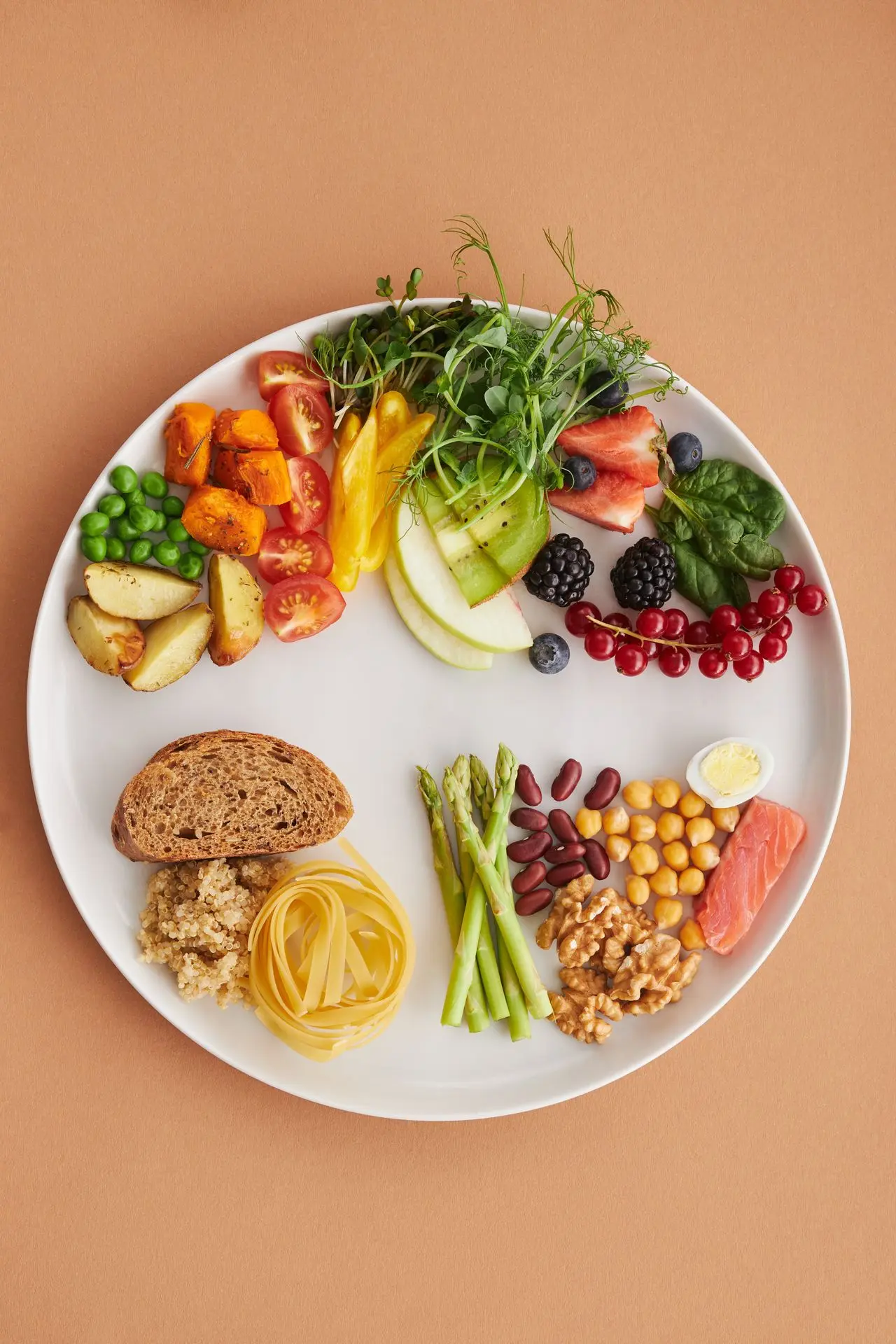
Even a two percent dehydration increases cortisol levels by ten percent; if you haven't produced clear urine by noon, you haven't drunk enough. For dinner, he recommends easily digestible carbohydrates – jasmine rice, sweet potatoes, rice pudding, or semolina pudding help you fall asleep. Not frozen pizza.
Muscle relaxation with a massage gun or fascia roller relieves tension that would otherwise disturb sleep. And regarding the breathing technique, which is explained in a complicated way in some guides, Graumann has a casual sentence: “Exhale longer than inhale, through the nose. That's all you need." About the sauna: The data situation is better than with cold applications. Cold water does suppress inflammation, but it also reduces the body's adaptation response – exactly what you train for.
Melatonin and creatine – two supplements with real evidence
Graumann is skeptical about what is sold in German pharmacies and drugstores as a sleep aid with melatonin. In competitive sports, he uses it specifically – but only for flights eastward with more than three hours of time difference. And then with significantly higher doses than the usual preparations contain: 10 to 30 milligrams depending on body weight.
“No kindergarten offerings,” he says. He recommends creatine more broadly. The supplement is not only relevant for the muscles but also for brain physiology. In stressful phases, he gives 2 to 5 grams in the evening. “The older, the more benefits. Most people notice after three weeks that they feel better."
The daily formula for longevity
At the end of his lecture, Graumann distills his recommendations into a handy protocol. Start the day with a large glass of water. Mobilize all major fascia structures in under three minutes. At least 30 minutes of daylight – because the light in offices and medical practices is 100 to 1,000 times weaker than sunlight, and the body needs real light to calibrate its rhythm. Schedule a short break in the middle of the day.
Eat at least 1.2 to 1.6 grams of protein per kilogram of body weight – "hardly anyone achieves this," says Graumann. And walk at least 5,649 steps a day: Below this threshold, according to Stanford data, the risk of depressive moods measurably increases. A
In the evening, the principle of the digital sunset applies: When it gets dark outside, reduce the stimulus density. And finally, with a directness that suits the man: "Stop doing stupid things. Less alcohol, less caffeine, less stress brings more than the best medicine."
The real problem is not the knowledge
What remains of a lecture on sleep that contains so many facts and recommendations? Perhaps this one sentence with which Graumann ends his performance: "Hand on heart: We actually know what should be good for us, but implementing it in everyday life is often not so great even for us health professionals."
It is an honest self-assessment that hits the audience directly. Sleep research has made enormous progress in recent years. What it has discovered is no longer a secret. The problem is not the knowledge – it is a professional culture that still frames exhaustion as a virtue, and an everyday life that treats regeneration as a luxury that must first be earned.
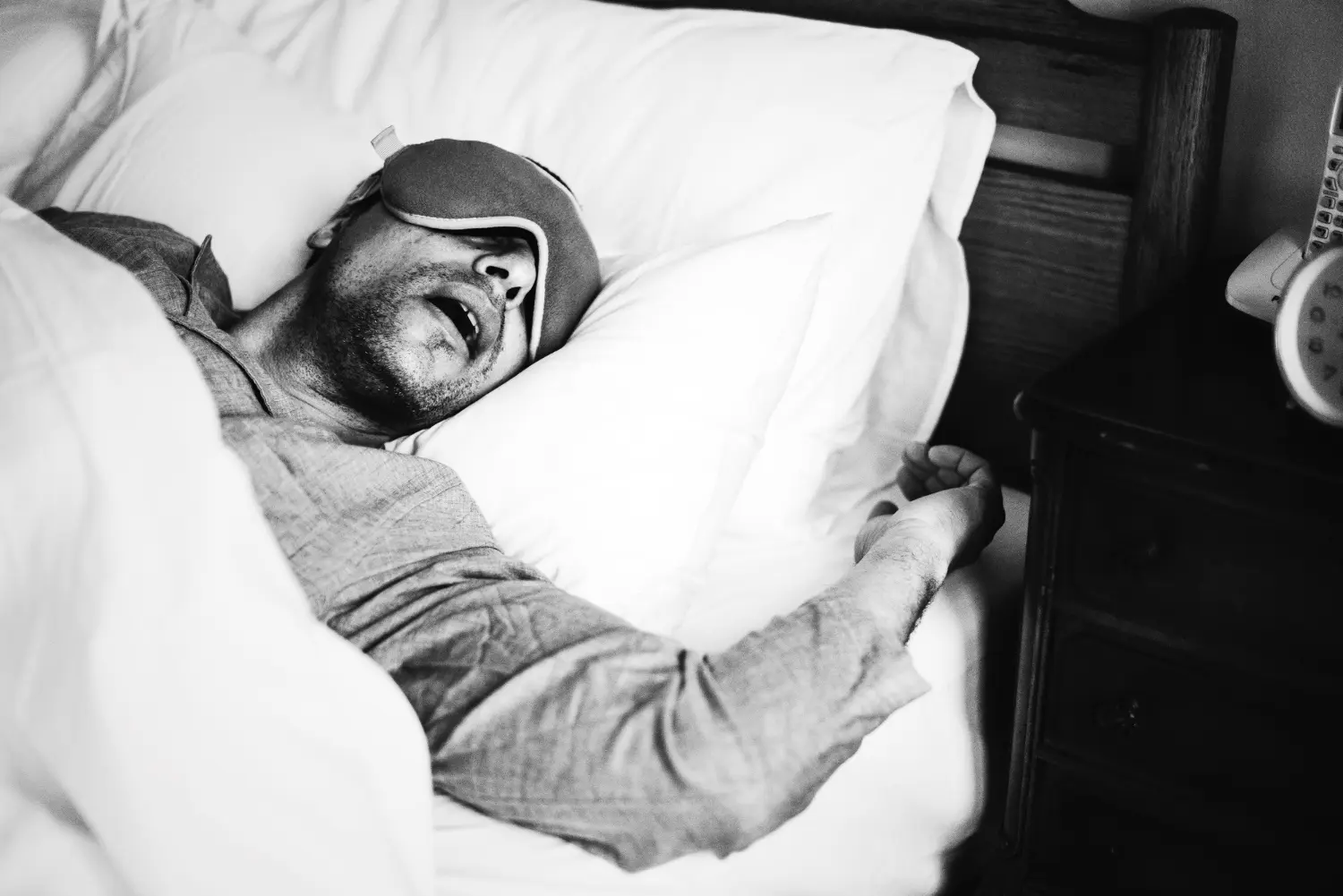
Graumann finally names the biggest medical risk factor: obstructive sleep apnea. It interrupts sleep a thousand times a night without the affected individuals being consciously aware of it, and it is simply incompatible with a long, healthy life. Too many people have lived with it for years without a diagnosis.