© Pavel Danilyuk
February 12, 2026
PMC Redaktion
Can diabetes be prevented? And will the disease be cured soon? Diabetologist Dr. Alexandra Dr. Schoeneich on scientific breakthroughs – and which therapies are already changing the lives of 11 million Germans today.

© PMC
An interview with
Dr. med. Alexandra Schoeneich
Diabetes is considered a widespread disease. Around 11 million people in Germany suffer from it. How to live with this metabolic disorder with as few restrictions as possible and whether the disease will be curable in the future, I discuss with Dr. Alexandra Schoeneich, specialist in endocrinology, diabetology, and internal medicine at the Diabetes, Hormone, and Metabolism Center at Isar Klinikum Munich.
Diabetes is referred to as a widespread disease. What exactly is meant by that?
Dr. Schöneich: The fact that diabetes is one of the most common chronic diseases in Germany and the incidence is unfortunately still increasing.
There are types 1, 2, and 3 diabetes, as well as pregnancy and gestational diabetes. Are the symptoms the same for all?
Dr. Schöneich: Yes. It leads to increased blood sugar.
Can you briefly explain how the types differ and what percentage of people are affected?
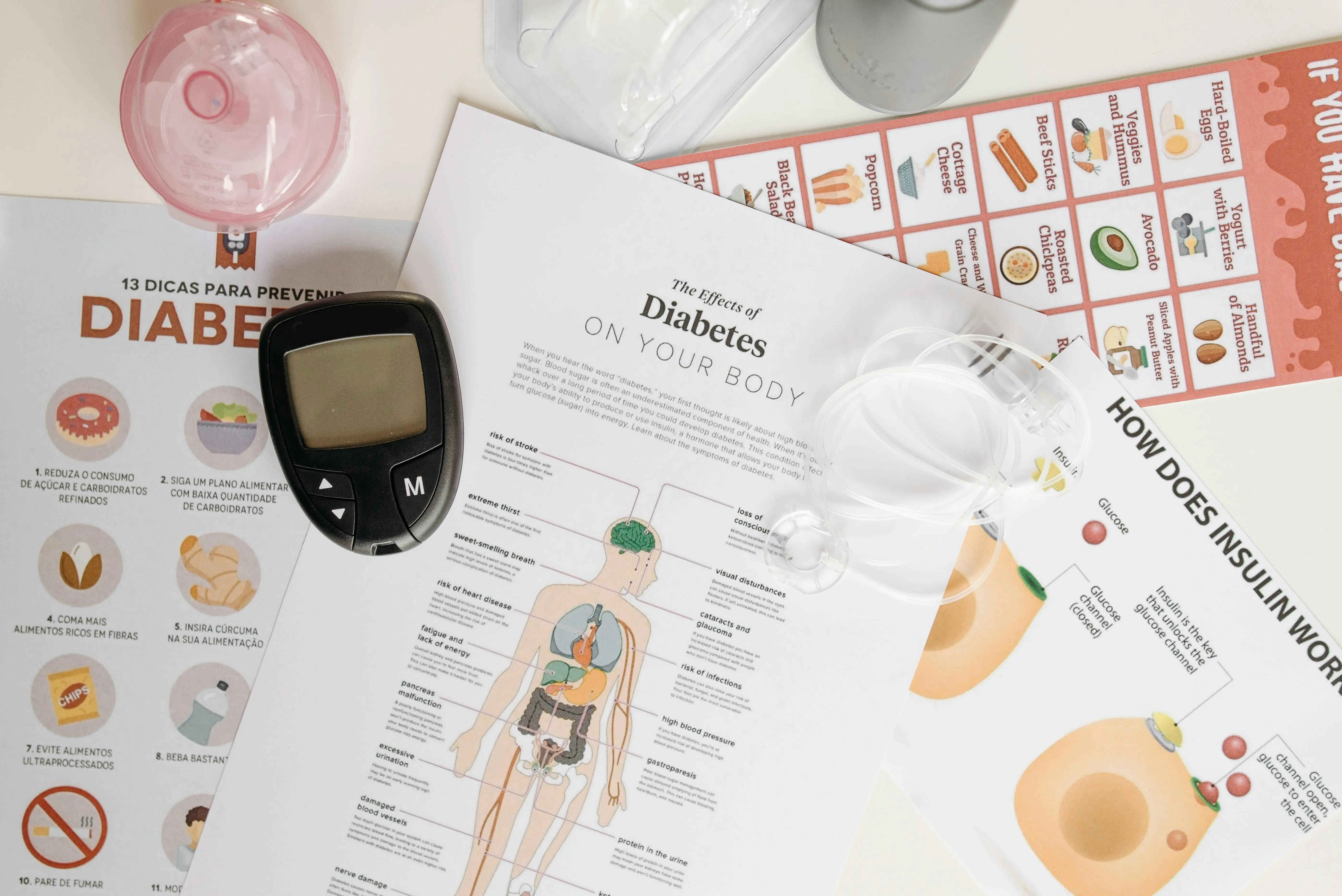
Dr. Schöneich: Type 2 diabetes is the most common of all types of diabetes, occurring in 95% of cases. It is a type of diabetes that develops insidiously over many years. Therefore, prevention is crucial and very, very important here. Ultimately, type 2 diabetes develops through insulin resistance. Insulin is actually responsible for keeping blood sugar stable in the blood.
When insulin no longer works as well, less sugar is absorbed into the cells. This leads to an increase in blood sugar, which we call insulin resistance. If insulin resistance persists for many years, an additional insulin deficiency develops.
The pancreas becomes weaker and produces less insulin, thus releasing less as well. Blood sugar continues to rise. Type 2 diabetes is also promoted by lack of exercise, weight gain, or being overweight. That's why prevention is so crucial here.
And what about Type 3?
Dr. Schöneich: First, I'll briefly return to Type 1 diabetes, a rare form of diabetes. It is an autoimmune disease and affects only about 5% of diabetes cases. Type 1 diabetes primarily occurs in childhood and young adulthood, but it can occur at any age.
The autoimmune disease results in the formation of antibodies in the body that lead to the destruction of beta cells, the insulin-producing cells in the pancreas. This then leads to an insulin deficiency. This type of diabetes always requires insulin therapy.
How can parents be made aware?
Dr. Schöneich: There are now clinical studies investigating whether it makes sense to test every child for these antibodies after birth, to prevent severe cases. Other signs include lethargy, weakness, fatigue, and extreme thirst. The children drink a lot and urinate a lot, becoming increasingly weaker.
And now I come to type 3 diabetes: This actually encompasses all forms of diabetes that cannot be classified as type 1 or type 2. The most well-known or common is probably the one that occurs when the pancreas is surgically completely or partially removed. This is called pancreas diabetes.
How can complications of diabetes be prevented through targeted therapy?
Dr. Schöneich: Unfortunately, diabetes has very serious complications. These include cardiovascular diseases such as strokes and heart attacks, but also peripheral circulatory disorders, kidney damage, eye damage, and unfortunately also nerve damage, which can lead to severe pain in the legs and feet. The good news is that with good sugar management and close monitoring, the risk of complications can be significantly reduced.
We closely monitor diabetes patients. They usually visit the diabetes practice every three months. There, the kidneys and blood sugar levels of the past three months are checked. It is also very important to change or adapt one's lifestyle accordingly.
You can prevent or even completely avoid the development of type 2 diabetes through increased exercise, healthy eating, and sufficient sleep. Through interdisciplinary work among doctors, complications can at least be postponed for a long time and sometimes even completely prevented.
So is interdisciplinary work being done here?
Dr. Schöneich: Absolutely. The ophthalmologist with the nephrologist with the neurologist – the diabetic patient is truly an interdisciplinary patient.
As someone affected, you don't really get a day off from this disease. Doesn't that have immense impacts on the psyche?
Dr. Schöneich: Absolutely – like any chronic illness. The risk of developing depression is twice as high as in the general population. Diabetics also frequently suffer from anxiety disorders. In my opinion, a well-informed patient has little room for fears and sadness. This is where the attending doctors play an important role.
You offer a diabetological consultation at the clinic. What are the most common questions asked here? And what do affected individuals struggle with the most?
Dr. Schöneich: Many patients are incredibly afraid of insulin, especially after the initial diagnosis. However, it should be noted that the most common type of illness is type 2 diabetes, which develops slowly. Fortunately, we now have a lot of new therapeutic options, so insulin as a therapy is moving further and further back.
Insulin means patients have to frequently measure blood sugar. Naturally, they are afraid of being significantly restricted in their quality of life. Sometimes an initial insulin therapy is necessary, but it can be discontinued later.
How can you tell if you are at risk for diabetes? Which examinations are crucially important here?
Dr. Schöneich: Since genetics play a major role in type 2 diabetes, more so than in type 1 diabetes, it can generally be said: If a close relative in the family suffers from type 2 diabetes, i.e., parents or siblings, then the risk is increased. Other risk factors include being overweight, lack of exercise, and unhealthy diet.
Nowadays, it can be said that lifestyle almost plays a bigger role. And that's the good news, I think – that we have an influence on it, because we don't have an influence on genetics. At most, perhaps, through epigenetics. But lifestyle is the biggest influence on our sugar metabolism.
It's not about not being allowed to do anything if you have a glucose metabolism disorder, but about consciously eating poorly and consciously eating well. That means knowing what's good for me, what's bad for me, and then being able to make a conscious decision.
Prevention keyword: How can I prevent diabetes?
Dr. Schöneich: For example, through regular check-ups. We have good screening parameters. This includes the HbA1c value, a value that reflects the sugar metabolism situation of the last three months. Every general practitioner can measure this.
Furthermore, we diabetologists also have a functional test that we can perform – the oGTT, the oral glucose tolerance test, which we also routinely perform in pregnant women as a screening test for gestational diabetes. In this test, the body is challenged with 75 grams of glucose, and the glucose level, sugar level, and also the insulin level are measured after one hour and after two hours.
Which milestones in diabetes therapy do you consider particularly important from recent years?
Dr. Schöneich: A groundbreaking new technology is continuous glucose monitoring. This means that the patient receives a kind of sticker the size of a 1 euro coin placed on their upper arm. The sensor works for 14 days, continuously measures the patient's blood sugar, and sends the sugar levels to a cell phone or a small device. This means the patient is able to measure sugar for 14 days, 24 hours a day.
It is truly amazing what dietary errors are uncovered that were not so consciously known. Even patients who receive insulin are much less at risk of hypoglycemia because they can monitor their sugar levels all the time. This is really a huge advantage for anyone with diabetes, especially those on insulin therapy.
On the other hand, we have many new medications, the most important being the SGLT-2 inhibitors. These are medications that cause increased sugar excretion through the urine. This means the patient excretes the sugar, and thus the blood sugar is continuously lowered. Other medications include GLP-1 analogs. These are gut hormones that lead to sugar normalization but can also reduce weight simultaneously, like the drug Ozempic.
In conclusion, I would like to look into the future. There is talk that diabetes may even be curable. What is your view on this?
Dr. Schöneich: Let's put it this way: Research is on a good path. Clinical trials are underway for various immunotherapies, that is, therapies that sort of reprogram our immune system so that the destruction of the islet cells by immune antibodies does not occur in the first place, or at least that the destruction can be postponed. Then there are attempts to produce insulin-producing cells from stem cells, which can then be transplanted to take over insulin production in the body. I am optimistic about the future.

How reishi, cordyceps, and other medicinal mushrooms can ease the pollen season
Marianne Waldenfels