© Steffen Sinniger
February 3, 2026
Marianne Waldenfels
Marco Müller, head chef at Rutz Berlin, on regionality, childhood memories, his grandmother's recipes, and the development of perfect dishes
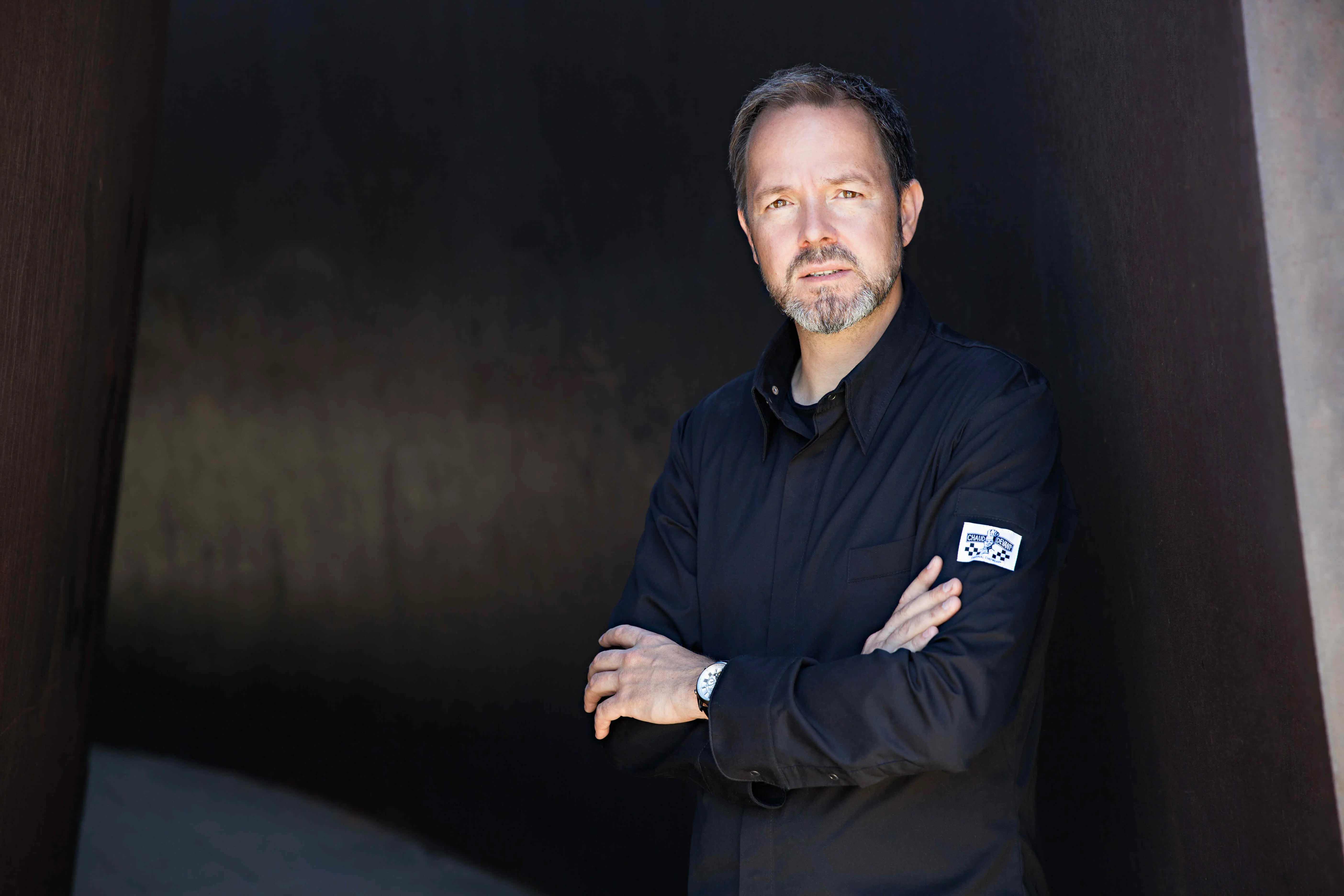
Marco Müller has shaped international haute cuisine for over 20 years. At Restaurant Rutz, Berlin's only 3-star restaurant, the native of Potsdam has been focusing on regionality and creative perfectionism since 2004. In the interview, he talks about his sources of inspiration, childhood memories, and the art of developing perfect dishes.
Is it true that you actually wanted to become a sculptor in your youth?
I was fortunate that my parents had a circle of friends that mostly consisted of artists – painters, sculptors, all kinds of creatives. These people inspired me greatly, and I sought my own path early on. I didn't want to go with the flow.
That's how punk came into my life, through music: the Sex Pistols, Fehlfarben, the B52s. You don't necessarily have to wear a Mohican to be punk or to listen to decent music. Punk is more of a mindset. For me, freedom of thought, independence, going my own way – not being pressed into a mold – has always been immensely important. To this day.
As a chef, you have also taken very unique paths. When you started, the topic of regionality did not yet play a significant role in upscale German cuisine.
No. At that time, cooking was mainly Italian and Asian. And if you wanted something special, you went to the French. Nobody dealt with German regionality. This was partly because we had poor products and concepts. Many looked at the price of products rather than the quality. Fortunately, that has changed.
At the time I started, there was no kitchen, no thinking, no recipes, and no mentors to learn from. I had an idea. A gut feeling. And then I found people who joined in.

© Steffen Sinzinge
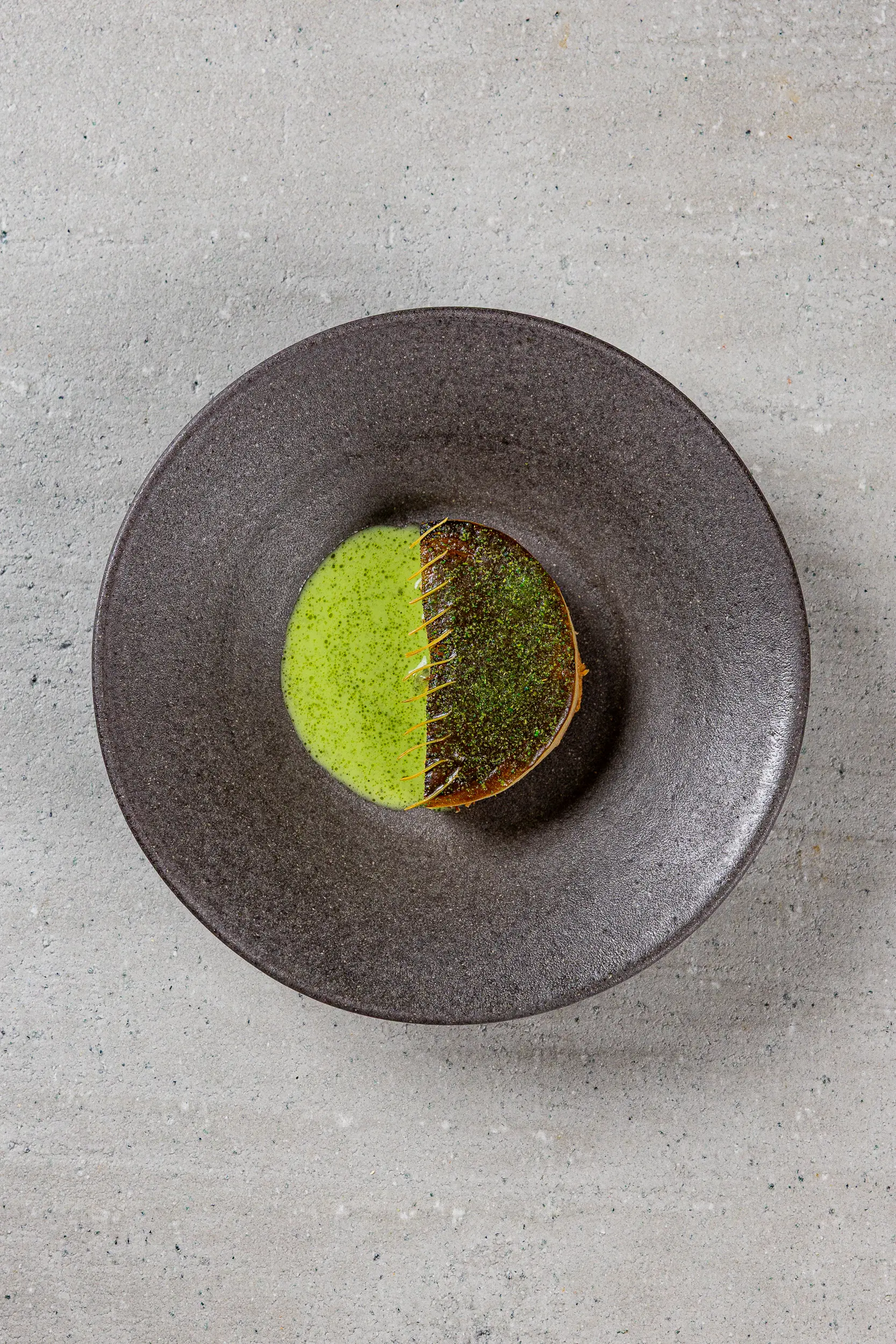
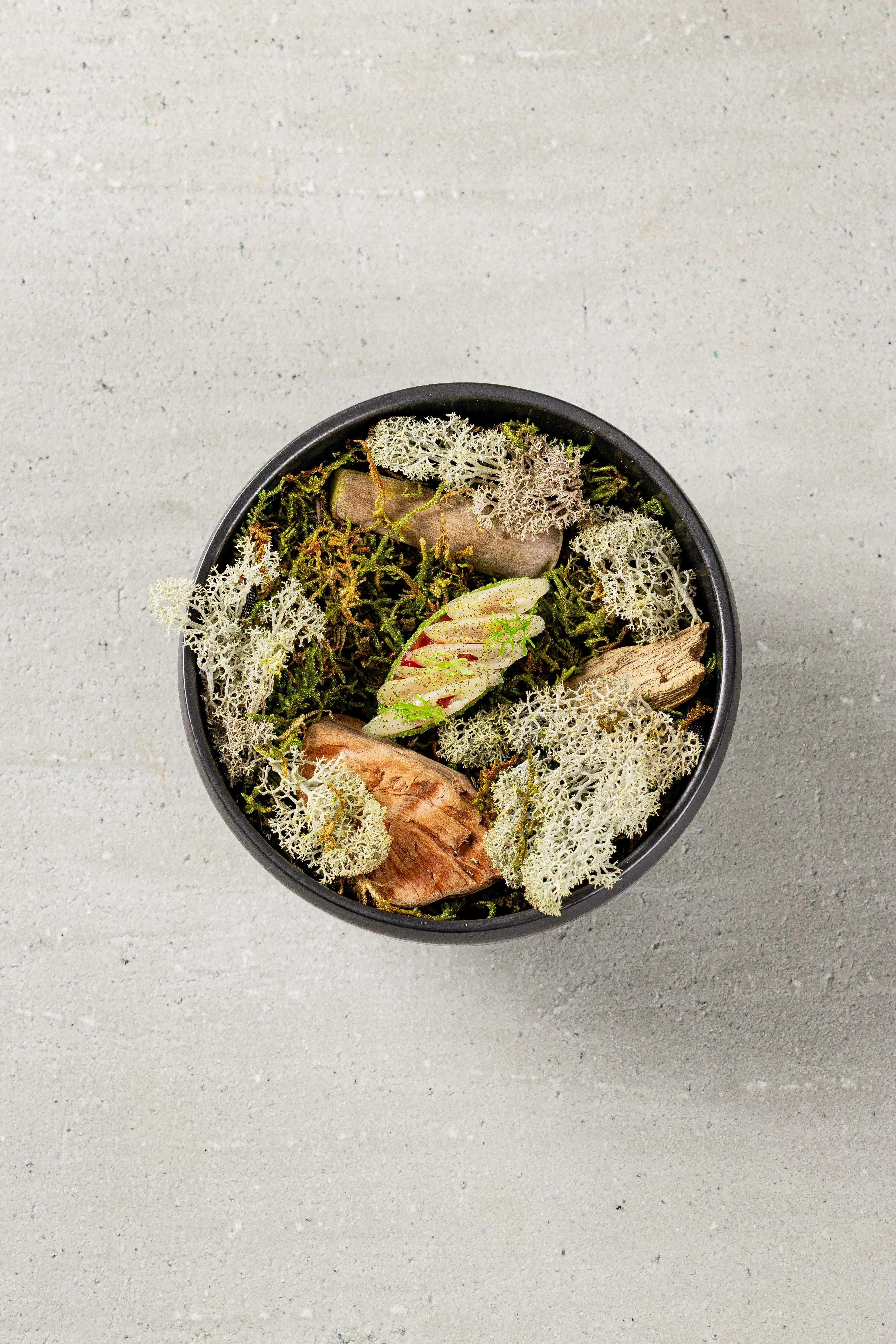
Flavor explosion at Rutz: Spruce & Kohlrabi with Almond Miso
Together we had completely new experiences and developed a very distinctive cuisine. I found it exciting to bring my childhood memories to the plates. I asked myself: How do I manage to translate these smells and aromas that shaped me into dishes? For example, the sweet taste of blades of grass I tasted with my father when I was about six years old.
The aroma of a freshly mown meadow. The scent of the different woods from the nearby sawmill—I could eventually even differentiate by smell whether they were processing beech or pine.
How do you find excellent regional products?
I'm from Brandenburg, so I know how to engage well with farmers and regional producers and develop a collaboration. Often we also improve the products together. But it was indeed a difficult task at first, and I traveled around a lot.
Today we have a great network. We work closely, for example, with the Müritz fishermen, who supply us with the best inland fish. And they also support each of my visions. If I need pike perch scales, for instance, they take care of it. The same goes for Ikejime-slaughtered fish—they've taught themselves this Japanese method. I'm very grateful for the collaboration.
Did cooking and good food play a role in your childhood?
Oh yes, a big one. When I was nine years old, my parents moved to Geltow, a small village in Brandenburg. The grandparents had a house there: a lake in front, a garden at the back, surrounded by fields, meadows, and forests. Most of the products we ate at that time came from our garden.
My grandpa was retired and needed something to do. He grew great fruits and vegetables – including many old varieties. I loved fishing all my life and smoked the fish myself. I still remember when my mother once said: "Boy, don't bring any more fish, we need to eat something else too!"
My mother cooked a lot and well. She learned it from her mother. My grandmother served classic bourgeois cuisine, and with excellence.
What was your absolute favorite dish back then?
Sweet and sour eggs! Not to be confused with mustard eggs, although they look similar. My grandmother sweated fatty, very nicely aged bacon, added onions, made a roux from it and cooked it into a sauce with a stock. The sweet and sour taste came from a neutral vinegar and sugar.
She then let the eggs plop into this sauce and let them steep until they were soft-boiled. There were potatoes from our own garden, cooked as a puree, with lots of butter. That was incredibly delicious, my absolute favorite food. My second favorite dish, which she also cooked just as well, with the same puree, was Königsberger Klopse.
How do you develop a new dish?
We experiment a lot. It usually starts with a product, let's say a carrot. It then gets two flavors on the side. Each dish generally consists of three pillars. I cook the carrot, for example, in a beef broth, maybe let it simmer slowly for three or four hours.
Then it tastes like the best of the beef and the best of a carrot, and when I cut it open and add a little salt, I already have a perfect product. We bring complementary flavors together on the plates, like wild quince and blackcurrant wood. Try it, it just blows you away.
Do experience, science, or gut feeling come into play? Or all three?
We always start with a gut feeling, and then experience comes into play. Of course, we experiment a lot and deal intensively with what flavor substances are in a product. We take as much time as we need to develop a dish until we think it is perfect.
If it isn't perfect, we start again next year with the idea or with a different one, for the same product. For me, the enjoyment experience of our guests is paramount – not how nerdy I was in the development process.
The hardest thing, I think, is that when I try them, I end up with a big grin on my face. However, developing the dishes is only half the work. The other half is developing processes with the team so that the guest receives exactly the same quality every day. If we can manage that, we've done our job.
To what extent do you or your colleagues at Rutz let yourselves be influenced by trends? Do you sometimes look at Instagram to see what colleagues are doing?
We have an Instagram creativity ban! Just kidding... But I think anything inspired by outside influence is not original. The more everything adapts globally, the more boring it becomes. Back when we started our concept, there wasn't any Instagram. Trends come and go.
The exciting thing about our profession is developing something unique and independent. I am often asked what the next trend in Berlin is. I don't really care because what we do is not a trend, but a long-term development.
How would you describe the pressure of being a 3-star chef?
I'm a person who gets bored quickly – I don't feel any pressure. I felt it more in the past when things didn't move quickly enough for me. For me, it's more of a satisfaction to be able to work the way I currently do. I don't want to and don't have to please everyone. Over the 21 years at Rutz, I've gained an enormous amount of experience and gone through many processes. I can draw from a wealth of experiences today.
And how do you relax?
In 2019, my wife and I moved to the outskirts with our three children. My parents don't live too far away either, so we have a waterfront property from which we benefit greatly in the summer. 60 meters next to our house is a nature reserve where I go running every other day. And I like fishing a lot. The water is still my 'happy place' today.
You are also a brand ambassador for Victorinox. How important are good knives in the kitchen?
They make a total difference, in every quality – from total beginner to professional. The range of Victorinox includes a huge variety. At home, everyone has their favorite knives; my wife, for example, cuts everything with the tomato knives.
I am a fan of the Grand Maître collection. The value for money is also good: The products are beautifully made and have a high value. They are designed to last a lifetime – not just half a year. By the way, I already had a Swiss Army knife from Victorinox as a kid.

© Steffen Sinzinger
Supreme Enjoyment: Savory and Tartare