© © Nils Hasenau
January 16, 2026
Oliver Lüder
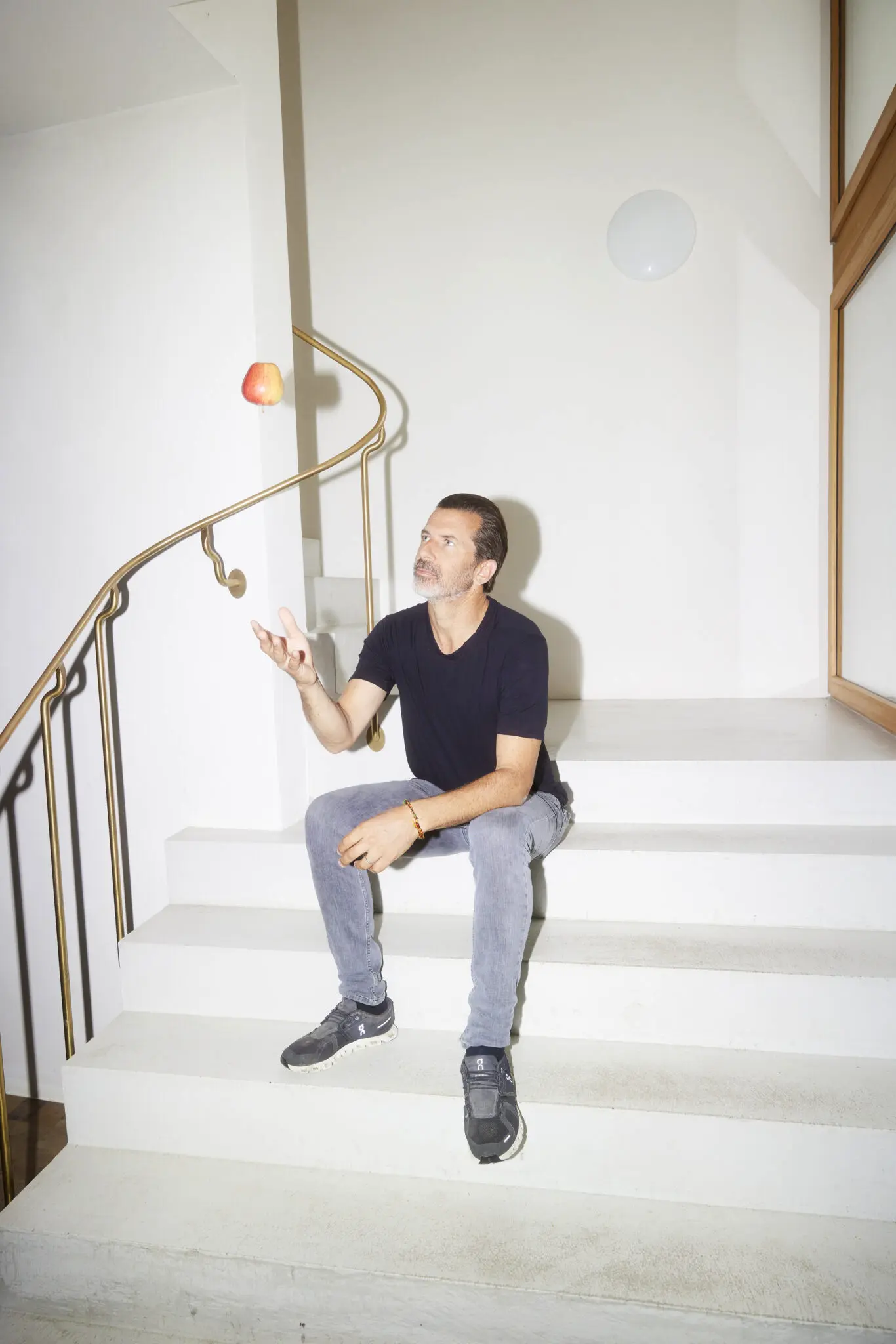
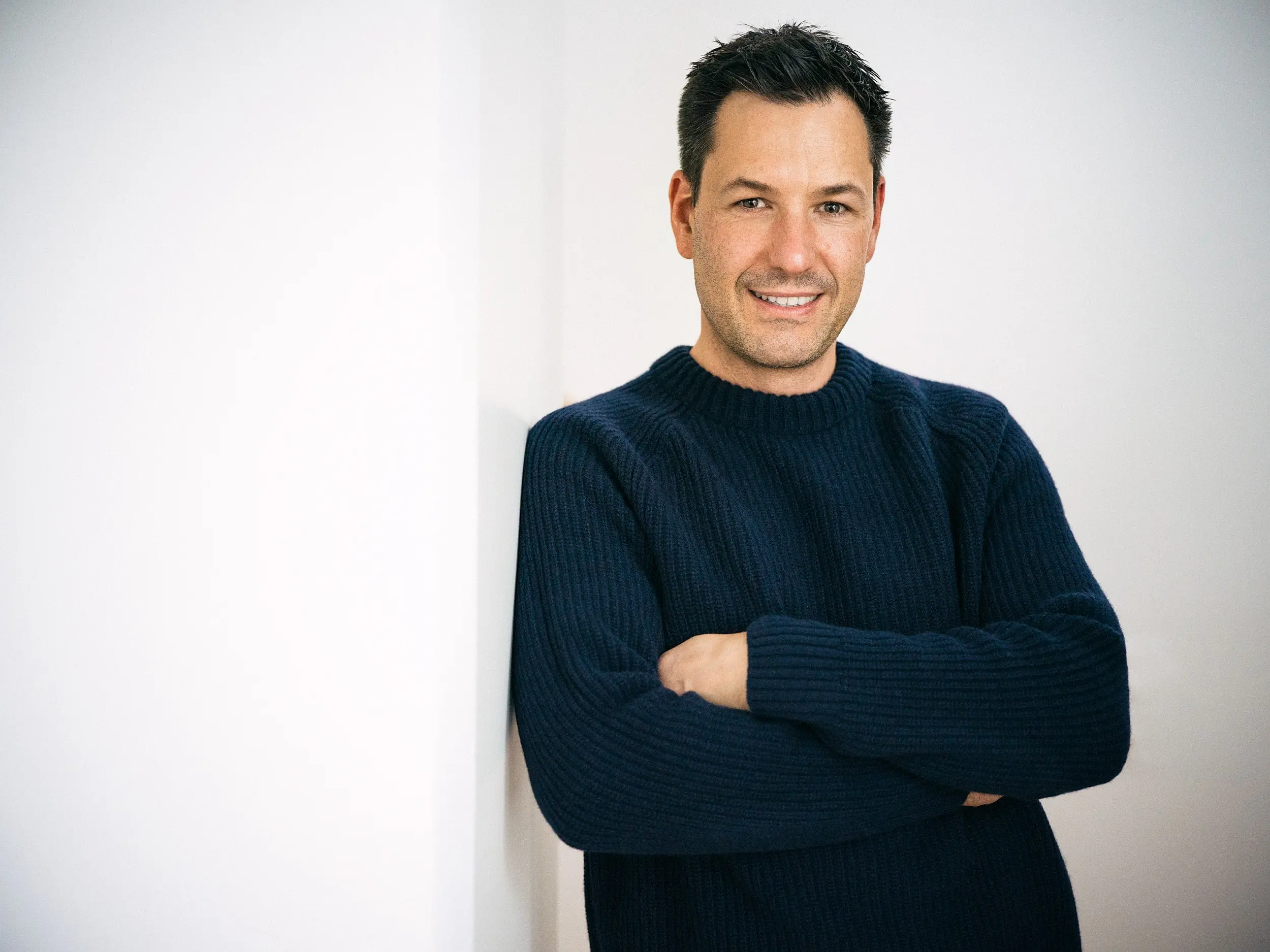
Star chef Tim Raue talks about healthy eating, star cuisine without dairy products, his FX Mayr cure, his fitness program, and why he avoids carbohydrates.
He has been one of the best chefs in the world for years and is still reaching for the stars. Tim Raue knows what it means to be hungry, even for success and recognition. Because the native Berliner literally comes from the bottom, out of the gutter of Kreuzberg, and has cooked his way up from the notorious street gang "36 Boys" to the luxurious world of the best taste.
At the age of 23, Raue became head chef, and two years later, the gourmet magazine Der Feinschmecker awarded him "Up-and-Comer of the Year." Numerous awards followed: in 2007, GaultMillau crowned him "Chef of the Year," the following year he received his first Michelin star, and in 2012 his restaurant "Tim Raue" was then awarded two stars. To this day, the culinary genius has not lost his creativity. His place in the "The 50 Best Restaurants of the World" heaven has been secure for years – still tending upward.
Mr. Raue, is star cuisine healthy?
Generally yes. Just because it uses the best ingredients. Of course, there were once aberrations like molecular cuisine, where a lot of powders from industrial food production were used to thicken liquids or create combinations of foods and ingredients that otherwise wouldn't be possible. But fundamentally, star cuisine is healthy, even very healthy.
What is healthy food?
There are certainly many different definitions. At the beginning of my career in the mid-nineties, healthy meant using the best ingredients from the most natural sources. Today we talk about organically grown salads and vegetables, fish with low pollutant levels. That wasn't the norm back then. For example, there was still swordfish to buy, which was extremely high in pollutants.
In 2007 there was a break for me after spending years frequently in Singapore and Hong Kong and getting to know Traditional Chinese Medicine. And the way of cooking so that everything you put on the plate and give to the guest provides them with energy and strength and makes sense. That led me to completely give up any form of dairy products and cook only lactose- and gluten-free, throw white sugar out of the kitchen, and refrain from any form of starchy sides next to potatoes. Even the bread with the meal, which was always a big topic in Germany.
My basic idea was that in the end, you only eat a combination of vegetables, fruits, herbs, and a protein, or even without protein. Six or eight courses are then much lighter and more digestible than usual. I still believe this is the essential step that made me successful. Guests can experience the flavors of sweetness, acidity, and spiciness without a mashed potato or pasta taking those flavors away. After such an evening or lunch, you feel energized and don't need two more shots for digestion.
Do people come to your restaurant to eat healthily or rather to have an exotic taste experience?
Nutritional awareness has become much more important among the younger generation in recent years. We are lucky that the main restaurant was included in the World's Best 50 and the Netflix Chef's Table series, both important channels for nutritionally conscious people between 20 and 45, who are much more represented at our place than older guests. The young ones are also the ones who made us switch from vegetarian to vegan in 1997, because it is simply a form of nutrition that is elemental for this generation.
For a long time, it was said that Mediterranean cuisine is the healthiest. Are certain culinary directions really healthier than others?
Definitely. Anyone who can spend some time in another place and eats accordingly will notice this very quickly. If you eat cooked vegetables today and a hamburger tomorrow, you can directly see how the blood values change. You can ensure from one day to the next that your diet improves. Every August, I spend three or four weeks on vacation in Sicily and eat almost exclusively fish, light meat, vegetables, olive oil, and salad, and I immediately notice the difference: I am much more vital, feel much lighter.
I also regularly do nutrition cures—for example—diets sound so strange—and I simply eat vegan for a week when I'm between two hardcore shooting phases. There is a company in Munich called Pure Delight, which I appreciate a lot and have already cooperated with.
When I eat vegan with them or drink the juices, I notice it immediately. When I'm in Asia, I'm invigorated by the world of flavors of ripe fruits and the spiciness. When I'm in Graz, where I experience total, loving bliss, but then start to eat dumplings and fried chicken, it really drags me down. I'm very sensitive to that. The moment I eat something, I feel if it's good for me or not.
Is fried chicken the greatest temptation for you?
I practically adore everything that's fried. At the top of my list is the whole fried fish with a sticky, syrupy tamarind sauce and a bowl of chili, ginger, and coriander at Raja Restaurant in Phuket. That's perfection for me because I also adore sugar and am severely sugar-dependent. With the tamarind sauce, everything I love came together.
Do you still go to your favorite Chinese restaurant "Good friends" in Berlin late at night after work?
Less often. My travel time has doubled in recent years, and the pandemic has also changed my daily life. Now I get home not at midnight but usually by 10 PM and try to eat in the afternoon. I've lost nearly eight kilos again because of this. When I'm massively overweight, it simply hinders me, even in my mental fitness. The tendency towards fast food, which I grew up with, is disastrous for me, especially for brain activity. Fast food drags me down, makes me melancholic and depressed, weighs down my body, and doesn't give me strength and energy.
Do you drink alcohol?
Little. I don’t drink coffee at all, never have. I don’t drink beer and I can’t handle spirits. And with wine, I have different phases. For three months, I haven’t been able to handle even a single glass of wine, I can’t sleep then. Probably because the stress level is so high. Basically, I like to drink red wine, but all in moderation.
Do you believe in the detox abilities of spices like turmeric, ginger, garlic, ginseng, chili?
That has nothing to do with belief, you notice it immediately in everyday life. I’m super sensitive. I was just filming in Singapore for a week and at the beginning, I visited a traditional Chinese medicine practitioner who gave me some tips on what to avoid and what is good for me.
I followed this advice and ate ginger, turmeric, in my case no red, but green and yellow chilies, completely avoided carbohydrates. I’m now in my late 40s and notice that my performance level directly increases and the 16-, 17-hour day is quite easy to manage again. Then I don’t have to struggle for the last two or three hours.
You also did an FX Mayr Cure, it was reported…
For me, it was life-changing. I already knew quite well what was good and not good for me. But the doctors there can see it very well from blood values or hemoglobin levels and can specifically detoxify the body. In my case, it was especially the gastrointestinal tract, because in stressful times I tend to reach for currywurst, kebab, fries, or a liter of ice cream. I was there for ten days, and from day six I felt 20 kilos lighter, freer, my brain really cleared up as all the dirt was flushed out of the bloodstream.
They have a procedure there to test for food intolerances. I have gluten, fructose, lactose intolerance, the whole fun up and down. I basically knew that. But there are also individual foods that are not good for me at all, and it helps me enormously now to leave them out in everyday life. Something as trivial as cucumbers and tomatoes, for example, which I really enjoyed eating in salads, but afterwards, a proper rumbling in my stomach always started.
I also only eat vegetables cooked and chew more consciously, trying to take my time. Often after a day of shooting, I would eat four or five portions of something in front of the TV in the hotel room. Now I leave the TV off for ten minutes while eating. It doesn't always work, but it's getting better. Honestly, I'm not a perfectionist, but I will go back to the spa. Absolutely.
Do you also do yoga?
Yes, but above all, I now train three to four times a week with a personal coach who demonstrates exercises via Skype - and I follow along.
Morning, evening?
In the morning, no matter where I am in the world. The muscle structure I have now helps me a lot with all the stress. As I said, I'm almost 50 now, and the body reacts much more intensely to stress. Exercise just gives me much more stability.
How healthy is the cuisine of your Brasserie Colette, which you run in Munich, Berlin, and Konstanz?
It is classic French, we work a lot with butter and also with cream. There are also all sorts of baked goods in the kitchen. It's a really nice cheating cuisine, you go there when you want to indulge, with puff pastry and creamy truffle sauce and chicken. It's something that still warms my soul, of course. Eating shouldn't just mean renunciation. If I eat perfectly seven days a week and push everything aside, the craving only gets bigger. I don't do that. But I don't eat chocolate, cookies, ice cream, and pizza every day, and then pour half a liter of ginger ale over it. Thankfully, those days are over.