© Andrea Sawatzki
January 2, 2026
Marianne Waldenfels
Whether as an actress, author, animal advocate, or simply as a person: Andrea Sawatzki is in a class of her own. A moving conversation about her dog rescues in Romania, dealing with dementia in the family, her childhood, and her novel "Biarritz."
She is one of the country's most popular actresses - and probably one of the busiest. Because in addition to her work in front of the camera, the wife of fellow professional Christian Berkel and mother of two adult sons is a film producer, podcaster, audiobook narrator, and writer.
In her works, she deals with very personal topics, such as in her autobiographical novel "Brunnenstraße," in which she writes about her life as the daughter of a father with Alzheimer's, whom she cared for since she was eight years old. Or in her new novel Biarritz, in which she movingly deals with the difficult relationship with her mother.
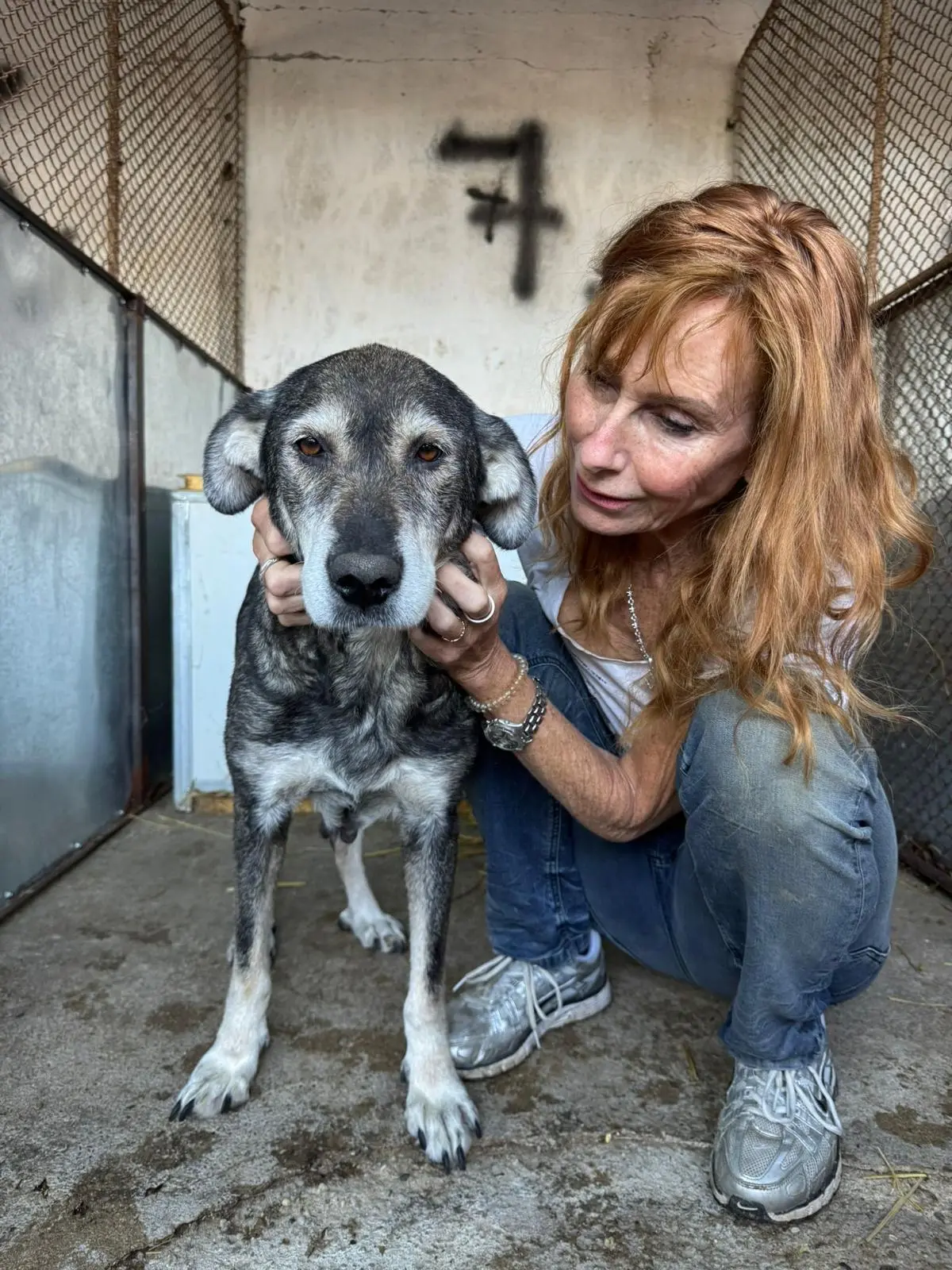
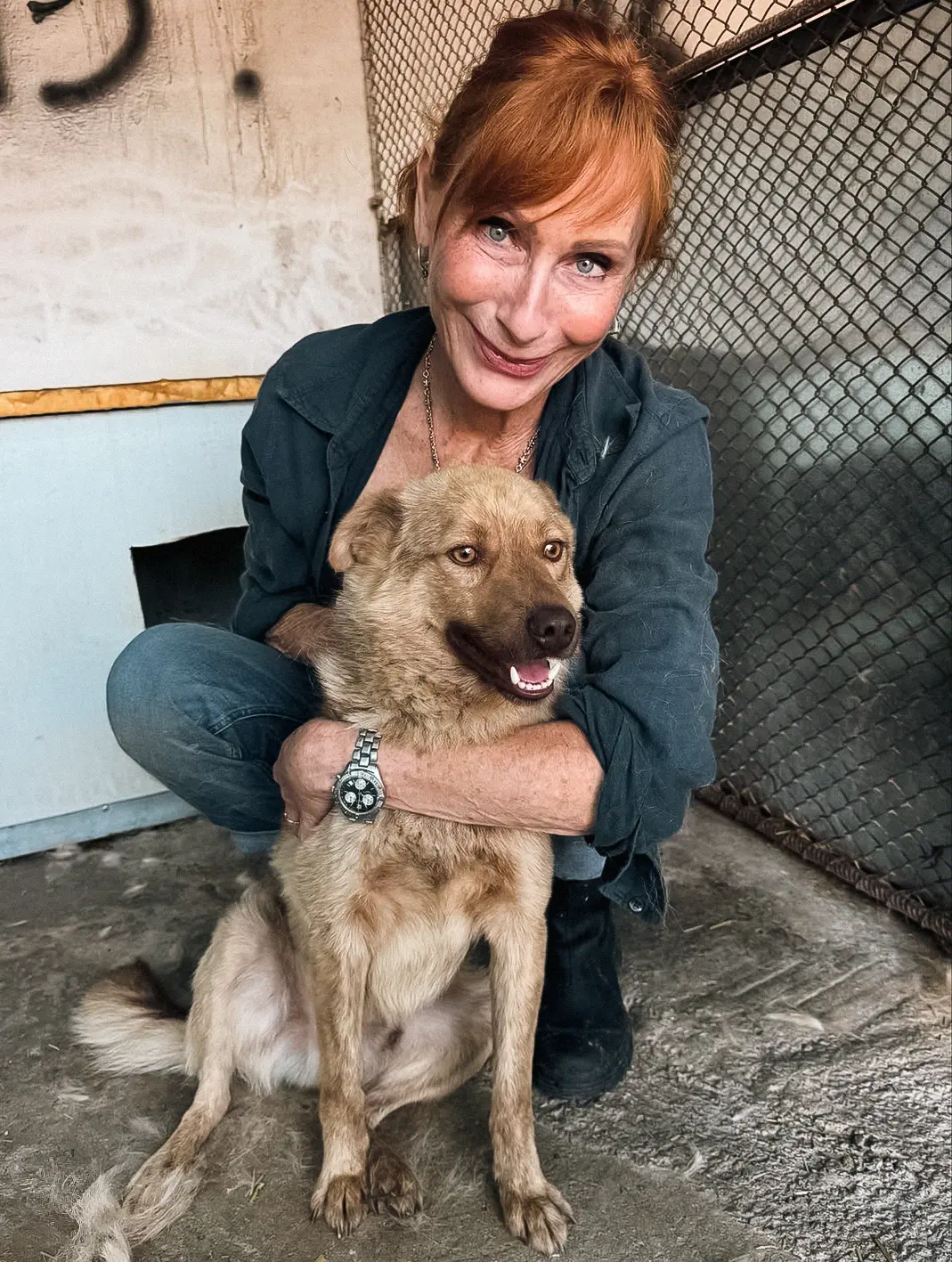
Andrea Sawatzki has dedicated the little free time she has to a very special heartfelt project: animal welfare. She is regularly part of the team of the organization "NaTiNo" on dog rescue missions in Romania, among other things.
You have just returned from a trip to Romania. How long were you on site this time?
Three days. First, we went to these terrible killing stations where abandoned or sick dogs end up - and the animals brought by dog catchers. The conditions there are horrific. The dogs lie on icy cold ground in winter, without water, and starve in their own feces and urine. I've rarely seen such suffering - it affected me deeply. We try to save as many dogs as possible and bring the animals we believe we can place to a nearby shelter of our organization. There, they are neutered, chipped, vaccinated, and, if necessary, initially placed in quarantine.
How can you prepare for this misery? How do you deal with it?
You can't prepare at all. I've been there for the fourth time now; in February of this year, I shot a documentary with Sabine Peschke from NaTiNo about their work for WDR. On every trip, there are incidents that just don't let go of me because they are so painful. For example, we were in a killing center and really rescued a lot of dogs - the whole van was full, the dogs were already stacked.
But we had to leave six puppies behind, as we simply couldn't find room for them. And the looks of those dogs we left behind, I will not forget. Next, we want to try to set up a large reception station in Germany, so that the dogs can be brought here more quickly, so they can be better cared for and easier to place.
Since when have you been active in animal protection?
It has actually accompanied me my whole life. I began to care so intensely about abused dogs in 2023. One of our dogs, Zazie, went missing on vacation in Andalusia – I fear someone took her. We then went to all the animal shelters in the area to look for her. And there I first learned about the situation of the Galgos and Podencos in Spain – that these dogs are not subject to animal protection in Spain but are considered livestock.
They are bred for hunting and can therefore be killed in the most brutal ways after the hunting season without the owners fearing any punishment. That leaves me speechless. Whenever I have time, I try to go to the Galgo marches here in Germany to raise awareness about these grievances.
You have dogs yourself today. Did your love for animals begin in childhood?
Yes, animals were my best friends from my earliest childhood. And I remember, even when I was very, very little, I played with snails and worms. I still love these animals today and always save them when I go for a walk and some of them crawl across the path and risk being stepped on. Then I carry them to the bushes so they can continue to live.

© Andrea Sawatzki
"I think dogs are the best therapists a person could wish for," says the actress.
The encounter and interaction with animals can indeed have a healing effect on us humans.
I think dogs are the best therapists a person can wish for – I already experienced that in my childhood. When I had no one to talk to when I was sad, I always found comfort with animals or in nature. And dogs, in particular, have always been close to me. I remember: when I was maybe three or four years old and lived with my foster mother, there was a shepherd with sheep in the neighborhood, and he owned three chained dogs. These chained dogs didn't let anyone near them – except me. I was the only one who was allowed in their doghouses. Somehow, I have such a deep feeling for these creatures.
In your autofictional novel 'Brunnenstraße', you talked about your father's dementia. In your new book 'Biarritz' it's now about the difficult relationship between a daughter and her mother, who is also suffering from dementia. What did it trigger in you when you first realized that your mother was ill – after having cared for your father for years as a child and teenager?
I noticed it when, as I describe it in the novel, I visited my mother in Ebersberg, where she lived, and opened the refrigerator. The inside of this refrigerator was a complete disaster, and I thought: damn! On one hand, it was a shock, and on the other hand, it was a feeling, as if something was happening that I had seen before. Because old age was inevitably linked to dementia due to the experiences with my father.
It was clear to me: When you get older, at some point you are dependent on other people or on help – which is, of course, not necessarily true. But this thought had ingrained itself in me. And with my mother, it was already difficult because she never wanted to go to a nursing home. I brought her to Berlin and had to accommodate her in a nursing home – a very nice one, but she didn't like it because she didn't feel old.
At that time, she was in her early 80s and found it disrespectful. For me, it was the only way to protect her from herself. Because what it means to have a person with Alzheimer's at home should be clear to everyone by now. You can't leave them alone for a second.

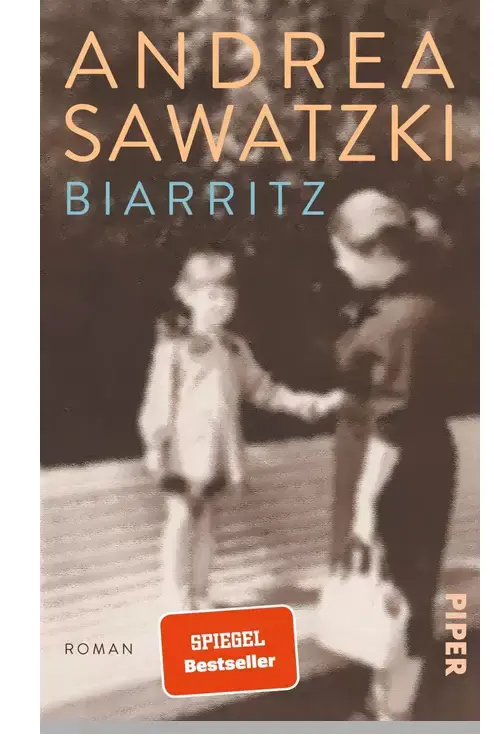
Recent bestseller: "Biarritz" about the difficult relationship with her mother. Piper Verlag
What would you advise someone who notices that their father or mother is developing dementia?
After my readings, I have many conversations with the audience. Because Alzheimer's and dementia are diseases that can affect every one of us eventually. And I honestly have no advice there. I think we do far too little for the elderly. For the people who have built so much for us, to whom we owe so much.
We should think about what we can do to ensure that the elderly are well cared for until their death. I saw a documentary about a model in Denmark some time ago. There, large farms are partially converted for elderly people, their partners, friends, and caregivers. Also for dementia patients. The grounds are monitored by cameras, and these houses are located in huge parks. The residents can go out anytime, day and night, and there are chickens and dogs there that they can pet. The people who live there retain their dignity until their last breath.
How did you manage not to pass on the traumas you experienced as a child and teenager to your children?
When our first son was born, I realized that I wasn't the way I wanted to be. That something was preventing me from feeling pure joy or truly being able to love from the heart. There was something unresolved in me, but I couldn't really interpret it. I constantly monitored myself, observed myself, to make sure I was doing everything right. It's like this: If you carry the experiences of a not-so-great childhood within you, you try to suppress them as you grow up and grow older. To survive somewhat, you push these dark images aside.
I then started an analysis. The work on myself was very difficult for me and at times drove me crazy. But in the end it brought me something because I was able to face the ghosts of the past. I brought up the images from back then and faced my childhood, including my own feelings of guilt that I have carried around with me ever since. I believe only if you rediscover the child within you and learn to accept yourself as you are and to love yourself, only then can you pass on love. And only then will it become bright in life again at some point.
In your podcast "Victories of Medicine" you talk about the impressive achievements in medical history, but also about the people who fought for them. What impressed you the most?
So many of these achievements and personalities. In the current season, for example, it's about the plague. A very eerie subject – many paintings, stories, and myths about this cruel disease were created at that time. I found it exciting to highlight what the plague actually is, how it came about, and what is behind the myths.
You and your husband are both busy as actors, screenwriters, audiobook narrators, producers, and writers. Do you give each other creative input when writing?
We only read each other's texts when the book is freshly printed. Before that, we hardly talk about what we are currently writing or what is going through our heads. Of course, we then give our opinion – about what we find great about the other's book or what we may not like quite as much. However, we criticize each other in a very gentle way, although I actually have nothing to criticize about my husband's books. I'm just his biggest fan.
What do you actually like doing the most? Acting, writing, or producing?
You can't really say that. It took me three years to write my book. Now the point has come where I am really looking forward to filming again. And of course to my large reading tour with Biarritz in January and February (dates on piper.de).
Heart project: For the animal protection organization “NaTiNo,” Andrea Sawatzki regularly travels to Romania to rescue animals from killing stations. Donations, animal mediation, and more information at: natino.de