© Magnific
November 2, 2026
Marianne Waldenfels
The skin of a kiwi contains almost three times as much fiber as the flesh. Other fruits and vegetables show similarly surprising differences. A new study reveals which parts are worth eating — and how to make the most of them.
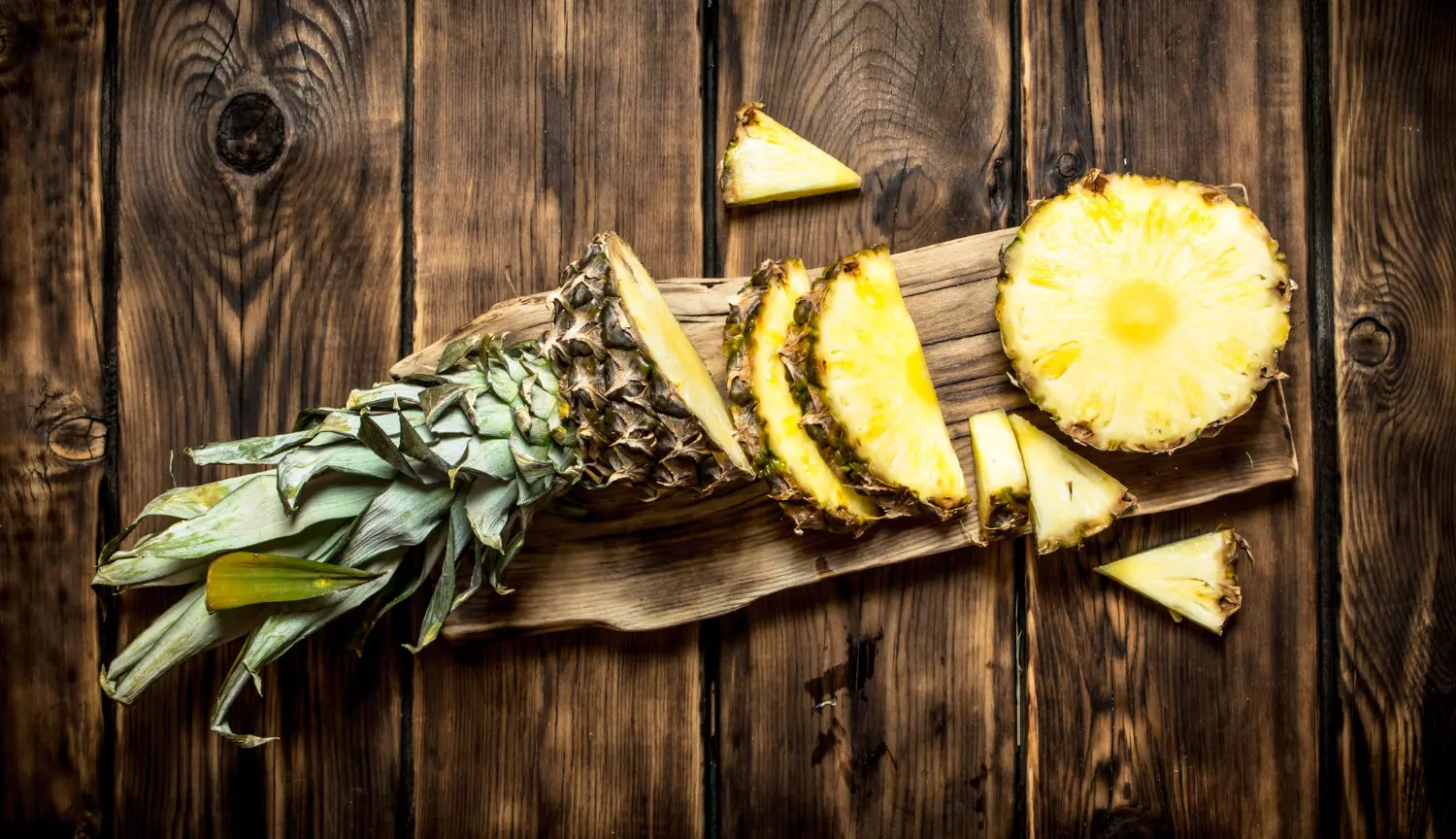
Anyone who peels a pineapple is throwing away some of the fruit's most fiber-rich parts. Researchers found that the skin and core contain more than five times as much fiber per 100 grams as the flesh. Kiwi and pumpkin also pack a surprising amount of fiber in the parts that are usually discarded.
A research team at King's College London investigated how much additional fiber can be gained by using peels, seeds, and cores. The study, published in late October 2026 in the International Journal of Food Sciences and Nutrition, found that in ten of the twelve fruits and vegetables examined, the parts normally discarded were richer in fiber than the flesh or the parts typically eaten.
The research team, led by Georgia Browne and Rachel Gibson, examined twelve fruits and vegetables commonly processed in British institutional kitchens. In the laboratory, the scientists compared the fiber content of the parts typically eaten with that of peels, seeds, stems, and cores. All samples were analyzed in their raw state.
There is a biological reason why the outer and firmer parts of plants tend to be especially high in fiber. Fiber is a key component of plant cell walls, providing structural stability and protecting the plant from external damage. Peels and stems often have particularly firm cell structures.
This pattern held true for ten of the twelve varieties examined. Depending on the food, the parts of the plant that are normally removed accounted for between 25 and 48 percent of the total weight — and many of these parts can readily be used in cooking.
This is also significant from a nutritional standpoint. The German Nutrition Society recommends that adults consume at least 30 grams of fiber per day. Most people in Germany fall short of this target. Yet fiber promotes healthy digestion, feeds gut bacteria, and can help you feel fuller for longer. A high-fiber diet is also associated with a lower risk of cardiovascular disease, type 2 diabetes, and colorectal cancer.
The laboratory analyses reveal just how unevenly fiber is distributed within a single fruit:
These figures refer to the individual plant parts analyzed. In a kiwi, for example, the skin contains significantly more fiber per 100 grams than the flesh — but eating the whole fruit means benefiting from both.
Two vegetables bucked the trend. In broccoli, the florets contained around 28 percent more fiber than the stem. With fennel, too, the part normally eaten was slightly higher in fiber than the outer layers and the core.
In practice, this changes little in the kitchen: broccoli stems can be peeled, cut into small pieces, and cooked alongside the florets. Fennel's outer layers work well in soups or vegetable dishes, and the fronds are also useful as a seasoning.
Many of these fiber-rich plant parts can be added to your diet with very little effort. Others, such as the tough outer skin of the pineapple, are not suitable for eating directly.
Fruits and vegetables should be thoroughly washed under running water before eating. This removes dirt and can help reduce pesticide residues. Those who regularly eat peels may also want to choose organic produce, where the use of chemically synthesized pesticides is largely prohibited.
At King's College London, the idea is already being put into practice in the university's catering. Under the name
Initial recipe trials showed that the fiber content of individual dishes could be increased by up to 15 percent simply by replacing common ingredients with plant parts that would otherwise be discarded. The chefs use pumpkin skins, vegetable stems, and other parts that tend to be overlooked in many kitchens.
The same principle can easily be applied at home. Eating kiwi with the skin on, cooking cauliflower cores alongside the florets, or roasting pumpkin seeds are all simple ways to add extra fiber to your diet — without needing to eat larger portions.
This study points to a straightforward way of getting more out of everyday foods. Sometimes the most valuable part of a fruit is found in precisely the parts we have barely paid attention to until now.

When fingers tingle or go numb at night, carpal tunnel syndrome may be to blame. Hand surgeon Prof. Dr. Helen Abel explains when a splint is sufficient, why waiting too long can cause permanent nerve damage, and what the chances of recovery are after surgery.
Christine Bürg & Marianne Waldenfels

An interview with
Prof. Dr. med. Helen Abel

A nasal spray containing synthetic mebufotenin, a psychedelic also found in toad secretion, has shown promising results after just one dose in patients with treatment-resistant depression. Psychiatrist Prof. Dr. Andreas Menke explains what makes the substance different from other psychedelics and how significant the findings really are.
Christine Bürg & Marianne Waldenfels

An interview with
Prof. Dr. med. Andreas Menke