© Mgnific
October 30, 2026
Christine Bürg & Marianne Waldenfels
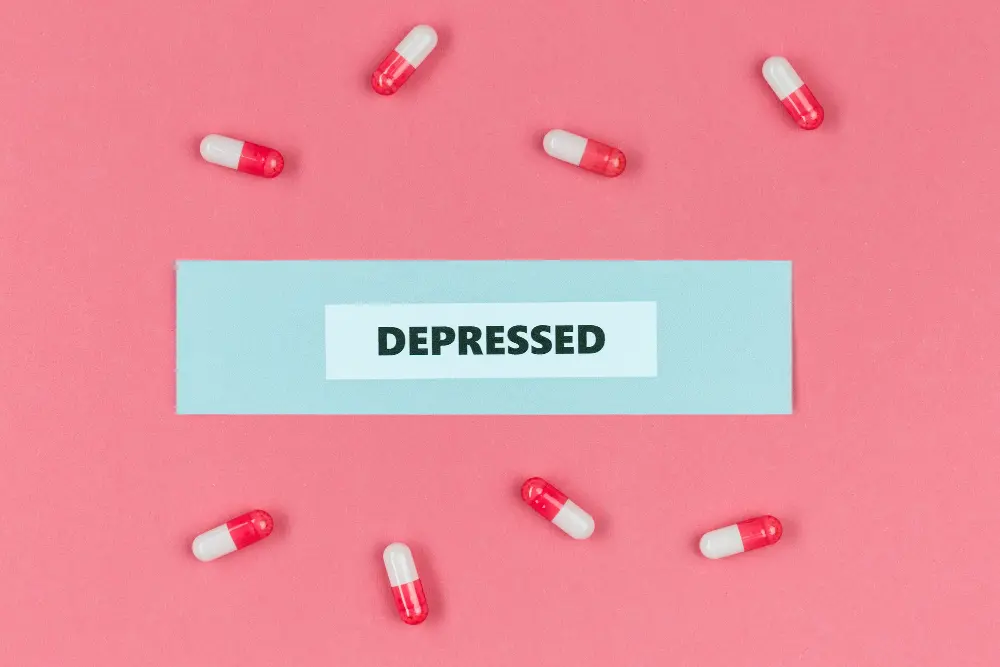
A nasal spray containing synthetic mebufotenin, a psychedelic also found in toad secretion, has shown promising results after just one dose in patients with treatment-resistant depression. Psychiatrist Prof. Dr. Andreas Menke explains what makes the substance different from other psychedelics and how significant the findings really are.

An interview with
Prof. Dr. med. Andreas Menke
Two antidepressants, taken at adequate doses over several weeks — and still no improvement. When that happens, experts speak of treatment-resistant depression. For those affected, a new psychedelic could offer another treatment option: mebufotenin, also known as 5-MeO-DMT. In nature, this psychedelic is found, among other places, in the glandular secretion of the Colorado River toad. For a new study, however, it was produced synthetically in a laboratory and administered as a nasal spray.
In a new study published in JAMA, researchers investigated 193 adults with treatment-resistant depression. Participants received a single dose of mebufotenin at one of two active dose levels or a very low comparison dose, along with psychological support. Improvements in depressive symptoms were observed as early as two days after treatment, with benefits still evident at the end of the eight-week study.
How much hope can patients draw from these results? Why might mebufotenin have advantages over other psychedelics? And what treatment options already exist today? We discussed these questions with Prof. Dr. Andreas Menke, psychiatrist and Medical Director of Medical Park Chiemseeblick.
Professor Menke, what is treatment-resistant depression — and how many people does it affect?
Treatment-resistant depression is, as the name suggests, a form of depression that is very difficult to treat and has not responded to therapies so far. The standard definition is this: two antidepressants have been tried, at adequate doses and for an adequate duration, and neither has led to significant improvement. It is estimated that approximately 20 to 30 percent of people with depression develop treatment resistance.
A new study in the journal JAMA has put the psychedelic mebufotenin to the test. Can psychedelics help with treatment-resistant depression?
Yes, they are very promising. There is now robust data showing that they work very well for depression. Their mechanisms of action are quite different from those of classic antidepressants: they activate the 5-HT2A receptor in the brain, which is a specific serotonin receptor. In theory, LSD could also be used, but it is active for significantly longer and is therefore less practical. MDMA, on the other hand, is being studied for conditions such as post-traumatic stress disorder.

You could say that psychedelics break up the rigid mental structures of depression and allow new learning to take place. Think of it like this: the well-worn tracks in the snow that form when you ski down the same slope again and again get covered with fresh snow, and suddenly new paths become possible. What's remarkable is that the depression can almost disappear after just a single dose — going into remission, as clinicians say.
How long does the effect of a single dose last?
Studies from Johns Hopkins University have shown that it can last up to twelve months — a significant improvement or even a complete resolution of the depression. The early data were outstanding. Since then, larger studies have tempered the picture somewhat, so the effects are no longer quite as striking, but they remain fairly solid. The bottom line is that psychedelics are clearly a very promising treatment option for treatment-resistant depression — though they have not yet received regulatory approval.
They are still working through the approval process. Psilocybin has been granted "Breakthrough Therapy" designation by the US Food and Drug Administration (FDA), which means the application is reviewed more quickly and given priority. However, it has been approved neither by the EMA in Europe nor by the FDA in the United States.
The current study examines mebufotenin as another candidate in this class. The rationale is that it is cleared from the body much more quickly than psilocybin. With psilocybin, the patient must be monitored for six to eight hours, during which time they lie there experiencing psychedelic effects — dissociation or hallucinations, for example — since psychotic symptoms can also occur. Mebufotenin, by contrast, leaves the system in about an hour, which would make treatment considerably more practical.
In the comparison group, which received only a very low dose, 8 percent of participants were largely free of symptoms four weeks after the single dose. With mebufotenin, depending on the dose, that figure was 18 to 26 percent. Is that a good result?
It is quite remarkable, because you have to keep in mind that these are patients with treatment-resistant depression. In someone experiencing depression for the first time, those numbers would actually be on the low side. But in the context of treatment resistance, that is a respectable result.
How does mebufotenin work in the brain?
It acts as an agonist at the 5-HT1A and 5-HT2A receptors and has neurotrophic effects. This means it has a very positive influence on neural transmission — that is, the transmission of signals between nerve cells — as well as on neuronal sprouting and nerve growth.
It also alters perception and consciousness, as well as emotional processing. Neuroplasticity is enhanced, and negative, entrenched patterns of thought and feeling are, in a sense, broken up as these functional networks and neural connections are reorganized.
Who would be a suitable candidate for mebufotenin — and who would not?
In principle, any patient with severe treatment-resistant depression. Caution would probably be warranted for those with serious cardiovascular conditions, as blood pressure can rise. It is also clearly problematic in cases of acute suicidality, where acute psychiatric treatment is needed first to stabilize the situation. And I would also exercise caution with patients who have psychotic disorders or psychotic symptoms.
Some people read about studies like this and think: I'll just try it myself. What do you say to that?
You mean eating the toad? (laughs) The active ingredient used in the study was synthetically produced. But there are also suppliers of psilocybin of varying degrees of repute. I would strongly advise against attempting anything like this on your own. Psychedelics carry significant side effects, including psychotic symptoms such as dissociation and hallucinations.
Anyone who takes them without safeguards and outside a therapeutic setting can find things going badly very quickly, triggering anxiety and panic attacks. On top of that, you have no way of knowing what you are actually getting: whether the substance is pure, whether it is contaminated, or whether something toxic has been substituted.
What treatments are already available for treatment-resistant depression today?
We see these patients regularly in our clinic as well. There are several options. For example, you can switch the antidepressant or combine it with a second one. Combining it with an antipsychotic is also very much possible, which brings additional mechanisms of action into play.
This is particularly helpful when someone ruminates a great deal and their thoughts keep going in circles. It creates some distance from that negative inner world. In addition, an antidepressant can be combined with thyroid hormones — even when the thyroid is functioning normally — or with lithium or antiepileptics such as lamotrigine. And of course psychotherapy is part of the picture. That is very important.
In our clinic, we also use the esketamine nasal spray. This moves somewhat in the direction of psychedelics, though not entirely. Esketamine acts on the neurotransmitter glutamate and its signaling, working through very different mechanisms than conventional antidepressants. It can produce a relatively rapid improvement in treatment-resistant depression.
Larger psychiatric clinics also offer repetitive transcranial magnetic stimulation, which uses magnetic pulses. The procedure is non-invasive and very well tolerated. And then there is electroconvulsive therapy, or ECT. It is actually still the most effective treatment we have.
It is somewhat more involved, however: the patient receives a brief general anesthetic with an anesthesia team and is asleep for about five minutes. The muscles are relaxed, and then an electrical impulse is delivered. This triggers a seizure in the brain, which can be measured on an EEG. Because of the muscle relaxation, the body does not convulse in the usual sense. After ten to twelve treatments over approximately four weeks, a very significant improvement in depression can be achieved.

A nasal spray containing synthetic mebufotenin, a psychedelic also found in toad secretion, has shown promising results after just one dose in patients with treatment-resistant depression. Psychiatrist Prof. Dr. Andreas Menke explains what makes the substance different from other psychedelics and how significant the findings really are.
Christine Bürg & Marianne Waldenfels

An interview with
Prof. Dr. med. Andreas Menke

Liver metastases and liver cancer can be cured far more often today than ten years ago. Surgeon Prof. Carina Riediger explains why, what role alcohol plays, and why patients should see a specialized liver surgeon.
Christine Bürg & Marianne Waldenfels

An interview with
Prof. Dr. med. Carina Riediger, MSc

"Feel good, live better" – in this podcast episode with Prof. Dr. Katharina Storck, we talk about the nose and why we should pay more attention to it
Christine Bürg

An interview with
Prof. Dr. med. Katharina Storck

Radiofrequency, ultrasound, micro-coring: How much can the latest skin-tightening treatments achieve without surgery? Plastic surgeon Dr. Lukas Kohler explains which methods show promise, where they fall short, and why some treatments can even make the face look older.
Christine Bürg & Marianne Waldenfels

An interview with
Dr. med. Lukas H. Kohler