The Liver Forgives a Lot: Why Cancer and Fatty Liver Often Go Unnoticed for So Long
Liver metastases and liver cancer can be cured far more often today than ten years ago. Surgeon Prof. Carina Riediger explains why, what role alcohol plays, and why patients should see a specialized liver surgeon.
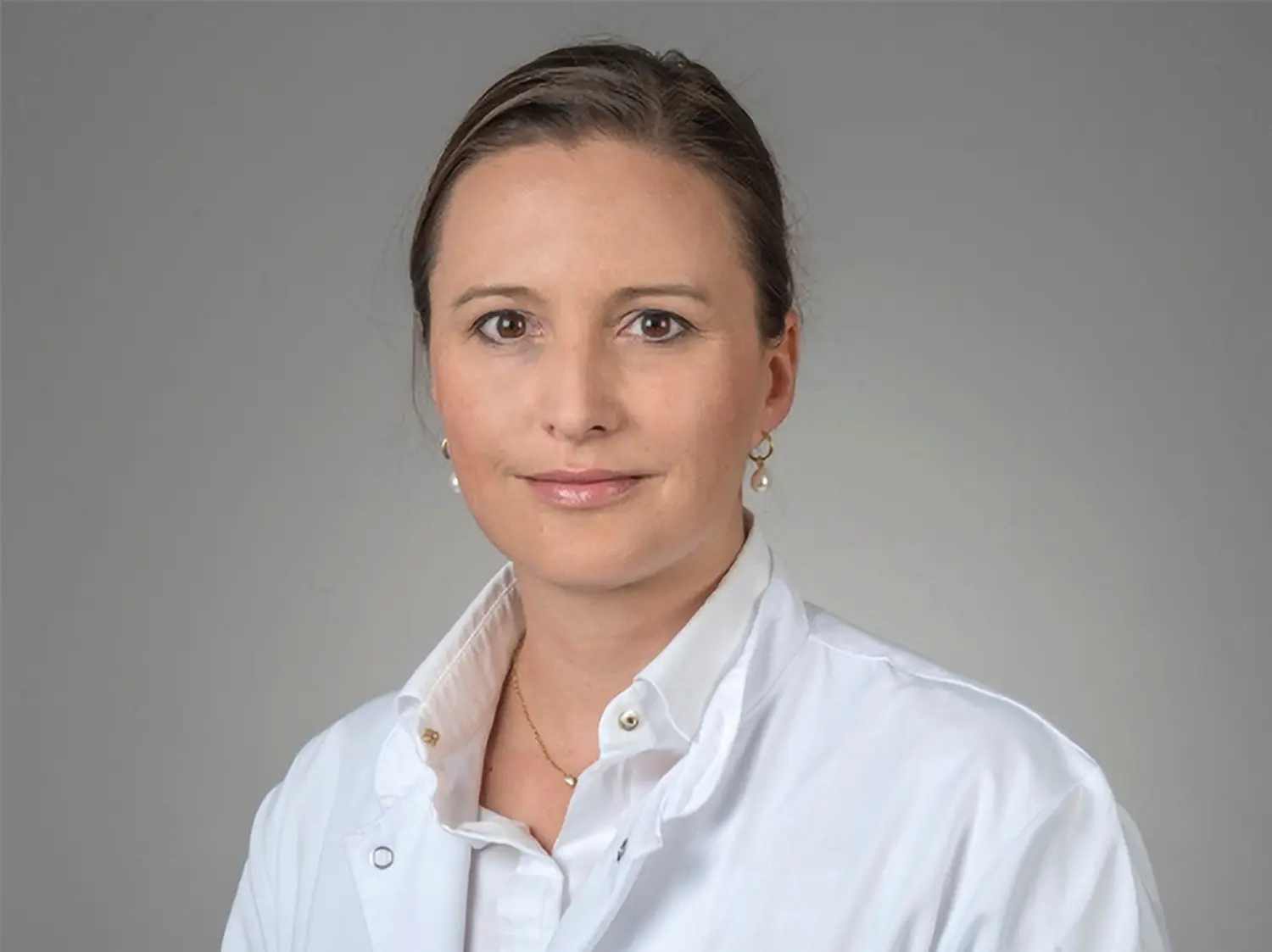
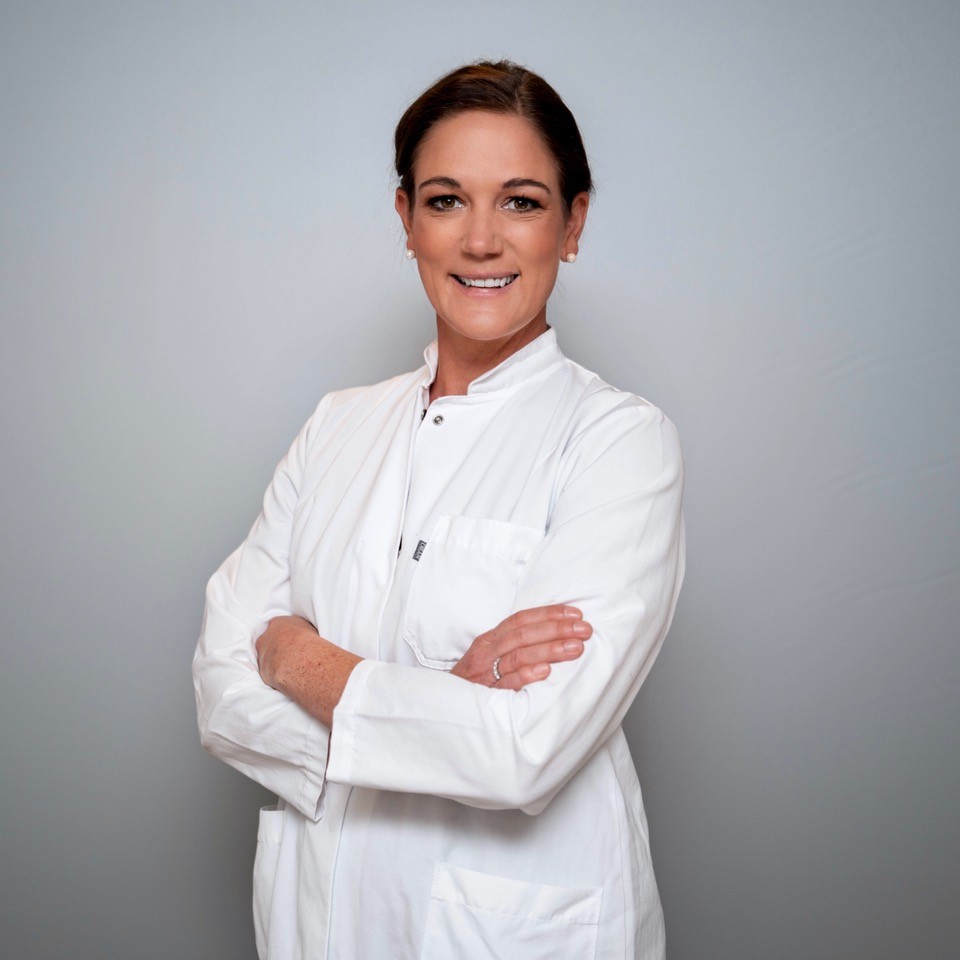
"The liver is not only the largest internal organ — to me, it is also the friendliest," says Prof. Dr. med. Carina Riediger, M.Sc. She is Senior Physician and Director of the Department of General, Visceral, and Thoracic Surgery at Marienhospital Stuttgart, and a specialist in what many consider the supreme discipline of surgery: the surgical treatment of liver tumors, whether primary carcinomas or metastases.
In this interview, she talks about why liver surgery is so complex, when transplantation becomes necessary, and why everyone should consider organ donation.
What the Liver Does — and Why Diseases Go Undetected for So Long
Professor Riediger, you describe the liver as the friendliest organ. Why?
For one thing, the liver is the only organ in the body that regenerates — a phenomenon known as the Prometheus effect. It means we can remove a large portion of the liver and it will grow back to its original volume. In a healthy liver with no prior damage, that portion can in principle be as much as 80 percent. And not only that: the liver also has an extraordinarily high reserve capacity, meaning those remaining 20 percent are temporarily enough to keep it functioning.
These are extreme figures, of course, since very few people have a completely healthy liver. In practice, the ratio is probably somewhat different — perhaps 70 to 30 percent. But for a fully healthy liver, those numbers hold. And that is precisely what we exploit in liver surgery.
On the other hand, if we damage a great many liver cells — hepatocytes — through alcohol consumption, the liver will forgive us for quite a while. But if we overdo it, inflammation and fatty liver develop — and eventually scarring, known as cirrhosis. At that point, the damage is no longer reversible. So the liver does not forgive us everything, but it does forgive a great deal over a relatively long period of time.
Why do liver diseases and liver tumors so often go undetected for so long?
We need to draw a distinction here: Is there a functional problem with the liver? Is there inflammation — a so-called hepatitis — a fatty liver, or liver cirrhosis, meaning a scarred liver? Or are we dealing with liver tumors? With liver inflammation, jaundice is possible. There may also be a certain capsular pain when the liver swells.
Liver cirrhosis or a fatty liver does not necessarily announce itself. In the final stage, you may notice jaundice — the whites of the eyes and the skin turn yellow. You might also notice, for example, that your urine is very dark and your stools very pale. But these are already signs of very advanced liver disease. Because the liver is so forgiving, damage tends to be noticed only quite late.
With tumors, the situation is this: in principle, your liver can be filled with tumors and you will have no idea, and no symptoms, as long as they are not located in areas that affect drainage — for example, as long as they are not blocking the bile ducts. Because it simply does not hurt. That is what makes it so insidious, and why regular check-ups are so important.
What does the liver actually do on a daily basis?
The liver is, in a sense, the largest gland in the human body. You could compare it to a chemical processing and detoxification plant, given how many functions it performs. First and foremost, it is the body's processing hub: everything we absorb as nutrients through the intestine travels through the blood directly into the liver, where it is processed. From these nutrients, the liver produces proteins, known as albumins. That is a broad term, but proteins are essential building blocks — for example, for blood clotting factors. The liver also stores glucose, that is, sugar. It is truly a central organ.
It also plays a vital role in detoxification: many harmful substances are filtered out in the liver and excreted into the intestine via bile. When people talk about bile in everyday conversation, many think of the gallbladder — but that is not quite right. Bile is the fluid produced by the liver itself — between one and one and a half liters per day — and released into the intestine. It is essential for digesting many substances and at the same time serves as a drainage channel for toxins.
Alcohol, Fatty Liver, Hepatitis: What Increases the Risk of Liver Cancer
Can liver cancer be prevented?
Here again, we need to make a distinction: are we talking about primary liver cancer, or about metastases? There are no prevention options for metastases as such. In that case, it always comes down to preventing the primary tumor — someone who never develops a primary tumor will not develop metastases either.
When it comes to liver cancer, there are clear risk factors. The main one is certainly liver cirrhosis. In this country, it is most commonly caused by alcohol, but also by viral hepatitis. That said, the picture is expected to shift considerably in the coming years.
Hepatitis C was a major problem because it was untreatable for so long. For several years now, however, we have been able to treat it in a way that amounts to a cure — a true milestone in hepatology. This means that many patients who developed liver cirrhosis or liver cancer as a result of hepatitis C are patients we will no longer be seeing in the future.
But as I said: alcohol remains a risk factor — and increasingly so does fatty liver that is not caused by alcohol but by obesity. Obesity has been rising significantly in recent years and is often associated with steatohepatitis, an inflamed fatty liver. This too is a risk factor for the development of hepatocellular carcinoma.
In essence, prevention comes down to following the advice every doctor gives: lead a healthy lifestyle, drink little or no alcohol, and eat well. This can help reduce the risk to a certain extent — though of course lifestyle is not always the cause.
Why do men develop liver cancer more often than women?
When it comes to HCC — hepatocellular carcinoma — men are indeed affected two to three times more often than women. This is probably because men, at least historically, drank significantly more alcohol and therefore developed liver cirrhosis more frequently. In recent years, however, women have been gradually catching up.
Why Liver Metastases Are Often Curable Today
Liver metastases were long considered a death sentence. What has changed?
A great deal has changed. We distinguish between metastases and primary liver tumors. Surgery remains, in large part, the only way to cure a tumor condition in the liver — through liver resection or liver transplantation. The goal is always to preserve as much liver as possible, because life without a liver is not possible. We pursue this goal by either shrinking the tumor or enlarging the liver.
Other specialties have also advanced significantly in this area — oncology, for example, with chemotherapy and antibody therapies, and interventional radiology, which can perform embolization procedures, among others. It is always a close collaboration between many specialties that makes it possible to remove tumors with a curative intent — that is, with the aim of healing — tumors that perhaps could not have been operated on ten years ago. That is, of course, remarkable. And surgical technique has advanced as well; we are capable of much more today.
You advise patients to always seek a second opinion at another clinic if they are in doubt. Why?
It is not enough for patients to simply present at any hospital. They should go directly to a hospital where a truly experienced liver surgeon works. In liver surgery in particular, a great deal of experience is needed to judge what is resectable — that is, surgically removable — and what is not, and to be aware of all the available options. Liver surgery is a highly complex, technically demanding form of surgery.
There is a very interesting study published in a Canadian medical journal. It surveyed physicians across several specialties: a medical oncologist — one who does not operate — a surgeon who primarily performs colorectal surgery, a surgeon who primarily performs tumor surgery without a specific focus, and liver surgeons.
They were each asked to assess, based on specific patient cases and the corresponding CT scan images, whether the tumors could be surgically removed. Interestingly, both the colorectal surgeon and the tumor surgeon were roughly as pessimistic as the oncologist, and significantly less likely to consider surgery feasible than the liver surgeon. Anyone who consults a non-liver surgeon will therefore hear "There is nothing more we can do" far more often than they would from a specialist.
How Liver Surgery Works
You cannot simply look inside the liver. How do you know during surgery where the tumor and blood vessels are?
Liver surgery relies enormously on experience. As you rightly point out, we cannot see inside. What we are essentially looking at is a mass of tissue with a reflective surface. There are a few superficial landmarks — as we call them — that help us orient ourselves: for example, where is the boundary between the right and left lobes of the liver?
But we cannot see exactly where the blood vessels and bile ducts run. That means, first of all, that one must have a very thorough knowledge of anatomy. One must then study the CT or MRI images very carefully to understand where, in this particular patient, the vessels run in relation to the tumor.
One tool we use to our advantage during the operation is ultrasound. There is a special probe — similar to one you might see at a general practitioner's office — that can be placed directly on the liver surface under sterile conditions. This can be done in both minimally invasive and open surgery, and it aids in orientation. But the ultrasound images can only be interpreted well by someone who is thoroughly familiar with the anatomy.
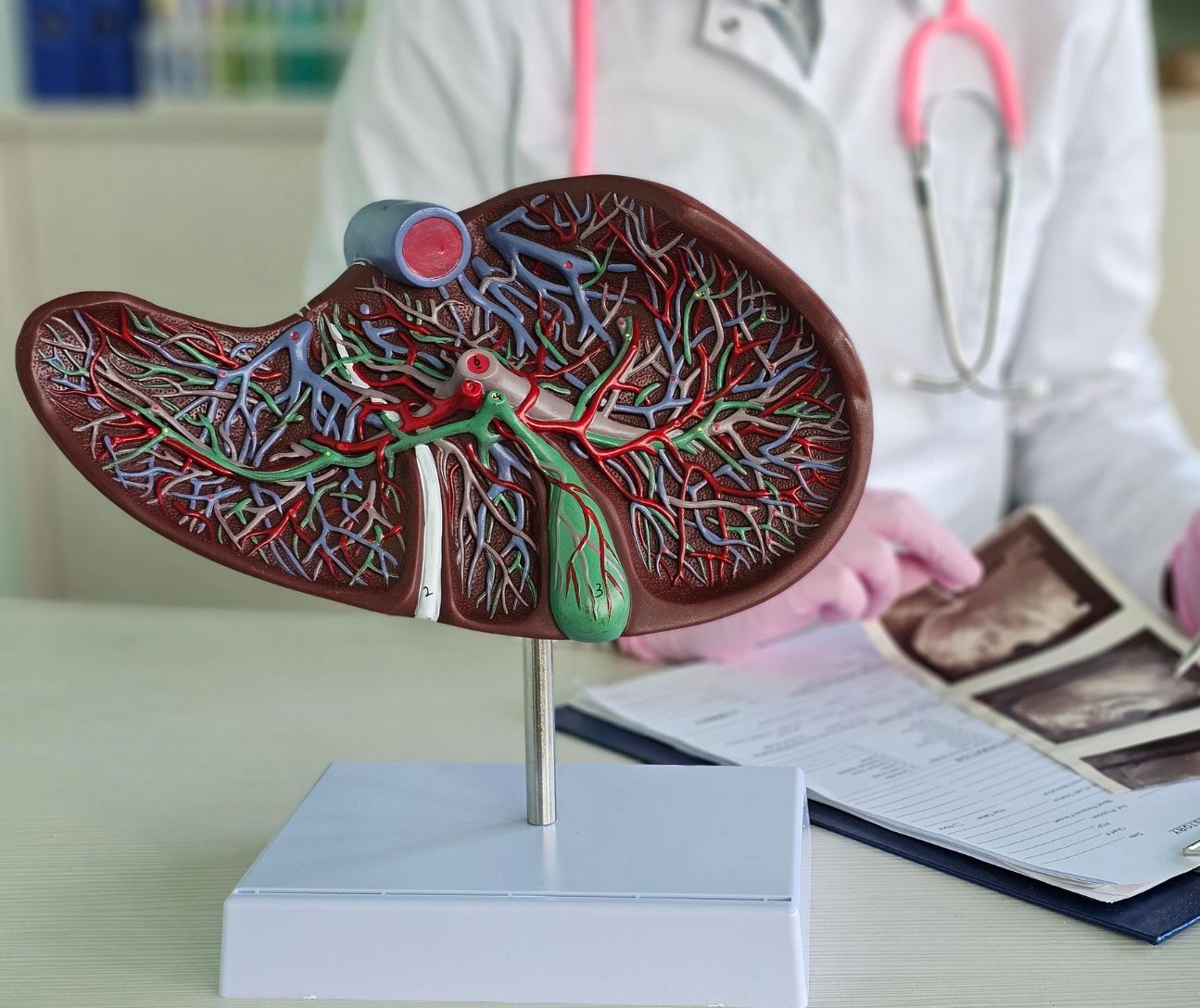
The liver adds another layer of complexity: not only is it an extremely intricate network of blood vessels and bile ducts, it also has virtually countless anatomical variations. We learn what is most common and the underlying structure — the basic framework of the major vessels remains the same. But in each individual patient, there are very often different pathways, particularly for the smaller vessels and bile ducts. All of that has to be studied carefully.
When can you operate — and when can you not?
A fundamental distinction has to be made here: Is it liver cancer — a hepatocellular carcinoma that originates in the liver itself? Or are we dealing with metastases — deposits that have spread to the liver? Beyond that, there are three things we always assess beforehand.
The first is: How large are the tumors, and where exactly are they located? Is it technically feasible to remove the tumor at all? Ultimately, I need at least a small remnant of liver to maintain function. That remnant needs adequate vessels to bring blood in and carry it out, as well as a way to drain the bile it produces into the intestine.
The second aspect is the condition of the liver tissue itself. Is it very healthy, or is there cirrhosis? If cirrhosis is present, I have significantly less room to maneuver, because the liver is no longer functioning at full capacity. Removing 80 percent in that situation would leave a remainder that is nowhere near sufficient. The third aspect is the patient's overall condition.
Operating without prior chemotherapy is always the preferable option, since chemotherapy also causes a degree of liver damage. When that is not possible, I have to draw on the multimodal concepts I mentioned at the outset — using, for example, chemotherapy or interventional therapy to shrink the tumor or to enlarge the future remnant liver.
Today, surgery is largely performed minimally invasively. When is open surgery still the right choice?
Whenever we have the technical means, we operate minimally invasively. Straightforward resections are now performed minimally invasively as standard. Once cases become more complex, careful judgment is required: How experienced is the surgeon? Oncological radicality and patient safety always come first. Making compromises simply to preserve a minimally invasive approach is not acceptable. What matters most is always what is happening inside the abdomen. If a larger incision is necessary in a given case, that decision is always justified.
Robotic surgery in particular now allows us to perform significantly more complex operations minimally invasively than conventional laparoscopy permits. That said, open liver surgery still plays an important role, especially for complex tumors.
There is another consideration: when patients have multiple liver metastases, pre-treatment with chemotherapy is often carried out. The metastases frequently respond very well and shrink considerably — but that also means they can then only be detected visually and by ultrasound during a minimally invasive procedure.
With the robot, we receive no haptic feedback, and even in laparoscopy it is greatly limited. Unlike in open surgery, I simply cannot feel what I am touching. And it is precisely those metastases that have responded well to chemotherapy that are often still detectable only by palpation.
How do you know during the operation that the tumor has been completely removed?
With every resection, we preserve a certain safety margin of healthy tissue. Once a tumor has been removed, we cut it open outside the body and check macroscopically — that is, with the naked eye — whether a sufficient rim of healthy tissue surrounds it.
If that margin is very small, we can send samples to the pathologist during the operation, who examines them under the microscope to confirm whether we have operated within healthy tissue. If the safety margin proves insufficient, we are notified immediately — while the patient is still on the table — and we still have the option to remove additional tissue in the same procedure.
Liver Transplantation, Organ Donation, and a Look to the Future
When is a transplant necessary, how often does it occur, and what are the prospects afterward?
Liver transplantation is primarily an option for patients who already have liver cirrhosis. Cirrhosis is one of the most important causes of liver cell cancer and carries a permanent risk. Even if I remove a liver cancer from a cirrhotic liver, the remaining liver is still like a ticking time bomb — new liver cell cancer can develop there at any time.
A transplant addresses the underlying cause of the cancer at the same time. This is why transplantation is in fact the treatment of choice for patients with liver cell cancer arising from liver cirrhosis. The problem is that we do not have enough organs to offer every patient this optimal treatment. This is why patients with liver cirrhosis are also treated surgically, since that is still better than no treatment at all.
In Germany, approximately 800 to 900 liver transplants are performed each year. The outcomes are excellent: survival rates stand at 90 percent after one year and remain above 70 percent after ten years. Of course, not all patients are transplanted because of a malignant tumor. Liver cirrhosis, metabolic disorders, or autoimmune diseases that have damaged the liver are frequently the underlying cause.
What are your hopes for the future of liver surgery?
That we can make even greater use of AI, particularly in diagnostics. At present, computed tomography and MRI are still viewed in two dimensions in many settings. We can reconstruct a 3D model through a relatively complex process and project it onto the patient during surgery — the concept of liver navigation.
This navigation is still relatively imprecise, however, because motion and breathing artifacts come into play. If AI could make this navigation more accurate, it would make liver surgery safer and more straightforward, and significantly more procedures could be performed minimally invasively.
On a completely different note — since I just mentioned that liver transplantation has very high success rates: I hope that people will take the time to consider whether they want to be organ donors. It is not about being obligated to donate. But if the subject has never been discussed, relatives are left in a devastating situation after an accident — having to cope with an overwhelming loss while simultaneously having to decide whether organ donation is permitted.
That is why I encourage everyone to obtain an organ donor card. You can also opt out — there is no obligation to donate. But the matter should be settled in advance. Organ donation can do an enormous amount of good. And it is always worth asking yourself: if I needed an organ, would I want to receive one?