© Adobe Stock
The female sex hormones can also act on the intestines through receptors, according to Professor Seiderer-Nack.
January 13, 2026
Marianne Waldenfels
Women suffer from gut problems twice as often as men – but why? Prof. Dr. med. Julia Seiderer-Nack, specialist in internal medicine and gut health expert, explains how hormones, the microbiome and the gut-brain axis are closely connected – and what women with irritable bowel syndrome, endometriosis or PCOS can do to feel better
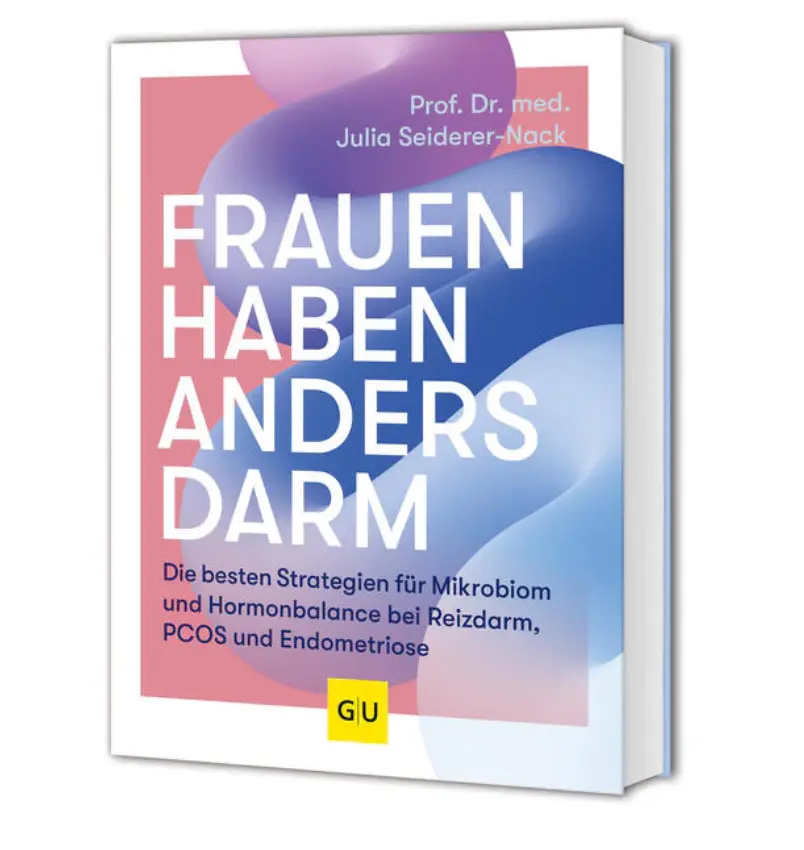
Stomach pain, bloating, constipation – women are affected twice as often as men. This is no coincidence: Hormones, microbiome, and the gut-brain axis are closely linked in women, says Prof. Dr. Julia Seiderer-Nack. The specialist in internal medicine and sought-after expert on gut health explains in her book "Women Have Different Guts" the connection between the gut and diseases like endometriosis, irritable bowel syndrome, or PCOS, why a microbiome-friendly diet is important, and which hacks help against complaints.
Why are more than 70 percent of those affected by irritable bowel syndrome female?
That is a good question that we have asked far too little in medicine and about which we also have too little knowledge – gender health gap says hello. It is often argued that women go to the doctor more often, speak more openly about digestive complaints compared to men, and therefore are more frequently diagnosed with irritable bowel syndrome.
Women are also often attributed with more stress or psychological strain, which are then often a quick explanation for female-typical pain disorders such as migraines, fibromyalgia, or irritable bowel syndrome. However, what we have previously overlooked are scientifically measurable differences between men and women in the gut, which could provide us with new perspectives for understanding and treating irritable bowel syndrome.
How do I actually recognize that I am suffering from irritable bowel syndrome?
An irritable bowel syndrome is initially a diagnosis of exclusion – if I suffer from constipation, abdominal pain, diarrhea, or bloating over a longer period, laboratory values, stool samples, and a stomach and colonoscopy must be used to rule out other diseases such as an infection, celiac disease, or chronic bowel inflammation behind these complaints. If the bowel is organically healthy in these examinations and the patient still has these complaints, such an irritable bowel syndrome is likely.
What are the differences between male and female intestines?
Women's intestines are not only crowded by the uterus and somewhat longer, but often also more relaxed: the food pulp is pushed through the intestinal loops more slowly, so we tend to be more constipated. We also have a different gut microbiome, meaning a different composition of bacterial species in the gut, and show differences in the strength of our immune defense, e.g. after infections or in autoimmune diseases.
And very importantly: The intestine is also influenced by female sex hormones, whether in terms of transport speed or pain perception. Women more often show increased pain sensitivity in the abdominal area (visceral hypersensitivity), which can play a role not only in endometriosis but also in irritable bowel syndrome and can be influenced by hormone levels.

© GU Verlag
Prof. Dr. med. Julia Seiderer-Nack, specialist in internal medicine and expert on gut health
How do female hormones affect the intestines?
Female sex hormones can also act on the intestines through receptors – we know, for example, that the hormone progesterone slows down the transport speed of food in the intestines, making the intestines sluggish and prone to constipation. We observe this not only during pregnancies but often in the second half of the menstrual cycle.
On the other hand, estrogen, for example, also influences our pain perception – and therefore also how strongly we perceive signals from an irritated intestine. There is also a close interplay with tissue hormones such as histamine and prostaglandin. It is therefore not surprising that some patients experience increased bowel problems depending on the cycle or that the intestine can become more irritable during phases of hormonal change (e.g. menopause).
What do conditions like PCOS and endometriosis have to do with the gut?
On one hand, we observe that about 20-30% of all patients with PCOS and endometriosis also have "irritable bowel syndrome" – this naturally raises suspicion and suggests an influence of hormone balance and microbiome on inflammatory processes. And indeed, science shows us that patients with PCOS often have a leaky gut; in patients with endometriosis, we often find an altered composition of the gut microbiome, which is likely also related to hormone levels and inflammatory processes.

"Women Have Different Intestines," GU Publishing
What exactly is the gut-brain axis and what does it do?
The gut-brain axis is not a thick cable in our body. The term describes the complex and reciprocal communication between the nervous system of the gut and the central nervous system, i.e., our brain. These two systems are in constant exchange via hormones, neurotransmitters, messenger substances, and also the autonomic nervous system.
A good connection is not only important for regulated digestion but also has much more far-reaching effects – for example, on our emotions, sensory processing, immune system, or hormone balance. Interestingly, 90% of communication goes from the gut to the brain – so what the gut and its microbiome have to say is indeed relevant for our control center in the head.
What does the perfect, healthy microbiome look like?
Science cannot clearly answer this question to this day, as this ecosystem and its impact on our health is too complex. However, we know that high biodiversity in our gut is important and associated with health, and we do not want disease-causing or pro-inflammatory bacteria in the gut. And we also know, for example, that some bacteria species are particularly important: for our immune system, the gut barrier, or the formation of anti-inflammatory fatty acids.
How does the gut microbiome change during menopause?
The gut microbiome develops into a largely stable ecosystem in the first three years of life, but with the onset of puberty, differences in composition between male and female microbiomes emerge under the influence of hormones.
Today we know that the microbiome changes again during menopause, e.g., in biodiversity, but also in the occurrence of different species. Interestingly, the female microbiome becomes more similar to that of men after menopause. Scientists suspect that these processes of change and the altered production of metabolic products could also be related to the increased risk of cardiovascular disease, obesity, and osteoporosis.
What does a nourishing diet for the microbiome and gut barrier consist of?
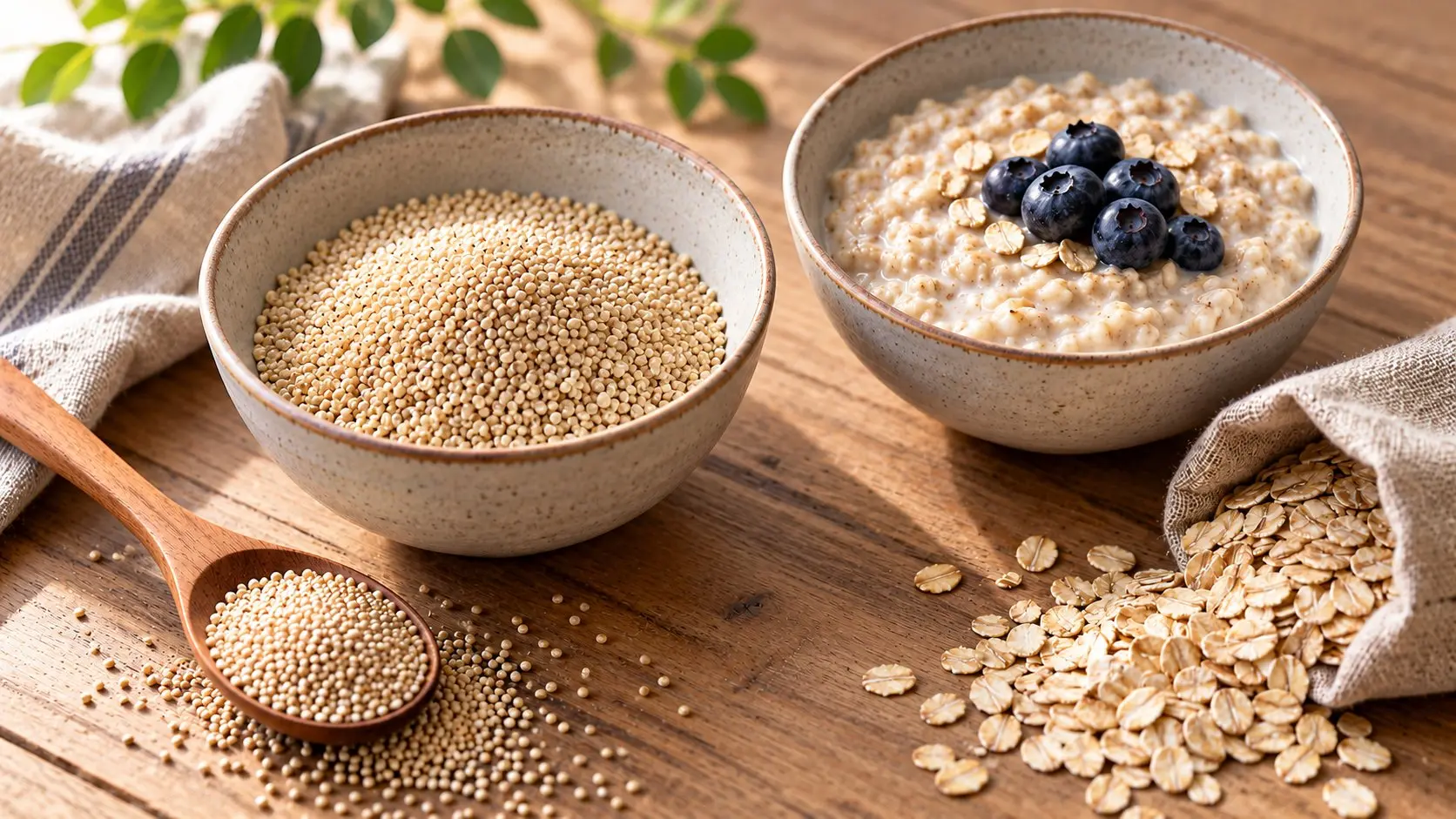
Very important for a healthy and diverse microbiome are sufficient fibers, meaning at least 30 grams of vegetables, whole grains, and fruits per day. A plant-based, fiber-rich diet is a good basis, as is an anti-inflammatory approach with high-quality omega-3 fatty acids and avoiding industrially highly processed foods – the latter can harm the intestinal barrier and the microbiome due to their numerous additives and unhealthy fatty acids.
Foods that naturally contain valuable bacteria such as lactobacilli and bifidobacteria, and are therefore probiotic, are also helpful for the microbiome. Examples include kefir, natural yogurt, sauerkraut, beets, or fermented vegetables.