© Freepik
April 16, 2026
Christine Bürg & Marianne Waldenfels
The HPV vaccine can significantly reduce cancer risk. Learn how well it protects, who benefits most, and where its limits are.

© PMC
With
Dr. med. Uta Emmerich
The HPV vaccine is considered one of the most effective tools for cancer prevention worldwide. It protects against the most important high-risk HPV types and can significantly reduce the risk of cervical cancer as well as other HPV-related cancers. However, it does not provide complete protection—regular screening remains essential.
Gynecologist Dr. Uta Emmerich explains how the vaccine works, who benefits most, and where its limitations lie.
In short: How well does the HPV vaccine protect against cancer?
The HPV vaccine is highly effective against the most important cancer-causing HPV types. Studies show it can prevent up to 95% of infections that may lead to cervical cancer. However, it does not offer complete protection, as not all HPV types are covered—so regular screening remains important.
Human papillomaviruses (HPV) are a large family of viruses with more than 200 known types. Some are transmitted through skin contact, while others mainly affect mucous membranes in the genital and throat areas.
Most infections go unnoticed and disappear within one to two years. It becomes problematic if high-risk HPV types remain in the body for a long time. Then cells can change, and over many years, precancerous stages develop. Types 16 and 18 are particularly relevant as they cause a large portion of HPV-related cancers.
HPV is most commonly associated with cervical cancer, but it also plays a role in other types of cancer such as tumors in the oropharyngeal region, anal cancer, penile cancer, and certain forms of cancer in the vulva and vagina area. These diseases often develop many years after the initial infection – that's why the benefits of vaccination often become visible only with a delay.
Today's HPV vaccines do not contain complete viruses but so-called virus-like particles. They trigger an immune response without causing an infection themselves. The body specifically forms antibodies against the HPV types contained in the vaccine. The 9-valent vaccine, in particular, offers broad protection against several cancer-causing HPV types.
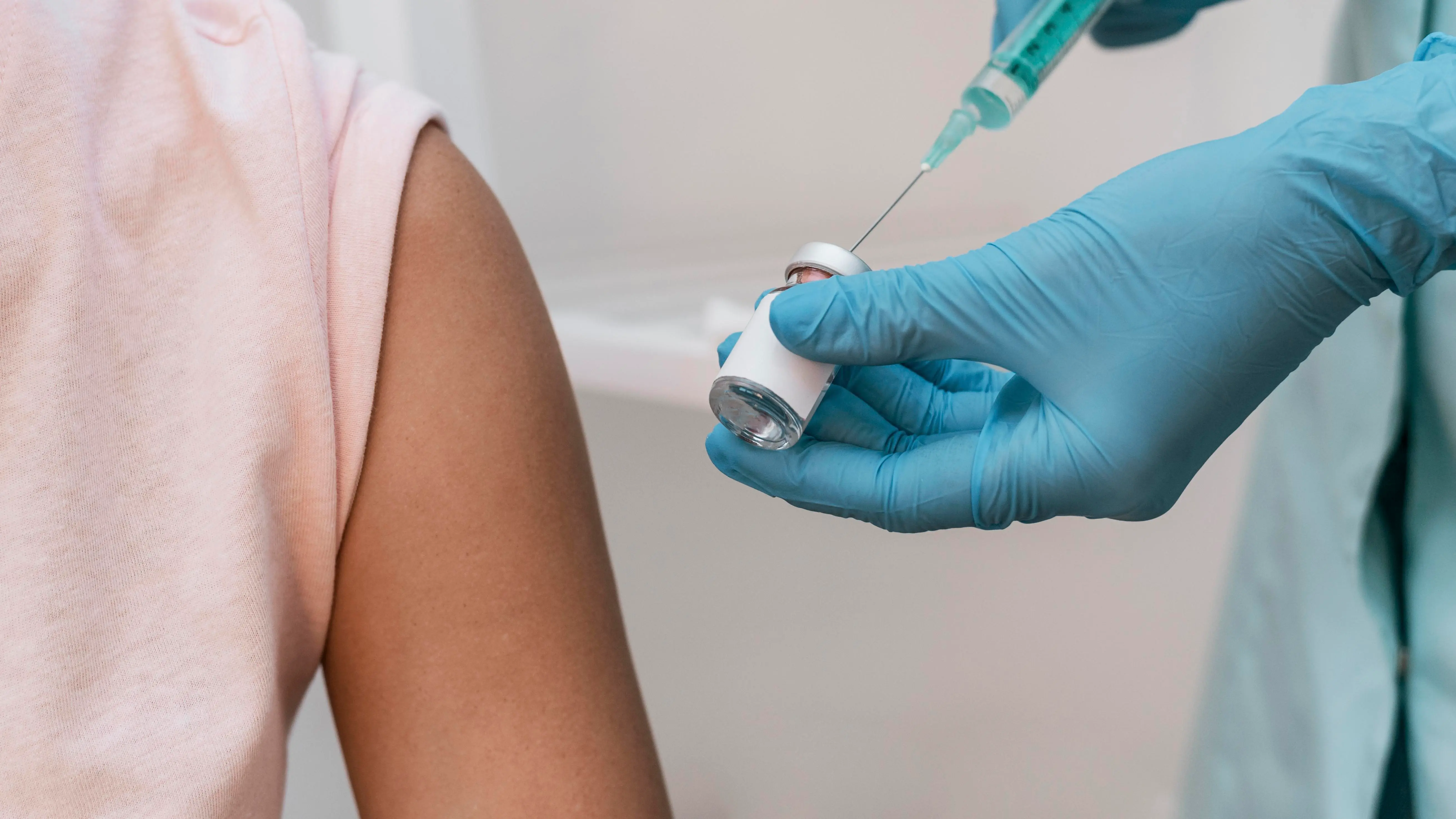
The effectiveness is particularly well documented when the vaccination is done before the first sexual contact. The Robert Koch Institute (RKI) assumes that the vaccination protects against almost 95% of HPV infections that can cause cervical cancer.
Large studies also show a significant effect: In young women, the number of HPV16/18-associated precancerous lesions drastically decreased. At the same time, long-term data show that vaccinated girls have a significantly lower risk of actually developing cervical cancer many years later. The vaccination is therefore not only effective in the short term but also provides long-term preventive benefits.
In Germany, the HPV vaccination is routinely recommended by the STIKO for all children (boys and girls) aged 9 to 14, explains gynecologist Dr. Uta Emmerich: “Ideally, the vaccination should be administered before the start of sexual activity, as it is most effective then.” A catch-up vaccination can also be useful: “A catch-up vaccination is recommended for individuals aged 13 to 26.”
For adults between 27 and 45, the decision should be made individually. “Here, younger adults, people with changing partners, and individuals recently diagnosed with a sexually transmitted infection benefit most,” says Emmerich.
A particularly relevant point from practice: “In patients with higher-grade cell changes, the HPV vaccination can reduce the risk of recurrence around surgery by about 60 to 65 percent.”
Despite its high efficacy, the HPV vaccine does not provide complete protection. It only covers certain virus types and cannot eliminate an existing infection. Additionally, other factors play a role in cancer development, such as smoking, a weakened immune system, or individual biological differences. Therefore, a residual risk remains.
Current data suggests long-term protection. Studies show that immunity lasts at least twelve years without signs of early decline. Many experts even believe that protection could last for decades. Booster vaccinations are currently not routinely recommended.
A key aspect of prevention is the distinction between prevention and early detection. "The HPV vaccine is a primary prevention – it prevents infection and thus the development of cancer," explains Dr. Uta Emmerich. The screening at the gynecologist, on the other hand, serves a different purpose: "It detects existing changes in the cervix that can then be treated." Dr. Emmerich summarizes that vaccination and screening are not alternatives, but rather complement each other effectively.
Men can also become infected with HPV and fall ill. The virus can, among other things, cancer in the mouth and throat area, at the anus, or on the penis. In particular, the so-called oropharyngeal carcinoma is now one of the most common HPV-associated cancers.
Therefore, the STIKO has been recommending the HPV vaccination for boys for several years. In addition to one's own protection, the vaccination also helps to reduce the spread of the virus overall.
Yes. The vaccination significantly reduces the risk, but does not prevent every infection and not every cancer formation.
Yes, however, the benefit is usually less than with an early vaccination.
Current data suggest long-lasting protection over many years.
No. Preventive examinations remain necessary.
Yes, since HPV can also cause various types of cancer in men.