© freepik
April 13, 2026
Marianne Waldenfels
Can showering in the dark improve your sleep? Discover how light, melatonin, and warm showers influence how fast you fall asleep.
Can showering in the dark help you fall asleep?
More and more people are turning to “dark showering” — a TikTok trend where you shower in the dark in the evening to unwind. The idea is simple: less light, fewer stimuli, and a clear transition from day to night. But is there any science behind it — and can it actually help you fall asleep?
Less light in the evening can support melatonin production, while warm showers help the body transition into sleep mode. Together, these factors may make it easier to fall asleep.
Dark showering means taking a shower in a dark or dimly lit bathroom in the evening. Instead of bright overhead lights, people use soft, indirect lighting, candles, or residual light from the hallway for orientation.
The idea behind it:
- fewer visual stimuli
- more calm for the nervous system
- a clear transition from day to night
Many people combine dark showering with a consistent evening routine, such as:
- putting away their phone
- taking a warm shower
- moving directly into a dimly lit bedroom
This trend taps into two key factors of good sleep hygiene: light and temperature.
Light is one of the strongest cues for our internal clock that regulates the sleep-wake cycle. In the evening, bright or blue-enriched light can shift the body into a "day mode"—exactly when it should be winding down.
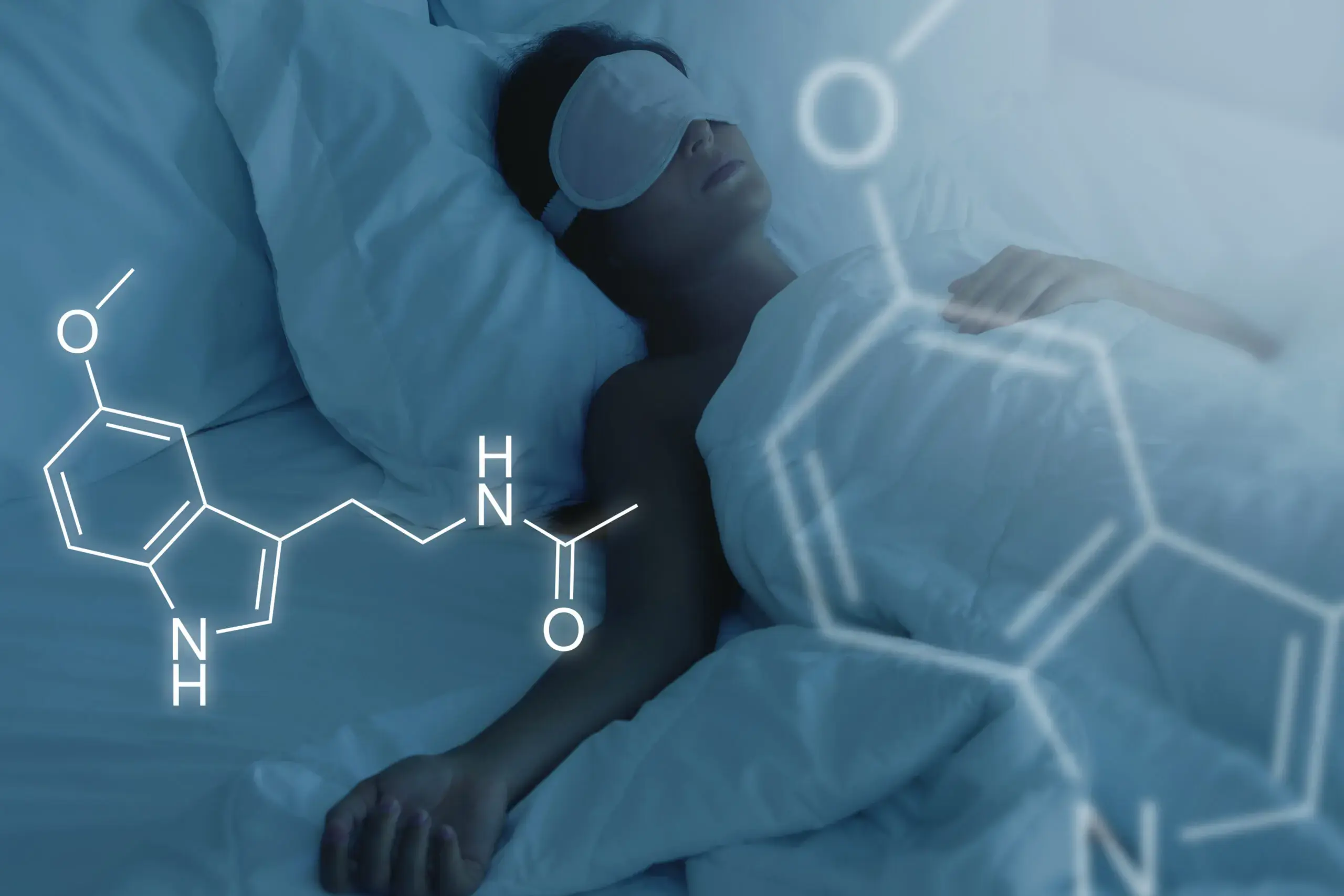
Melatonin is an important hormone for the day-night rhythm and signals the body that bedtime is approaching. It is produced in the brain and its production is significantly inhibited by light, especially in the blue-violet spectrum. A systematic review showed that just two hours of blue light in the evening – such as from LED lights or screens – significantly suppresses melatonin production.
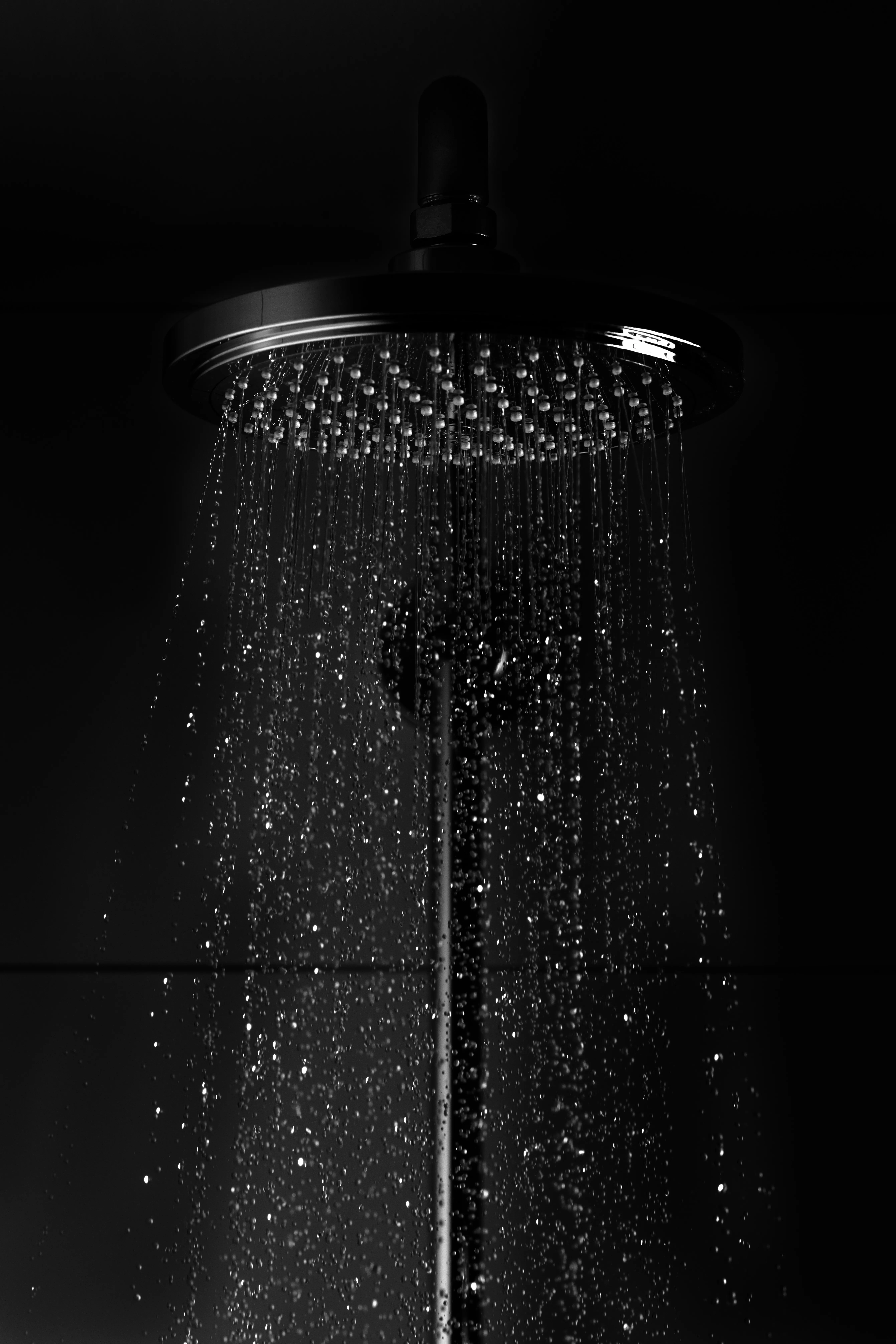
Bathrooms are typically among the brightest rooms in the home, equipped with strong ceiling spotlights and illuminated mirrors. From a sleep research perspective, this is practical in the morning, but unfavorable in the evening. Switching to Dark Showering here removes a strong "It's still day" signal from the body and facilitates the transition to night mode.
Besides light, body temperature also plays a crucial role in falling asleep. Interestingly, it is not cold, but a prior warmth impulse that helps one to become tired more quickly.
A meta-analysis of so-called 'passive body heating' through warm baths or showers before bedtime revealed:
Physiologically, the following happens: Warm water dilates peripheral blood vessels, allowing the body to release heat more effectively through the skin after a shower. As a result, the core body temperature drops—a signal that the body naturally associates with sleep. Simultaneously, the parasympathetic nervous system is activated: heart rate decreases, heart rate variability increases, and a state of deeper relaxation sets in.
Dark showering thus combines two sleep-promoting mechanisms: reduced light stimuli and a targeted thermal impulse.
Dark showering combines several scientifically proven effects:
Potential mechanisms of action:
Important: The effect dissipates if full light is turned on again after the shower or if the smartphone is used directly. Experts emphasize that the entire period before sleeping should be as dark and screen-free as possible to prevent the internal clock from being constantly pulled back into 'day mode.'
Those who want to try the trend can relatively easily incorporate dark showering into their sleep hygiene routine.
Practical tips:
Those who need orientation at night, for example for safety reasons, can resort to warm-toned, dim nightlights, which suppress significantly less melatonin than bright, white-blue LED lighting.
Dark showering is not a miracle cure and does not replace medical treatment.
Be cautious with:
In such cases: Use dimmed light instead of complete darkness.
Dark Showering is more than just a social media hype. The combination of less light and warm water can simultaneously activate several sleep-promoting processes.
If you have trouble falling asleep or find it hard to relax in the evening, you can try this method as a simple addition to your sleep hygiene.
The key is:
less light + warmth + calm routine.
Yes. Taking a warm shower can shorten the time it takes to fall asleep and improve sleep quality as it regulates body temperature.
Dark Showering reduces light stimuli and supports melatonin production, helping the body transition more easily into sleep mode.
Ideally 60 to 120 minutes before going to bed.
Not necessarily, but dimmed light should be used if there is a risk of falling or uncertainty.
It has hardly been directly studied, but the underlying mechanisms (light, melatonin, temperature) are well documented.