© Firefly_Gemini Flash
April 13, 2026
Marianne Waldenfels
The TikTok trend “Sleep Window” promises more energy and fewer cravings. What a consistent sleep schedule really does for health and weight.
On TikTok, users are showcasing their “new life”: more energy, fewer cravings, finally a sense of structure — all without dieting or hardcore workouts. The common denominator? They simply go to bed earlier, often as early as 10 p.m., and stick to a consistent sleep schedule. The trend is called the “Sleep Window” — a fixed daily time frame for sleep.
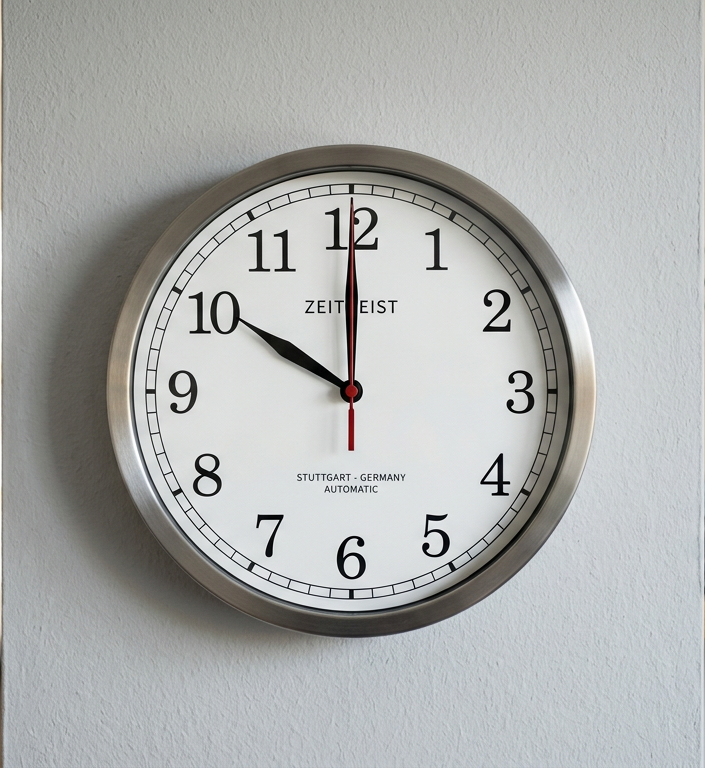
A “Sleep Window” refers to a fixed daily time frame for sleeping — for example, from 10 p.m. to 6 a.m. or 11 p.m. to 7 a.m. The goal is to go to bed and wake up at the same time every day.
The idea behind it:
Regular sleep times may help to:
Unlike extreme “5 a.m. routines,” the focus here is not on productivity but on sleep quality and recovery.
The concept itself isn’t new — but its presentation is. The Sleep Window is framed as a lifestyle: a routine, a form of self-optimization, and a seemingly simple path to better health.
That Sleep is central to health has been well established for years. It gets interesting where it concerns the Regularity is what the 'Sleep Window' aims for. Studies suggest: It's not just about how long we sleep but also how much our sleep times vary from day to day.
In the Multi-Ethnic Study of Atherosclerosis it was found that adults with highly irregular bedtimes and varying sleep durations were more likely to develop metabolic irregularities – including high blood pressure, unfavorable blood lipids, and impaired glucose metabolism.
The researchers concluded that an irregular 'sleep architecture' can increase the risk for cardiometabolic diseases independently of diet and exercise.
Sleep apparently plays a role in weight as well. with several tens of thousands of adults concluded that people who consistently sleep six hours or less per night have an increased risk of gaining significant weight or becoming obese over the next few years—especially when there is little physical activity at the same time.
Thus, short or highly fragmented nights seem to favor those processes that promote long-term weight gain and abdominal fat.
A stable sleep rhythm supports the circadian rhythm—i.e., the body's internal clock. It coordinates, among other things, the release of hormones that control hunger, satiety, energy levels, mood, and stress reactions. If this rhythm is disrupted, for example, by alternating shift work or highly fluctuating bedtimes, it can biochemical balance become unstable.
A consistent sleep window acts like a daily "time anchor" here. Those who signal to their body: "Between 10 p.m. and 6 a.m. is bedtime," offer their internal clock a reliable framework. This can explain why many people report being more focused during the day, less irritable, and hungrier at regular times when they adhere to their Sleep consistently structured.
The success of the trend can also be read culturally. After years in which optimization was mainly loud and extreme - intermittent fasting, biohacking, 4 a.m. routines - the desire for measures that can be integrated into a normal life is growing. Many wellbeing trends are currently shifting away from maximum challenges towards simple, stable habits.
Going to bed earlier fits exactly this need profile:
At the same time, the Sleep Window combines several topics that are currently very present: mental health, stress reduction, exhaustion after years of high stress — and the desire for sustainable, non-extreme weight loss.
On social media, the effect of the trend is often exaggerated. Users talk about drastic changes: more energy, hardly any cravings, clear skin, better focus, and sometimes even significant weight loss — all, it seems, just by sleeping earlier.
The reality is more nuanced:
The important thing is not the exact time but:
In addition: An early Sleep Window does not fit every lifestyle. Shift workers, people with small children or caregiving obligations can rarely go to bed at the same time every evening. The individual chronotype also plays a role: "Owls," who naturally become tired later, often find extremely early bedtimes unnatural and hard to maintain.
For them, it may be more sensible not to rigidly copy an ideal but to create more stability within their own biorhythm: for example, always sleeping between 11 p.m. and 7 a.m., instead of varying greatly between 11 p.m. and 2 a.m. The health benefit arises more from consistency than from a "perfect" time.
The Sleep Window is not a magic bullet. But it hits an important point.
In a time full of complex health promises, a simple habit seems almost radical: sleeping at the same time every day.
A regular sleep schedule can:
Not as a quick fix – but as a quiet, sustainable lever.