© Elijah O'Donnell
April 7, 2026
Christine Bürg & Marianne Waldenfels
Can creatine help with depression? Early evidence suggests it may improve symptoms – especially alongside therapy. Here’s what an expert says

With
Prof. Dr. med. Andreas Menke
Creatine is best known as a supplement used in fitness and sports. However, recent research suggests it may also play a role in depression. Early studies indicate that creatine could help improve mood – particularly as an add-on to existing treatments. That said, the evidence is still limited. Here’s what we know so far.
Can creatine help with depression?
Creatine may help improve depressive symptoms, especially when used alongside antidepressants or psychotherapy. However, the current evidence is still limited.
Creatine is not just a muscle supplement. It plays a central role in the energy supply of cells – including in the brain.
“The brain accounts for only about 2% of body mass, but it consumes about 20% of the energy,” explains Professor Dr. med Andreas Menke, Medical Director and Chief Physician at the Medical Park Chiemseeblick. “Creatine is essential for the provision of adenosine triphosphate (ATP), the most important energy carrier in the body.”
A disturbed energy balance in the brain has long been associated with depression. This is exactly where research on creatine comes in. Many affected individuals wonder whether creatine can help with depression.
“There are now several areas where creatine could be beneficial,” says Menke. “In acute stress situations such as physical exertion, severe” Stress oder Schlafdefizit zeigen Studien Hinweise auf eine bessere Leistungsfähigkeit.
Auch bei chronischen Erkrankungen – darunter Depressionen sowie neurodegenerative Erkrankungen wie Parkinson oder Alzheimer – wurden teils Kreatin-Defizite und erste positive Effekte einer Supplementierung beobachtet. Insgesamt ist die Datenlage jedoch noch begrenzt, sodass Kreatin derzeit eher als ergänzender Baustein und nicht als eigenständige Therapie zu verstehen ist.“
Eine große Übersichtsarbeit aus dem Jahr 2025, veröffentlicht im British Journal of Nutrition, hat die bisherige about creatine and depression systematically evaluated and concludes that creatine may improve depressive symptoms – especially in combination with existing therapies.

“In depression, there is evidence that there are partially lower creatine concentrations in the brain and that lower levels are associated with more severe symptoms,” explains Menke. “In initial clinical studies, depressive symptoms partially improved with creatine supplementation – especially as an addition to an existing drug therapy.”
However, the previous studies are still too small and too different to derive clear recommendations.
A look at individual studies shows in which situations creatine could be particularly interesting:
Women with severe depression who took creatine in addition to their antidepressant showed faster and greater improvements in their symptoms compared to the control group.
Better results were also observed in combination with cognitive behavioral therapy – both in mood and remission.
Recent analyses confirm: Creatine can have antidepressant effects and is generally well tolerated in studies. However, large long-term studies are still missing.
Some studies suggest that creatine might have a stronger effect against depressive symptoms in women than in men. Clinical observations also point in this direction.
“In women, it seems to work a bit better than in men,” says Menke. “We see the greatest effects in those who have a deficit—whether acute, such as due to lack of sleep or stress, or chronic, such as in depression, Parkinson's, or after traumatic brain injuries. And it is more pronounced in women than in men.”
Why this is so has not yet been conclusively clarified. Differences in energy metabolism and hormonal influences are being discussed, among other things.
An important caveat is: In bipolar depression, manic phases have been observed in isolated cases. Special caution is needed here.
Why creatine could affect the psyche at all has not yet been conclusively clarified. However, there are several plausible explanations:
These mechanisms are not yet fully scientifically proven but provide a plausible basis for the observed effects.
Some researchers increasingly view depression as a disorder of energy metabolism in the brain. In certain brain regions, energy processes may be less efficient.
Creatine addresses exactly this issue, as it plays a central role in rapid energy supply in cells. This could explain why it shows an impact on mood and drive in studies.
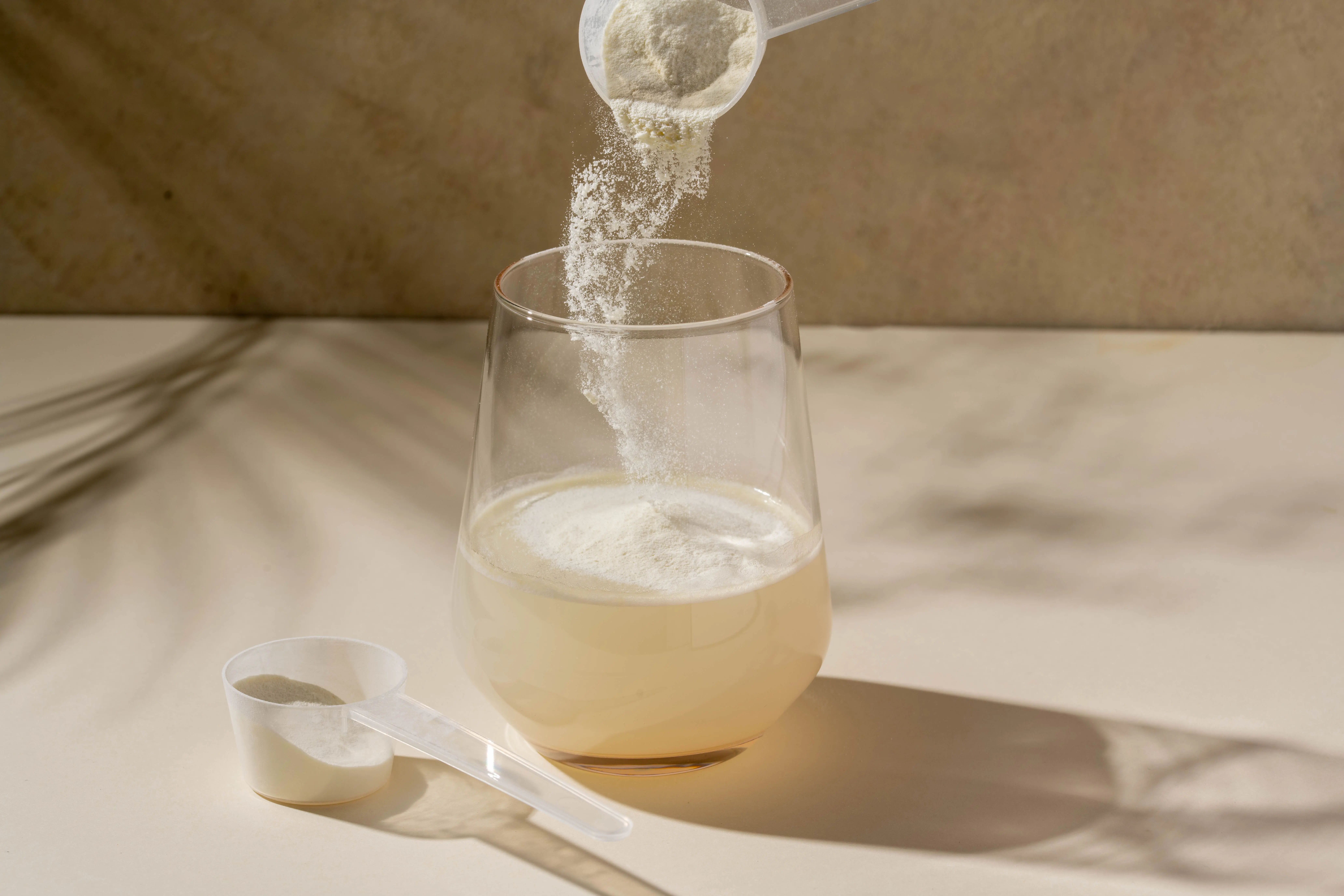
Creatine is one of the most researched dietary supplements. In typical amounts of 3–5 g daily, it is considered well tolerated by healthy adults.
Side effects are rare and mostly mild, such as:
Special caution is advised for:
Important to remember: Creatine is no substitute for medical or psychotherapeutic treatment.
Creatine also naturally occurs in foods – especially in:
Typically, about 1–2 g are consumed daily through diet. This is generally not enough for the effects studied in research.
People who eat little or no meat often have lower creatine stores and may therefore benefit more from supplementation.
Alongside creatine, other supplements are being studied in connection with depression.
These substances can be used as supplements in individual cases, but do not replace established therapy.
Anyone who wants to try creatine should consider some basic points:
Creatine is not a miracle cure for depression. The previous studies, however, show that it could be an interesting complementary approach.
Creatine can currently be considered a possible supplementary component – not a standalone treatment.
No. Creatine is only being studied as a possible supplement.
In studies, effects were sometimes seen after a few weeks – usually in combination with other therapies.
Creatine monohydrate is considered the standard.
This has been studied – but only after consulting a doctor.
There is little reliable data on this so far.
Creatine should not be taken without medical supervision in cases of kidney disease or bipolar disorder.
Yes, creatine is freely available as a dietary supplement and does not require a prescription. However, it should only be taken after consulting with a doctor, especially if there are existing conditions.
In studies, creatine was mostly taken over several weeks to months. However, there are no clear recommendations for the duration of use for depression. Therefore, intake should always be accompanied by a doctor.
Medical note: This article does not replace medical advice. If you suspect depression, please contact a professional.