© Dmitry Osipenko
May 8, 2026
Christine Bürg & Moira Hammes
Livestreams, petitions, collective mourning: Psychiatrist Dr. Richard Musil explains what the response to Timmy the Whale reveals about modern society

An interview with
Priv.-Doz. Dr. Richard Musil
At the beginning of March 2026, a humpback whale appears in the port of Wismar. What follows is a weeks-long odyssey along the German Baltic Sea coast – multiple strandings at Timmendorfer Strand, off the island of Poel, repeated brief free swims, and repeated groundings. Experts initially reject active salvage as cruelty to animals, and state rescue measures are discontinued due to failure.
Finally, a private initiative takes over: The whale is transported to the North Sea on a barge with straps, heading towards Denmark and the Atlantic. His current whereabouts are unknown; experts assume he has died.
The whale, called "Timmy" by many and "Hope" by others, becomes Germany's most famous animal during these weeks. An NDR livestream generates nearly 6 million views. Journalists and onlookers camp at the beach for weeks.
Creators with tens of thousands of followers stream live from the shore, AI-generated pop songs circulate on social media, and conspiracy theories abound. Politics comes under significant pressure from petitions and angry online campaigns. Even the New York Times and BBC report on it – calling it "Germany's favorite whale" and a media spectacle.
Why does a stranded whale seemingly throw an entire country into turmoil? And what does this collective reaction reveal about our emotional health, our capacity for empathy, and the state of our society? We spoke with Dr. Richard Musil, specialist in psychiatry and psychotherapy and medical director and chief physician at the Oberberg Fachklinik in Bad Tölz, from our network.
Timmy moved millions of people in the media – people cried, were on edge, and followed livestreams for hours. What is happening from a psychological perspective?
I think we need to look at this in a larger context. Currently, we are feeling exposed around the clock to topics that have potentially catastrophic dimensions: climate crisis, wars, pandemic, economic uncertainties. And the crucial point is: As an individual, you can't influence any of it. We are facing an ongoing collective powerlessness.
At first glance, it was similar with the whale – but then a few people went there and said: I know how we can help. Here was finally the chance to get involved again.
Additionally: It's about a whale. If it were a wolf, the reaction would be completely different. Whales are intelligent, they sing, communicate in fascinating ways – we don’t have negative stereotypes about them. We don’t know an “aggressive whale” or a “narcissistic whale.” For us, the whale is simply the projection of good, the nice neighbor we just want to help.
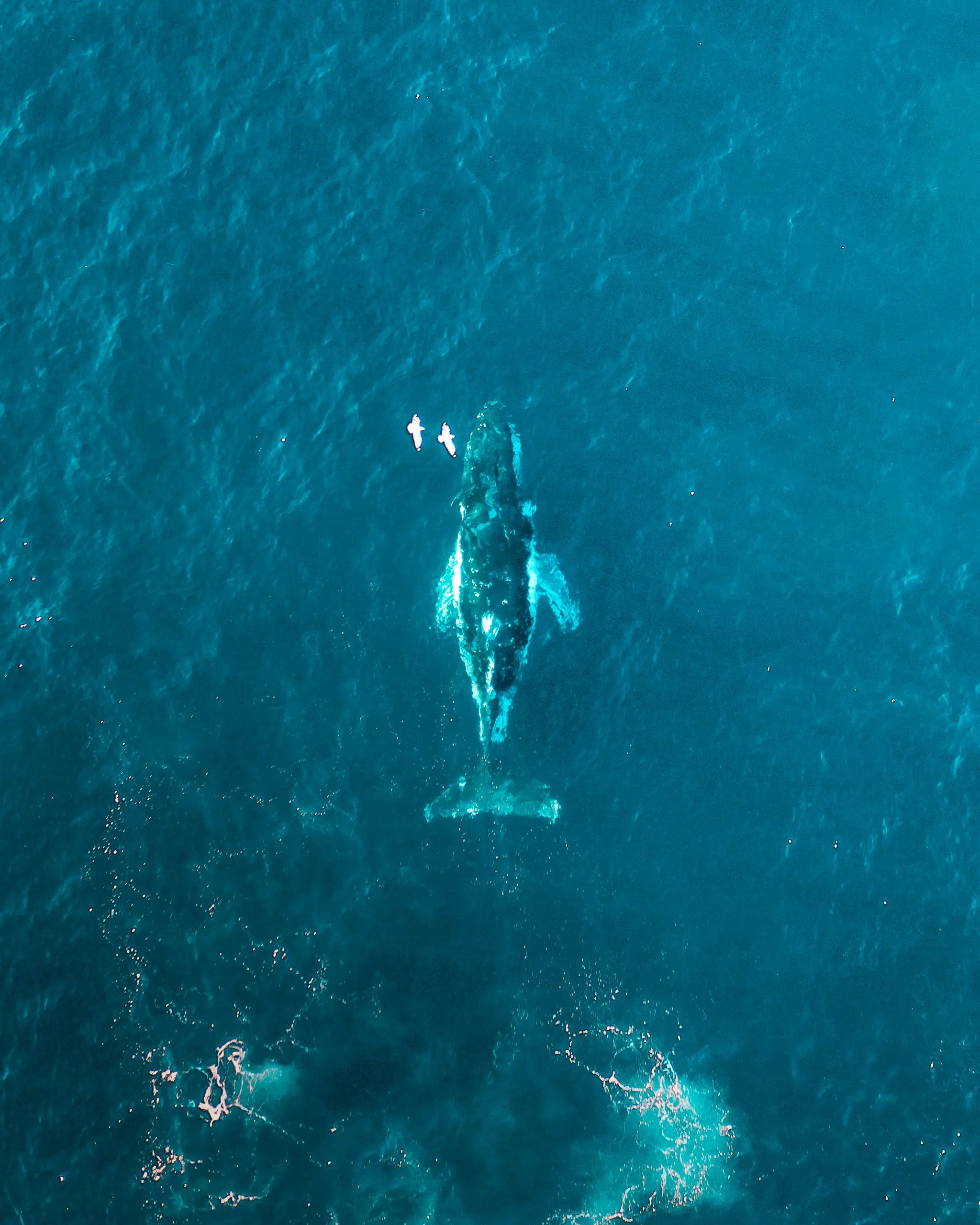
With a human, however, we immediately categorize – we classify, evaluate, take sides. The whale completely eludes this.
What role does the collective experience play – the knowledge that many are feeling the same thing right now?
Certainly a big one. And in this case, this collective energy discharged in a positive direction. It shows society: This doesn’t pass us by indifferently. We have a fundamental ability for empathy, which has been strongly channeled here, and that is initially something encouraging.
So would you see it more positively – or is such emotionalization also concerning?
In individual cases, it may have been concerning – when people with questionable ideas intervened on the spot. But in general? I like living in a society that has compassion for a whale.
What makes me think is the simultaneity: On one hand, society is passionate about a stranded whale – on the other hand, compassion for people in existential distress is often much more difficult.
Why do we sometimes find it easier to empathize with an animal than with people in need?
There is a well-known image from the refugee crisis – that of a drowned little boy on the beach. That also caused a great outcry. But not with everyone. There were people who were left cold by it, or worse.
It's different with the whale. A humpback whale stands outside social categorization – we don't initially associate it with societal conflicts. And it is probably for this reason that it is such a widespread societal phenomenon.
Is there a term for this phenomenon in psychology?
I can't immediately think of any established term.
His colleague, Dr. Martin Rein, chief physician of the Oberberg Day Clinic Munich Bogenhausen and specialist in psychiatry and psychotherapy, who is present during the conversation, spontaneously suggests the term "collective hyper-empathy."
Dr. Musil: A nice coinage, that actually describes it very well.
There is also the concept of parasocial bonding. How do you classify that?
In people with mental illnesses, we often observe that animals—service dogs, horses, cats—are experienced as more reliable relationship partners than humans. That is the core of animal-assisted therapy approaches: Animals do not disappoint, do not abuse, do not judge.
But I wouldn't conclude from this that we as a society are collectively attachment-disordered and have therefore developed a parasocial bond with Timmy. Hardly anyone here has developed a genuine parasocial bond—and if so, then only in isolated cases.