© Nataliya Vaitkevich
May 5, 2026
Margit Hiebl
The sense of touch is vital: How touch enables diagnoses and supports healing in osteopathy, surgery, and TCM.

© PMC
With
Prof. Dr. med. Carina Riediger, MSc
It is the very first sense we develop in the womb and the last one we lose when we die. Without it, we couldn't (survive). The sense of touch is undoubtedly one of evolution's most ingenious developments. With over 17,000 receptors, the fingertips can detect elevations smaller than a fifth of a millimeter.
And different receptors are responsible for each sensation: "Merkel cells" register fine pressure differences, "Meissner's corpuscles" respond to light vibrations, "Ruffini endings" to stretching and movement, and "Pacinian corpuscles" to stronger vibrations. There are also thermal and pain receptors.
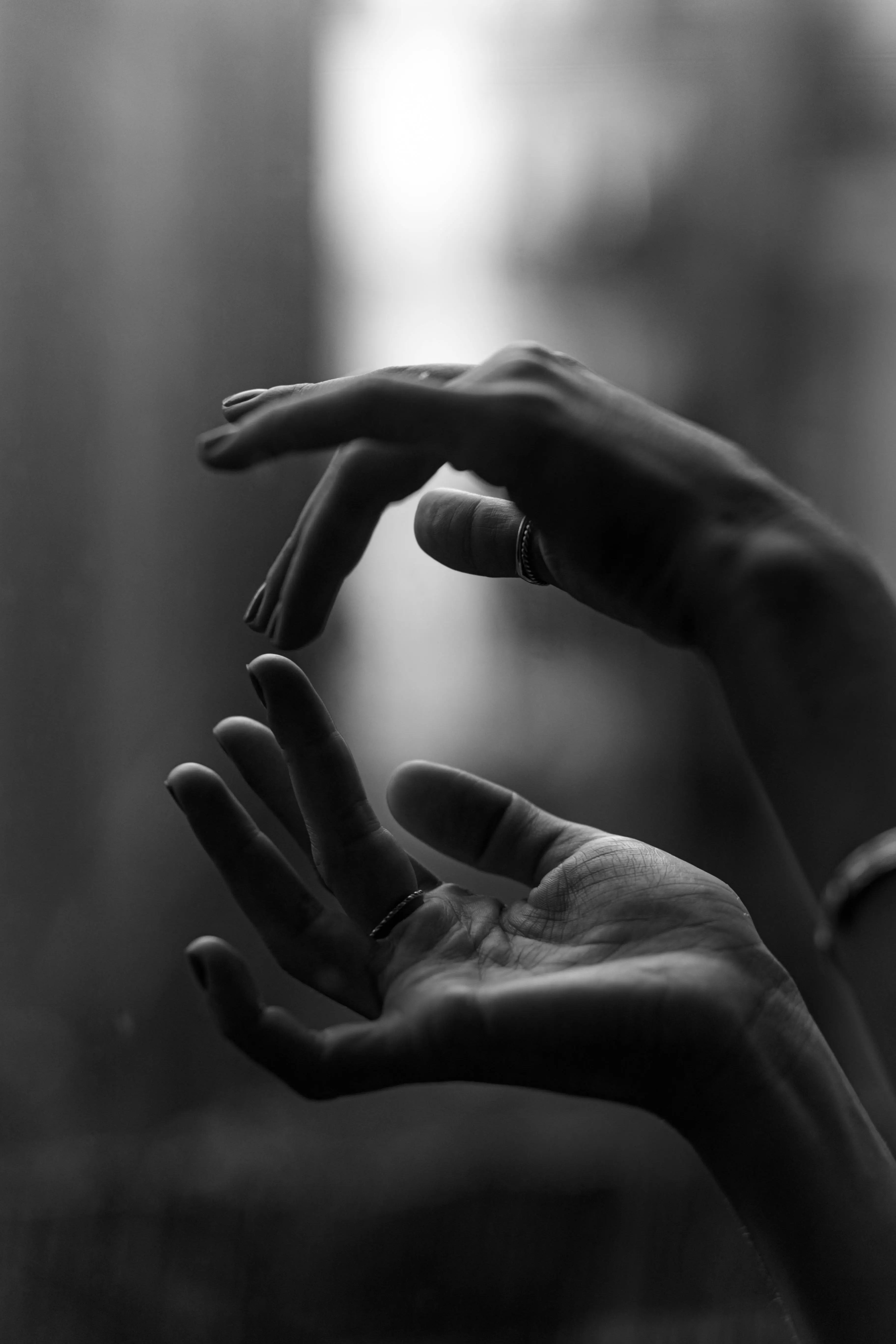
All this information is transmitted via nerve pathways to the brain which forms an astonishingly precise image from it that even the best sense of sight could not draw. The fingertips, as highly sensitive perceiving organs, make them the most important tool in numerous healing professions:
"In the Osteopathy they speak of Thinking Fingers – 'thinking fingers', says Munich osteopath Andreas Stollreiter. 'You transfer the thinking to your fingertips, leave your head for a moment and fully engage with perception.'
With their fingertips, an osteopath 'reads' the body. 'I sense temperature differences, whether there are hardenings, whether it pulsates, feels alive or blocked,' explains Stollreiter. A diagnostic measure here is the 'Primary Respiratory Mechanism'. This involves the so-called cerebrospinal fluid, colloquially also known as brain or nerve water – the 150 ml of fluid circulating in the body.
Osteopaths can feel the cerebrospinal fluid throughout the body. However, because it surrounds the brain and spinal cord, it is most easily felt at the head and sacrum. 'It moves in a rhythmic frequency of eight to twelve times per minute. If it is slow or weak, it indicates that something is metaphorically not flowing.' After treatment, it should be harmonious again, regardless of where the barrier was.
In search of blockages, Stollreiter palpates superficial fascia, deeper organ layers, or bones. 'I start at the head then maybe the head fascia already guides me and shows where the tension comes from.' Because in the BodyIn simple terms, if everything is connected, it could be that the unexplained neck pain might be due to a long-forgotten stumble.
And the foot bones have shifted downwards, pulling the fibula downwards, which then pulls on the tract to the hip and from there towards the head. Therefore, one should not be surprised if the osteopath treats the foot for neck pain. "Warmth, movement, or a sudden relaxation under the hands indicate that the body is responding and that you are on the right path."
The ideal moment for Stollreiter is when he feels at one with the tissues under his hands – stillness and movement at the same time. Having a good instinct also means knowing when to stop. "There are treatments that you stop after 30 minutes because the body can't take any more input. Sometimes I place my hand and immediately sense that I can’t get through the tissue," Stollreiter says.
"If I then ask: 'May I treat you' – and the patient says 'yes', everything changes. The nervous system calms down, the tension decreases." This small gesture becomes a moment of trust – and the beginning of the healing process. "The osteopath doesn't heal, he just gives the body back the ability to heal itself," says Stollreiter.
More and more often in surgery robot-assisted procedures in use. The precision is high, the incisions are small – but how important is the tactile sensitivity when the hands control the instruments only through a console? “Not as important as in open procedures,” says Prof. Dr. Carina Riediger, medical director of the Clinic for General, Visceral, and Thoracic Surgery at the Marienhospital Stuttgart.
“With the robot, you don't have haptic feedback, everything is supported visually. That is actually one of the disadvantages compared to open procedures, where you can feel how the tissue feels.” Isn't something missing there? “Yes, you have to adapt a lot as a surgeon, because the brain no longer receives feedback through the hands, but through the visual channel – you have to translate that first. But it's a matter of getting used to.”
Although the robot offers a 3D visualization and tenfold magnification, “a sensory quality is missing,” says Riediger. How important this is is shown, for example, in liver surgery. “A liver has many shades. Feeling whether a liver is very soft, normal, or hard helps decide how much surgery the organ can tolerate.” This also applies to the intestine: “You can feel whether the intestinal wall is sensitive or robust – this helps to assess whether a long suture will heal well.”
The robot does not bring advantages in all areas. “However, if you have long surgical experience, this, coupled with excellent optics, can compensate for a lot,” says the surgeon. “Nevertheless, you will always weigh what is more advantageous for the patient and whether the quality of the operation is impaired.”
In emergency operations or complex liver operations, she would always prefer open surgery. Tactile sensitivity still plays a role for her in another context: “I shake my patients’ hands. I consider this very important – at the first contact and also during the physical examination, it builds a connection. If you don't have a good sense of touch, you're not a good surgeon. But just as important is the emotional sensitivity – especially with serious diagnoses.”
"In the TCM the diagnosis is essentially made by palpating the pulse, but also by examining the tongue and questioning the patient," says Dr. Yumiko L. von Hasselbach from the Specialist Center for Chinese Medicine Prof. Hempen and Colleagues in Munich. "At six pulse points, you feel the quality of the pulse wave in the three levels. This allows more than 30 different pulse qualities to be differentiated, which provide conclusions about the energetic state."
How this feels in practice is described by the general practitioner and TCM doctor like this: "At each pulse point – like a pianist – you press the pulse wave down and feel when slowly releasing how its quality feels in the different levels." The pulse can be too deep or too superficial. "If it is too superficial at the pulse point of the lung functional circle, this indicates, for example, the struggle of the defense Qi during an infection," she says.
The pulse can also be too slow or too fast. If it is fast, this indicates increased dynamics of the disease, such as fever. Additionally, the pulse can be weak or overloaded – if it is overloaded, it indicates disease-inducing factors, in the TCM categorized, for example, as "Wind," "Cold," or "Heat."
TCM has a traditional and very vivid language for this: 'In the case of so-called wind afflictions, the pulse feels tense like a guitar string – for example, in the case of a cold. A weak, silk-thread-like pulse indicates that too little Xue and fluids are flowing. A Qi stagnation, on the other hand, is indicated by an overloaded pulse that dances like a bean on a stalk.
A Xue stasis feels rough like a knife scraping over bamboo. A slippery pulse, on the other hand, is reminiscent of reaching into a bowl of pearls – it indicates a weakness of the center, for example in chronic fatigue. Much can also be read from the skin: whether it is cold, warm, moist, dry, or rough, whether there are swellings or hardenings, whether the tissue is spongy or firm – all provide additional information about the state of the organism.
The sense of touch also has a therapeutic side in TCM. 'Acupuncture points are palpated and located with the finger before the needle is inserted,' explains Dr. von Hasselbach. 'Acupressure can also be used to stimulate the points.' A study by Charité Berlin showed that merely by acupressure of suitable acupuncture points, menstrual complaints can be alleviated.
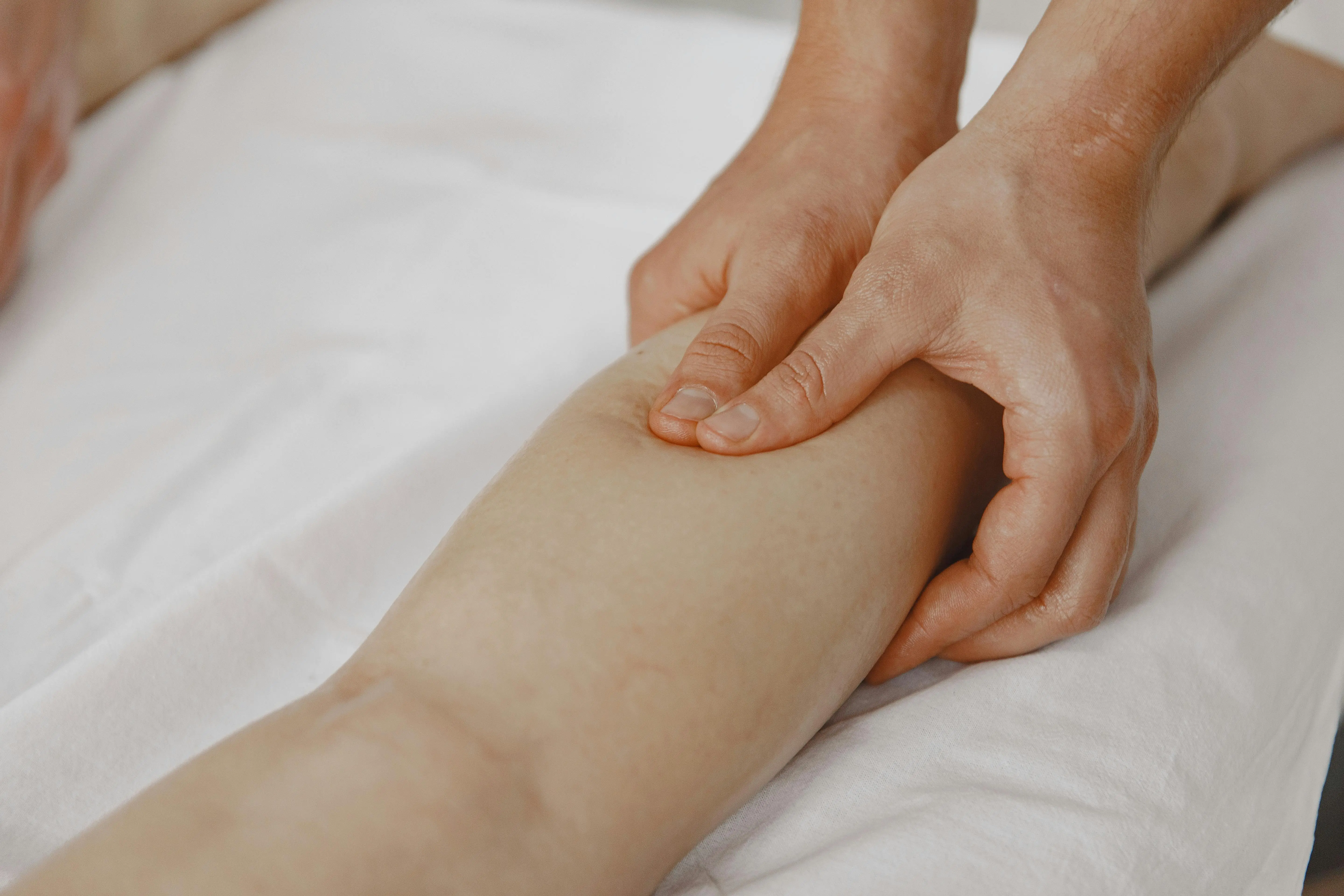
Tuina, the Chinese manual therapy, uses the sense of touch for diagnosing disorders in the meridians and body regions and also for their treatment: With the fingers, pressure is applied, rubbed, tapped, pushed, shaken, pulled, and plucked. 'In this way, stagnations and blockages of Qi, Xue, and body fluids are resolved – and pain relieved."
"Manual treatment is for me an expression of deep respect - towards the largest and, I find, most fascinating organ of our body: the skin," says Munich cosmetician Nina Stock. That is why she works almost exclusively with her hands in her institute.
"One is touched on an almost meditative level. Devices or products alone cannot achieve this." Massages promote blood and lymph flow, relax the muscles, deepen breathing, and reduce stress. "Even the immune system can benefit from it."
After more than 30 years of treatment experience, she no longer follows a fixed scheme: "I combine techniques and tailor them individually. A kind of flow is created - I let my intuition guide me." Often it is the quiet moments in which the special happens:
"When the hands pause, a space is created where something like basic trust can be felt – like with a child held in one's arms," she says. And that is exactly the real value of her work. The sense of touch becomes the central form of perception during the facial treatment.
"Under the hands, I feel how the facial muscles gradually relax. Tissue that initially appears firm and difficult to move becomes gradually more elastic, the skin responds more vividly." The warmth of the hands supports this process, stimulates circulation, and gives the skin an even temperature.
"Depending on the pressure, I can work in different layers – always guided by the sense of touch, which detects the slightest changes." She experiences the power of this touch most clearly during oncological cosmetic treatments. The practice then becomes a place of strength.
"Many of my clients are unsettled by the illness and the therapies, their trust in their own bodies is shaken," she says. Added to this are the visible effects of the therapies. "My treatments are then more than just skincare. They are a soothing distraction and care – a small break from the daily challenges," says Nina Stock. She can only accompany the side effects.