© Adobe Stock
January 2, 2026
Margit Hiebl
How Acupuncture Helps with Trauma: Dr. Richard Musil Treats PTSD with the ABE Method. Experience Report on an Innovative Trauma Therapy in Bad Tölz

With
Priv.-Doz. Dr. Richard Musil
Sometimes a smell or a sound is enough - and something inside us tightens. Often we don't know why. But the body remembers. And reacts to something that lies frozen within us. Often an experience that was too fast, too intense, or too much for us. Something that shakes our psychological integrity – a mental injury. This can be a severe accident, violence, abuse, a sudden separation, or the loss of loved ones. But smaller experiences can also trigger intense distress afterward. Trauma is not just a word for big events. It arises whenever we cannot integrate what we have experienced.
And it is by no means a marginal phenomenon, but also a tribute to our times. The demands are high, stress, bullying, and humiliation often have profound effects on our mental and physical health. And more and more people are talking about it – it seems as if everyone has a bit of trauma. Well, not everyone has a diagnosable post-traumatic stress disorder (PTSD), but many carry unresolved experiences with them.
In the guidelines for post-traumatic stress disorder, it is stated that even “less severe events” can lead to people developing the full symptomatic picture of PTSD. What is always decisive is the inner structure. Classic trauma therapy often relies on talk therapy or exposure work.
A new method, which builds on an ancient Far Eastern healing practice, could become a game-changer here. Bad Tölz, August 2025. I am meeting with PD Dr. Richard Musil The specialist in psychiatry and psychotherapy is the medical director and chief physician of the Oberberg Fachklinik Bad Tölz. He is considered a pioneer and expert in treating post-traumatic stress disorders with acupuncture.
During his trauma therapy training at the Munich Institute for Trauma Therapy, he always noticed during the exposure work, i.e., the targeted re-experiencing of the traumatic situation in the therapeutic setting: "As soon as patients approach the traumatic memory again, intense physical reactions often occur — chest pressure, abdominal pulling, trembling, restlessness, strong emotions like anger or helplessness. These physical-emotional reactions must be co-regulated in the session — that is challenging," he reports.
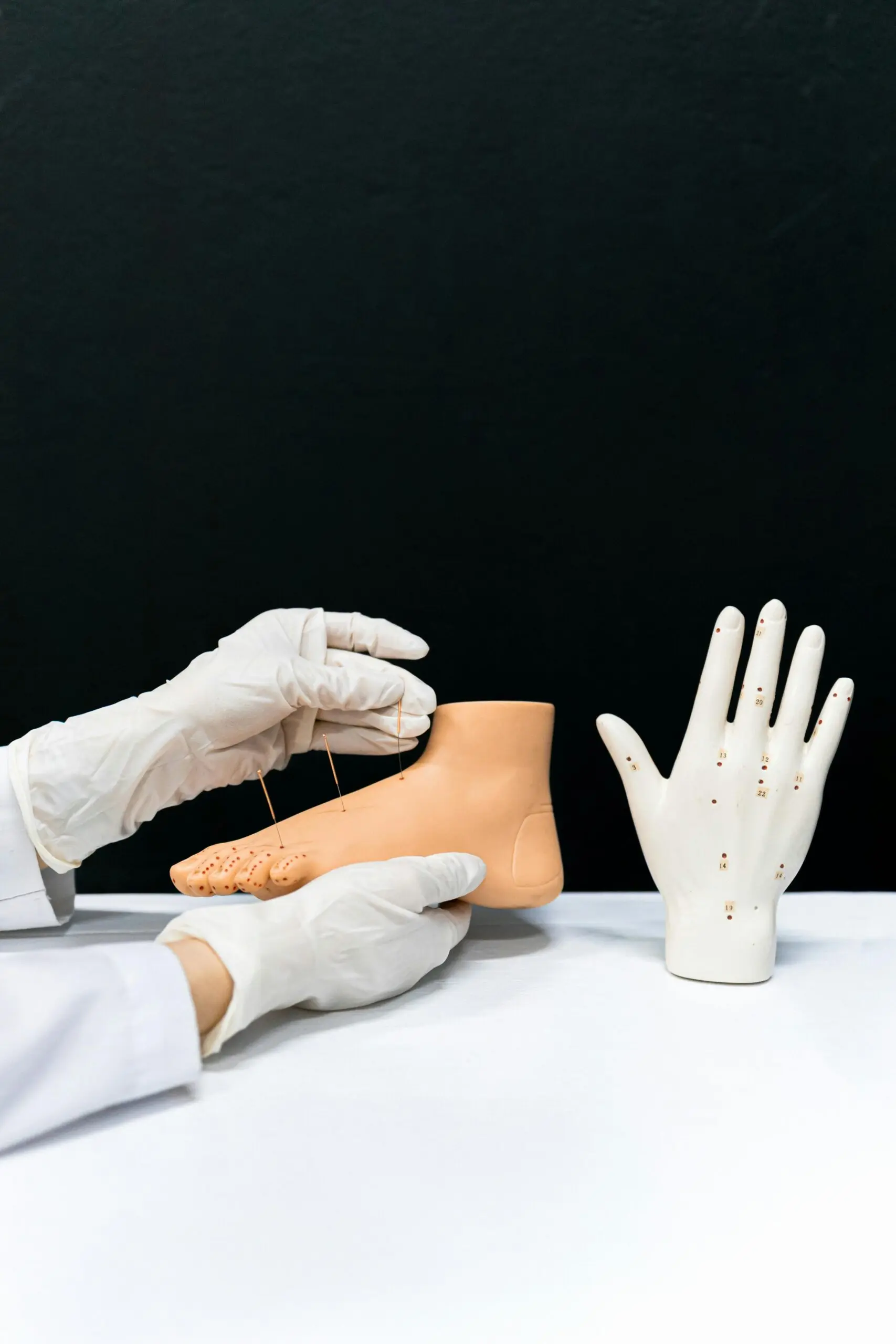
He was looking for a solution to treat these somatic side effects more specifically. And because he has appropriate additional training, he also thought about acupuncture — a suitable setting was provided by Dr. Jürgen Schottdorf, a colleague from the German Medical Society for Acupuncture: "By stimulating acupuncture points, you can change feelings directly and immediately. It is a very individual, event-related approach, particularly suitable for trauma-related disorders — but also for complicated grief processes or distressing anxiety symptoms," explains Dr. Musil.
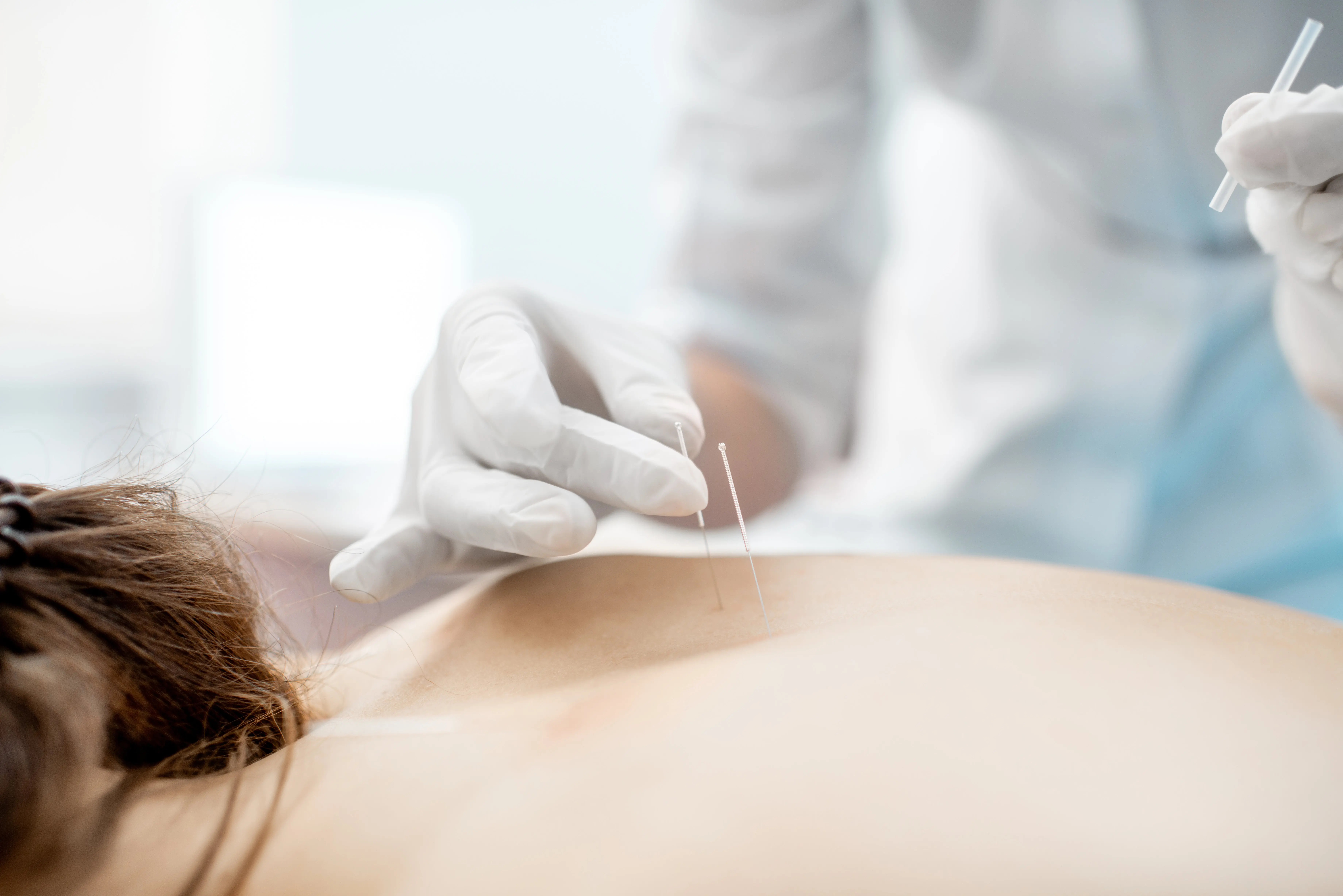
Meanwhile, effectiveness in psychiatric disorders is proven in many studies. Especially with post-traumatic stress disorders, he repeatedly achieves astonishing successes with many patients. The principle of acupuncture-based exposure (ABE) briefly: Within a treatment session, one or more distressing images from the past are presented in the mind's eye. These imaginations evoke sensations or unpleasant feelings in the body again. Sometimes it is enough, for example, if you just imagine a photo of a person.
The therapist then selects the acupuncture points that can alleviate these unpleasant bodily sensations or feelings. "If someone remembers an accident and feels pressure on the chest or restlessness, I choose a point on the pericardium meridian, which is closely connected to the cardiovascular system and emotions from the perspective of Traditional Chinese Medicine (TCM)," explains Dr. Musil. "Ideally, after several points or runs, we return to the traumatic memory, and the original image loses its emotional and physical impact — it disappears into a kind of inner fog. Because we go directly into the body with the needles, I achieve immediate regulation, something I do not know in this form from any other method."
I want to experience this myself — with a distressing experience from my childhood. I tell Dr. Musil how it came about: My parents regularly took short spa stays and then took me to my grandma. Once, when I was about five, that wasn't possible. They took me along and, hoping it wouldn't be so boring for me there, placed me in a kind of children's home on recommendation, where other children of spa guests were also accommodated.
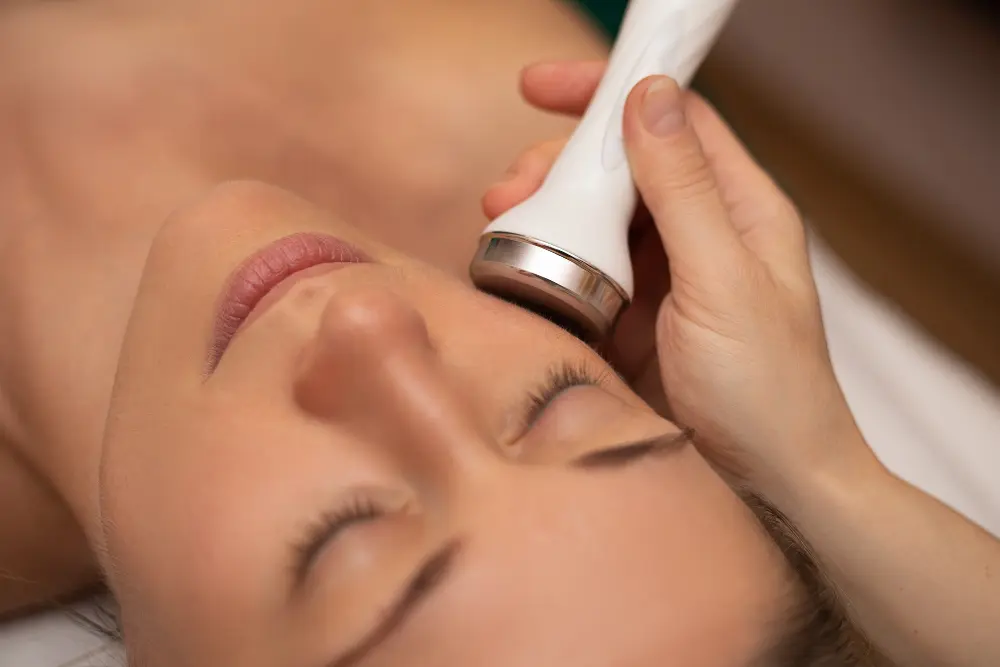
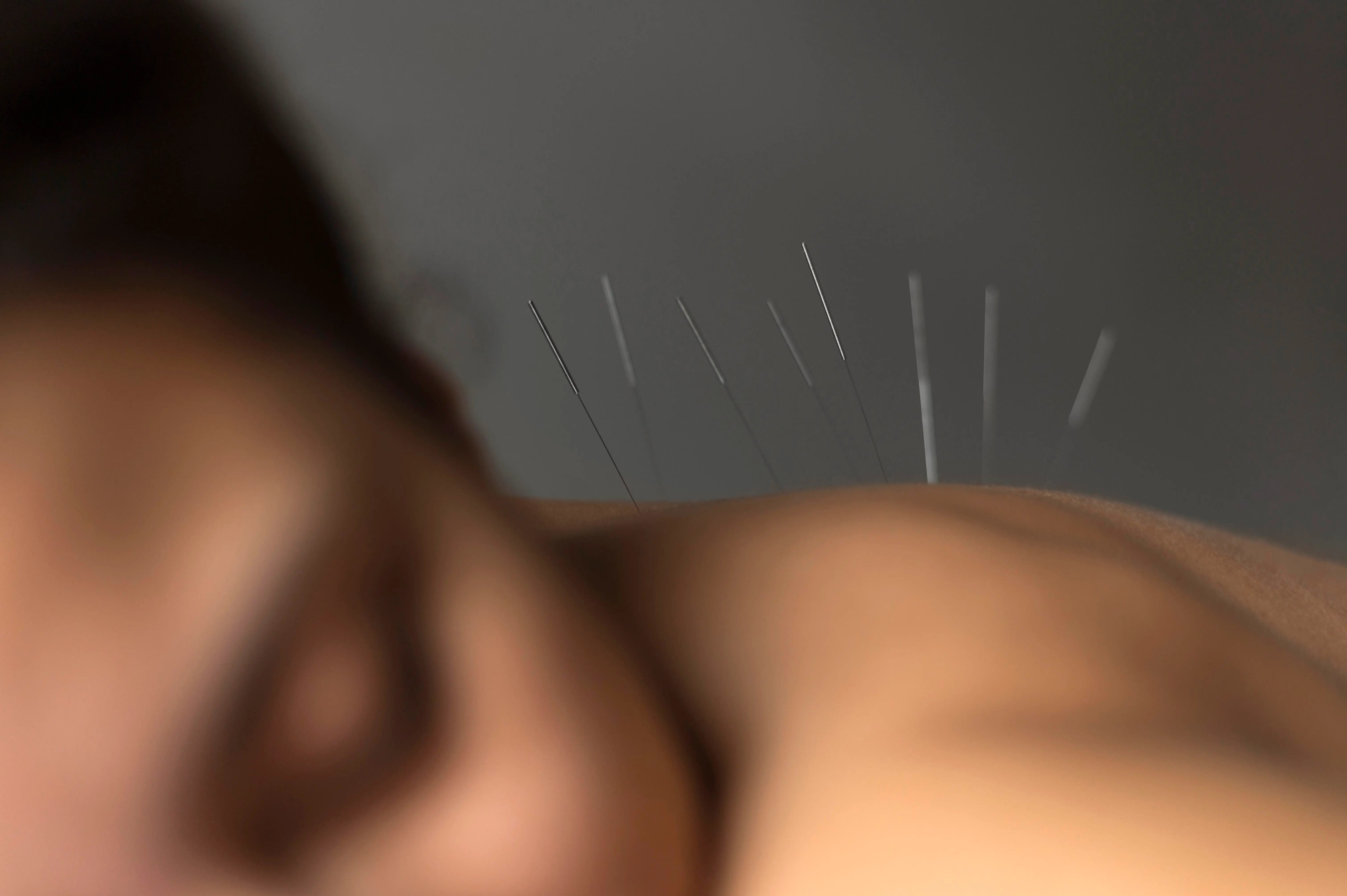
After briefly describing the traumatic experiences that followed, the doctor asks me to lie on the treatment couch. I sit on the edge, with my back to him. He first feels my back on both sides for muscle tension and places acupuncture needles at points where he can gently release the tension. This so-called Japanese palpation acupuncture forms the basis of the ABE method.
Then I can lie on my back—no problem, the needles are so flat that you don't feel them. In the supine position, several areas are palpated on the abdomen, in the middle of the sternum, or on the neck. For each of the predefined areas, there are one or more acupuncture points that can be used.
Only the imagination follows. I close my eyes. To put myself back in time, I am supposed to imagine a picture of myself... I describe to him a cheerful, open, little girl, neatly dressed with a coat and a little suitcase (a picture for which there is a photo). What do I feel? I feel the need to take her in my arms and protect her.
Then I go upstairs with my little suitcase, in which my Pixi books and a pack of tissues are stowed. The next inner picture: Both are taken away from me, the other children don’t have them either, they say. I don't understand it. I'm sad. But I can't defend myself. I describe how real powerlessness and anger rise within me. "Does the feeling lighten when I press here?" Dr. Musil asks me, and feels his way up my forearm. At the point where I actually feel some lightness, he places the needle.
The next picture that comes is initially somewhat diffuse: A dark dormitory, about ten children giggling and chatting. Only a small beam of light shining in through the open door gap from the corridor. A nun, I see her clearly in front of me now, with a flowing white habit and distinctive glasses, comes in, scolds the children—and seals my mouth with adhesive tape strips.
There it is again, the powerlessness. Oppression spreads, very real. And I feel like I can't breathe. My nose is also blocked. Musil places needles in the lung area, asks me if it gets better. He places needles on the legs, feet, wrists, seemingly everywhere—and slowly the pressure on the chest eases. But the feeling of fear remains...
He places new needles at the hairline, parting. How does the image look now, Dr. Musil asks. Is it colorful, clearly outlined? What color is it? He places new needles. "Can you remove the adhesive tape, or would you rather have someone else remove it?", he asks. In my memory, the nun removed it at some point. Ratsch – to this day I feel the pulling and burning. I touch my mouth. In the situation now, I decide to mentally remove it myself – I must do it, I feel strong enough now.
I notice that the tension eases slightly. I can breathe more freely. How does the image look now? Like an old sepia photo. What do I want to do now, the doctor asks me. Actually, I wanted to erase another image from the children's home. But I realize that I want to get out of the memory. I also want to get off the couch. We decide to end the session now. Dr. Musil removes the needles, I count along – perhaps to distract myself – there were about 50 in total. We talk for a while. I feel lighter on the one hand, but my head is full of cotton. Actually, I just want to go outside, into the fresh air.
On the way home to Munich, I open the car roof, "Up from the Bottom" by Linkin Park is on the radio. I turn it up really loud, and tears just run down my face. Very quietly. At home, I have to lie down first. For two days I have a sort of hangover. Crazy how strongly the experience was still anchored. Even though, now an adult, I went back with my parents and verbally handed over my "package" there.
And yes, my parents very much noticed at the time that something was wrong and wondered why I only answered with shaking or nodding my head. Only after a lot of questioning did I dare to tell them. My father confronted those responsible, but they denied everything – saying the child had made it up.
What does the image look like today? It's like in a fog, more and more, and I struggle to retrieve it. And: It no longer triggers anything in me. But I remember now that I often didn't dare to speak afterwards. And I remember the asthma attacks that accompanied me for years from then on. Is there a connection? I will find out. An appointment is already booked.