© Anna Shvets
March 6, 2026
Christine Bürg & Margit Hiebl
Why do we find some people irresistible? Neurologists, hormone specialists, and dentists explain what really happens in your body when attraction strikes
With experts from our network
Are there human pheromones? Does symmetry really make someone more attractive? And what does the cycle have to do with flirting? Questions that concern people – and that science can now answer quite precisely. We asked a neurologist, an endocrinologist, a plastic surgeon, a dermatologist, an ENT doctor, and a dentist what lies behind the phenomenon of seduction. The result is surprisingly concrete – and sometimes surprisingly romantic.
"There is no single seduction hormone, but rather it is the mix of different hormones and messengers that triggers this euphoria and thus has a similar effect to a drug. It's no wonder you feel intoxicated. When we flirt or fall in love, the hormones literally go crazy.
Adrenaline and noradrenaline are increasingly released, acting like stimulants, making the heart beat faster, causing the famous butterflies in the stomach, and putting the body on alert.
In addition, there is the neurotransmitter dopamine, also known as the happiness hormone, which triggers joy and desire and ensures that we find flirting appealing and exciting. When falling in love, the cuddle hormone oxytocin is additionally released, which strengthens the bond and trust with the partner.
The question of why one feels attracted to certain people has – besides psychological, social, and cultural factors – to do with the interaction of these different hormones. Since this process takes place in the brain, you can't simply draw blood and measure the individual values.
The female cycle also affects our flirting behavior. Several studies have shown that women tend to be more attracted to masculine and symmetrical facial features, deeper voices, and certain male behaviors during their ovulation phase, when estrogen levels are highest – all traits considered signs of good genetic quality.
How seductive we appear – this also depends, among other things, on hormones. If they are in balance, it has a positive impact on our well-being and thus also on our charisma and attractiveness.”
"Seduction is a complex psycho-physiological process that is deeply rooted in the neurobiological mechanisms of the brain. Central players here are the limbic system, the prefrontal cortex, and various neurotransmitters.
The limbic system controls the brain's reward system and thus plays a crucial role in seduction. Particularly important is the nucleus accumbens, which is responsible for the experience of pleasure and reward. Activation of this center releases the neurotransmitter dopamine, which is closely associated with the feeling of joy and motivation.
In the context of seduction, the dopamine system is stimulated, which results in a positive reinforcement of experienced emotions and increases the desire for further positive experiences.
The amygdala, also known as the almond nucleus, processes emotions: it evaluates stimuli, is closely linked to the perception of attractiveness, and the recognition of social signals. In seduction, the amygdala responds to subtle cues of interest or affection and triggers emotional reactions such as arousal or joy.
Finally, the hippocampus, which is responsible for memory and learning, stores experiences and associations that can influence the perception of seduction.
The prefrontal cortex is responsible for conscious control and decision-making. This area helps to consider social norms and control personal impulses to regulate behavior. Neurotransmitters like serotonin and oxytocin also play an important role. Serotonin affects mood and can provide a sense of well-being in social interactions. Oxytocin promotes bonding and trust and plays a key role in interpersonal relationships.
In cases of neuropathological changes in these areas, such as in addiction, personality disorders, or dementia, abnormal behaviors and disruptions in social interaction can occur, impairing the perception and exercise of the phenomenon of seduction.
The neurophysiological foundations behind the act of seduction illustrate how closely our biological systems are connected to the emergence and development of interpersonal behaviors."
"Symmetry, clear skin, harmonious proportions – all of these play a role when we talk about beauty. Studies show, for example, that a symmetrical face is perceived as particularly healthy, genetically stable, and thus seductive. And yet perfect symmetry often appears unnatural, almost artificial, because attractiveness is much more than pure geometry.
Our brain loves structure but simultaneously seeks uniqueness. 'Wabi Sabi,' a Japanese aesthetic, calls it the beauty in the imperfect – and modern psychology confirms: Small deviations from the ideal – a mole, a distinctive nose – make people unique and often appealing precisely because they give character.
Everyone knows the term 'Golden Ratio'– a harmonious proportional relationship (1:1.618) known since antiquity, found in nature, art, and architecture, as well as in faces and body shapes, which we subconsciously perceive as attractive. In aesthetic treatments for facial modeling, the Golden Ratio often serves as a design guide and orientation.
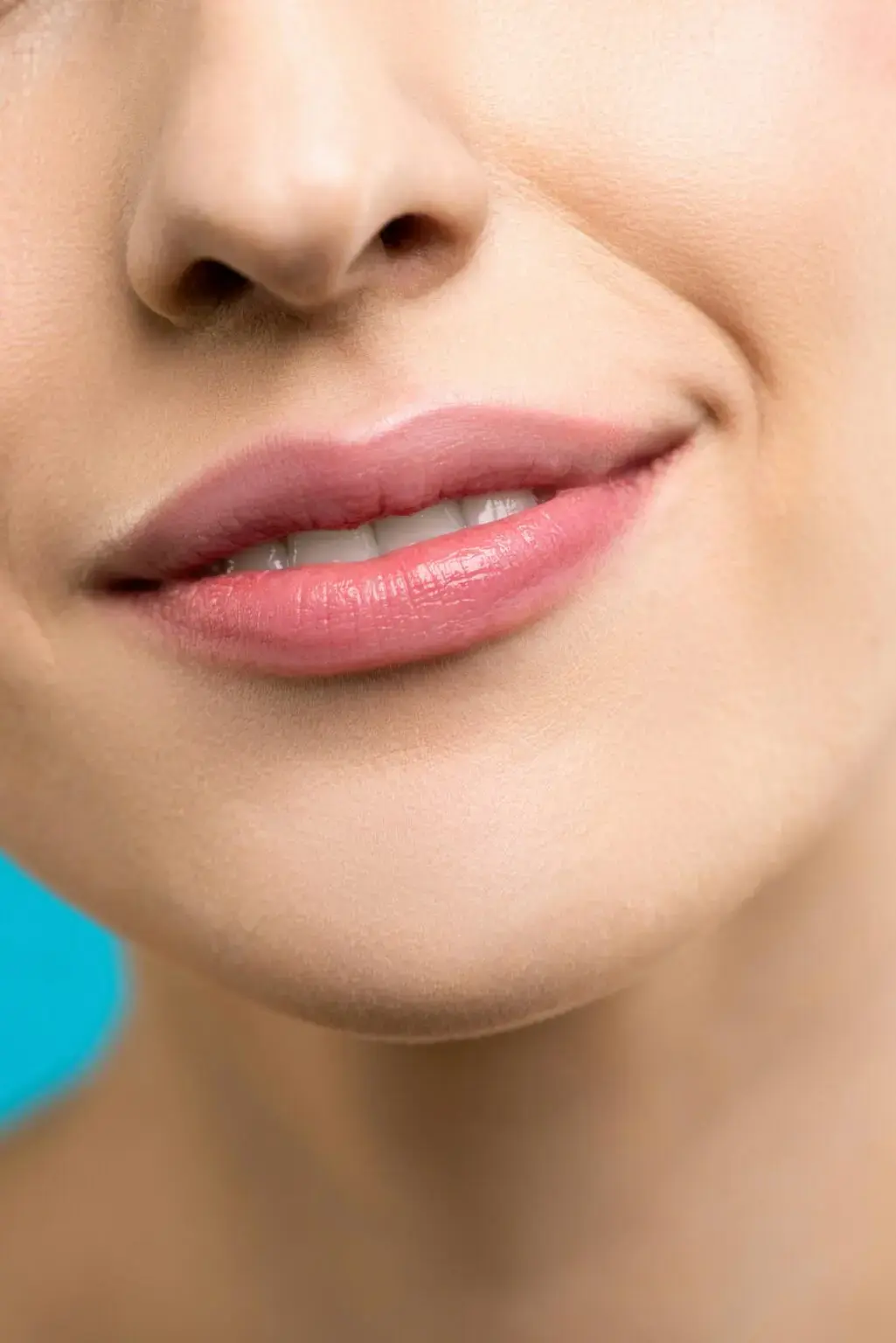
A classic example is lip augmentation. Here, the ratio of lower to upper lip of approximately 1.6:1 is particularly appealing. In profile optimization, the distance between the tip of the nose, lips, and chin is modeled based on the golden ratio, as is the height and width of the cheeks.
However, even here it applies: The ideal measure is not the measure of all things. In the real world, balance is often more important than perfection. A strong silhouette, the contrast between narrow and curvy shapes, between soft expression and angular lines – all of this is attractive because it creates tension.
Additionally, what is considered beautiful changes with the spirit of the times, media, and role models. While pale skin and an androgynous appearance were once the ideal, today it is curves, naturalness, and even visible aging. Modern attractiveness has become more complex.
On TikTok, millions celebrate the 'Clean Girl Aesthetic' as well as the 'Messy Boyfriend Aesthetic': Effortless elegance meets ironic imperfection. The signature effect is created by gap teeth, baldness with attitude, and strong eyebrows.
Culture also influences individual perceptions of beauty. While clear skin and healthy hair are universally considered beauty ideals, there are cultures where a strong physique or fair skin are still expressions of status and thus sex appeal. Attractiveness is therefore biologically shaped and culturally refined.
Role models also influence our understanding of beauty. Those who resemble them in appearance, posture, voice, and presence evoke positive emotions and thus a strong attractiveness. These can be people who are similar to oneself, as this similarity creates trust.
Or others who are completely different and captivate us precisely because of that. Beauty is therefore not an algorithm but a resonance. Attraction does not live on a smooth surface, but on personality and presence."
"The skin plays an outstanding role in the context of seduction, attractiveness, and interpersonal attraction. Its texture, firmness, and natural scent make it an essential part of non-verbal communication.
The need to touch skin is deeply rooted in human nature. Skin-to-skin contact is the most original form of interpersonal communication. Even in newborns, touch has a calming, bonding-promoting effect and is vital.
So it is a basic human need to create closeness through skin contact. Touch creates trust and makes closeness tangible, also because the skin responds directly – with goosebumps, blushing, or warmth. Thus, the skin becomes a mirror of our inner self – and reveals much about emotions.
Skin conveys intimacy – also in a figurative sense: Those who show it reveal something about themselves. Those who are allowed to touch it are admitted. In this way, it signals access or distance.
And it tells stories of lived moments: Laugh lines, freckles, or fine lines are a sign of experience and authenticity, which appears attractive. True seduction begins with healthy skin, not exaggerated perfection. Thus, a radiant complexion and well-cared-for skin appear far more attractive than flawlessness.
However, the attractiveness of the skin is not a static state. It changes due to internal and external influences. During the fertile phase of a woman's cycle, it appears more radiant, even, rosy, and is perceived as particularly attractive. Likewise, after exercising, when the skin is better circulated, it is referred to as the 'post workout glow'.
Light also plays a role: gentle, warm light – such as at sunrise or sunset – makes the skin appear particularly soft and even. In summer, the sun gives the skin an even tone, makes it shine, and highlights pigments. And of course, emotions also affect skin health: while the skin often suffers from stress, happiness, being in love, or excitement have a beneficial effect.
In short: People in a positive mood appear more attractive—not only, but also because of their skin. Seduction doesn't necessarily begin with the other person, but with oneself. An even complexion, natural elasticity, and a gentle glow are associated with health, freshness, and energy. Well-groomed skin also signals that someone takes care of themselves. It stands for self-love, mindfulness, and a conscious body awareness—qualities that are attractive.”
“Humans perceive fragrances from their environment primarily through two sensory impressions. Primarily through the specially trained olfactory sensory cells, which allow us to distinguish numerous scents. These are chemically absorbed and converted into electrical signals in our nerve pathways. In addition, fragrances can be identified via somatosensory receptors.
Humans also emit their own fragrances. Most are formed in the so-called scent glands, primarily in the sweat and sebaceous glands. These scents are genetically individual and encounter a very individual composition of one's skin flora, which consists of bacteria, fungi, etc., as a microbiome.
This mixture creates the unmistakable, personal body odor. Sex hormones can also influence the scent glands, which is why body odor tends to intensify with puberty.
The basic smell is determined by certain proteins (MHC complex). This can be similar depending on the degree of relationship and also determines whether two people can 'smell' each other. In animal models, it can be shown that this mechanism provides a natural incest barrier, and animals that are genetically dissimilar usually mate.
However, many vertebrates also have the Jacobson's organ in the nasal mucosa, which can only be rudimentarily detected in humans or is only present as an embryonic feature. This organ is responsible for the perception of pheromones (messenger substances), with functions that are sometimes vital for animals in terms of behavior, foraging, territory marking, and reproduction.
Even though it would often be desirable from a commercial point of view, it cannot easily be transferred to humans and their sexual interaction biologically.
It is rather assumed that in humans, there are presumed pheromones over scent glands, but these are mediated through the classic olfactory sensory impression. This is because sensory impressions are not only guided via the Jacobson's organ but also through the olfactory cells and olfactory pathways to brain areas that connect smelling with the processing of emotions and particularly memory.
Characteristic: the emotional experience of smells that polarize. Either you can smell something and someone or not. Likewise, places and people from the past are associated with smells and can be quickly reactivated. This connection also plays an essential role in human sexual behavior. This becomes clear when something smells bad. While we are practiced in looking away or not listening, it usually fails to 'smell away'.
When someone says that the food or a person tastes good, it usually refers to the sensory impression that represents an interplay of taste and smell – even on a neuronal level. Taste qualities are mediated by cranial nerves that have other functions, while the olfactory cells are further processed by their own cranial nerve.
People with reduced or absent sense of smell have a significantly increased risk of depression and/or emotional dysfunctions. This is understandable because the emotional processing and evaluation of olfactory impressions are missing, and those affected feel numb to enjoyment.
If food can only be judged by its texture and at best by the taste qualities sweet, sour, salty, bitter – and, newly added, umami and fat – the joy of eating quickly disappears. Since smelling is also deeply rooted in us as an identification of dangers (fire, spoiled food, etc.), the loss is also closely associated with fear."
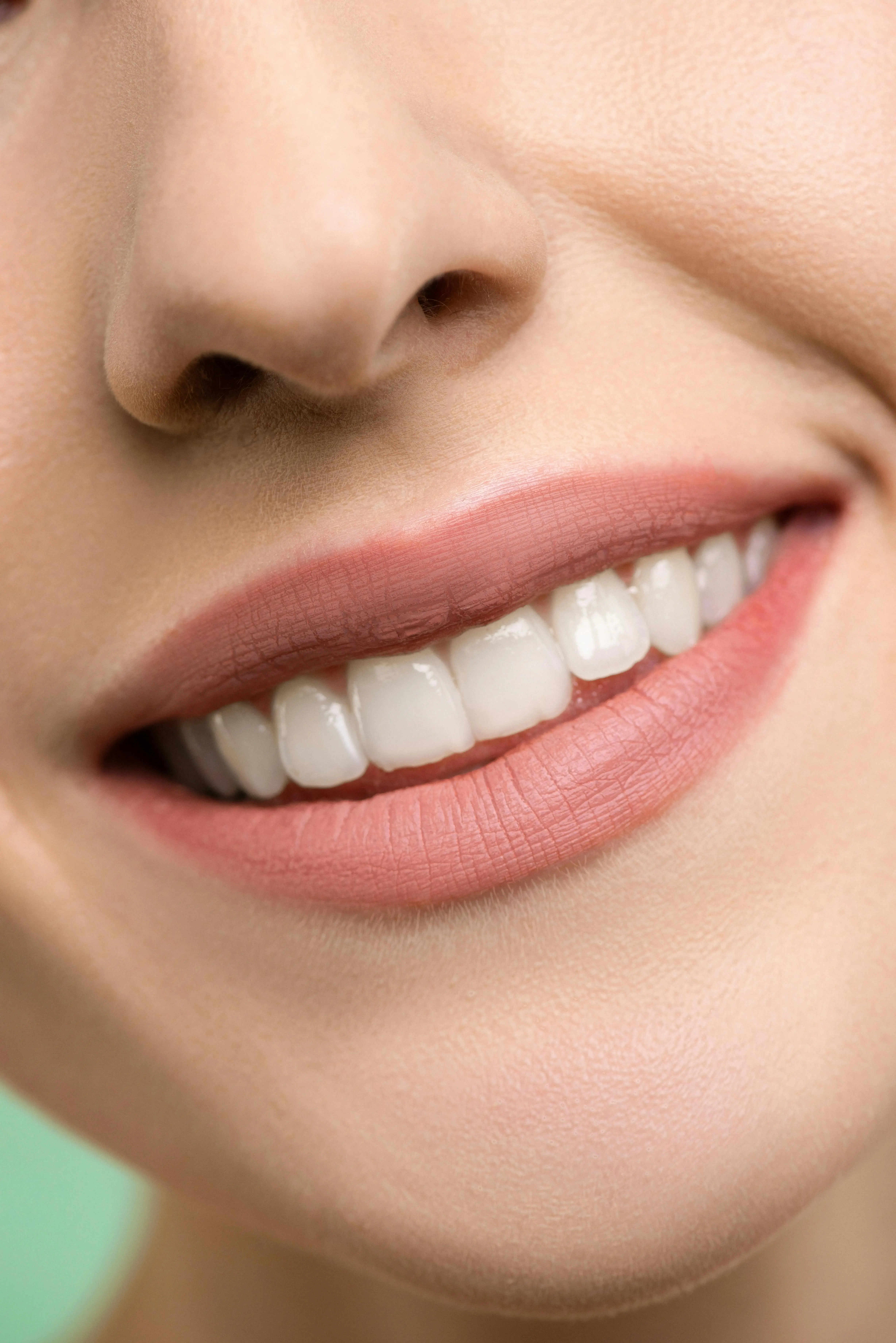
"A smile signals trust, openness, and also attractiveness. Studies show that it is a key factor in choosing a partner. When getting to know someone, we first look into their eyes, then at their teeth, after which it becomes gender-specific.
Our smile therefore shapes the first impression – and this sometimes speaks more than a thousand words.
Because our brain reacts particularly strongly to symmetry, brightness, and contrasts – exactly what well-maintained teeth provide. Neuroaesthetic studies show that looking at a beautiful smile activates similar rewarding brain areas as music, good food, or even being in love. They also demonstrate that white, straight teeth are associated with intelligence, success, and trustworthiness.
However, it's not only about aesthetics or beauty in the classical sense – harmony, charisma, freshness, smell, and health in the oral area also play a crucial role. Because: Our breath, taste, and even partner choice are connected to the oral microbiome. Certain bacterial compositions are associated with more pleasant smells and better oral health.
In the future, oral microbiome analyses could be an integral part of the beauty or dating context. Scientifically proven is also that halitosis (bad breath) is one of the strongest attractiveness killers – especially in intimate proximity. The tricky part: many affected individuals don't notice it themselves.
Regular dental visits, professional dental cleaning, and targeted diagnostics – such as with a tongue swab – can help here. Fresh breath is not a luxury but a basic requirement for interpersonal closeness, attractiveness, and indeed seduction. It's not just the teeth that play a role: full, well-circulated lips in combination with visible, well-maintained teeth are considered particularly seductive – an interaction that works strongly subconsciously.
In combination with facial expressions, the mouth area sends non-verbal signals of openness, health, and fertility. However, beautiful does not automatically mean flawless. Of course, symmetry and proportions play a role, as do tooth color and alignment. More importantly: the teeth should fit the person. A small imperfection, like gaps or slightly crooked teeth, is often more memorable than a standardized smile – no seduction without individuality.
Dentists call this aesthetic imperfection. On the other hand, even the smallest aesthetic corrections can positively influence self-perception. A person who is no longer ashamed when smiling automatically exudes more self-confidence. Nevertheless, the intervention should always fit the person, not an unrealistic ideal image.
The natural dentition is a highly complex system that we want to preserve. The best seduction is achieved through naturalness. And: True attractiveness begins with health."

 Find a Doctor
Search the network for suitable specialists and contact them directly

© PMC
© PMC
Radiofrequency, ultrasound, micro-coring: How much can the latest skin-tightening treatments achieve without surgery? Plastic surgeon Dr. Lukas Kohler explains which methods show promise, where they fall short, and why some treatments can even make the face look older.
Christine Bürg & Marianne Waldenfels

An interview with
Dr. med. Lukas H. Kohler

ARFID is often mistaken for picky eating, partly because weight can be normal. Chief physician Dr. Tabea Bauman explains how to recognize the eating disorder and why pressure at mealtimes does more harm than good.
Christine Bürg & Marianne Waldenfels

An interview with
KIRINUS Privatklinik Am Friedensengel

When the days get shorter, many people’s moods take a dip. But not every winter slump is harmless: psychiatrist Prof. Dr. Andreas Menke explains when the winter blues turns into seasonal depression that needs treatment.
Christine Bürg

With
Prof. Dr. med. Andreas Menke

When cancer runs in the family, questions about one's own risk often follow. In the first installment of her column, geneticist Dr. Laura von der Heyden explains how inherited genetic variants influence the risk of breast, colorectal, and prostate cancer — and how this knowledge can change preventive care.
Dr. med. Laura von der Heyden

By