© Shiny Diamond
February 27, 2026
Christine Bürg
Red wine, coffee, turmeric – what stains teeth the most? Dentist Dr. Christoph Wenninger explains which foods stain teeth, when bleaching makes sense, and what to consider when whitening.

An interview with
Dr. Christoph Wenninger
Radiant white teeth are considered a beauty ideal - yet many people struggle with stubborn discolorations. It's not always just the morning coffee or the evening glass of red wine. Often decisive is something you neither see nor feel: the condition of the enamel.
Dentist Dr. Christoph Wenninger explains in an interview which foods and drinks really stain teeth, why whitening products from the drugstore can be risky - and what professional bleaching can (and cannot) achieve.
What five things should you not eat or drink if you want white teeth?
Anything that naturally causes strong discoloration - such as excessive consumption of red wine, coffee, and tea. How strongly the teeth are stained depends - regardless of what you consume - also on the tooth surface and is individually different.
With rougher enamel, residues are more likely to stick than with softer or smoother enamel. The condition of the enamel is also related to age: Over the years, it becomes more brittle, is not as resistant, and discolorations are deposited faster.
Do teeth only discolor if I drink a lot of tea, red wine & co.?
You can't say that in general. One person drinks a lot of coffee and yet the teeth hardly discolor; another drinks little but has the same degree of discoloration. The enamel surface is always crucial. It also depends on how often you go for prophylaxis, how the enamel structure is maintained - at home, in the practice. Also on what tools are used…
Back to food. You mentioned that anything that stains heavily also stains teeth – so certain spices like turmeric, fruits, and vegetables as well?
Yes, also. But not nearly to the extent as with drinks. We only see it with heavy tea and red wine drinkers. Even smoking sometimes affects tooth color more strongly and sometimes less – depending on the surface texture of the enamel.
And what can people with a rather rough surface do to avoid discoloration?
You can smooth the surface with a polish – it helps at least a little. Additionally, you should use a toothpaste that doesn't roughen the surface too much. There are different levels of abrasion in toothpastes. There are more aggressive and less aggressive ones.
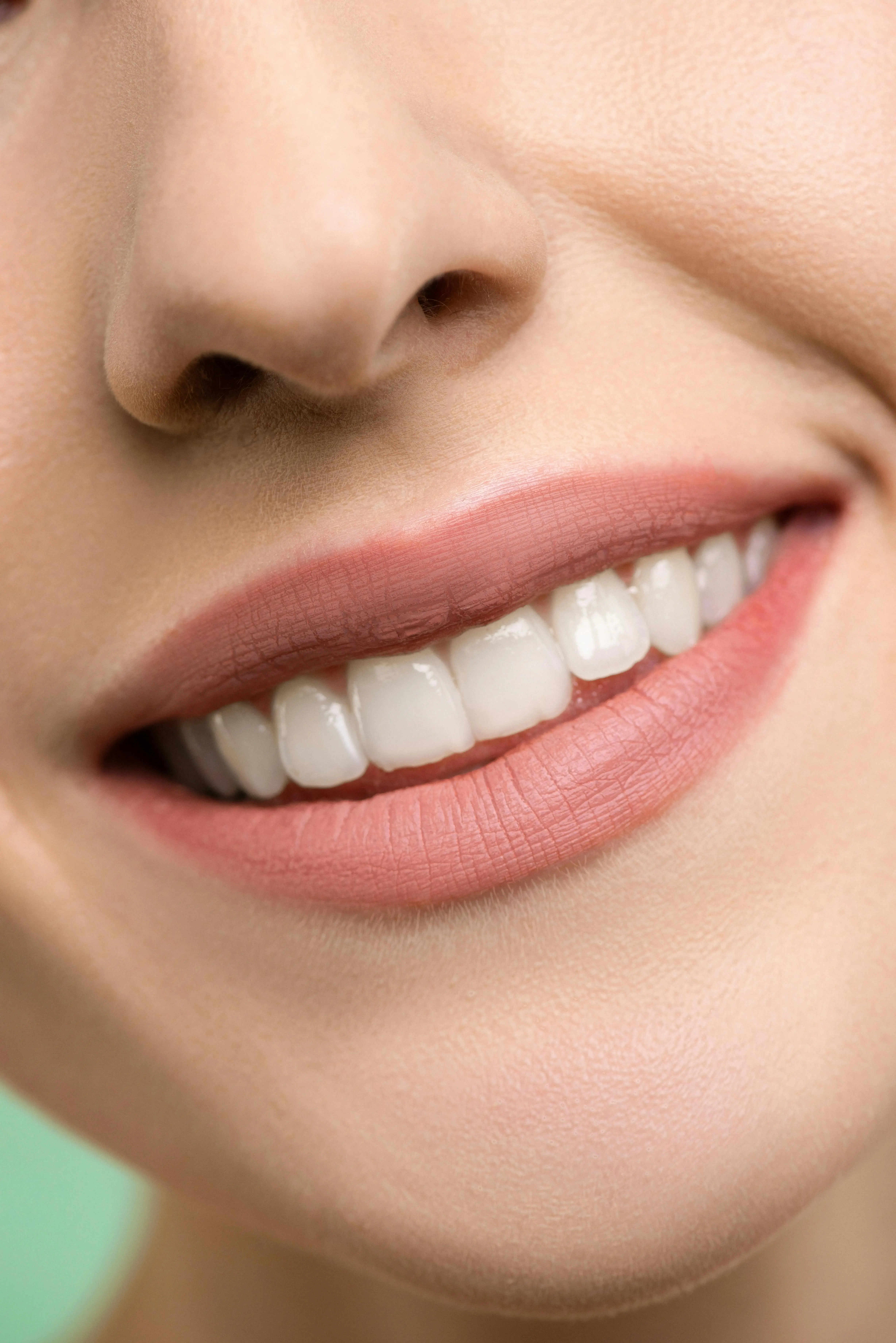
This should be adjusted to the enamel. Abrasion worsens the discoloration, in other words: With a rough surface, I need a toothpaste that is less abrasive. If you're unsure about choosing a toothpaste, you should ask the dentist or the dental hygienist.
What do you say about over-the-counter whitening products from the drugstore?
I would advise against that. The enamel can be attacked, it can lead to hypersensitivity (e.g. to acids) and thus to pain. Inflammations are also possible.
That means, if bleaching, then at the dentist. How can you regulate the degree of whiteness?
There are different methods used: Home bleaching with trays or in-office bleaching, which we perform in the practice with a gel and a special lamp. The latter has the advantage that we can tailor it individually to the desires of the patients. We can, for example, start gently and then increase the bleaching effect.
Can a tooth also react sensitively if the bleaching is done professionally?
Yes, that can happen. There are patients who need painkillers afterward.
Does bleaching work for everyone? Or in other words: Can you get every tooth white?
No, but very many. Depending on the enamel structure, tooth status, tooth structure, there can be problems. It's also difficult with heavily-filled teeth. Then you can bleach the areas that are still intact and then replace the fillings, which is tedious and difficult because the color has to be matched accordingly.
Either way, it takes a while—on average three weeks—until you can see the final result. The color needs to settle first. We have patients come in for a check-up after one to two weeks and bleach again if necessary. You can also combine in-office and home bleaching, so first with us, then at home.
The trays for home bleaching are customized, so they fit precisely, ensuring that none of the aggressive bleaching gel comes into contact with the gums. And that's also the advantage over drugstore products.
Does bleaching once mean always bleaching?
If you want to maintain the result, yes. Then it needs to be refreshed regularly. For some, it lasts one year, for others, two years. Those with customized trays can refresh in one or two nights. You fill in the gel and wear the trays overnight.
Once you've brushed your teeth in the morning, you see the effect. If it's still too low, wear the trays for a third night. Usually, you start with a lower bleaching concentration of ten percent and increase to 16% if necessary.
What foods stain teeth the most? Mainly drinks like red wine, coffee, and tea leave marks. But spices like turmeric and certain fruits and vegetables can also cause stains, although to a much lesser extent.
Why do some teeth stain faster than others? The condition of the enamel plays a crucial role. Pigments settle more easily on a rough surface than on smooth enamel. Age also affects this: over the years, enamel becomes more brittle and less resistant.
Are whitening products from the drugstore recommended? No. They can attack the enamel, cause hypersensitivity, and in the worst case, lead to inflammation. Bleaching should always be done by a dentist.
How long does professional tooth bleaching last? It varies from person to person – for some, one year; for others, two. However, with custom-fitted bleaching trays, the result can be easily refreshed.
Can bleaching be done for everyone? Not always. For teeth with many fillings or certain enamel structures, bleaching can have its limits. A consultation with the dentist clarifies what is possible.

Judith Cyriax und Margit Hiebl