Hair loss is a complex issue - both emotionally and medically. It affects more people than often assumed: hormonally induced, genetic, stress-related, or simply age-dependent. Those who don't want to resort to hair transplantation right away but are looking for a gentle, natural regeneration method will sooner or later come across mesotherapy for hair.
The principle: With the finest microinjections, specifically formulated active ingredients are introduced directly into the scalp - precisely where hair roots need nutrients. The aim is to improve blood circulation, stimulate cell regeneration, and thus promote natural hair growth. The method is considered well-tolerated, can be performed on an outpatient basis, and is increasingly interesting scientifically.
In this article, you will learn how mesotherapy for hair works, who it is suitable for, and what results can realistically be achieved. We also clarify how many sessions make sense, what costs to expect, and what you should pay attention to regarding aftercare and potential risks.
What is mesotherapy for hair loss?
Mesotherapy for hair - also known under the term Mesohair - is a special form of mesotherapy specifically used for diffuse or hormonally induced hair loss. Individually formulated mixtures of active ingredients composed of vitamins, amino acids, minerals, and circulation-promoting substances are injected directly into the scalp with fine needles.
The aim is to nourish the hair follicles, stimulate local blood circulation, and create a regenerative microclimate that stimulates hair growth and slows hair loss. The treatment can also improve the structure and density of the hair by stabilizing scalp function and normalizing the cellular environment.
How mesotherapy works on hair: active ingredients & mechanism
At the core of the Mesotherapy stands alongside the injection technique with the targeted selection of bioactive substances, which are introduced directly into the hair follicle environment. There, they unfold their effect precisely at the interfaces where hair growth is regulated: cell metabolism, microcirculation, inflammation regulation, and structural development of the hair root.
What's inside?
The composition of the active ingredient cocktail depends on the hair type, the severity of hair loss, and the therapeutic goal. Common components are:
Vitamins (especially B-complex, biotin): Support cell metabolism and activate the hair matrix.
Amino acids (e.g. Arginine, Cysteine): Serve as basic building blocks for keratin and collagen connective tissue.
Minerals (primarily zinc, silicon): Stabilize the follicle structure and regulate the function of the sebaceous glands.
Circulation-promoting substances (e.g. dexpanthenol, organ preparations): Enhance microcirculation and improve nutrient supply.
Optionally, depending on the indication, growth factors, peptides, or low-molecular-weight hyaluronic acid are added.
What mesotherapy does in the hair follicle
The aim of the injections is to optimize the biological environment around the hair root for more active, sustainable hair growth:
Reactivation of dormant hair follicles through targeted nutrient supply.
Stimulation of blood circulation, which boosts cell metabolism at the hair root.
Antioxidative and anti-inflammatory effect, which stabilizes the scalp.
Improvement of growth conditions, to slow down hair loss and promote new hair growth
Difference to other hair treatments
Various methods are used against hair loss: from topical agents like Minoxidil to systemic therapies like Finasteride, to PRP or surgical procedures like hair transplantation. Mesotherapy is a gentle, non-surgical alternative. It acts directly on the hair follicle without interfering with the hormone balance or surgically altering the tissue.
Study situation on effectiveness
Mesotherapy vs. Minoxidil - who wins? A systematic review (2024) compared 11 clinical studies on mesotherapy with traditional hair growth treatments. The result:
In several studies, there was a significant increase in hair density with Mesohair.
Patient satisfaction was comparable to or even higher than with minoxidil, a commonly used hair growth agent.
Side effects were mostly local, manifesting as redness or slight swelling.
Authors' conclusion: Mesotherapy could be a "safe and effective alternative" to classic topical therapies - especially for patients who do not tolerate minoxidil or do not want systemic therapy.
Who is mesotherapy for hair suitable for?
Mesotherapy is aimed at people looking for a gentle but targeted method to stop early hair loss or improve hair structure - without systemic medication or extended downtime.
The prerequisite is that the hair roots are still fundamentally active. Only where the follicle still "responds" can the injected active ingredients unfold their regenerative effect.
Fcoarse, men, and different types of hair loss
Mesotherapy is suitable for different forms of hair loss:
Diffuse hair loss: Even hair loss across the entire scalp, often caused by stress, hormonal fluctuations, or nutrient deficiency.
Androgenetic hair loss: Genetically determined hair loss, usually at the crown (in men) or at the parting area (in women).
Postpartum hair loss: After birth, when the hormonal balance changes.
Hair loss during menopauseOften hormonally influenced and slowly progressive.
Even after a hair transplant or with weakened scalp, mesotherapy can help stabilize the skin environment and support regrowth.
When is the treatment not suitable?
From a medical perspective, mesotherapy should be avoided if:
there are acute inflammations or infections of the scalp
an autoimmune disease like alopecia areata (circular hair loss) is the cause
you are pregnant or breastfeeding
an allergy to certain active ingredients in the cocktail is known
A preliminary consultation in the practice is therefore essential to ensure that the method is suitable for your individual situation.
Procedure of the treatment - what to expect
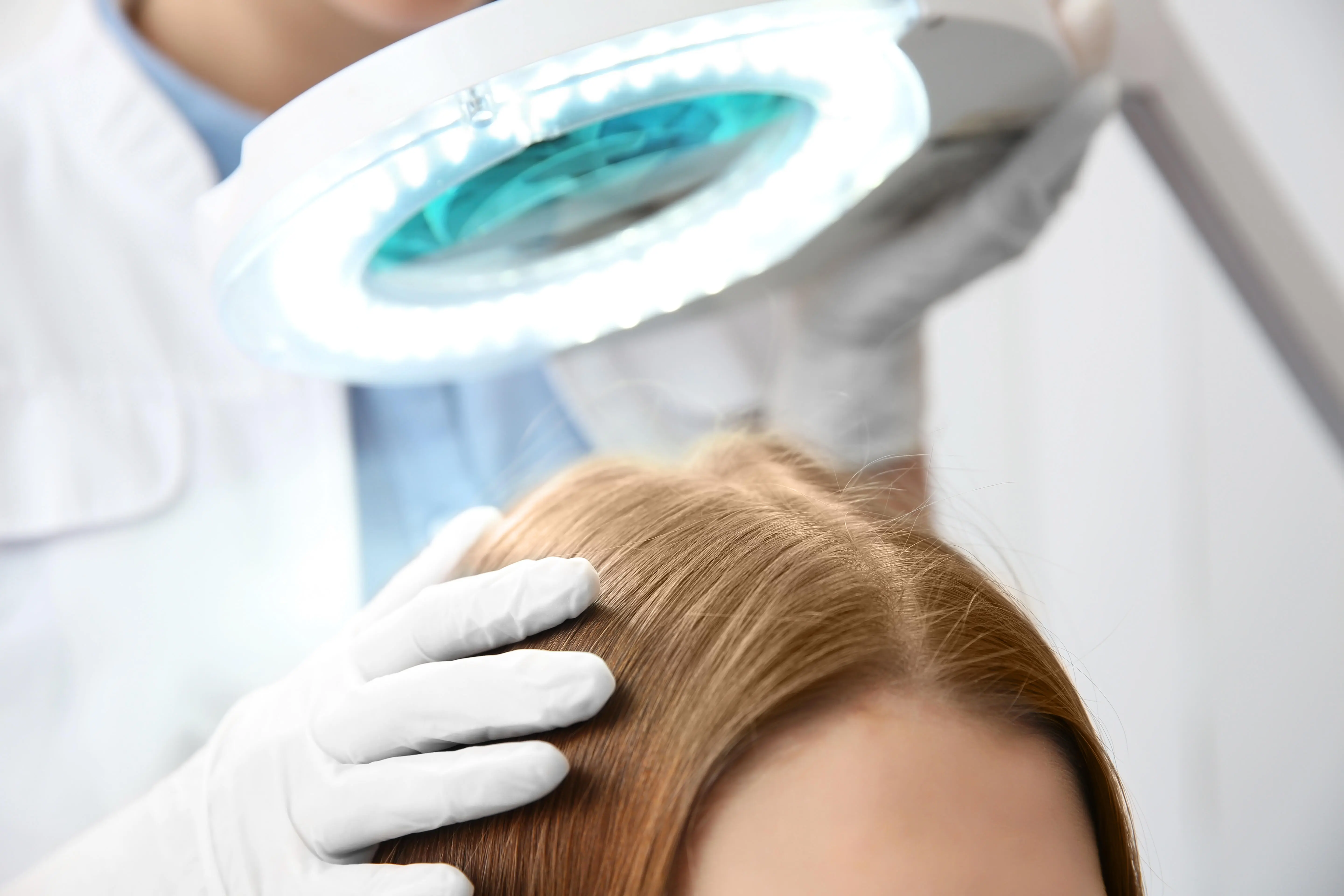
The mesotherapy for hair is an outpatient procedure carried out in a few steps. The sessions usually last no longer than 30 minutes and require no downtime. You are generally socially acceptable immediately afterwards.
Preparation, injections, aftercare
Before the first session, a medical consultation takes place: the form of hair loss, possible causes, pre-existing conditions, and contraindications are clarified. Subsequently, an individual active ingredient cocktail is put together - depending on the condition of the hair, gender, and therapeutic goal.
Before the treatment: The scalp is thoroughly cleaned and, if necessary, prepared with a locally acting numbing cream - especially for sensitive skin.
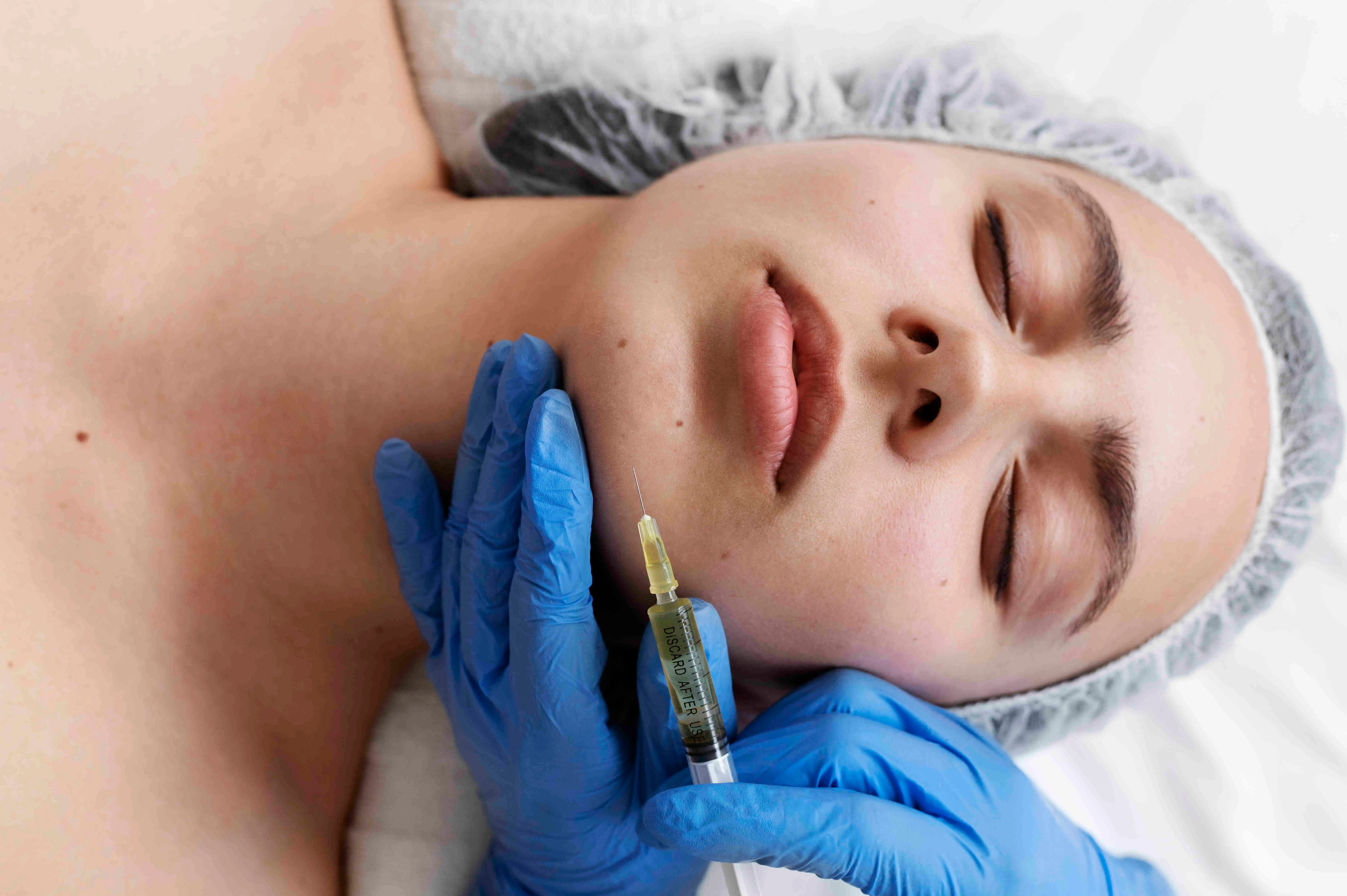
During the treatment: A fine needle or meso-gun is used to inject the active ingredient in small amounts directly into the upper layers of the scalp skin. The procedure is generally well tolerated - most patients feel at most a slight prick or tingling sensation.
After the treatment: Mild redness or swelling is possible but usually subsides within a few hours. Immediately afterward, sun exposure, saunas, and intensive hair care products should be avoided for about 24 hours. Gentle care and UV protection for the scalp are advisable in the initial period.
Mesotherapy hair - how often is treatment advisable?
How often mesotherapy for hair should be carried out depends on the individual findings. In most cases, doctors recommend a course of treatment with 3 to 6 sessions, each 2 to 4 weeks apart. The goal is to specifically stimulate the hair follicles and prepare the tissue for regeneration.
To stabilize the achieved effect, regular maintenance treatments every 4 to 6 months are advisable - especially in cases of ongoing triggers such as hormonal fluctuations or genetically determined hair loss.
Results of mesotherapy for hair
How well mesotherapy works depends on various factors, especially the individual starting condition and the activity of the hair follicles. Important: The method aims for biological regeneration, not an immediate effect. Patience is part of the concept.
When do you see an effect?
First visible changes are seen by many patients after two to three sessions, i.e., after about four to eight weeks. Typical first changes are:
less spontaneous hair loss
visibly strengthened hair structure
a denser, stronger overall appearance
Hair growth itself naturally takes longer: The anagen phase - the active growth phase - is extended by the treatment, which becomes more noticeable after about two to three months.
Mesotherapy Hair: How long does the result last?
With a good response and appropriate follow-up care, the effect of mesotherapy for hair can last several months. Many specialist practices recommend a refresher after about six months to maintain the stimulating impulses.
Especially in cases of chronic or hormonally induced hair loss, long-term supportive therapy is sensible - similar to other dermatological regeneration procedures.
What does a mesotherapy for hair cost
Those interested in mesotherapy for hair loss naturally want to know: How high are the costs? And: Is any of it covered? Here you will find the most important information at a glance.
Price range and number of sessions
The cost of mesotherapy for hair is usually between 150 and 350 euros per session, depending on the cocktail of active ingredients, technique, and practice location. Many providers recommend 3 to 6 treatments, often in a discounted package.
Mesotherapy for the Hair - Price and Quality: It's not just the price per session that matters, but also the medical experience, the quality of the active ingredients, and hygiene during the application.
Is the treatment covered by insurance?
As mesotherapy is a non-reimbursable procedure in aesthetic medicine, statutory health insurers do not cover the costs. Private insurers generally only pay in exceptional cases - such as medically proven hair loss after chemotherapy or radiation therapy.
Our tip: Before starting treatment, get an individual cost plan and clarify early on whether and to what extent your insurance covers costs - especially with private insurers, there is sometimes leeway in functional indications.
Frequently asked questions about mesotherapy for hair loss
Is the treatment painful?
Mesotherapy for hair is generally not painful. Many only feel a slight prick or tingling - a numbing cream can be used if desired.
Can I do mesotherapy myself?
It is not recommended to perform hair mesotherapy yourself. Injections should be handled by experienced hands - improper technique or non-sterile work can lead to complications.
What side effects can occur?
Typical side effects include redness, small bruises, or slight swelling at the injection site. Serious reactions are rare when the treatment is performed properly.