© Getty Images/Unsplash
April 20, 2026
Marianne Waldenfels
Which supplements help with Ozempic side effects? Learn what supports energy, digestion, and muscle health
Many people successfully lose weight with Ozempic but start to notice side effects such as fatigue, constipation, or low energy.
Medications like Ozempic or Wegovy—often referred to as weight-loss injections—contain the active ingredient semaglutide. While they are effective at reducing appetite, they can also lower overall nutrient intake.
As a result, deficiencies can develop more quickly than expected. Eating less often means consuming less protein, vitamins, and minerals, which can contribute to issues like digestive problems, weakness, or muscle loss.
This is where supplements can help. When used correctly, they don’t drive weight loss themselves—but they can support your body and help maintain energy, muscle mass, and overall health during the process.
Even though the need is individual, some typical 'problem areas' can be seen in practice. Protein intake, digestion, and certain micronutrients such as vitamin D, magnesium, or iron.
Therefore, many users benefit from targeted supplementation – especially when complaints already occur or the diet is severely restricted.
With active ingredients like semaglutide, as found in medications like Ozempic or Wegovy, eating habits change fundamentally. Hunger occurs less often, portions become smaller, meals are skipped.
This initially sounds ideal for weight loss – but often leads to important nutrients simply can no longer be absorbed in sufficient quantities.
The protein intake is particularly critical. While the body loses fat, it simultaneously loses muscle mass without sufficient protein. This can not only impair physical performance but also slow down metabolism in the long term.
In addition, typical side effects such as nausea or constipation can further restrict food choices. In such situations, supplements often become a sensible support.
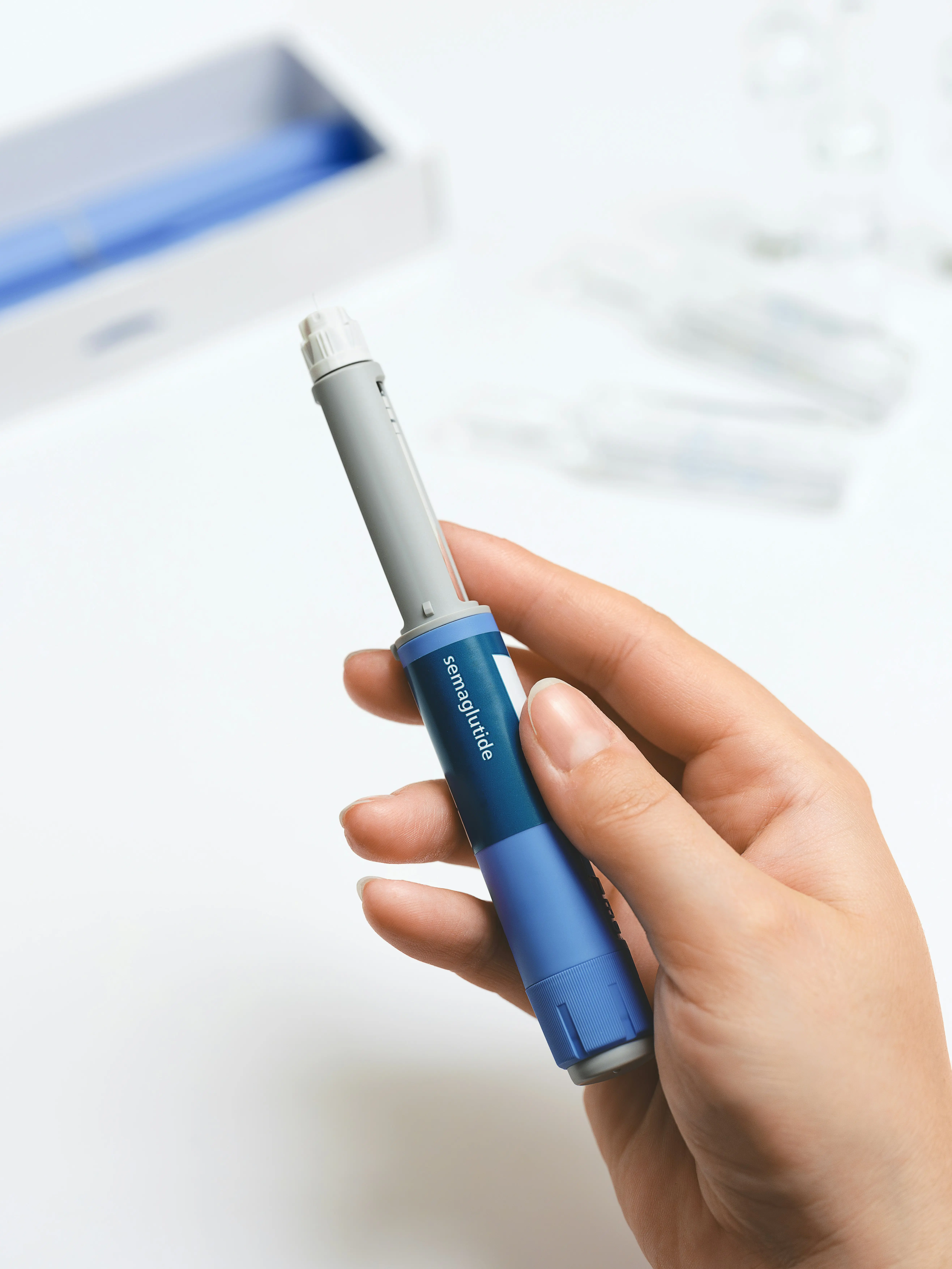
During weight loss, the body not only loses fat but often also muscle mass. Especially with weight loss injections like Ozempic this risk is increased because the calorie intake drops significantly.
A daily protein intake of about 1.2 to 1.6 grams per kilogram of body weight is considered sensible to maintain muscles. Those who do not reach this amount through diet can turn to protein shakes (e.g. Whey or plant-based alternatives).
Also Creatine can be useful in certain cases as it supports muscle strength and can counteract degradation – especially in combination with strength training.
Digestive problems are among the most common side effects of weight loss injections like Ozempic and Wegovy. The slowed gastrointestinal transit can lead to irregular bowel movements.
Fiber Psyllium husks or flaxseeds can effectively support here. It is important to gradually increase the amount and drink enough at the same time. A daily fluid intake of about 1.5 to 2 liters is crucial, as the feeling of thirst is often reduced with Ozempic.
Vitamin D plays a central role in bone health, muscle function, and the immune system. Especially with rapid weight loss, an existing deficiency can become more significant.
A blood test (25-OH vitamin D) provides information about the status. If there is a deficiency, dosages of about 1,000 to 2,000 IU daily are often recommended - individually adjusted through medical consultation.
Magnesium and calcium are essential for muscle contraction, nerve function, and bone stability. Many people do not get enough of them on a reduced diet.
Magnesium can also be helpful for constipation and muscle cramps, especially in the form of magnesium citrate. Common dosages are in the range of 200 to 400 mg daily.
Calcium should preferably be covered by diet, if necessary, supplementation can be useful to achieve about 1,000 mg per day.
Fatigue, concentration problems, or hair loss can be indications of a nutrient deficiency – particularly with iron or certain B vitamins like B12.
An iron deficiency can be most reliably determined by the ferritin level. Supplementation should not occur "on suspicion" but targeted.
Vitamin B12 is especially relevant with restricted food intake or certain diets. In individual cases, there is evidence that it can usefully supplement therapy, but the data situation is still limited.
Omega-3 fatty acids support cardiovascular health and can have anti-inflammatory effects. Especially for people with metabolic risk, supplementation can be useful, even if they don't belong directly to the 'mandatory supplements' for Ozempic.
Typical side effects occur not only with Ozempic but with most weight loss injections containing semaglutide. Many users specifically seek solutions for specific complaints. Supplements can provide support here but should always be part of an overall approach.
For constipation, fiber and magnesium are key, combined with sufficient fluids and exercise.
For fatigue, it's worth looking at iron, vitamin D, and B vitamins – ideally after a blood test.
Nausea is less easily resolved with classic supplements. Here, small, light meals and an adjusted diet help more. Digestive enzymes are sometimes used, but their effectiveness varies individually.
As helpful as dietary supplements can be, they do not replace a balanced diet. The goal should always be to get as many nutrients as possible from food and use supplements only selectively.
Especially with higher doses – such as Vitamin D or iron – consulting a doctor is advisable. Possible interactions with other medications should also not be overlooked.
Not necessarily. Many people can meet their needs through diet. In practice, however, it is often shown that nutrient gaps arise due to reduced appetite. Supplements can then be useful – especially in the case of specific complaints or proven deficiencies.
The focus is primarily on protein to maintain muscle mass and fiber to support digestion. Additionally, vitamin D, magnesium, or iron can be useful depending on individual diet and blood values.
Guidelines suggest around 1.2 to 1.6 grams of protein per kilogram of body weight daily. This range helps prevent muscle loss during weight loss.
Fiber such as psyllium husks or flaxseeds can support digestion. Sufficient fluid intake is also important as thirst sensation may be reduced on Ozempic.
Supplements can be a valuable support with Ozempic and generally with weight loss injections with semaglutide, especially when typical side effects occur or the diet is insufficient.
The focus is less on individual 'miracle cures' and more on targeted supplementation: sufficient protein to protect muscles, fiber for proper digestion, as well as selected vitamins and minerals according to individual needs.
Ultimately, it's not the quantity of supplements that matters but the right selection. Listening to your body, taking symptoms seriously, and regularly checking your nutrient supply can make the therapy not only effective but also healthy in the long term.