What Happens When You Stop Ozempic? The Truth About Weight Regain
You’ve lost weight with Ozempic - but what happens after your last injection? Many users worry about regaining weight, changing appetite, and unexpected side effects. Here’s what really happens in your body when you stop Ozempic - and how to manage what comes next.
Many celebrate rapid weight loss with Ozempic. But after stopping the injections, a common concern sets in: Will the weight come back?
Studies suggest the body often reacts differently than expected. After stopping semaglutide, many people regain a significant portion of the weight.
An analysis from the University of Cambridge found that, on average, around 60% of the lost weight returns within a year. One key reason is a rise in appetite once treatment ends.
So what happens after the last injection? Here’s what to expect — and what can help you avoid weight regain and maintain your results.
What are GLP-1 drugs like Ozempic and Wegovy?
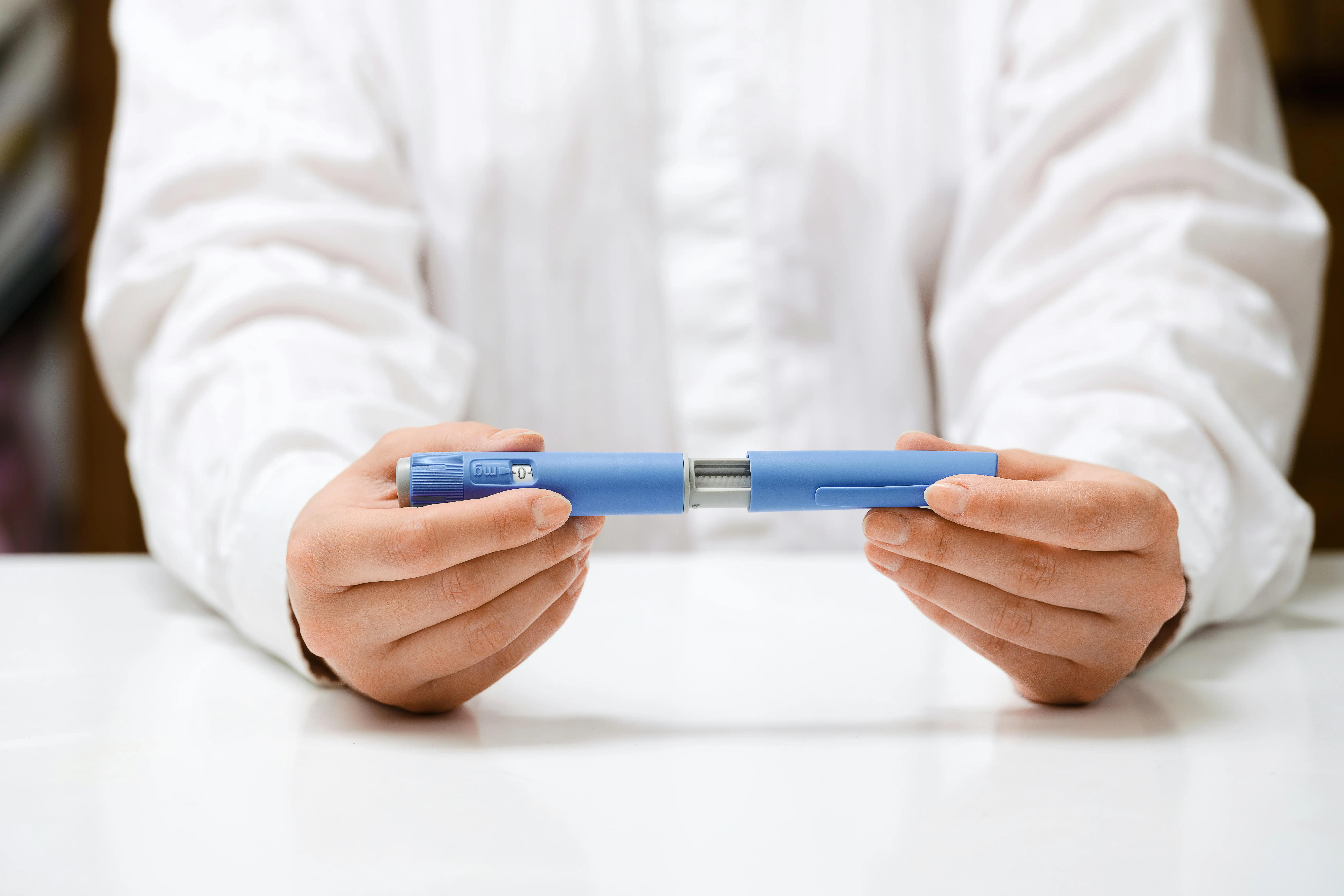
Ozempic and Wegovy contain the active ingredient semaglutide, a so-called GLP-1 receptor agonist. The drug mimics a natural hormone that regulates hunger, satiety, and blood sugar levels.
Specifically, semaglutide causes:
• Faster feeling of fullness after eating
• Reduced appetite throughout the day
• Slows gastric emptying
• Improved blood sugar regulation (particularly relevant for type 2 diabetes)
Ozempic is primarily approved for type 2 diabetes. Wegovy contains the same substance but in a higher dosage and is approved for the treatment of obesity. The same mechanisms apply to both substances when discontinued.
New Study: This Much Weight Comes Back After Ozempic
After stopping Ozempic and other GLP-1 medications, about 60 percent of the previously lost body weight returns within a year for most patients. This is shown by a meta-analysis published in March 2026 in eClinicalMedicine published by the University of Cambridge. At the same time, according to the researchers, theoretically 25 percent of the weight loss remains long-term.
Why does the weight return?
• Hunger returns because the appetite-suppressing effect is absent
• The satiety hormone GLP-1 is released back at its original level
• Due to previously reduced body weight, the basal metabolic rate may have decreased
• If dietary and exercise habits have not been permanently adjusted, the weight increases again
Cambridge analysis: Rapid, then slowed increase
Brajan Budini and Steven Luo from the University of Cambridge evaluated six randomized controlled trials with a total of over 3,200 patients. Three of the studies tested Semaglutide (Ozempic, Wegovy), two Tirzepatide and a liraglutide.
The analysis shows a consistent pattern: After stopping the medication, rapid weight gain begins, which settles at about 60 percent of the lost weight after about a year. The curves then flatten and reach a plateau at about 75 percent. Whether this value actually holds in the long term remains open – real data over several years is not yet available.
“Medications like Ozempic act like a brake on appetite," explains Budini in the Cambridge press release. “When you stop, you take your foot off the brake – this leads to rapid weight gain."
A meta-analysis published in 2023 by the Mayo Clinic under Dr. Juan Pablo Domecq came to similar numbers: Without lifestyle changes, 67 percent of patients regained two-thirds of the weight loss within a year.
This emphasizes: The medication works – but only as long as you take it, if no behavioral changes occur simultaneously.
Stopping the weight loss injection: What happens in the body?
After the last injection, the effect of semaglutide does not disappear immediately – but it noticeably diminishes. The body gradually returns to its previous state.
Typical changes after stopping
• Appetite increases again – often within a few weeks
• Feeling of fullness decreases
• Gastric emptying normalizes
• Blood sugar can rise (especially in type 2 diabetes)
• Mood swings are possible (related to GLP-1 influence on the brain)
Important: Classic withdrawal symptoms – as known from nicotine or alcohol – do not occur with semaglutide. People more often report increased hunger and less satiety.
How long does Ozempic work after stopping?
Ozempic has a half-life of about a week. This means: The active ingredient is broken down slowly and remains active in the body for several weeks after the last injection.
• After 8–12 weeks: Complete breakdown of semaglutide in the body
This gradual breakdown is also the reason why many only notice a significant change a few weeks after discontinuation.
Stopping Ozempic: taper off slowly or stop abruptly?
Whether Ozempic is tapered off gradually or stopped directly depends on the individual situation. Both can be medically appropriate – the decision should be in the hands of a doctor.
When special caution is advised
• For type 2 diabetes: blood sugar monitoring is necessary, alternative medication may be required
• For those planning pregnancy or already pregnant: semaglutide should be discontinued at least 2 months in advance
• In cases of severe overweight (obesity grade II/III): relapse risk is particularly high
Preventing weight gain after slimming injections: What really helps
The crucial factor: Start with stable habits during the intake – not just after stopping.
Nutrition
• Eat protein-rich foods (at least 1.2–1.6 g per kg of body weight): promotes satiety and muscle maintenance
• Keep regular meal times to avoid cravings
• Reduce highly processed foods and sugar
• Plan snacks consciously – avoid spontaneous eating
• Drink enough water (thirst is often mistaken for hunger)
Movement
• 2–3x per week strength training: maintains muscle mass and increases basal metabolic rate
• Additionally, moderate endurance sports (e.g., 150 minutes per week)
• Increase everyday activity: increase steps, take stairs instead of the elevator
Behavior & mental health
After discontinuing Ozempic, not only the body plays a role – behavior and mental factors are also crucial. It may be helpful to seek nutritional counseling or therapy to develop new, sustainable routines.
At the same time, it is worthwhile to consciously recognize and specifically question emotional eating. Many automatically turn to food in stressful or burdensome situations without feeling genuine physical hunger. Here it helps to better understand one's own patterns.
It is equally important to perceive the body's natural hunger and satiety signals again. After a phase of medicinal support, this feeling may initially be altered and often needs to be relearned.
Not least, sleep should not be underestimated: Those who consistently get too little sleep have been shown to be hungrier and crave high-calorie foods. A stable sleep rhythm is therefore an important component for weight stabilization.
Do you have to take Ozempic or Wegovy permanently?
Not necessarily – but long-term therapy makes medical sense for many people. This is especially true for:
• Type 2 diabetes with insufficient blood sugar control through other measures
• Obesity with a high risk of relapse
• Comorbidities that benefit from weight loss (e.g., heart disease)
Whether discontinuation is possible depends on blood sugar levels, body weight, metabolic condition, and lifestyle. This decision should always be made together with the treating doctor.
FAQ: Discontinuing Ozempic – the most common questions
How long does the weight loss injection last after stopping?
Ozempic has a half-life of about a week. Initial changes in hunger begin to appear after 1–2 weeks. The effect is significantly reduced after about 4–8 weeks; the active substance is completely metabolized after 8–12 weeks.
How much weight do you regain after stopping Ozempic?
Studies show that many people regain weight after stopping Ozempic. A recent analysis by the University of Cambridge found that on average, about 60% of the lost weight returns within a year. However, the extent of weight gain strongly depends on lifestyle.
Can you stop taking Ozempic on your own?
No. Especially with type 2 diabetes, medical supervision is necessary when stopping to monitor blood sugar and adjust medication if necessary. Even for obesity treatment, discontinuation should be coordinated with a doctor.
Are there withdrawal symptoms with Semaglutide?
Classic withdrawal symptoms (like with addictive substances) do not occur. More often, affected individuals report increased hunger, less satiety, and occasionally mood swings – all consequences of the diminishing GLP-1 effect.
How does stopping Ozempic differ from stopping Wegovy?
Both contain semaglutide, so the cessation mechanisms are identical. The difference lies in the dosage: Wegovy is used in higher doses, which may slightly increase the rebound effect on hunger.
When must Ozempic be stopped before a pregnancy?
Semaglutide should be discontinued at least 2 months before a planned pregnancy. Always discuss this with your doctor.
How can weight gain be prevented after stopping?
The most effective combination: high-protein diet, regular strength training (2–3x/week), fixed meal times, and possibly nutritional counseling. With these measures, weight can be stabilized in the long term.
Conclusion: Properly stopping Ozempic
Ozempic continues to work for several weeks after stopping – but once the drug is metabolized, appetite returns. Weight gain is common, but not an unavoidable fate.
The key is: Those who already establish stable nutritional and exercise routines during intake have the best chances of maintaining weight in the long term. Discontinuation should always be done in consultation with a doctor.
Medical Note
This article is for general information and does not replace individual medical advice. Decisions to discontinue medications – particularly for diabetes or obesity – should always be made together with medical professionals.