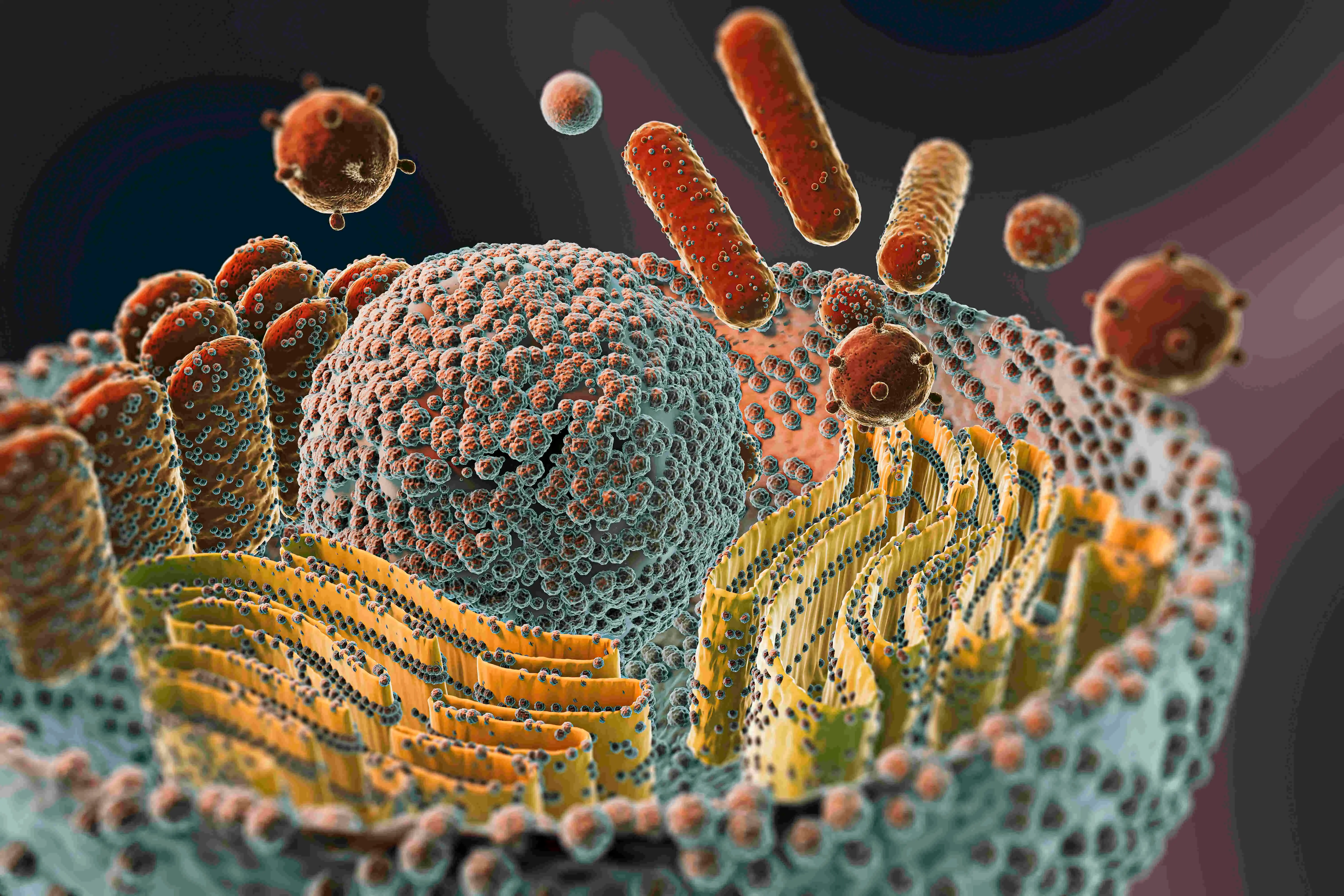
© Marco Bianchetti/Unsplash
May 11, 2026
Marianne Waldenfels
New research on Long Covid and ME/CFS is uncovering biomarkers, immune abnormalities, and promising new treatment approaches.
Long Covid and Myalgic Encephalomyelitis/Chronic Fatigue Syndrome (ME/CFS) are now among the most intensively studied post-viral diseases worldwide. Millions of people suffer from chronic fatigue after a coronavirus infection, brain fog, sleep disturbances and drastically reduced resilience.
Just a few years ago, ME/CFS was often misunderstood or psychologized. Today, perspectives are fundamentally changing. New studies on immune disorders, biomarkers, vascular problems, and energy production are providing concrete biological insights into the causes of ME/CFS and Long Covid for the first time.
For many affected individuals, the disease is associated with massive restrictions in everyday life. Even minor physical or mental exertion can significantly worsen symptoms and make social and professional participation almost impossible.
The crucial question now is: How far has research really come – and is there justified hope for better diagnoses and therapies?
ME/CFS is now internationally described as a chronic neuroimmunological multisystem disease. The central feature is the so-called Post-Exertional Malaise (PEM): a significant worsening of symptoms after physical or mental exertion, often with a delay of hours or even days.
With the Corona pandemic, post-viral diseases suddenly became the focus of medicine. Millions of people reported symptoms similar to ME/CFS after a SARS-CoV-2 infection: persistent fatigue, concentration problems, exercise intolerance, and PEM.
This also changed the perception of the disease. What was considered rare or difficult to explain for a long time became an international research topic.
New study networks and specialized centers have emerged in Germany. Institutions like Charité – Universitätsmedizin Berlin are now specifically investigating the biological mechanisms behind Long Covid and ME/CFS.

Current research is mainly focused on three major areas: immune system, vascular function, and energy production of the cells.
Several studies show evidence of a persistently disturbed immune response after viral infections. Particularly interesting are so-called autoantibodies – antibodies that could attack the body’s own structures.
Researchers suspect that this could impair circulatory regulation, nerve function, or muscle activity. At the same time, scientists are investigating whether reactivated viruses such as Epstein-Barr viruses play a role.
There is still no clear cause. But for the first time, a biologically understandable picture of the disease is emerging.
Circulation is also increasingly the focus. Research groups are investigating whether disorders of microcirculation or vascular function could contribute to fatigue and exercise intolerance.
The discussion includes:
These approaches could explain why many affected individuals develop severe symptoms even after minimal exertion.
Another focus is the energy metabolism. Scientists are currently investigating whether the mitochondria—the "powerhouses" of the cells—are functioning improperly in ME/CFS.
Evidence of changes in muscle metabolism and oxidative stress in scientific reviews could explain why even small activities lead to severe physical breakdowns in some patients.
This phenomenon is considered central to understanding PEM.
One of the biggest problems with ME/CFS has long been the lack of objective tests. Many patients waited years for a diagnosis.
Meanwhile, researchers are specifically looking for biomarkers – that is, measurable biological changes in the blood, immune system or metabolism. Modern analytical methods and AI-supported data models help make different disease patterns visible.
Multiple workgroups already report noticeable inflammatory markers, immune profiles, or metabolic changes in Long Covid and ME/CFS.

However, there is still no generally accepted lab test. Research is still in an early phase. Nevertheless, experts see this as an important progress: For the first time, different forms of post-infectious diseases could be biologically distinguished.
The current phase of research is characterized by controlled clinical trials – not by quick promises of healing.
Among other things, the following are being investigated:
For example, studies on immunoadsorption and vascular drugs in patients with post-viral ME/CFS are being conducted at Charité.
At the same time, rehabilitation is also changing. Many modern programs now do without rigid activation models and instead rely on so-called PEM-sensitive approaches. Energy management, limits of exertion, and "pacing" are the focus.
There is still no cure for ME/CFS and no universally accepted standard test. The diagnosis is still mainly based on clinical criteria and the exclusion of other diseases. Nevertheless, the situation has fundamentally changed.
Research increasingly shows:
The hope therefore lies less in a quick miracle cure and more in a gradual, evidence-based understanding of the disease. For those affected, this could make the crucial difference in the long run.
Yes. Studies show that a portion of those affected by Long Covid develop the diagnostic criteria for ME/CFS. Particularly typical are chronic fatigue, brain fog, sleep disturbances, and Post-Exertional Malaise (PEM).
PEM refers to a significant worsening of symptoms after physical or mental exertion. The reaction often occurs with a delay and can last hours or days. PEM is considered a central feature of ME/CFS.
Not yet. Researchers are currently investigating various biomarkers in the blood, immune system, and metabolism. The goal is an objective lab test for ME/CFS and Long Covid.
Currently, there is no universally recognized cure for ME/CFS. However, clinical trials are ongoing worldwide for immunotherapies, anti-inflammatory medications, and new treatment approaches for Long Covid and post-viral illnesses.
Many affected individuals are sensitive to physical or mental activity. Researchers suspect that disturbances in energy metabolism, the immune system, and the autonomic nervous system could play a role.
Many experts currently recommend so-called PEM-sensitive strategies like pacing and energy management. This involves recognizing stress limits early and avoiding severe symptom crashes.
Exact numbers vary. However, estimates suggest that millions of people worldwide suffer from Long Covid or ME/CFS, with increasing attention since the coronavirus pandemic.