Pomegranate provides a wide range of polyphenols, vitamins, and minerals that can support various processes in the body.
In summary:
rich in antioxidant plant compounds
may support heart health and blood vessels
has anti-inflammatory properties
effects are supported by research but generally modest
Pomegranate is not a miracle cure, but it can be a valuable part of a plant-rich diet.
Pomegranate and Cancer: What the New Urolithin A Study Shows
As we age, our immune system loses its effectiveness: Naive T cells become rarer, signs of exhaustion increase, infections and cancer become more likely. This is exactly where a German Phase I study published in Nature Aging in 2025 comes in: 50 healthy middle-aged adults received either Urolithin A or a placebo daily for four weeks.
The result: Urolithin A significantly increased the proportion of naive T cells and improved the metabolic programs of the T cells towards "younger" appearing immune profiles; at the same time, markers for oxidative stress and certain inflammatory markers decreased. The substance was well tolerated. Experts see clear indications that Urolithin A can mitigate certain aspects of immune aging in humans – however, clinical effects on infections, vaccine responses, or cancer risk must first be demonstrated in further studies.
“By rejuvenating immune cells, we could make life-saving cancer treatments effective for more patients. We have already started a follow-up study with affected individuals undergoing immunotherapy and are very excited to see if we can achieve the same positive effects here,” said Prof. Dr. Florian Greten, Director of the Georg-Speyer-Haus and spokesperson for the LOEWE Center Frankfurt Cancer Institute in a press release.
Important for classification: In the study, isolated Urolithin A used, not pomegranate juice. Therefore, pomegranate is the plant source of precursors – how much someone benefits from juice or seeds depends on their own gut flora and dosage.
In animal models, significantly fewer new tumor formations, slower tumor growth, and fewer metastases were observed under pomegranate polyphenols – for example, in prostate, colon, lung, and breast cancer.
In humans, the evidence is weaker: A early study with 48 men with prostate cancer showed that daily pomegranate juice extended the PSA doubling time from an average of 15 to 54 months – without a control group. Later, better-controlled studies could not confirm these impressive results in this form; they found partial changes in the PSA course, but no clear advantage in clinically hard endpoints such as metastasis rate or survival.
The Cancer Information Service of the German Cancer Research Center summarizes:
Pomegranate extracts show clear antitumor effects in the laboratory and animal model.
There are currently no sufficient evidencesto recommend pomegranate as a therapy.
Pomegranate can be a sensible part of a whole, plant-rich diet, but it never replaces guideline-compliant cancer treatment.
In short: Pomegranate is an exciting research subject in oncology – but not a cancer drug.
What nutrients are in the pomegranate?
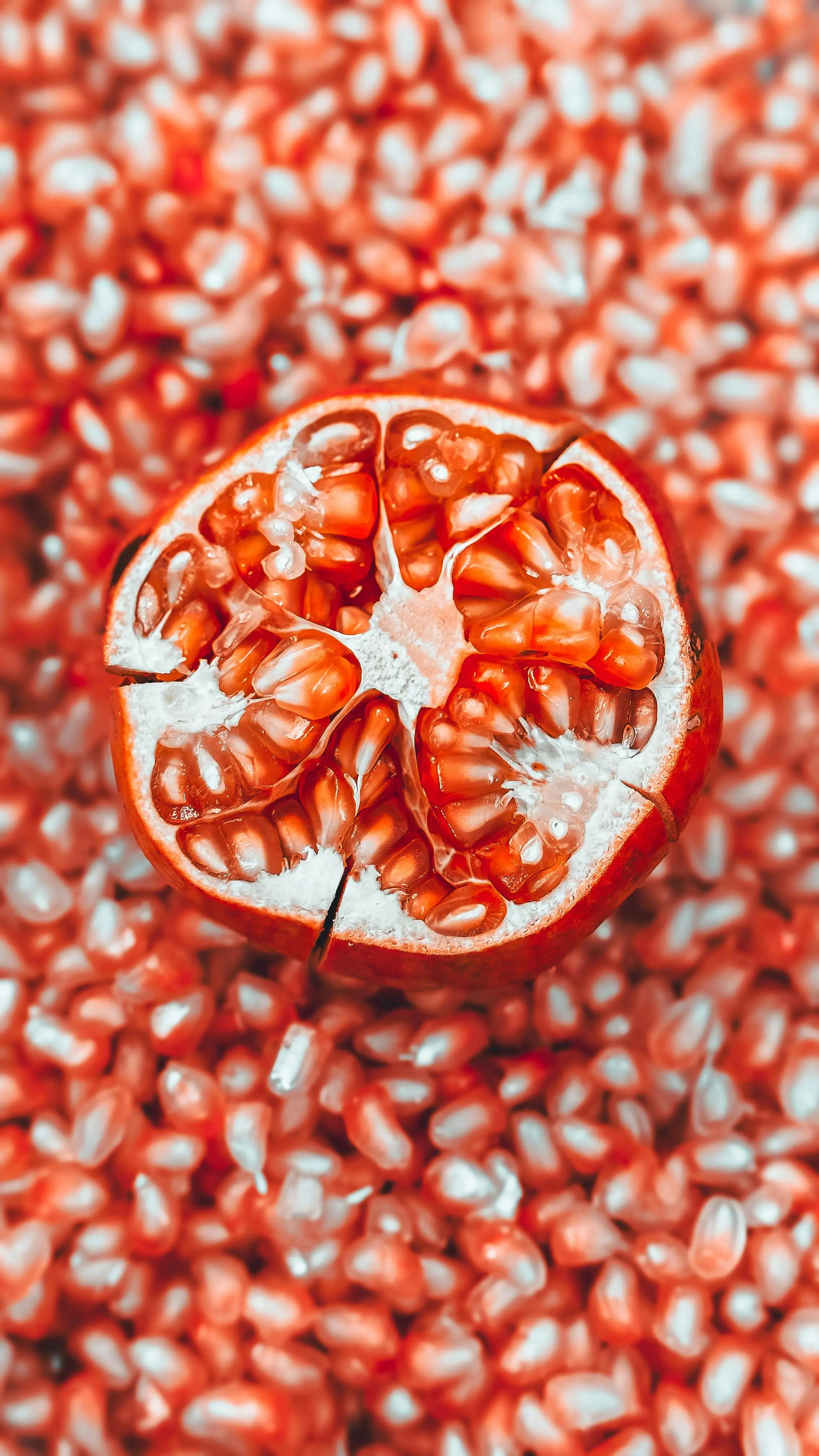
Pomegranates contain hundreds of small, ruby-red seeds with a slightly tart-sweet taste. Botanically, they are considered berries.
These have antioxidant effects and can protect cells from oxidative stress.
Pomegranate: Effects on Heart, Blood Pressure, and Vessels
Several clinical studies and meta-analyses suggest that pomegranate juice can moderately lower blood pressure, especially in people with elevated baseline levels. Researchers also observed slight improvements in LDL cholesterol and other cardiometabolic risk factors – the effects are generally small to moderate.
These effects are mainly attributed to the polyphenols, which protect vascular walls from oxidative stress, slow down the formation of aggressive oxygen radicals, and modulate inflammatory processes in the arteries. Experts still emphasize that pomegranate does not replace blood pressure medications but is at best a component of an overall heart-healthy, plant-rich diet.
Inflammations, Gut, and Immune System
The polyphenols in the pomegranate act on many studies anti-inflammatory. They influence signal pathways and can reduce the formation of certain inflammatory substances.
Observed effects:
Reduction of chronic inflammation
Protection of the intestinal mucosa (in animal studies)
possible support of the immune system
These effects are especially relevant in the long term in the context of a healthy diet.
Urolithin A: The most exciting active ingredient from pomegranate
A portion of pomegranate polyphenols is converted into urolithin A in the gut – a substance currently being extensively researched.
Urolithin A supports the so-called mitophagy: a process in which damaged cellular components are recycled.
Indications of positive effects on the immune system
A recent human study suggests that urolithin A may improve certain aspects of immune aging.
Important: Not everyone produces the same amount of urolithin A – it depends on the individual gut flora.
Risks and side effects of pomegranate
As attractive as the health benefits sound, pomegranate is not entirely unproblematic for everyone. The juice contains a relatively high amount of fructose, which is relevant for people with diabetes or insulin resistance. Additionally, there is evidence that pomegranate products can affect liver enzymes involved in drug metabolism – similar to grapefruit. Those taking many or critical medications should use high-dose extracts only after consulting with a doctor.
Then there's the quality issue: studies and consumer reports show that supposed "100% pomegranate juices" are sometimes diluted with other juices or heavily processed. Therefore, 100% direct juices without added sugar and products from reputable manufacturers are recommended; for dietary supplements, standardized extracts with declared polyphenol content should be chosen.
Conclusion: How beneficial is pomegranate really?
Pomegranate is a nutrient-rich food with interesting health effects. The polyphenols it contains can have a positive effect on the heart, vessels, and inflammatory processes.
Research on urolithin A also shows great potential—particularly in the area of immune aging.
At the same time, it applies:
The effects are usually moderate
Pomegranate is not a miracle cure
Statements about cancer are not yet sufficiently proven
Frequently asked questions about pomegranate
Is pomegranate really healthy?
Yes. Pomegranates provide many polyphenols, vitamins, and minerals and can support the cardiovascular system, vessels, and inflammatory processes – but they are not a medical miracle cure.
What effect does pomegranate have on the body?
Studies suggest that pomegranate can slightly lower blood pressure, reduce oxidative stress, and positively influence inflammation markers. The effects are detectable but remain generally moderate.
How much pomegranate should one eat or drink daily?
For healthy individuals, a small portion is usually sufficient, such as half a fruit or about 100–150 ml of direct juice per day, embedded in an overall balanced diet.
Is pomegranate juice healthy?
Yes, pomegranate juice is rich in polyphenols but contains more sugar and less fiber than the whole seeds. Recommended is 100% direct juice without added sugar or other additives – ideally in moderate amounts.
Can pomegranate prevent or cure cancer?
No. Although there are laboratory and animal studies with antitumoral effects, there is currently no reliable evidence that pomegranate can prevent or cure cancer in humans. It can complement a healthy diet but does not replace cancer therapy.
What role does Urolithin A from pomegranate play in cancer and immune aging?
Urolithin A is a metabolite derived from pomegranate polyphenols, which has been shown to "rejuvenate" immune cells in studies and improve tumor defense in models. This is promising but still in the research stage and is not an approved standard in cancer therapy.
Does pomegranate have side effects or interactions?
In normal food quantities, pomegranate is generally well tolerated. However, with very high amounts or high-dose extracts, interactions with medications are possible; those who take medication regularly should consult a doctor.