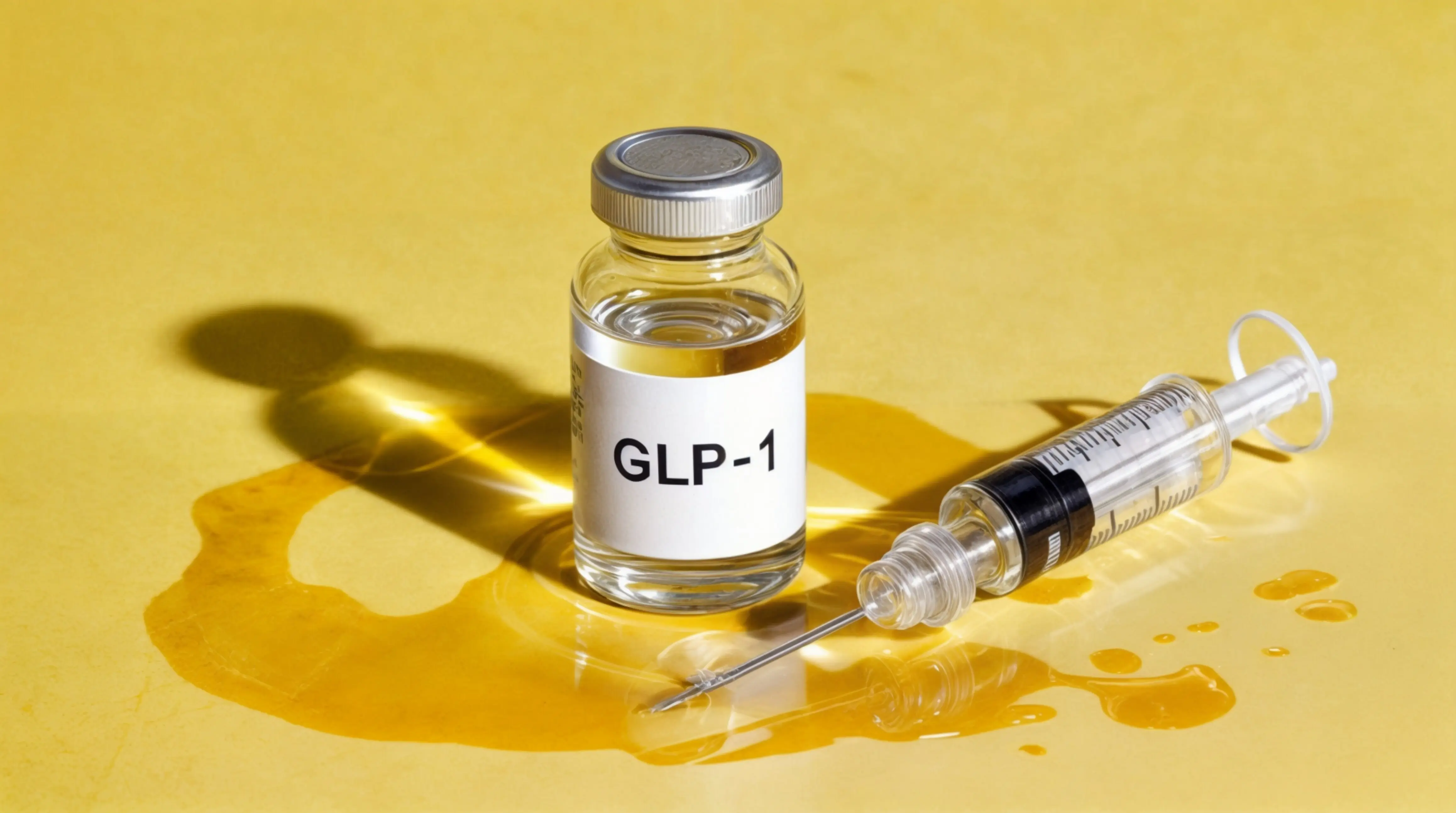
© Magnific
May 13, 2026
Marianne Waldenfels
- Health
Ozempic and Wegovy in Breast Cancer: Study Suggests Improved Survival
New study suggests GLP-1 medications like Ozempic and Wegovy could improve breast cancer prognosis.
Share article:
© Magnific
May 13, 2026
Marianne Waldenfels
New study suggests GLP-1 medications like Ozempic and Wegovy could improve breast cancer prognosis.

 Find a Doctor
Search the network for suitable specialists and contact them directly
Women with breast cancer who took GLP-1 medications such as Ozempic or Wegovy, had lower mortality and a reduced risk of recurrence in a new observational study. The findings are drawing significant attention in the medical community, although experts caution against interpreting the data as proof of a protective effect.
The analysis, published in JAMA Network Open, examined a large cohort of breast cancer patients and compared women who received GLP-1 receptor agonists with those who did not. According to the authors, use of the medications was associated with a lower risk of death from any cause as well as a lower risk of tumor recurrence.
The results were particularly striking in women with obesity or type 2 diabetes.
Some of the most well-known GLP-1 medications include Ozempic, Wegovy, and Mounjaro. These active ingredients are primarily used for the treatment of type 2 diabetes and obesity and have been the focus of intensive research for months.
Obesity and metabolic disorders are considered factors that can affect the course of many cancers negatively. Therefore, a possible positive effect of GLP-1 therapies seems at least biologically plausible.
Additionally, GLP-1 receptor agonists not only lower weight and blood sugar, but can also reduce cardiometabolic risks. This could be relevant for breast cancer patients, as cardiovascular diseases also play an important role in long-term mortality.
Despite the much-discussed results, this is not a randomized clinical trial, but a retrospective observational analysis. Therefore, it cannot be definitively proven that the drugs themselves caused the observed advantage.
Such datasets are considered susceptible to so-called confounders and biases. Patients with GLP-1 therapy often differ in important respects from other patients - for example, in general health status, access to medical care, or treatment intensity.
A professional commentary by Medscape also points out that administrative data and incomplete documentation can significantly limit the validity. If key factors such as tumor biology, surgical status, or adjuvant therapies are not fully captured, reliable comparisons are difficult.
The current data should therefore not be understood as proof that GLP-1 medications directly influence breast cancer or protect against relapses.
Rather, the study suggests that the relationship between metabolic health, weight loss, and cancer progression should be examined more closely. Experts see this as an important approach for further research.
For the treatment of breast cancer there are currently no immediate changes. GLP-1 medications remain primarily drugs for the treatment of type 2 diabetes and obesity – not for cancer treatment.
However, the results emphasize how important prospective and randomized studies would be to more precisely examine the potential effects of the drugs and clearly distinguish between drug effects, weight loss, and general health differences.