Weight-loss injections: Why many heart attacks could be prevented
Overweight is a leading cause of heart attack and stroke – yet it’s often underestimated. A doctor explains how Ozempic and Wegovy work and why they’re more than a lifestyle trend
Overweight is still often seen as a personal issue – yet it has long been one of the greatest medical challenges of our time. Heart attack, stroke, diabetes: the consequences are severe and often underestimated.
One person who has been working in this field for years is internist and cardiologist Prof. Dr. med. Uwe Nixdorff. At his European Prevention Centers (EPC) in Düsseldorf, he closely supports patients through diagnostics, lifestyle advice, and increasingly through medical therapies such as weight-loss injections.
In this interview, he explains why visceral fat is so dangerous, how GLP-1 medications work – including active ingredients such as semaglutide, known under brand names like Ozempic or Wegovy – and why he describes obesity as the “real pandemic.”
You once said that the more sustainable pandemic than Corona is obesity. Why is being overweight so harmful to health?
That is indeed the case, and I would like to emphasize that again. This has also increased significantly in recent years. The pandemic of overweight and obesity is still measured by BMI, the Body Mass Index. It is calculated from body weight divided by height squared.
However, that is not quite ideal, one must say. Anyone can imagine that because this BMI does not take into account the composition of the body. Take a bodybuilder for example: They have a lot of muscle and can still have a high BMI – even over 30, which is already defined as obesity.
For classification: Overweight is between 25 and 30, obesity starts at 30 and is then further divided into different stages.
Why is being overweight so dangerous?
The key factor is especially the adipose tissue - especially the fat in the abdominal cavity, the so-called visceral fat. This is actually the norm: many overweight people have fat deposits not only under the skin but also in the abdominal cavity.
I see this daily in practice during check-up examinations with imaging: fat is found between the organs, but also in the organs themselves. Particularly important is the fatty liver, the so-called hepatic steatosis, which we now also refer to as metabolic-associated fatty liver disease. This already implies that it is a .
The pancreas is also often fat-laden. This visceral fat is particularly unfavorable because it is highly active. It is not just "deposited" and perhaps an aesthetic problem, but has a significant biological effect.
When the fat cells enlarge, they release more interleukins and cytokines - i.e., inflammatory mediators. These enter the bloodstream and attack the vessel walls.
What are the consequences of overweight for the heart and vessels?
This leads to what concerns us particularly in preventive cardiology: atherosclerosis. If this process continues for years, it results in the well-known cardiovascular diseases.
Internationally, these are referred to as atherosclerotic cardiovascular diseases, abbreviated as ASCVD. These primarily include heart attack and stroke.
And here we must clearly say: In Western industrialized countries, these diseases are still the leading cause of death - significantly ahead of cancer. Many people are very afraid of cancer, which is understandable, but in fact, about twice as many people die from cardiovascular diseases.
Is the risk often underestimated?
Yes, definitely. You often hear about low mortality rates of two to three percent. But these numbers only refer to patients who arrive at the hospital alive.
That's a very important point: Many people die before reaching the hospital. Epidemiologically, about half of heart attacks are still fatal.
In clinical medicine, this is often not sufficiently taken into account. The advances in cardiology are enormous – many patients can be treated successfully today. But that only applies to those who manage to get medical treatment in time.
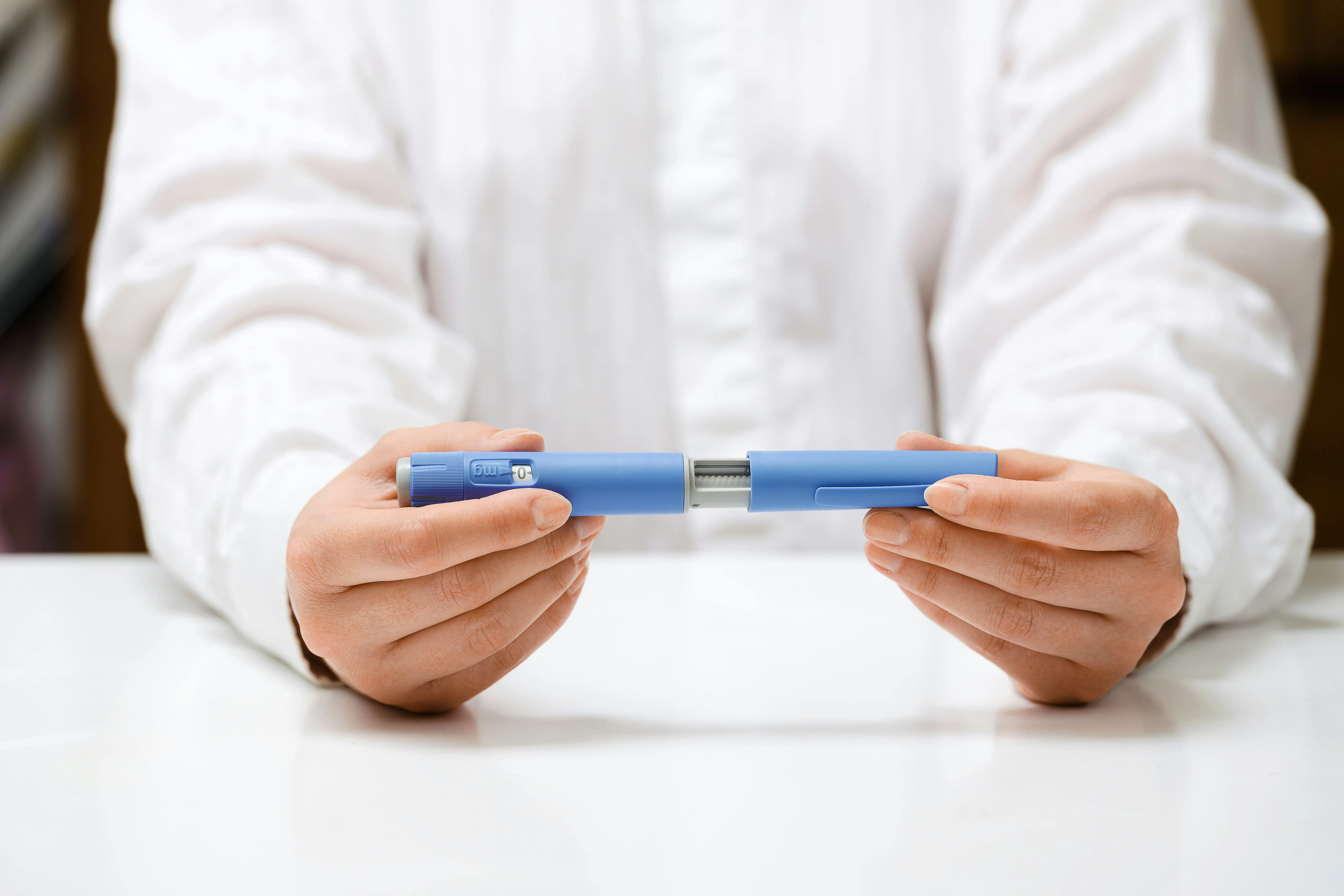
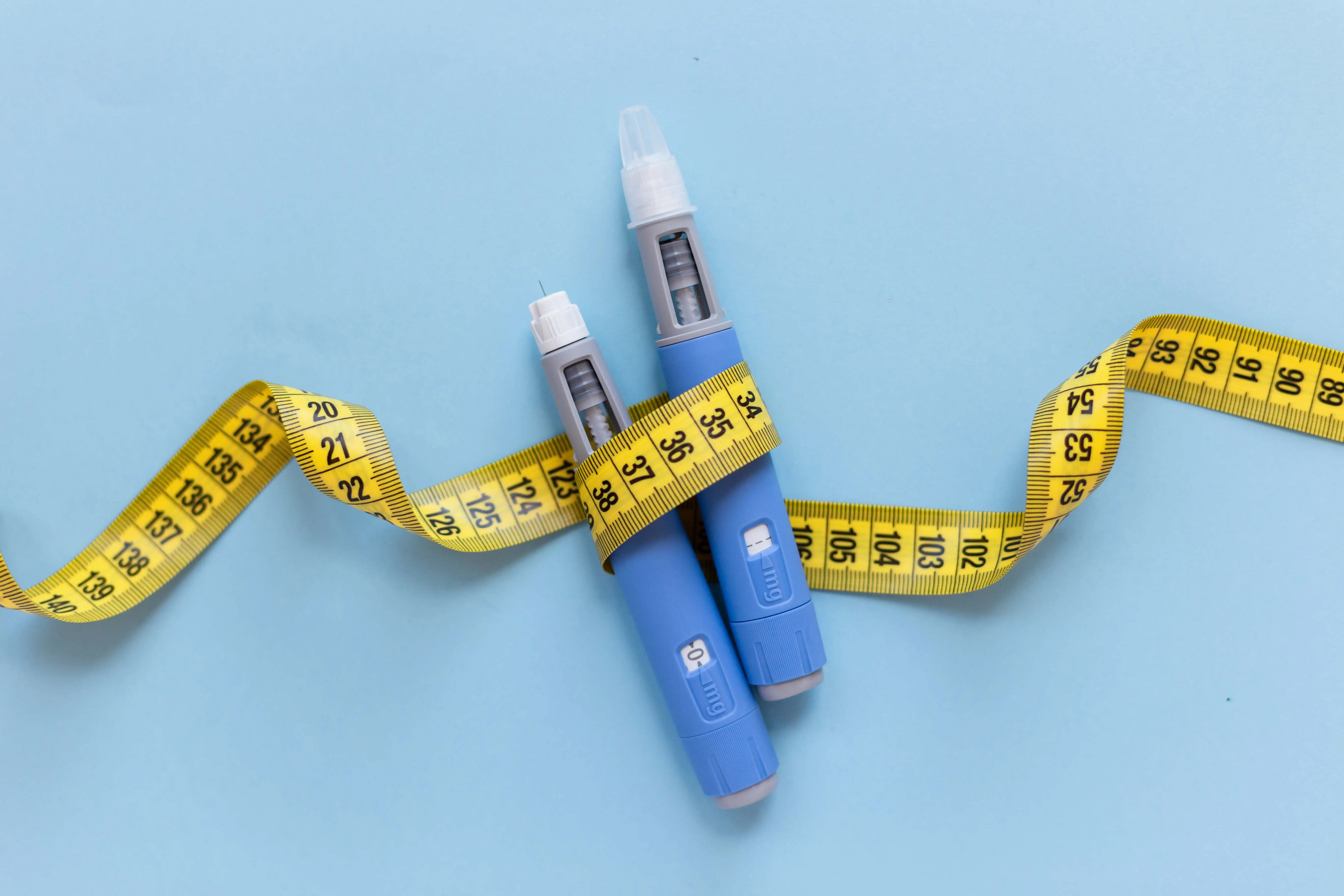
How does the weight-loss injection work?
First of all, it's about peptides, which also occur naturally in the body. I often encounter people who are afraid that "chemicals" will be administered to them – but that's not the case.
This is about the so-called GLP-1, the 'Glucagon-like Peptide-1'. It is produced in the intestine and has an important regulatory function there. For example, when you eat a larger meal, the intestine is activated and produces this hormone in the neuroendocrine cells. This GLP-1 then enters the bloodstream and takes on several tasks:
It promotes the feeling of fullness in the brain – so you simply feel less hungry. At the same time, gastric emptying is slowed down. This means that you feel full faster and stay full longer.
Basically, this system naturally ensures that we do not eat too much.
Another point, which is particularly important from my perspective, is the influence on the metabolism – especially on insulin management. Insulin ensures that sugar is taken from the blood into the cells.
Overweight people often have what is known as insulin resistance. Simply put: The receptors where insulin works do not increase to the same extent as body weight. As a result, insulin can no longer work effectively – and this is where GLP-1 comes in to regulate.
And how quickly do the effects of GLP-1 medications show?
The effect sets in very quickly – essentially within seconds to a few minutes. This is also sensible because the body can respond very finely to food intake.
The pharmaceutical industry has further developed this principle. Through targeted adjustments, it has been possible to significantly extend the half-life of these active substances. As a result, the medications do not need to be administered constantly. Today, it is therefore possible to give these so-called weight-loss injections only once a week.
How much weight do you lose with preparations like Ozempic and Wegovy?
That depends on the specific preparation, as the active substances differ in their effectiveness. A well-known example is Semaglutide, commonly known as Ozempic. With it, an average weight reduction of about 15 percent can be achieved.
Newer substances go even further because they combine multiple mechanisms of action. These include so-called GIP agonists, i.e., glucose-dependent insulinotropic polypeptides, which complement the effect of GLP-1.
An example is Tirzepatide, which is already more potent. So-called triple agonists go even further, where the glucagon receptor is additionally activated. Here, we are now talking about weight reductions of up to 25 percent.
This puts us in a range that was previously only achievable through bariatric surgery – that is, through surgical procedures such as stomach reductions. Percentage-wise, the effects are now actually comparable.
What is fascinating is what you can achieve today.
Absolutely. I am an internist and therefore a conservative physician. I have to say honestly: I have always viewed surgical interventions like gastric reductions critically.
Of course, these procedures have their justification and are evidence-based, especially in cases of severe obesity. But it remains a very invasive intervention.
If today we have pharmaceutical options that achieve similar effects, then surgery should really be the very last option in my view – when all other measures have been exhausted.
What are the side effects?
The most common side effect is nausea. This is something that occurs relatively often. In some cases, it can even lead to vomiting.
However, my personal experience over several years is very positive: Many patients tolerate the therapy well and even report no side effects.
If side effects occur, they usually happen at the beginning of the treatment. They typically subside again after a few days.
For this exact reason, the therapy is increased slowly. You start with a low dose and gradually increase it – usually monthly. This way, side effects can be much better controlled and avoided.
There have been repeated reports that Ozempic or Mounjaro can lead to vision damage. What has been your experience?
The issue came up a few years ago because individual cases were described where inflammation of the optic nerve occurred. As a result, more intensive research was conducted. The current status is that a clear causal relationship has not yet been definitively proven.
However, it might not be completely ruled out either. What's important is that other eye diseases, such as diabetic retinopathy or glaucoma, can be more favorably influenced by these medications.
We also conduct telemedical eye examinations at our center, in collaboration with the clinic in Erlangen. Therefore, I do have insight into corresponding findings. In my own practice, I have not yet seen such side effects.
The weight-loss injection is prescription-only and is actually intended for diabetes and obesity. Nevertheless, people without medical indications also use it. What do you say to such patients?
This is actually rather rare in my practice. Most people who come to me have a clear medical indication, such as severe overweight.
The general rule is: This therapy is not indicated for normal weight. I don't use it in such cases either. I had already mentioned that BMI is not always the ideal measure. Personally, I find waist circumference very telling – for women, it should be around 80 to 85 centimeters.
Isn't it still a medication that mainly benefits people with higher incomes?
First of all, there are clear medical indications – and in these cases, the costs are also covered by health insurance. This mainly concerns type 2 diabetes mellitus.
It must not be forgotten: Obesity and diabetes are closely related. Often, long-term insulin resistance eventually develops into type 2 diabetes. And that is precisely part of this "pandemic" we talked about.
Medically, this is highly relevant. A diabetic has a significantly increased risk of cardiovascular diseases – such as heart attack. Prognostically, diabetes is now evaluated as seriously as existing coronary heart disease.
The indication for these medications clearly arises from the medical situation:
or already from a BMI of 27 if additional diseases are present
It is also new that current European guidelines emphasize the use of these medications even more—especially in patients with existing atherosclerotic cardiovascular diseases in combination with diabetes.
This shows: This therapy is no longer just a 'lifestyle topic,' but has clear medical relevance.
What does the treatment cost?
The therapy is not cheap. Depending on the preparation, the costs are currently about 300 to 400 euros per month, with newer active ingredients sometimes even higher.
If there is no clear medical indication, patients must cover these costs themselves. The health insurance companies—even private ones—are rather reluctant here.
In my experience, costs are usually only covered if there is actually diabetes mellitus. In precursor stages like insulin resistance, it is still very difficult to achieve cost coverage—even with the appropriate medical justification.
How long do you use the syringe?
Basically until normal weight is reached. I am very consistent there – as in all of preventive medicine. I work with clear numbers and facts, not with excuses.
The goal is a BMI under 25. Although I also want to emphasize: The BMI alone is not ideal. More important are additional measurements like the waist-to-hip ratio or – even better – body composition.
We routinely work with bioimpedance analyses. This precisely captures how the body is composed – how much fat mass, muscle mass, and especially visceral fat is present. Precisely this visceral fat is our real target.
I see my patients every two to three months during therapy. We regularly conduct analyses and blood tests to check, for example, insulin resistance.
What happens after stopping Ozempic or Wegovy?
This is a very important question. It can lead to a yo-yo effect – and this can potentially be even more pronounced than with traditional diets. That's why it is crucial to always accompany the therapy with intensive lifestyle counseling – right from the start.
This includes especially:
regular exercise and physical activity
an adapted diet, particularly fewer rapidly available carbohydrates
stress reduction
In my view, exercise is particularly central because many people do not move enough in their daily lives. Without activity, sugars and fatty acids are not sufficiently burned. Also Stress plays a big role because it often leads to unhealthier behaviors.
One must not forget the situation many affected people are in. It often involves people who haven’t had a normal weight for years or decades. Obesity is now clearly recognized as a disease—and should be treated as such.
When these patients lose significant weight for the first time through therapy, there is often an enormous motivational boost. Many experience this as a new beginning.
I have patients who say, "I have been given a second life." And it is precisely this moment that must be seized to make long-term changes.
Much is still being researched – what developments do you see?
An exciting field is anti-aging medicine. We are still at the beginning, but important studies are already underway – for example, on metformin and its potential influence on aging processes.
There are also new insights on GLP-1 agonists that go beyond pure weight reduction. An important study is the so-called SELECT study, published in the New England Journal of Medicine. Patients with existing atherosclerotic diseases were examined there—even without diabetes. Some received the drug, others a placebo.
The result was impressive: The combined endpoint of fatal and non-fatal heart attack as well as stroke could be reduced by about 20 percent. This shows very clearly: These drugs have protective effects on various organs. This is particularly relevant for the heart, but also for the kidneys.
Another important point is the anti-inflammatory effect. In preventive medicine, inflammation plays a central role – and this is exactly where these medications also take effect.
Additionally, we see positive effects on blood pressure and even on blood coagulation. Overall, it is a therapy with multiple complementary mechanisms of action.