© Magnific
October 27, 2026
Marianne Waldenfels
On TikTok, okra water is celebrated as a natural remedy for high blood sugar. Two recent meta-analyses suggest the green pods may indeed benefit blood sugar and cholesterol – but most studies tested okra powder or extracts, not the soaking water that goes viral online.
A few green pods, a glass of water, and a night in the refrigerator: that's all it takes to make a drink that social media has embraced as a health booster. Okra water is said to lower blood sugar, improve digestion, help with weight loss and even give you clearer, more beautiful skin. On TikTok and Instagram in particular, the slightly slimy liquid is promoted as an easy home remedy.
What sounds like another short-lived wellness trend actually has some scientific backing. Two meta-analyses from 2026 provide evidence that okra may beneficially affect blood sugar and certain cholesterol levels. One of them encompasses 14 clinical studies with a total of 836 participants — results compelling enough to take a closer look at this unusual drink.
Okra is a green, elongated vegetable pod that is especially common in African, Indian, Caribbean, and South American cuisine. When cut and cooked, it releases a viscous substance known as slime or mucilage, which is made up of complex carbohydrates and soluble dietary fiber, among other things.
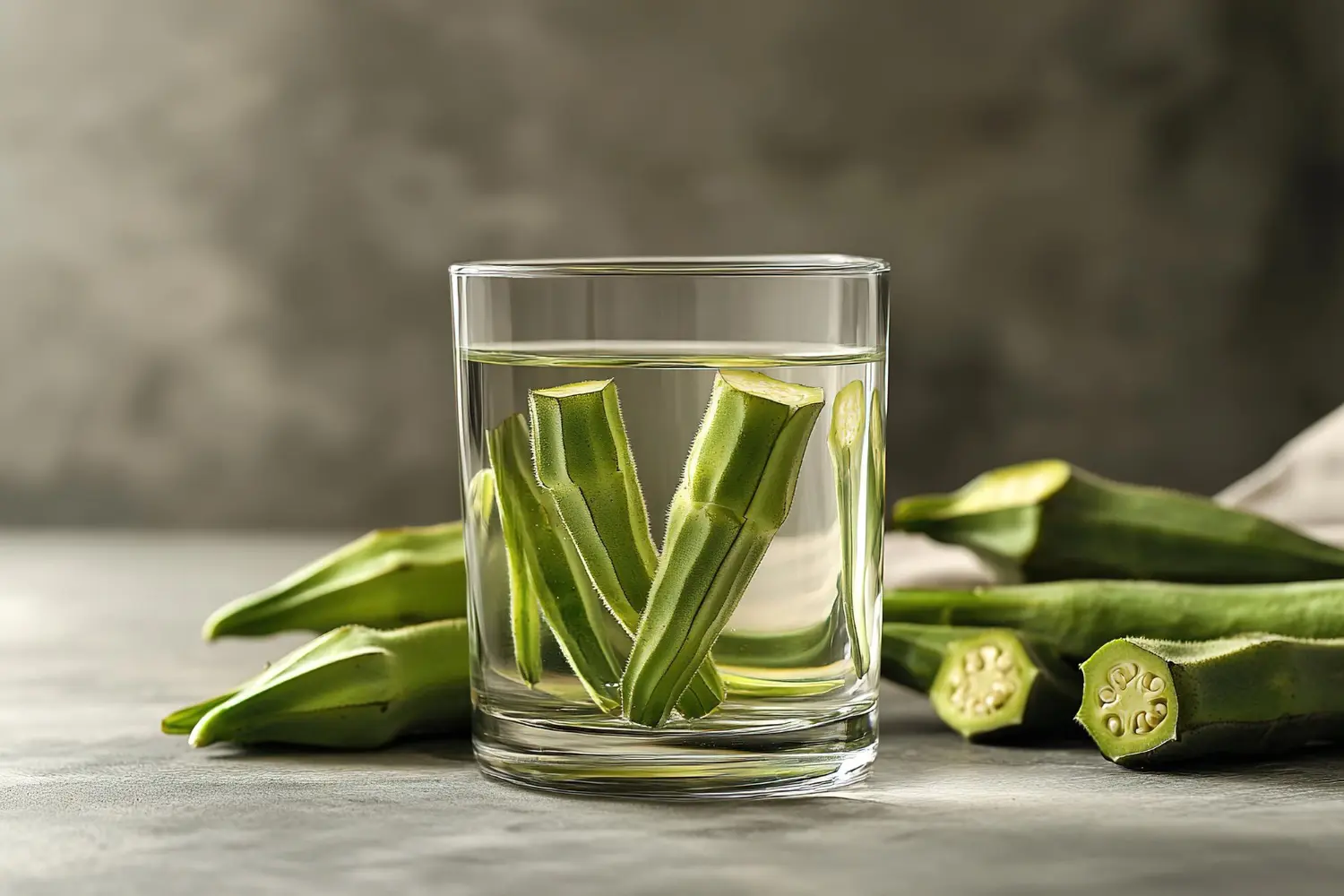
To make the trending drink, several fresh okra pods are washed, cut, and left to soak in water overnight. The next morning, the pods are removed and the liquid — which has taken on a slightly gel-like consistency — is consumed.
The idea is that certain active compounds from the okra leach into the water and produce a similar effect to eating the vegetable itself. The most common claim is that the drink can blunt blood sugar spikes after meals.
There is a biologically plausible mechanism for this. Soluble, gel-forming dietary fibers can slow the absorption of carbohydrates in the intestine. However, whether homemade okra water contains enough of these fibers is still unclear.
A Experimental Physiology published meta-analysis from 2026 examined 14 randomized controlled trials involving a total of 836 participants. The researchers set out to determine whether okra produces a measurable benefit in people with impaired glucose metabolism.
Compared with the control groups, participants who received okra had fasting blood sugar levels that were, on average, 23.7 milligrams per deciliter lower. Blood sugar measured two hours after a meal was also lower, by an average of 22.4 milligrams per deciliter.
For the long-term blood sugar marker HbA1c — which reflects average blood sugar control over several weeks — a difference of 0.30 percentage points was observed. The scientists also found improvements in certain cholesterol levels and in a measure of insulin resistance.
For an ordinary vegetable, these are remarkable results. Especially noteworthy is that not just short-term blood sugar but also the long-term marker HbA1c was more favorable. That said, the studies varied considerably in their design, using different okra preparations including powder and dietary supplements. Whether the results translate to a glass of okra water therefore remains an open question.
A second Nutrition & Diabetes published in meta-analysis from 2026 examined ten studies on okra in people with prediabetes, type 2 diabetes, or diabetes-related kidney disease.
Here too, the researchers found favorable changes. LDL cholesterol in the okra groups was on average 8.5 milligrams per deciliter lower than in the control groups, and total cholesterol was around 14 milligrams per deciliter lower. Triglycerides and certain inflammatory markers also decreased.
These results suggest that okra could be more than just a high-fiber vegetable. However, this study too looked primarily at concentrated or standardized preparations. Whether the observed changes actually prevent cardiovascular disease in the long term has not been demonstrated.
It is encouraging that the signs of possible health benefits extend beyond blood sugar. The researchers also found favorable changes in lipid metabolism and certain inflammatory markers. Okra may therefore hold more interest for metabolic research than this unassuming vegetable might initially suggest.
The central question is this: does soaking actually transfer enough active compounds into the water? Most clinical studies examined okra as a powder, extract, or in other preparations — not the drink being promoted on TikTok.
In the studies included in the second meta-analysis, participants received between 3 and 20 grams of okra daily, mostly in concentrated form. How much of this ends up in a glass of soaking water depends partly on the preparation method and has so far barely been studied.
Okra water has not gone entirely without scientific investigation, however. A small study from Indonesia involving 30 people with type 2 diabetes reported more favorable fasting blood sugar levels after two weeks compared to the control group. A further study from India with 95 diabetes patients also found lower values after 15 days, but lacked a control group.
The results are intriguing, but not yet sufficient to reliably assess the effect. How much soluble fiber and how many other active compounds actually pass into the water during soaking depends on the preparation method, among other factors, and has not yet been adequately studied.
Eating the whole okra pod, by contrast, also delivers the dietary fibers and nutrients that remain in the vegetable during soaking. This is the fundamental flaw of the trend: the very pods whose health properties researchers are studying are simply thrown away.
On TikTok, okra water is credited with far more than just a beneficial effect on blood sugar. The drink is claimed to aid weight loss, improve digestion and even promote a clearer complexion.
At least when it comes to body weight, there is some scientific basis. A 2025 meta-analysis covering twelve clinical studies and 770 participants found indications that okra preparations can reduce weight, BMI, and body fat. However, a larger 2026 review was unable to confirm this effect. There are also some early clinical findings on digestion, including from a study using a combination of okra and ashwagandha extracts.
For the widely promoted skin benefits, however, convincing human studies are lacking. And even the positive findings on weight loss come predominantly from studies using okra preparations, not the soaking water popularized on TikTok.
For healthy adults, hygienically prepared okra water consumed in typical amounts is unlikely to cause problems in most cases. That said, sensitive individuals may experience bloating or other digestive complaints.
People with diabetes who are taking blood sugar-lowering medications should pay particular attention. While it has not been proven that ordinary okra water significantly lowers blood sugar, any possible additional effects should be discussed with the treating physician.
Okra also contains oxalate, which in larger amounts can promote the formation of certain kidney stones. Anyone who has already had calcium oxalate stones should therefore avoid drinking it daily or in large quantities. People taking anticoagulants such as warfarin should also exercise caution: okra provides vitamin K, which can reduce the effectiveness of these medications. What matters most is avoiding any sudden, significant change in vitamin K intake. Consulting a doctor is advisable.
The drink should be prepared and stored cold, and consumed fresh. Above all, it must never replace prescribed diabetes treatment.
The TikTok trend has thrust a vegetable into the spotlight that may have more to offer healthwise than many people suspect. The new studies provide interesting indications that okra can beneficially affect glucose and lipid metabolism. The findings on blood sugar in particular make it a promising candidate for further clinical research.
Whether the soaking water works in a similar way has not yet been sufficiently established. Those who want to take advantage of okra's possible health benefits don't need to rely on the trending drink. The simpler and nutritionally sounder choice is to eat okra regularly as a vegetable — in curries, stews, or briefly sautéed, for example.
Perhaps the best thing about the okra water trend isn't the water at all, but the rediscovery of the okra pod itself.

Radiofrequency, ultrasound, micro-coring: How much can the latest skin-tightening treatments achieve without surgery? Plastic surgeon Dr. Lukas Kohler explains which methods show promise, where they fall short, and why some treatments can even make the face look older.
Christine Bürg & Marianne Waldenfels

An interview with
Dr. med. Lukas H. Kohler

ARFID is often mistaken for picky eating, partly because weight can be normal. Chief physician Dr. Tabea Bauman explains how to recognize the eating disorder and why pressure at mealtimes does more harm than good.
Christine Bürg & Marianne Waldenfels
An interview with
KIRINUS Privatklinik Am Friedensengel

When the days get shorter, many people’s moods take a dip. But not every winter slump is harmless: psychiatrist Prof. Dr. Andreas Menke explains when the winter blues turns into seasonal depression that needs treatment.
Christine Bürg

With
Prof. Dr. med. Andreas Menke

When cancer runs in the family, questions about one's own risk often follow. In the first installment of her column, geneticist Dr. Laura von der Heyden explains how inherited genetic variants influence the risk of breast, colorectal, and prostate cancer — and how this knowledge can change preventive care.
Dr. med. Laura von der Heyden
By