© Magnific
September 2, 2026
Marianne Waldenfels
Some popular blood sugar hacks really do work — from changing the order in which you eat to taking a walk after a meal. But the evidence for others is surprisingly thin, and not every glucose spike is cause for concern.
How much blood sugar rises after a meal depends on more than just what we eat. The order of foods, how they are combined, and even what we do right after eating can all shape the glucose curve.
This might sound like a fine point of metabolic research, but it has real practical implications. A new systematic review from 2026 shows, for example, that it can matter whether vegetables and protein-rich foods are eaten before or after carbohydrates. There is now also interesting data on vinegar and post-meal physical activity.
After a meal containing carbohydrates, digestion breaks them down into glucose, among other things. That glucose enters the bloodstream, blood sugar rises, and the pancreas releases insulin — the hormone that allows glucose to move from the blood into the cells.
A rise in blood sugar after eating is therefore completely normal. How quickly and how sharply it rises, however, depends on more than just the amount of carbohydrates consumed. The overall composition of a meal plays a role too — and apparently so does the order in which foods are eaten.
The advice sounds simple enough: rather than starting with bread, rice, or pasta, begin with vegetables or protein-rich foods and save the carbohydrate-heavy portion for last.
A systematic review published in 2026 examined this so-called "meal sequence" in healthy adults. Six studies with a total of 107 participants aged between 20 and just under 37 years were included. In most studies, the blood sugar response after eating was lower when vegetables, fruit, or protein-rich foods were consumed before the carbohydrate-rich components.
This can likely be explained by several mechanisms. Fiber from vegetables, together with protein and fat, slows the digestion of carbohydrates. When bread, rice, or pasta is eaten afterward, the glucose released enters the bloodstream more gradually — meaning blood sugar rises less steeply.
The data suggest that meal order can at least influence the short-term glucose curve. The research is not yet sufficient to draw broader conclusions, however: the studies were small, participants were predominantly young, and longer-term investigations are lacking. Whether healthy people stand to benefit from this approach over time remains an open question.
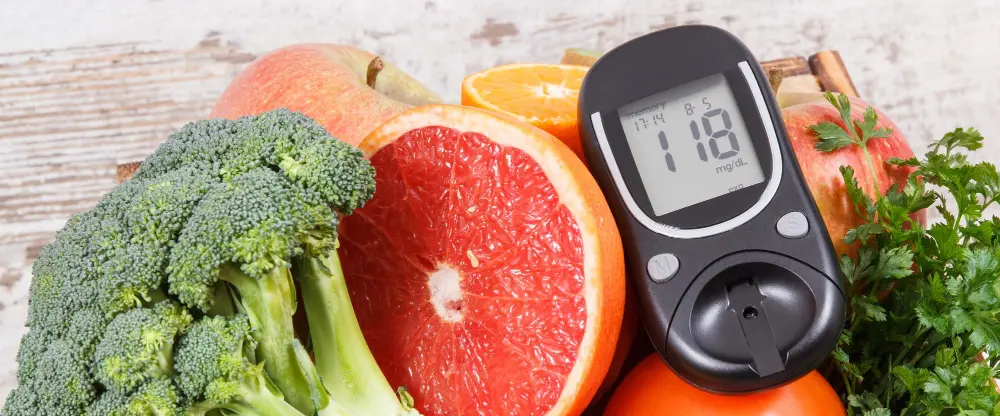
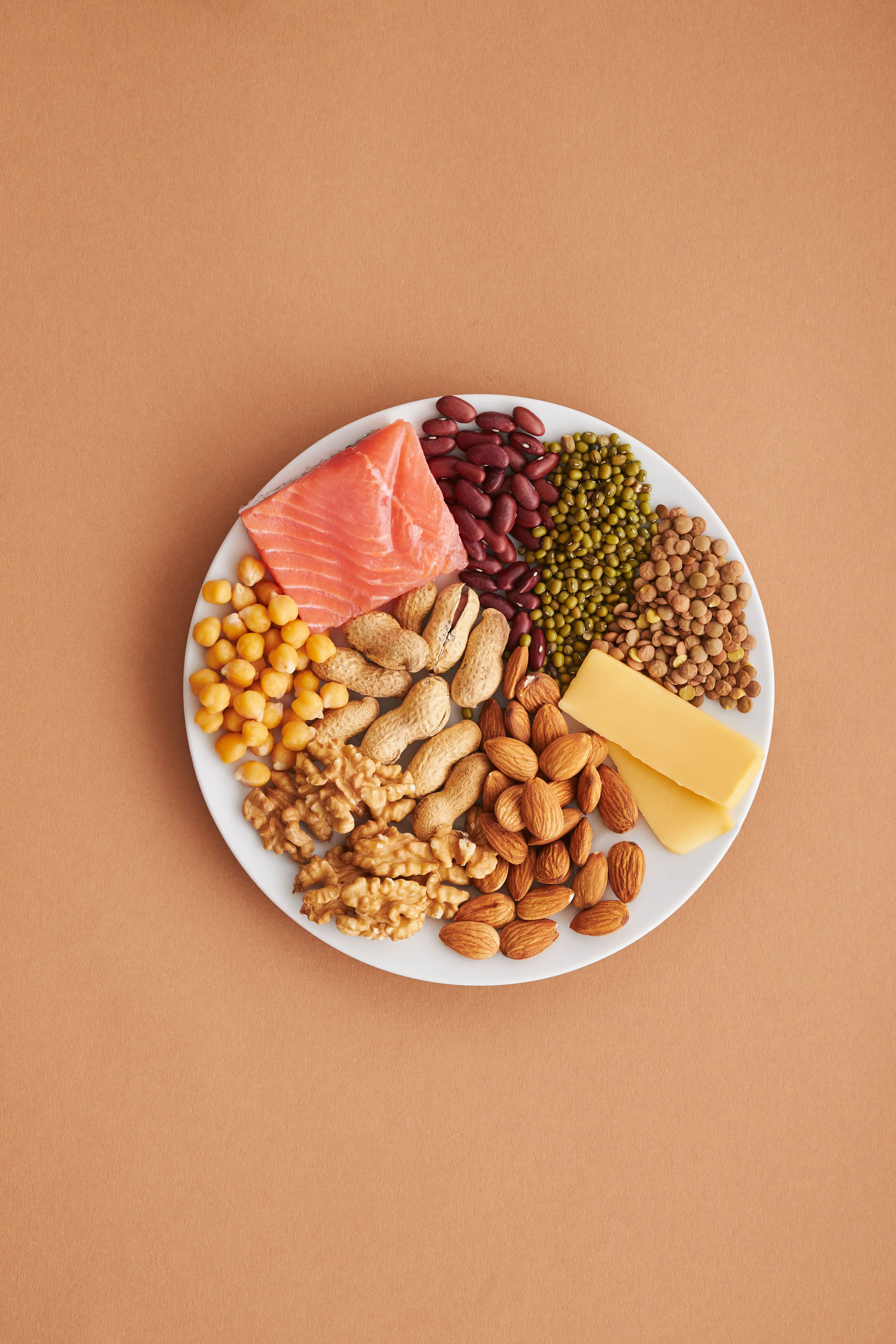
There is now quite a substantial body of data on this question as well. A systematic review and meta-analysis published in the Journal of Nutrition in 2024 analyzed 154 comparisons from controlled dietary studies, focusing on what happens when protein is added to a carbohydrate-containing meal.
In people without diabetes, the post-meal rise in blood sugar was lower as a result. At the same time, however, the body secreted more insulin. A flatter glucose curve does not therefore automatically mean the metabolism is working less hard. How pronounced the effect was also depended, among other factors, on the protein source.
The widely circulated claim that "protein prevents glucose spikes" is therefore an oversimplification. That said, it may still be beneficial to avoid eating carbohydrates on their own — pairing pasta with vegetables and a protein source, for example, rather than eating it alone.
Using vinegar to help manage blood sugar levels is not a new idea. The potential effect has been studied for years, and a new large-scale analysis now takes stock of how solid the existing evidence actually is.
For the umbrella review published in Food Science & Nutrition in 2026, the researchers analyzed ten existing meta-analyses covering a total of 38 primary studies.
On average, post-meal blood sugar was approximately 14.6 mg/dl lower in participants who had consumed vinegar. The authors consider this a measurable effect, though they also note that the studies analyzed sometimes differed considerably from one another.
Notably, it does not appear to have to be apple cider vinegar specifically. Various types of vinegar were studied, and the acetic acid they all contain is likely the key factor behind the effect.
A word of caution: vinegar is highly acidic and, when consumed undiluted or very frequently, can erode tooth enamel and irritate mucous membranes. In sensitive individuals, it may also worsen stomach complaints or acid reflux. Those who enjoy vinegar can use it in a perfectly straightforward way as part of a meal — in a salad dressing, for example.
One of the better-supported strategies has nothing to do with food at all: exercise. A systematic review with meta-analysis compared exercise before and after a meal. Eight randomized crossover studies with a total of 116 people with and without type 2 diabetes were included.
Exercise after eating reduced blood sugar spikes more effectively than exercise before a meal or no exercise at all. Getting active as soon as possible after eating appeared to be especially beneficial. The studies used various forms of physical activity, including walks of approximately 20 minutes.
The underlying mechanism is straightforward: working muscles need energy and draw glucose directly from the blood to power that activity.
A new meta-analysis from 2026 confirms the benefit of post-meal physical activity specifically in people with type 2 diabetes. In the crossover studies analyzed, several values measured using continuous glucose monitoring showed improvement.
Cooking potatoes, rice, or pasta, letting them cool, and then eating them later or reheating them: this too is said to reduce the post-meal rise in blood sugar.
When cooked starchy foods are cooled, part of the starch changes its structure, forming what is known as resistant starch. This type of starch is not digested — or only partially so — in the small intestine, meaning less of it is broken down into glucose.
How this can affect blood sugar is illustrated by a randomized crossover study published in 2026. 32 adults with type 1 diabetes ate either freshly cooked pasta or pasta that had been refrigerated for 24 hours after cooking and then reheated. Blood sugar rose less sharply after the cooled pasta.
These results cannot simply be transferred to healthy individuals, however. How much the proportion of resistant starch — altered by cooling — actually affects blood sugar in everyday life is likely to depend on the specific food and how it is prepared.
Lemon juice keeps cropping up as a blood sugar hack. The evidence is limited, but it is quite striking.
In a randomized crossover study, healthy adults ate 100 grams of bread alongside either water, black tea, or lemon juice. With lemon juice, the peak blood sugar rise was around 30 percent lower than with water, and the peak itself occurred later.
Another randomized crossover study with ten participants reached a similar conclusion. Fifty-five minutes after eating bread with lemon juice, measured blood sugar was around 35 percent lower than after bread with water.
These are striking figures, but they come from small experiments involving a very specific meal. They do not mean that a squeeze of lemon reduces blood sugar by 30 or 35 percent after every meal.
One possible explanation involves the acidic environment, which may influence how starch is digested. Whether this will ever translate into a practical dietary recommendation is something larger studies will need to determine.
The research does not support any reliable ranking. Studies, participants, meals, and measurement methods vary too widely for direct comparisons. Exercise after eating is the best-supported approach. Meal order and vinegar can also influence the glucose curve — but how meaningful these effects are in the long run for healthy people is a separate question altogether.
This is arguably the more important question. Continuous glucose sensors now make visible what previously went entirely unnoticed: after a meal, blood sugar rises and then falls again. The curve does not look the same in every person, and can vary even in the same individual from day to day.
A spike upward does not automatically mean something is going wrong. In metabolically healthy people, a temporary rise in blood sugar after eating is a normal physiological response.
A commentary published in JAMA Internal Medicine in August 2026 addresses the growing use of continuous glucose monitors outside of diabetes management. For most people without diabetes, a health benefit from continuous self-monitoring has not yet been established.
It becomes problematic when every dip and spike in the glucose curve is interpreted as a health risk. The current evidence offers little support for that view in metabolically healthy individuals.
For people with diabetes, the picture is of course different. In that context, managing blood sugar is an important part of treatment and should be done under medical supervision. Healthy people, by contrast, do not need to optimize their glucose curve after every meal. Eating a balanced diet and exercising regularly is likely to do far more for their metabolism than chasing the perfect curve with individual tricks.

"Feel Good, Live Better" – In this podcast episode, Prof. Dr. Carina Riediger explains why liver tumors can be cured more often than you might expect.
Christine Bürg

An interview with
Prof. Dr. med. Carina Riediger, MSc

Medfluencers enjoy a high level of trust and reach millions with health advice. But on social media, reach often counts for more than scientific evidence. Prof. Dominik Pförringer examines the troubling intersection of medicine, influence, and commercial interests.
Prof. Dominik Pförringer

By
Univ.-Prof. Dr. med. Dominik Pförringer

Wegovy is now available as a pill. But how does it compare with the weekly injection? Prof. Uwe Nixdorff explains the key differences in effectiveness, use, and side effects.
Christine Bürg & Marianne Waldenfels

With
Prof. Dr. Uwe Nixdorff