© Getty Images/Unsplash
October 17, 2026
Marianne Waldenfels
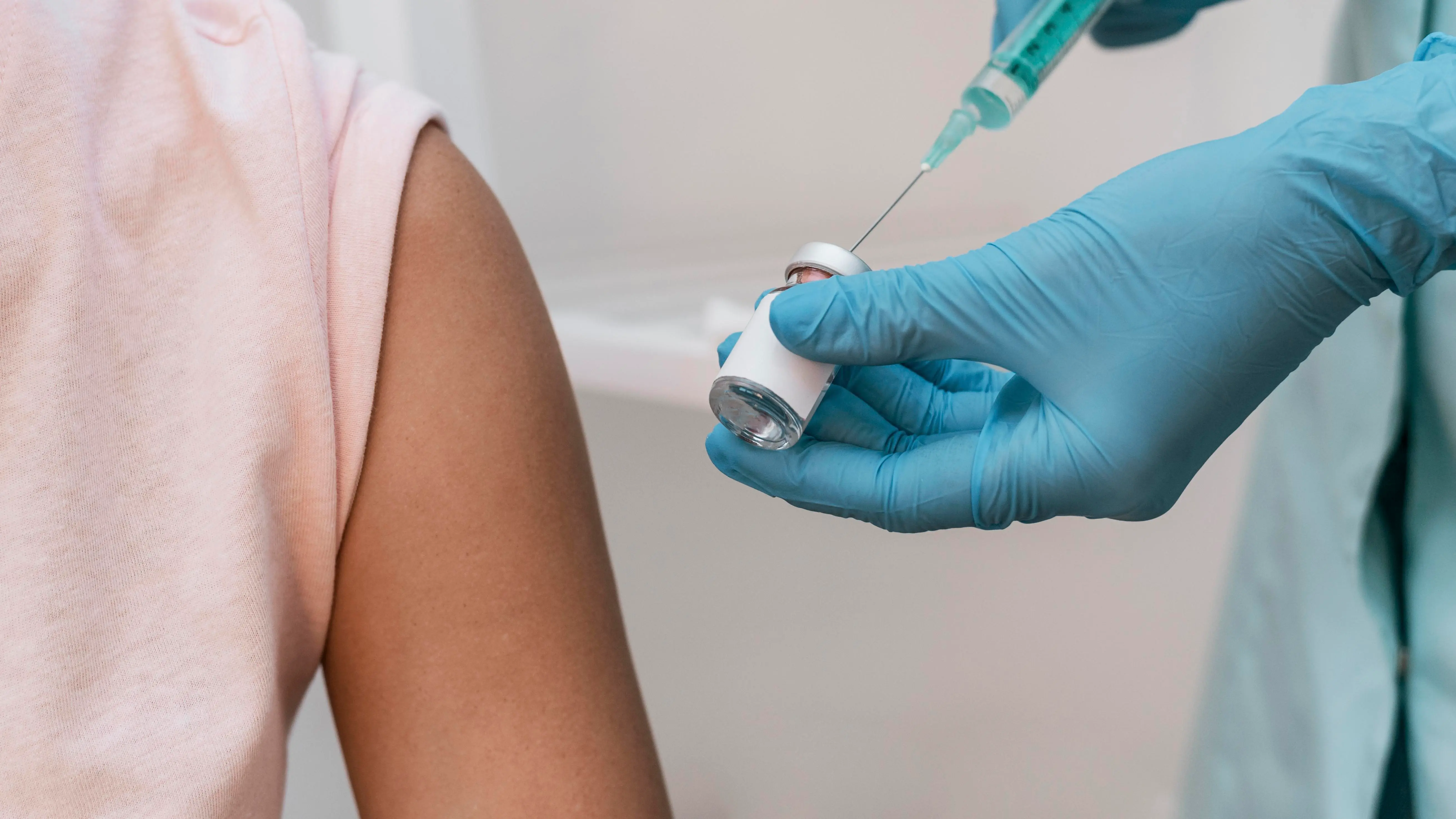
The HPV vaccine protects against cervical cancer. A large Swedish study now suggests another potential benefit: vaccinated women were less likely to give birth prematurely. The association was particularly strong among women vaccinated during adolescence.
Anyone who has their child vaccinated at age twelve against human papillomaviruses thinks about cervical cancer, perhaps also about genital warts. Hardly anyone thinks about a pregnancy that may not begin until two decades later. Yet that is precisely where another, so far little-noticed benefit of the vaccine may lie.
This is suggested by a study from the Karolinska Institute in Stockholm, published in early October 2026 in the journal The BMJ. The team led by Zhongsong Zhang and Jiayao Lei analyzed Swedish health registers: 624,713 first births from 2006 to 2023, with just under 15 percent of the mothers having been vaccinated against HPV before their pregnancy. The result: their children were born prematurely slightly less often.
HPV is one of the most common sexually transmitted infections. It usually clears up unnoticed, but sometimes the virus persists and alters the cells of the cervix. These precancerous lesions are often surgically removed — for example, through a conization, in which a small cone of tissue is excised. This shortens the cervix, and the risk of spontaneous preterm birth can roughly double as a result.
But the virus itself may also play a role. In 2021, Gothenburg gynecologist Johanna Wiik showed in an analysis of more than one million Swedish births (PLOS Medicine) that even an HPV infection shortly before or during pregnancy is associated with somewhat more preterm births. At the time, she noted that it would soon be possible to see what vaccination programs would change in this regard. The new study, in which several of her co-authors from that time are involved, is in a sense the answer to that.
Vaccinated women had an approximately five percent lower risk of preterm birth; for very early preterm births between weeks 28 and 31, the difference was 15 percent. Premature rupture of membranes and very small babies were also less common. In contrast, no statistically confirmed association was found for stillbirths or neonatal mortality.

The differences are comparatively small. At the population level, however, they could still be significant. Because millions of young people are vaccinated worldwide, even a small reduction in risk can make a big difference, says Jiayao Lei in a statement from the Karolinska Institute.
The data also offer a clue as to why: high-grade cervical cell changes had been detected before delivery in 3.7 percent of unvaccinated women, compared with only 0.6 percent of vaccinated women. Those who are vaccinated need surgery less often — and that could explain part of the effect.
The association was clearest among women who had been vaccinated before their 17th birthday. Their risk of preterm birth was around ten percent lower; among those vaccinated later, the effect was considerably weaker. For study author Zhang, this aligns with what has long been known about the vaccine: it offers the best protection when administered before first contact with the virus.
As large as the study is, it is observational only — it does not prove causation. Vaccinated and unvaccinated women may differ in ways that no register captures, such as health behaviors. Furthermore, the older quadrivalent vaccine was studied; in many places, a nine-valent vaccine is now used. And what applies in Sweden, with its own vaccination program and its own obstetric care, cannot be transferred one-to-one to other settings.
Previous research is also inconsistent. Studies from Finland and Denmark reached similar conclusions, while a Scottish analysis found no association with preterm births. What is well established, however, is safety: a Danish study involving around 580,000 pregnancies (New England Journal of Medicine 2017) found no increased risks even when women had been inadvertently vaccinated during an as-yet-undetected pregnancy.
The Standing Committee on Vaccination recommends the HPV vaccine for girls and boys between the ages of 9 and 14, with missed vaccinations to be caught up by the 18th birthday. In Germany, this happens too rarely: according to a report by the European health authority ECDC, only around 55 percent of 15-year-old girls are fully vaccinated. Portugal achieves 90 percent.
Adults can still be vaccinated, but the protection is lower. Vaccination is not given during pregnancy itself, and regular cancer screening remains important regardless. Anyone who is unsure is best advised to speak with their pediatrician or gynecologist.
The Swedish study does not change the recommendation. It simply adds an argument that hardly anyone had on their radar: a vaccine given in childhood could still have an effect decades later — on a child who did not yet exist at the time of vaccination.

A single hydrogel injection into the knee may relieve osteoarthritis pain for years. Orthopedist Dr. Ivo Breitenbacher has treated around 200 patients with it and explains who the procedure is right for and where its limitations lie
Christine Bürg & Marianne Waldenfels

An interview with
Dr. med. Ivo Breitenbacher

Almost everyone has seen them, and most people ignore them: tiny specks and strands drifting across their vision. Usually, they’re harmless. But sometimes they signal an emergency where quick action can save your sight. Ophthalmologist Dr. Mirka Höltzermann explains which warning signs to watch for.
Christine Bürg & Marianne Waldenfels

An interview with
Dr. Mirka R. Höltzermann

Can fasting relieve hot flashes and other menopausal symptoms? Dr. Verena Buchinger-Kähler shares remarkable cases from her clinical practice and explains how women respond to prolonged fasting – and what science has revealed so far.
Christine Bürg & Marianne Waldenfels
An interview with
Dr. med. Verena Buchinger

"Feel good, live better" – in this episode, Dr. Alexandra Schoeneich sheds light on the wide-ranging changes that menopause brings to the body
Christine Bürg

An interview with
Dr. med. Alexandra Schoeneich

Stopping antidepressants can trigger symptoms that resemble a return of depression. Psychiatrist Prof. Dr. Andreas Menke explains how to tell the difference, why the final milligrams can be particularly difficult, and which two mistakes patients should avoid.
Christine Bürg & Marianne Waldenfels

An interview with
Prof. Dr. med. Andreas Menke