© Vanessa Loring
August 6, 2026
Marianne Waldenfels
Protein is widely considered essential for healthy aging. But a new review asks whether more is always better. Here's why researchers are rethinking the protein boom — and why current recommendations remain unchanged.
Protein bars, protein yogurt, protein bread — few nutritional topics have surged in popularity quite like protein has in recent years. In old age especially, we are told to eat more of it in order to preserve muscle mass and strength for as long as possible. The German Nutrition Society (DGE) recommends 1.0 gram of protein per kilogram of body weight per day for healthy adults aged 65 and over.
All the more surprising, then, is a new review from the United States. It stops short of concluding that everyone should eat less protein, but it does raise a different question: Has the protein boom gone too far?
The researchers are not arguing that we should simply accept muscle loss. Rather, they are interested in whether metabolism and aging may follow different biological rules than muscle maintenance. In other words: could the amount of protein that is optimal for muscles simultaneously affect the aging process?
With this in mind, the authors examined evidence for whether a lower protein intake — or more precisely, a targeted reduction of certain amino acids — might potentially slow aging processes.
Before this prompts any new dietary recommendations, it is worth taking a closer look at the data — because this work does not present new findings from a clinical study in humans.
Instead, researchers led by Bailey A. Knopf and Prof. Dudley W. Lamming from the University of Wisconsin-Madison compiled already published research — ranging from cell studies and animal experiments to observational studies and early randomized intervention trials in humans.
Their goal was to understand why lower protein intake is repeatedly associated with slower biological aging across various animal models.
Lamming himself is also careful to temper expectations. Speaking to the trade publication Inside Precision Medicine, he emphasizes that adequate protein intake for muscle building and recovery is beyond question. His criticism is aimed instead at a broader dietary trend: many predominantly sedentary people today consume significantly more protein than they actually need.
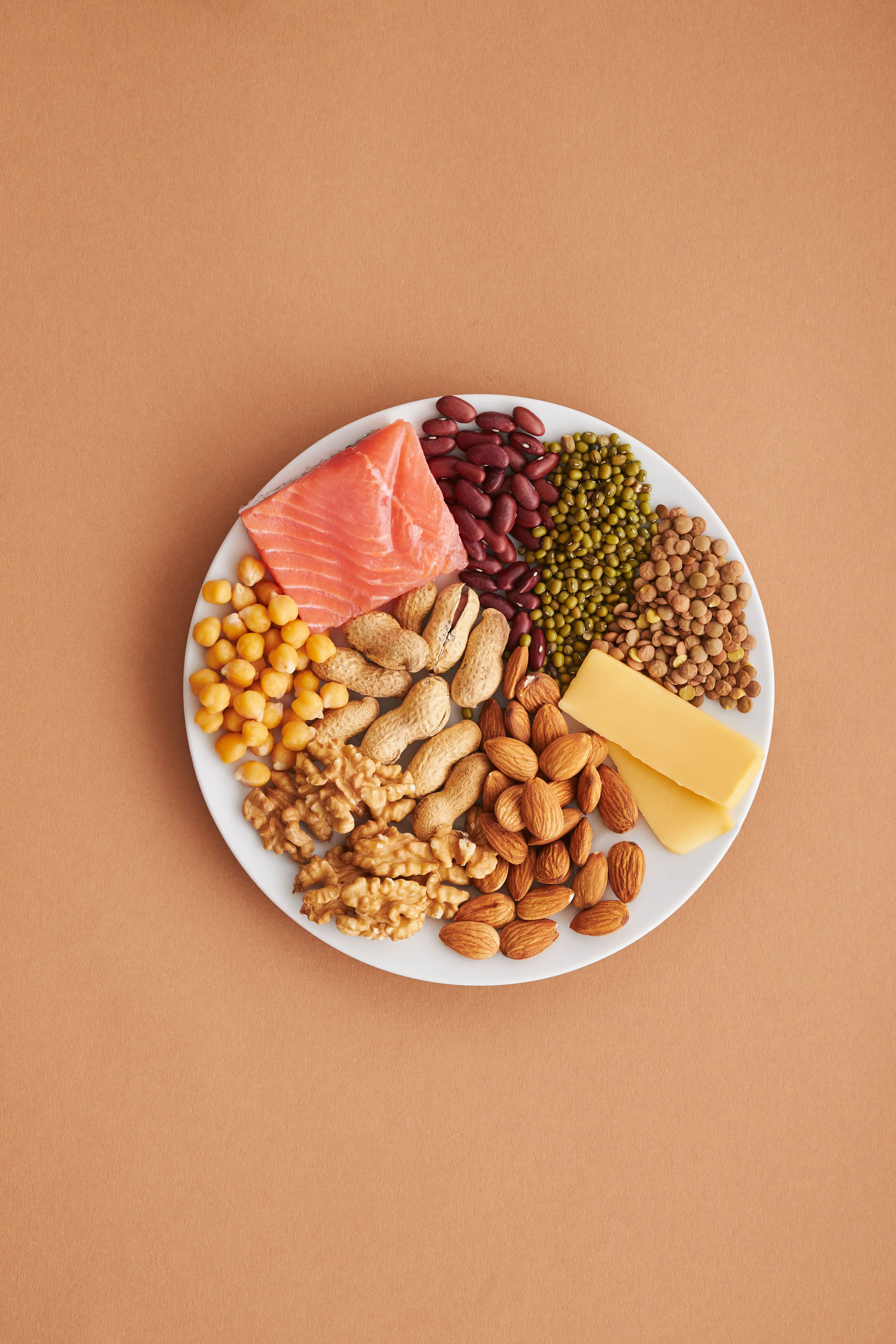
This is precisely where the real debate begins. Hardly anyone disputes that protein is essential. What remains an open question is whether a consistently very high protein intake always benefits metabolism, or whether other biological processes eventually become more important.
Why might eating less protein influence aging? There is no clear answer yet. What is clear, however, is that protein is far more than just a building block for muscles. It also appears to influence metabolic processes that may play a role in healthy aging.
The hormone FGF21 may be an important piece of the puzzle. In mice, its secretion increases when they receive less protein. At the same time, they burn more energy and respond better to insulin. When the hormone is absent, many of these beneficial effects disappear.
Other biological processes also appear to respond to lower protein intake. The researchers found indications that cell repair, inflammatory processes, and the activity of certain genes may all be affected, among other things. Which of these mechanisms actually prove decisive in humans, however, remains to be seen.
The hypothesis rests primarily on animal studies. In many models, animals fed a lower-protein diet lived longer and remained healthier into old age. Whether these findings translate to humans is not yet clear.
Is the debate ultimately focused on the wrong question? It may be that what matters most is not how much protein we eat, but which amino acids it contains.
This is precisely the angle the authors find most compelling in their review. Amino acids are the building blocks of protein — and they apparently serve different functions in the body. In animal studies, selectively altering individual amino acids was sometimes enough to produce effects on metabolism and lifespan similar to those seen with an overall lower-protein diet.
Other amino acids, by contrast, appear to be especially important for healthy muscles. This could help explain why muscle health and healthy aging may not always follow the same biological rules.
For the researchers, this suggests that the debate will need to become more nuanced going forward. Perhaps the key question will no longer be how much protein we eat, but what kind.
At first glance, the new review might seem to contradict current dietary recommendations. In reality, however, the two are pursuing different goals.
As we age, the body responds less efficiently to dietary protein — a phenomenon experts call anabolic resistance. To preserve muscle mass, mobility, and independence for as long as possible, the German Nutrition Society (DGE) and the European professional society ESPEN therefore recommend a higher protein intake for older adults.
The American review does not challenge this goal. Rather, it asks whether a persistently very high-protein diet could simultaneously influence metabolic and aging processes, independent of muscle maintenance.
For older adults at increased risk of muscle loss, the new review changes nothing for now. The current DGE recommendation to combine adequate protein with regular strength training remains the best-supported scientific strategy for preserving muscle mass and independence in old age for as long as possible.
For healthy adults without an elevated protein requirement, however, the review does give pause for thought: extra protein shakes, protein bars, and other heavily protein-enriched foods are not automatically healthy — particularly when consumed without a sporting context or medical need.
The authors therefore do not advocate an across-the-board reduction in protein. Instead, they call for a protein intake that takes into account age, physical activity level, muscle status, and individual health risks.
The review does not offer new dietary recommendations. What it does show is that the scientific conversation is shifting. For years, the central question was how much protein we need. Going forward, greater attention may be paid to which amino acids matter most at different stages of life.

Stress, diet, and teeth grinding can all affect how our teeth age. Dentist Dr. Paul Leonhard Schuh explains the role of healthy gums, lifestyle, and modern dentistry in maintaining a healthy, natural-looking smile.
Christine Bürg & Marianne Waldenfels

An interview with
Dr. Paul Schuh

Biohacking, jaw training and even self-inflicted facial fractures: the quest for the perfect body is becoming increasingly extreme. Prof. Dominik Pförringer explores where self-improvement ends and self-harm begins.
Prof. Dominik Pförringer

By
Univ.-Prof. Dr. med. Dominik Pförringer