January 9, 2026
Marie Hein
- Health
- Sport
How to Start Jogging: Expert Tips & Common Myths Debunked
Can anyone really learn to jog? Expert Andrea Goceva debunks myths and gives tips for beginners.
Share article:
January 9, 2026
Marie Hein
Can anyone really learn to jog? Expert Andrea Goceva debunks myths and gives tips for beginners.

 Find a Doctor
Search the network for suitable specialists and contact them directly
Running is considered one of the most accessible sports, yet myths and excuses persist. Can anyone really learn to jog? "Yes," says Andrea Goceva. The native Macedonian is an expert in movement, performance and rehab coach, face of Nike Running, and trainer of the Running-Community Berlin Braves. She herself comes from competitive sports, having been involved in modern pentathlon as a child and was part of the German national team.
When "The Andi G.", as she calls herself on Instagram, is not training with her clients worldwide, she attends movement symposiums or works on opening her own gym in Berlin. Her sporting views are modern, approachable, and clear up dusty clichés.
Becoming a personal trainer was never your dream: After a bachelor's degree in automotive engineering, you are in the final stages of your medical engineering master's. What drives you?
I want to know how movement and good training work. This naturally includes a healthy lifestyle. For several months now, I've been increasingly involved with biomechanics – the science that explores how the body moves, how forces arise, and how bones and joints interact. It's not just about muscles, but about movement processes.
You always hear that jogging is bad for the joints. Is that true?
Not moving is bad for the joints. Joints need movement, otherwise they become stiff. The body is incredibly adaptable, but it needs time. Parkour athletes jump from five meters high and roll without injuring themselves. If I did that today, I would break my bones. But I could train to do it. It's the same with jogging: running ten kilometers out of nowhere hurts.
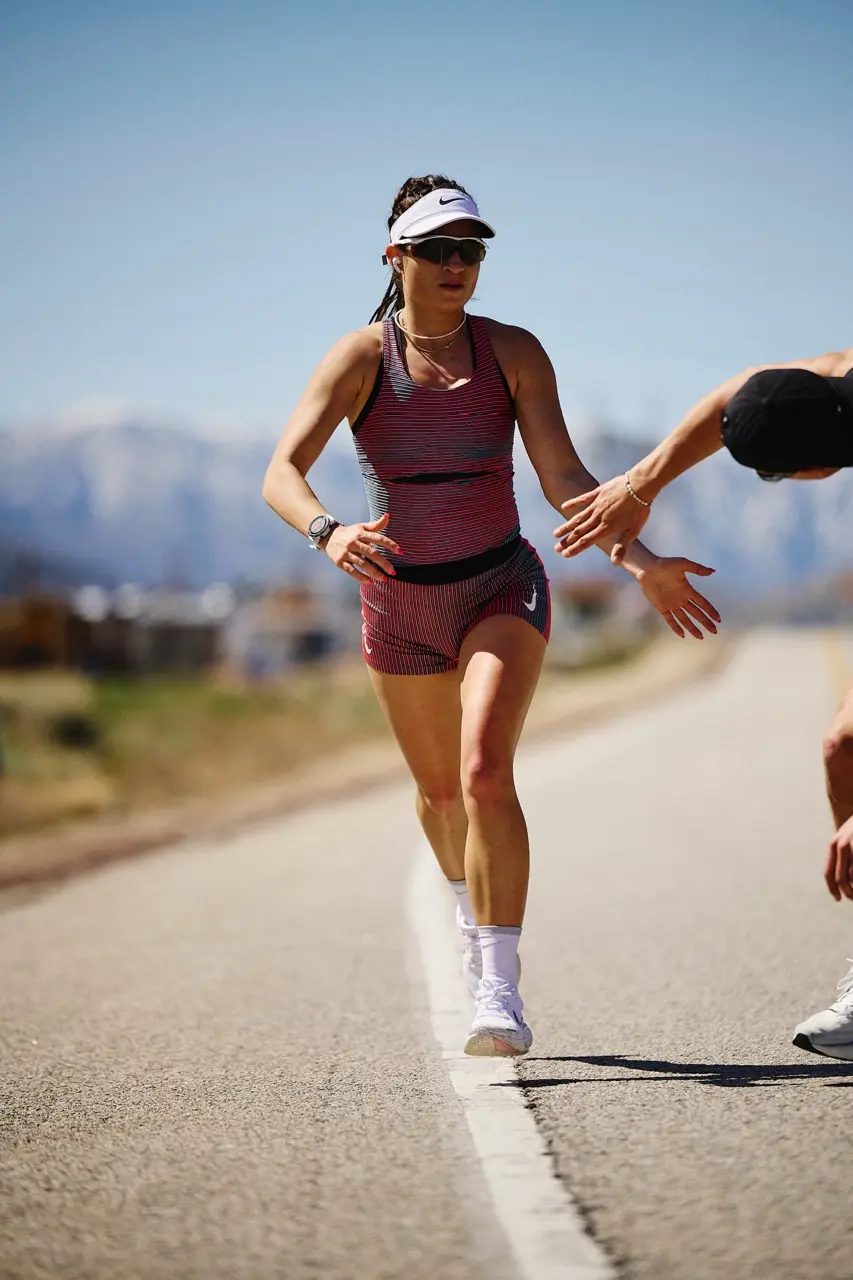
© iampatrickpilz
So can really anyone learn to jog?
Absolutely. Anyone with functioning legs can jog. The best thing about running is that it has such a low entry barrier. You need a sneaker – not even a running shoe at the beginning – and you can start running. The biggest mistake most make: they run way too fast and are out of breath after five minutes.
How should one start? What does the perfect training plan for beginners look like?
Jogging is a very rhythmic sport, and you have to develop a feel for this rhythm. That only happens if you do it regularly. That's why it's better to run more often and shorter rather than less often and longer. Two to three training sessions a week are sensible. At the beginning, you jog for two to three minutes and then walk for one to two minutes. You do this for a total of 15 minutes. You can increase each week.
And how do you increase when jogging?
A rule of thumb that's a good guideline for beginner joggers: increase the training volume by ten percent per week. This means: if you run a total of 50 minutes in the first week, increase to 55 minutes in the second week.
Endurance and breathing are often a challenge at first. If you're unlucky, you might jog with side stitches. Do you have a tip?
With side stitches, the small muscles between the ribs cramp up – the respiratory muscles. This happens especially when you talk while jogging and therefore breathe irregularly. Something I learned in competitive sports: breathe in and out for three steps during easy runs.
Left, right, left – inhale. Right, left, right – exhale. For fast runs, reduce the breath to two steps. Also, as a beginner, you shouldn't necessarily jog with music – better to run without music at first and just focus on your breathing.
Is there something everyone can practice that serves as particularly good preparation for running?
Jumping! A movement many no longer do. Jumping is very strenuous as it requires tremendous strength to accelerate your own body weight. Regular jumping strengthens tendons, ligaments, and bones, improves reaction ability, and trains the ability to catch yourself. It is also an excellent fall prevention measure in old age.
How does that affect jogging?
Jogging means working against gravity. You often see people in the park barely lifting off the ground because they haven't learned to push themselves up. But as with any new movement skill, consistency is key. Targeted jumping three to four times a week is effective training.
One of the myths ahead of jogging is that it breaks down muscles instead of building them…
Bodybuilders especially fear this. Muscles are built when they receive sufficient stimuli and have enough energy available. In other words, when you eat enough. If you run more, you also burn more calories. If these are not balanced, the body taps into muscle mass.
Many people like to jog on an empty stomach – especially in the morning. What should you ideally eat before a run?
In the morning, the cortisol level is already elevated, and exercising on an empty stomach increases it further. It's especially important for women not to jog on an empty stomach. A banana is often enough, but better is toast with peanut butter, banana, honey, and salt – this keeps me going for 45 minutes.
You are not only a performance coach but also offer a kind of modern rehab. Why is our healthcare system no longer sufficient here?
With chronic complaints, people often receive pills, a few sessions of physiotherapy, or are sent to rehab. There, they mostly learn only the essentials. The actual cause often remains untreated. Many of my clients have been through an odyssey of doctor and physiotherapy visits without real progress. This is exactly where I come in: I bridge the gap between rehab and training.
Finally: What do you do to motivate yourself?
I've never regretted going for a run—but I've often regretted not going for a run. With this sentence, I can always motivate myself.
Two to three sessions per week are ideal. Consistency is more important than long runs – better more often and shorter than rarely and too long.
Slow enough to still hold a conversation. If you're out of breath after five minutes, you're going too fast. The goal is a steady, calm rhythm.
Breathe evenly: inhale and exhale every three steps during easy runs. Don't start too fast and focus on calm, deep breathing.
Yes – especially in the morning. A banana or toast with peanut butter and honey provides enough energy for a run of 30 to 45 minutes.
Only if you eat too little. Those who balance their calorie needs with more exercise do not lose muscle.

When cancer runs in the family, questions about one's own risk often follow. In the first installment of her column, geneticist Dr. Laura von der Heyden explains how inherited genetic variants influence the risk of breast, colorectal, and prostate cancer — and how this knowledge can change preventive care.
Dr. med. Laura von der Heyden

By

Implant or your own tissue, now or after treatment — or perhaps no reconstruction at all? Plastic surgeon Dr. Juliane Bodo explains what role radiation plays, what risks to expect, and why no one should make this decision under pressure.
Christine Bürg & Marianne Waldenfels

An interview with
Dr. med. Juliane Bodo
A single hydrogel injection into the knee may relieve osteoarthritis pain for years. Orthopedist Dr. Ivo Breitenbacher has treated around 200 patients with it and explains who the procedure is right for and where its limitations lie
Christine Bürg & Marianne Waldenfels

An interview with
Dr. med. Ivo Breitenbacher