© Freepik
April 23, 2026
Marianne Waldenfels
- Food
- Health
Is Sauerkraut Good for Gut Health? What Science Really Says
Is sauerkraut good for gut health? Studies show it can support digestion and gut bacteria – but effects vary
Share article:
© Freepik
April 23, 2026
Marianne Waldenfels
Is sauerkraut good for gut health? Studies show it can support digestion and gut bacteria – but effects vary

 Find a Doctor
Search the network for suitable specialists and contact them directly
In short: Sauerkraut can support gut health, especially in people with an imbalanced gut microbiome. Studies show that fiber and fermentation compounds help strengthen the gut barrier. However, the effects tend to be smaller in healthy individuals.
Sauerkraut is a traditional fermented food and is often described as a natural probiotic. Scientific evidence, however, paints a more nuanced picture: not everyone benefits equally, and the effects depend largely on the individual state of the gut microbiome.
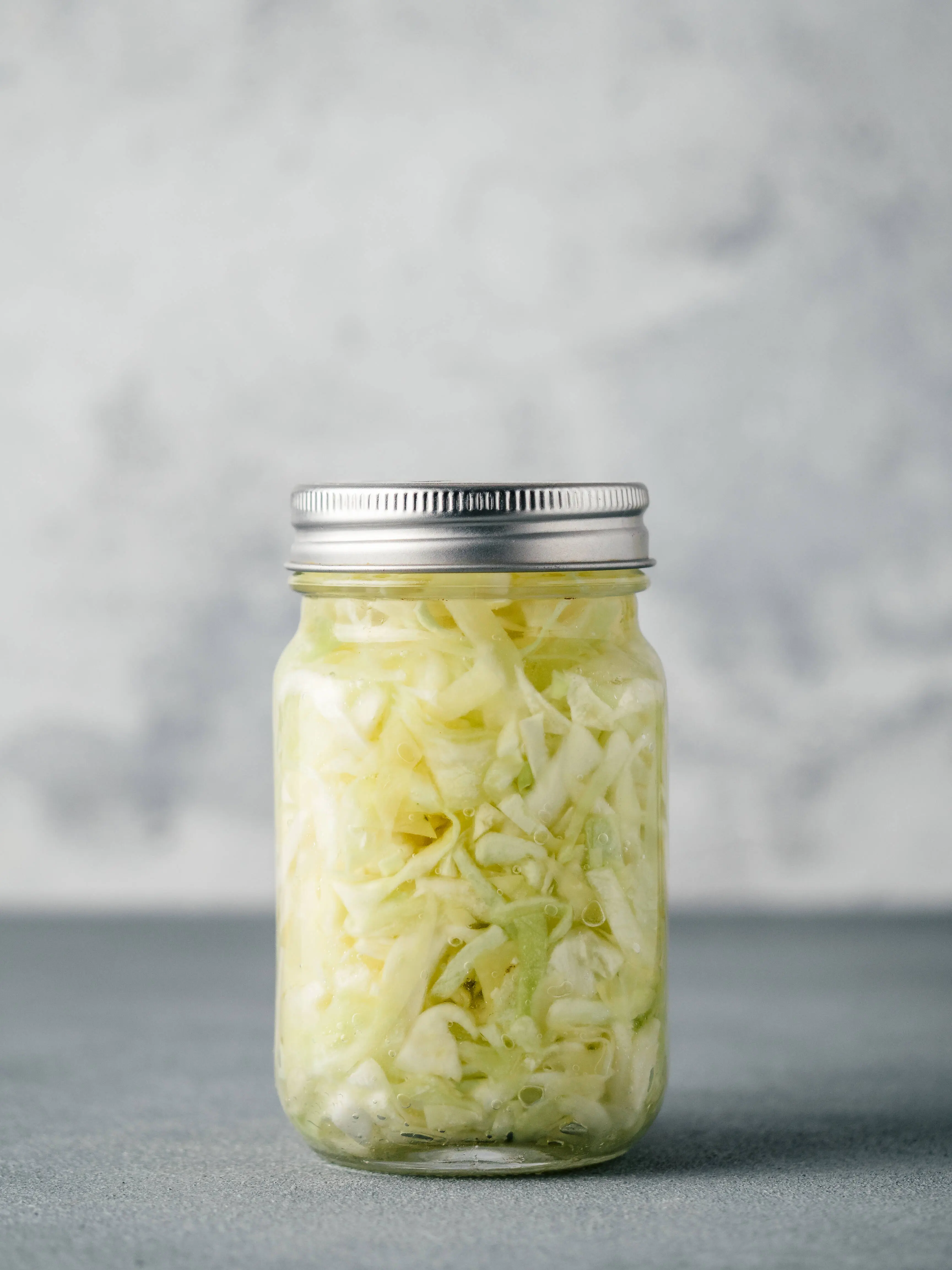
Sauerkraut is created through the lactic acid fermentation of white cabbage. This process produces lactic acid bacteria such as Lactobacillus plantarum, L. brevis and Leuconostoc-strains that lower the pH and inhibit undesirable germs.
Unpasteurized sauerkraut contains large amounts of live microorganisms. Some of these bacteria survive the stomach acid and reach the intestines, where they become temporarily active. They produce antimicrobial substances and can influence the immune response of the intestinal mucosa.
However, it is important to note: These bacteria usually do not permanently establish themselves but rather support the existing microbiome.
A central, often underestimated point is the effect of fiber and so-called postbiotics. Sauerkraut provides about three grams of fiber per 100 grams, which serve as food for beneficial gut bacteria and promote their activity.
During fermentation, bioactive substances such as short-chain fatty acids, including butyrate and acetate, are also produced. These compounds strengthen the intestinal barrier, have anti-inflammatory effects, and support the regeneration of the intestinal mucosa.
These effects are also retained in pasteurized sauerkraut because the metabolic products are heat-stable. Therefore, heated sauerkraut can also have a positive impact on gut health .
Scientific studies show that sauerkraut can have positive effects, especially in people with a disturbed gut flora. Intervention studies observed an increase in bacterial diversity and an increased production of short-chain fatty acids. At the same time, inflammation markers decreased.
Randomized studies suggest that both raw and pasteurized sauerkraut can improve the gut barrier and positively influence metabolic processes.
In healthy people with stable gut flora, however, there are often no significant changes in the microbiome. This suggests that a healthy gut ecosystem is relatively stable and reacts less strongly to individual foods.
Nevertheless, studies in this group also report functional benefits such as improved digestion and a more stable mucosal barrier.
Overall, studies show that sauerkraut, especially with disturbed gut flora has clear advantages, while the effect is less pronounced in healthy individuals
Sauerkraut can be especially helpful for:
In healthy individuals, sauerkraut acts more as a supportive and preventive measure. It contributes to the stability of the microbiome but rarely leads to drastic changes.
Not everyone tolerates sauerkraut equally well. People with histamine intolerance often react sensitively to fermented foods. Also, in the case of small intestinal bacterial overgrowth (SIBO), sauerkraut can exacerbate symptoms like bloating.
The amount also plays an important role. While moderate portions are well tolerated, very high consumption can lead to digestive problems.
Additionally, attention should be paid to quality. Industrially processed sauerkraut may contain residues, which is why organic products or homemade sauerkraut are often the better choice.
Sauerkraut can support gut health especially through fiber and fermentation products. The bacteria it contains are usually only temporary but promote the activity of existing microorganisms in the gut. Studies show that the effects are particularly pronounced in disturbed gut flora, while they are less significant in healthy individuals.
Most studies and dietary recommendations suggest that 100 to 150 grams of sauerkraut per day is a reasonable amount. Beginners often find that about 50 grams is enough to slowly get the digestive system accustomed. Consuming it two to three times a week can already be enough to achieve positive effects on gut health.
Raw sauerkraut contains live lactic acid bacteria and can therefore have probiotic effects. Cooked or pasteurized sauerkraut contains fewer live cultures but still provides valuable postbiotics and fiber.. Both versions can be beneficial for gut health, depending on individual tolerance and goals.
Sauerkraut can cause bloating in sensitive individuals, especially in the beginning. This is mainly due to the fiber and fermentation products it contains, which are further processed in the gut. In most cases, discomfort can be significantly reduced by consuming smaller amounts and gradually getting used to it.
Sauerkraut can affect digestion within a few days. However, changes in gut flora usually take longer and strongly depend on the individual starting situation.
Sauerkraut can generally be eaten daily as long as it is well tolerated. Amounts of 100 to 150 grams are considered unproblematic for most people.
In cases of histamine intolerance, SIBO, or sensitive intestines, sauerkraut can cause discomfort. In such cases, consumption should be adjusted or avoided individually.
Sauerkraut can also be eaten in the evening. However, it may cause bloating in sensitive individuals, so smaller amounts are often better tolerated.
Yes, sauerkraut can support digestion because it contains fiber and fermentation products that stimulate bowel activity.
Sauerkraut can promote bowel movement due to its fiber and thus counteract constipation. However, the effect varies from person to person.
After an antibiotic therapy, sauerkraut can help support gut flora. Fermented foods in particular can contribute to regeneration.
Very large amounts, about over 400 to 500 grams per day, can lead to bloating or digestive issues. A moderate amount is usually better tolerated.
Sauerkraut is not a miracle cure, but a scientifically well-documented food to support gut health. Its effect is not only based on probiotic bacteria, but above all on fiber and bioactive fermentation products.
Especially with a disturbed gut flora, sauerkraut can bring measurable benefits. In healthy people, it acts mainly stabilizing and preventive.