© Magnific
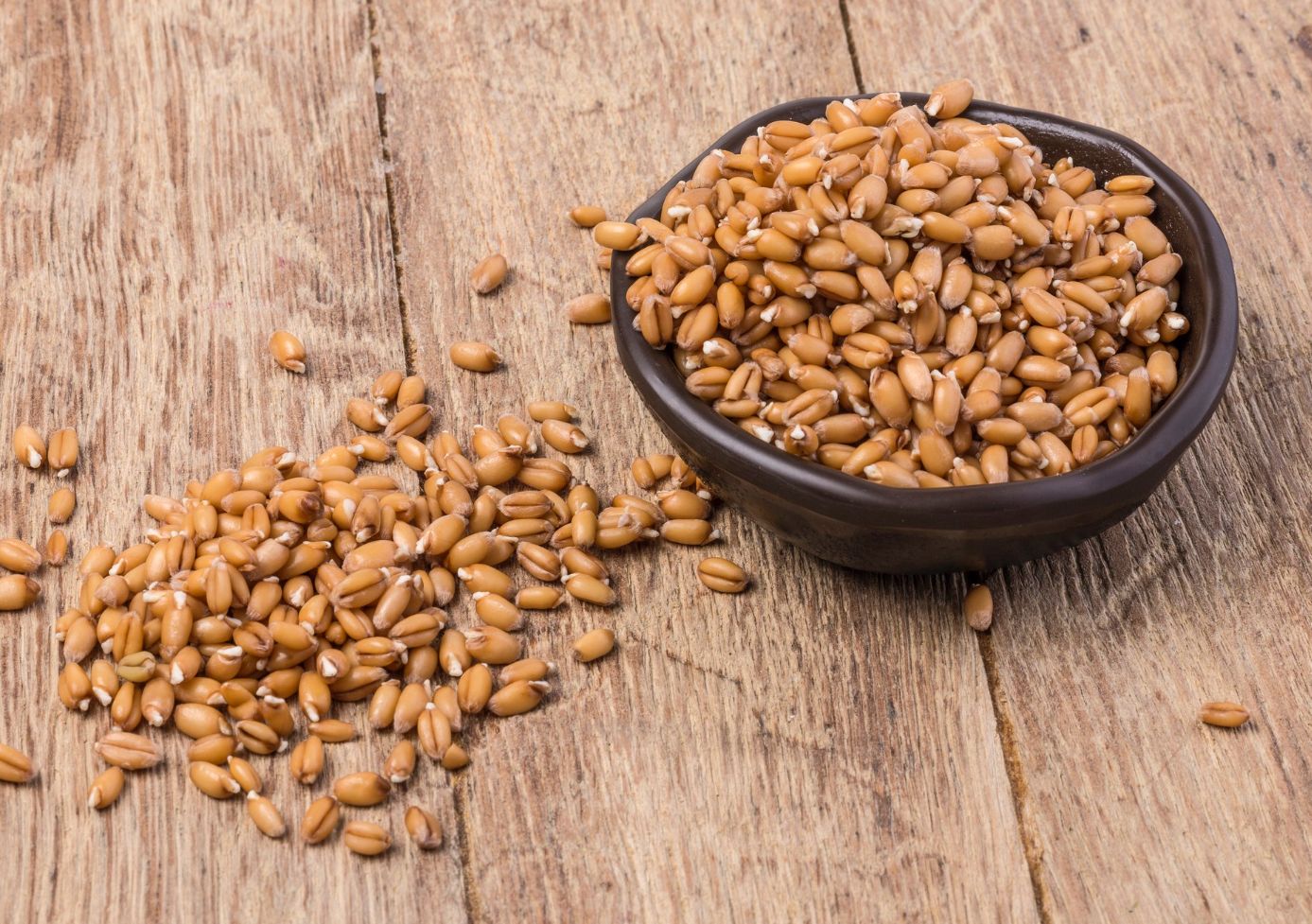
The germ of the wheat kernel is especially rich in spermidine
October 18, 2026
Birgitta Dunckel
Whether it comes from wheat germ or a capsule, spermidine has been hailed as a weapon against aging. But human trials have been underwhelming — and cancer researchers are starting to see it in a different light.
It is a tempting idea: a substance found naturally in wheat germ, aged cheese, and mushrooms could slow down the aging process. That substance is spermidine, and in the longevity scene it has long claimed its place, nestled somewhere between intermittent fasting, cold plunges, and morning routines. Capsules made from wheat germ extract line the shelves of drugstores and online shops, their packaging full of bold promises.
Science is more cautious. In the laboratory, spermidine does show remarkable effects: yeasts, worms, flies, and mice all live longer when given the substance. In humans, however, the results so far have been disappointing. And a study from Japan now shows that the substance can also be useful where it is least wanted — in the growth of cancer cells.
The substance was first discovered in human seminal fluid. In fact, spermidine is present in virtually every living cell, in plants as well as animals. The body produces it on its own, some comes from gut bacteria, and the rest from food. Chemically, it belongs to the polyamines — small molecules that cells cannot grow or divide without.
The real source of interest is autophagy — a kind of cellular waste disposal in which damaged proteins and worn-out components are collected, broken down, and recycled. With age, so the thinking goes, this system slows down. Things that do not belong in cells begin to accumulate, with potential consequences for the brain, blood vessels, and metabolism.
Spermidine can kick-start this waste disposal process. Just how central its role is was demonstrated in 2024 by an international study involving the universities of Graz and Bonn: during fasting, spermidine levels rise significantly — and organisms that could not produce spermidine gained no benefit from fasting either. At the same time, spermidine levels in the body decline with age. The logical conclusion: taking in more of it could get the cells' self-cleaning process back on track. In mice, this equation holds up. In humans, it remains unresolved to this day.
Much of the hope rests on a study from South Tyrol. Researchers at the Medical University of Innsbruck tracked the diets of around 800 people from Bruneck over roughly 20 years. Those who ate a lot of spermidine lived on average longer — the difference between the groups amounted to around five and a half years of life.
A striking result, but with an important caveat. People who eat a lot of whole grains, legumes, and vegetables also tend to lead healthier lives overall. Whether it is the spermidine itself or the broader lifestyle that makes the difference is something a purely observational study cannot answer.
More definitive answers were expected from the SmartAge study at Berlin's Charité. One hundred older adults who felt their memory was declining took daily spermidine capsules or a placebo for one year. A smaller pilot study had been encouraging. The larger study's result was sobering: no difference in memory performance was found. The researchers themselves do acknowledge, however, that the capsules increased participants' daily spermidine intake by only around ten percent.
There is also a more fundamental question: does spermidine from a capsule actually reach the place where it is supposed to act? Researchers at the University of Lübeck gave healthy individuals high-dose spermidine — but what they detected in the blood afterward was not more spermidine, but more spermine, a chemical relative. It appears that a large portion is already converted in the gut. A US study using very high doses reached a similar conclusion.
On the positive side: spermidine does not appear to be harmful in the quantities studied, and even high doses were well tolerated.
The very property that makes spermidine so interesting has a flip side. Spermidine helps cells grow and divide — and that applies to cancer cells as well. Cancer researchers have long known that tumors have an especially high demand for polyamines. A team at the Tokyo University of Science has now described in greater detail how this works.
At the center of the mechanism are two nearly identical proteins, both of which depend on spermidine. One functions in healthy cells and appears to support cellular waste disposal there. The other shows up primarily in tumors — and spermidine causes cancer cells to produce more of it. When the researchers cut off cancer cells from spermidine in the laboratory, the cells grew significantly more slowly. When spermidine was restored, growth resumed.
There is no cause for panic. The experiments were conducted in petri dishes, not in humans. They also do not show that spermidine causes cancer, but rather that an already existing tumor can exploit the substance for its own purposes. Whether the amounts found in dietary supplements play any role in this is currently unknown.
Just how seriously medicine takes tumors' appetite for polyamines is illustrated by a look at cancer therapy. In late 2023, the US Food and Drug Administration (FDA) approved a drug for neuroblastoma, a rare cancer in children. The active ingredient eflornithine inhibits polyamine production — which is exactly the same mechanism the Japanese researchers used to deprive their cancer cells of spermidine.
The picture is not entirely clear-cut, however. A group led by Parisian cell biologist Guido Kroemer showed in 2016 in mice that spermidine can even make chemotherapy more effective, apparently by helping the immune system identify tumor cells. Spermidine is therefore neither a cancer protector nor a cancer promoter in any simple sense. Which effect prevails depends on the tissue, the stage of the disease, and the amount.
Healthy people who eat a balanced diet have no reason to fear spermidine on their plate. It has always been part of the human diet. The situation is different with high-dose capsules designed to deliberately stimulate cellular processes. Anyone who has or has had cancer should speak with their doctor before taking them.
You don't need to reach for a capsule to get more spermidine. It is found in particularly high amounts in:
• Wheat germ: around 24 mg per 100 g
• Dried soybeans: around 21 mg per 100 g
• Aged cheeses such as cheddar or parmesan: 2 to 20 mg per 100 g depending on aging
• Shiitake mushrooms: around 9 mg per 100 g
• Broccoli: around 2.5 mg per 100 g
Legumes, whole grain products, nuts and green vegetables also contribute meaningfully. Exact amounts vary depending on variety, processing, and storage. People with celiac disease should note that wheat germ — and therefore many wheat germ-based products — contains gluten; soy, mushrooms, and broccoli are gluten-free.
Based on everything known today: probably not for healthy people. Most products deliver one to six milligrams per day — roughly the same amount provided by two or three tablespoons of wheat germ in muesli. No study has yet demonstrated any additional benefit from capsules, and consumer protection organizations have also flagged the unclear evidence for efficacy.
Getting spermidine through food also means taking in fiber, vitamins, and minerals at the same time. It may well be precisely this complete package that made the difference in the Bruneck study.
Through food, adults in Europe consume an estimated 7 to 25 milligrams of spermidine per day. In the EU, dietary supplements are subject to an upper limit of 6 milligrams per day. Certain groups should exercise caution:
• Histamine intolerance: Spermidine can stimulate histamine release and trigger symptoms.
• Pregnant women, breastfeeding women, and children: Experts advise against supplements.
• Chronic inflammatory conditions such as Crohn's disease, ulcerative colitis, psoriasis, or rheumatism: supplementation is also advised against.
• Cancer, current or past: Supplementation should be discussed with the treating physician.
• Ethambutol: Those taking this tuberculosis medication should avoid spermidine, as it may reduce the drug's effectiveness.

Implant or your own tissue, now or after treatment — or perhaps no reconstruction at all? Plastic surgeon Dr. Juliane Bodo explains what role radiation plays, what risks to expect, and why no one should make this decision under pressure.
Christine Bürg & Marianne Waldenfels

An interview with
Dr. med. Juliane Bodo

A single hydrogel injection into the knee may relieve osteoarthritis pain for years. Orthopedist Dr. Ivo Breitenbacher has treated around 200 patients with it and explains who the procedure is right for and where its limitations lie
Christine Bürg & Marianne Waldenfels

An interview with
Dr. med. Ivo Breitenbacher

Almost everyone has seen them, and most people ignore them: tiny specks and strands drifting across their vision. Usually, they’re harmless. But sometimes they signal an emergency where quick action can save your sight. Ophthalmologist Dr. Mirka Höltzermann explains which warning signs to watch for.
Christine Bürg & Marianne Waldenfels

An interview with
Dr. Mirka R. Höltzermann

Can fasting relieve hot flashes and other menopausal symptoms? Dr. Verena Buchinger-Kähler shares remarkable cases from her clinical practice and explains how women respond to prolonged fasting – and what science has revealed so far.
Christine Bürg & Marianne Waldenfels
An interview with
Dr. med. Verena Buchinger