© Magnific
October 29, 2026
Marianne Waldenfels
Drinks like ginger shots, turmeric lattes, and matcha are said to fight silent inflammation. But clinical studies paint a mixed picture: some beverages influence inflammatory markers, while others fail to live up to their promises.
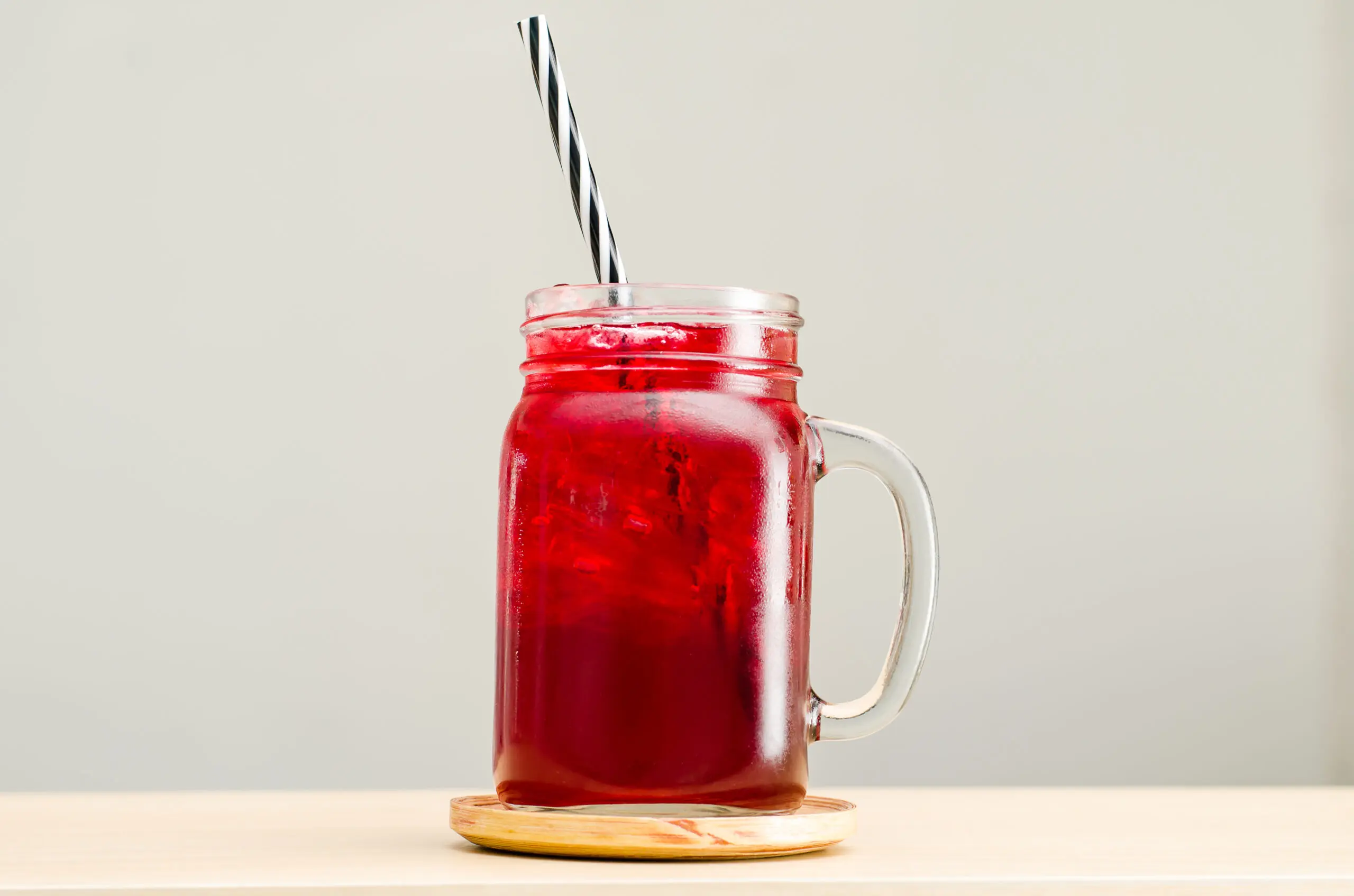
A dark juice drips into a glass bottle, and the caption reads: "4 drinks I make every week to fight chronic inflammation – the silent killer behind almost every disease." Around 4.1 million times this Instagram video was viewed in October. It is one of many: ginger shots, golden turmeric milk, tart cherry juice, and matcha are celebrated on Instagram and TikTok as natural anti-inflammatory remedies.
The idea behind these drinks is not without merit. Chronic, low-grade inflammation plays a role in cardiovascular disease, diabetes and aging processes — a phenomenon researchers also call inflammaging. The key question is: can you actually drink your way out of inflammation?
Studies on food and inflammation typically measure specific markers in the blood. The best known is C-reactive protein, or CRP, which the liver produces in greater quantities during inflammation. Other key messengers include interleukin-6 (IL-6) and tumor necrosis factor-alpha (TNF-α). If these values fall further than those in a control group after several weeks, it may indicate an anti-inflammatory effect.
The changes are often small, and a lower lab value does not necessarily mean that someone gets sick less often or lives longer. With this benchmark in mind, we examined the studies on six popular anti-inflammatory drinks.
Tart cherry juice is best known as a sleep aid, often marketed under the label "Sleepy Girl Mocktail." But there is also positive data when it comes to inflammation markers. A meta-analysis of ten randomized studies, published in 2022 in the journal Complementary Therapies in Medicine, found an average reduction in CRP of 0.55 mg/l.
A larger review of 21 studies in the journal Heliyon confirmed a small effect on CRP in 2023. For IL-6, however, no clear effect was found.
The quantities involved were substantial. In the studies included in the 2022 meta-analysis, participants typically drank 240 milliliters of juice per day, and in two studies as much as 480 to 500 milliliters. Others received 30 to 60 milliliters of concentrate daily, or one to just under two grams of freeze-dried cherry powder, usually over four to six weeks. An occasional glass of cherry juice is not really comparable.
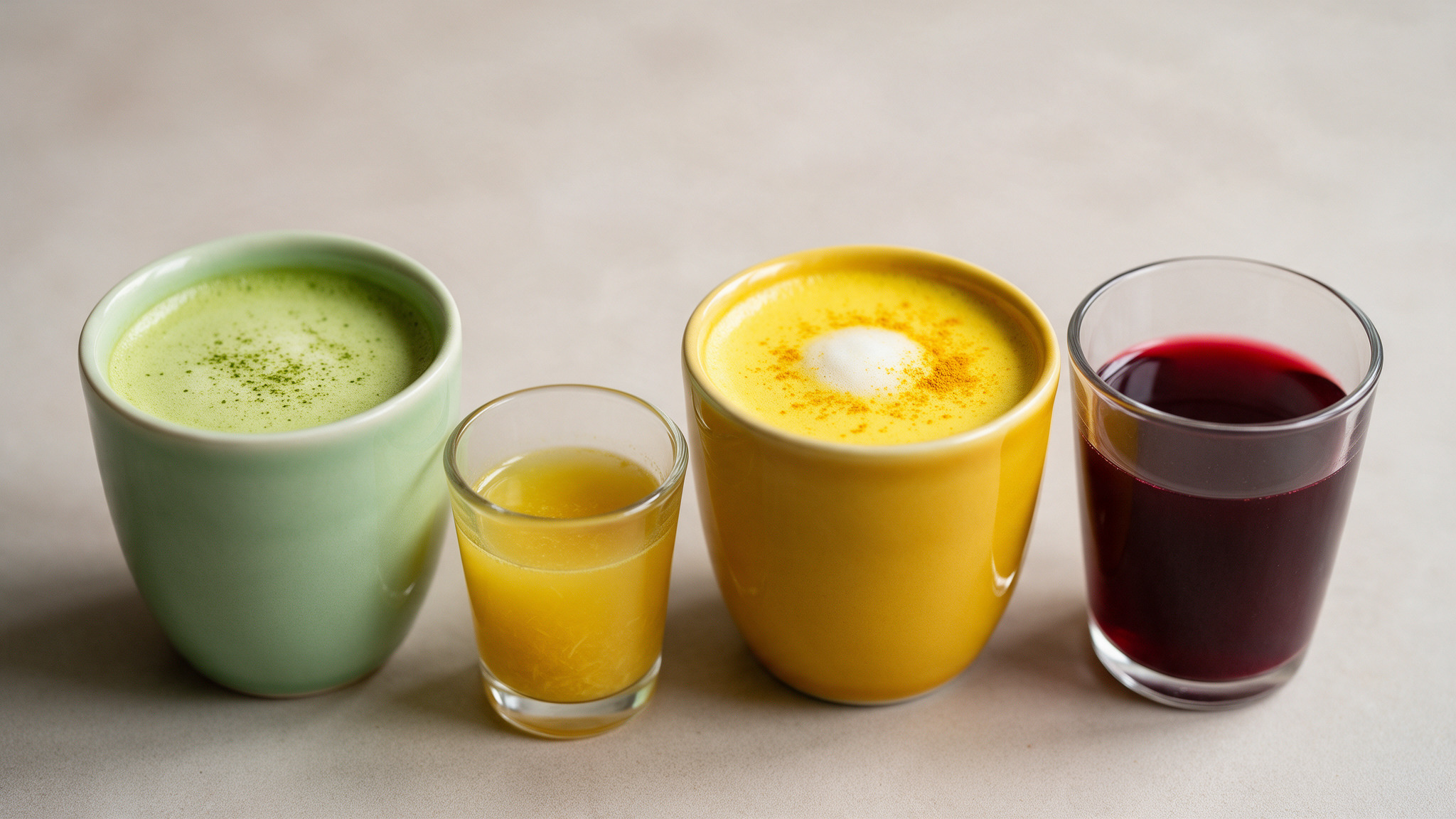
The natural sugar content is also worth keeping in mind. Anyone drinking larger quantities daily is also taking in extra calories. Whether the small reduction in an inflammation marker outweighs this drawback has not been investigated.
There is also promising data for ginger. A meta-analysis of 16 randomized studies with 1,010 participants, published in 2020 in the journal Cytokine, found a significant reduction in both CRP and TNF-α. IL-6, however, did not change significantly.
These results come predominantly from studies using ginger supplements. Participants were typically given one to three grams of ginger in defined daily doses over several weeks. How much ginger a commercially available shot actually contains, by contrast, varies considerably.
The results of the individual studies also varied widely. Ginger is therefore one of the more promising candidates — though whether the daily shot from the refrigerated aisle achieves the same effect remains an open question.
Pomegranate is widely regarded as particularly healthy due to its high polyphenol content. However, the clinical results are inconsistent. A review article in the journal Nutrients concluded in 2017 that pomegranate juice did not significantly reduce CRP in a pooled analysis of five studies. In those studies, participants drank between 100 and 500 milliliters of juice daily.
Individual positive findings came mainly from studies involving people with metabolic syndrome or dialysis patients. Many of these studies were small, ran for only a few weeks, or had methodological weaknesses.
A more recent study from 2025 with 76 participants between 55 and 70 years of age found a reduction in IL-6 after twelve weeks, but not in CRP. However, the intervention tested was 740 milligrams of pomegranate extract in capsule form per day, not juice. The study was also funded by the manufacturer of the supplement.
Pomegranate contains interesting plant compounds. Even so, it has not yet been demonstrated that a daily glass of juice reduces silent inflammation in healthy people.
Golden milk with turmeric is one of the most well-known anti-inflammatory drinks. Its reputation rests primarily on curcumin, a compound found in the turmeric root. In the laboratory, curcumin influences various signaling pathways involved in inflammatory processes.
Clinical studies using curcumin supplements also show declining inflammation markers: a review article in the journal Nutrients evaluated the available meta-analyses in 2024 and found that CRP decreased in seven out of ten. However, this does not mean that a turmeric latte has the same effect.
The reason is that curcumin is poorly absorbed by the body and rapidly metabolized. Many studies therefore use high-dose extracts or specially formulated preparations designed to improve absorption. These bear little resemblance to the relatively small amount of curcumin found in a cup of golden milk.
The real question, then, is not whether curcumin has anti-inflammatory properties in principle, but whether the typical amount of turmeric in a drink produces clinically relevant effects. Convincing research to support this is lacking.
Beetroot juice is popular mainly because of its high nitrate content. The body can convert nitrate into nitric oxide, which dilates blood vessels and can lower blood pressure. But does the same logic apply to inflammation?
In a double-blind study in the journal Food & Function, 27 people with treated high blood pressure received nitrate-rich beetroot juice daily for one week and, for comparison, a juice from which the nitrate had been removed. For the inflammation and vascular markers examined — including IL-6 and TNF-α — no significant difference was found.
The study was small and lasted only one week, so long-term effects cannot be ruled out. That said, it provides no evidence for the claim that beetroot juice can effectively reduce chronic inflammation. Its potential benefits for blood pressure remain a separate matter.
Green tea has been considered one of the healthiest beverages for years. Matcha, its finely ground powder counterpart, is now frequently marketed as an anti-inflammatory drink. All the more sobering, then, is a meta-analysis of 38 randomized studies with nearly 2,000 participants published in 2025 in the Journal of Nutritional Science.
Green tea and green tea extracts did not significantly reduce the three most commonly studied inflammation markers — CRP, IL-6, and TNF-α — overall. Only for one additional messenger, interleukin-1β, was a significant decrease observed. However, this finding is based on just two studies.
The trials predominantly involved green tea extracts and isolated catechins such as EGCG, and in some cases tea leaves or brewed tea. Quantities ranged from around 200 milligrams of extract to nine grams of tea leaves daily, over periods of four to 48 weeks. The researchers found no relationship between dose and effect for CRP, IL-6, or TNF-α — meaning higher amounts brought no additional benefit.
The research team led by Mohammad Jafar Dehzad rated the quality of evidence as predominantly low to very low. Any potential benefit was more apparent for markers of oxidative stress than for the classic inflammation values.
The evidence for matcha itself is even thinner. Although the powder contains the same plant compounds as green tea — including catechins such as EGCG — the fact that the whole leaf is consumed with matcha may lead to higher absorption of certain components. This does not, however, support the conclusion that matcha inhibits inflammation more effectively.
Tart cherry and ginger come out on top — but with caveats. The drinks have never been directly compared with one another: the studies examined different preparations, dosages, and participant groups.
• Tart cherry: Two meta-analyses show a slight reduction in CRP. The results do not apply exclusively to juice.
• Ginger: Positive effects on CRP and TNF-α, tested predominantly with precisely dosed supplements rather than shots.
• Pomegranate: Some positive results, particularly in people with pre-existing conditions. The benefit for healthy individuals remains unclear.
• Turmeric: Clinical indications of an effect from curcumin supplements, but no convincing evidence for golden milk.
• Beetroot: Possible benefits for blood pressure, but so far no convincing clinical evidence for an anti-inflammatory effect.
• Green tea and matcha: A large meta-analysis found no significant overall effect on CRP, IL-6, or TNF-α. Independent studies specifically on matcha are also lacking.
Even where inflammation markers do decline, the changes remain mostly modest. Whether this translates into fewer cases of cardiovascular disease, less diabetes, or other long-term health benefits has not been demonstrated. Moreover, many studies examined people who were overweight or had pre-existing conditions. Whether healthy individuals with normal inflammation levels would benefit at all remains an open question.
Anyone looking to reduce chronic inflammatory processes has far better-studied options at their disposal, including regular exercise, adequate sleep, a healthy body weight, and a plant-based diet. A glass of cherry juice or a cup of matcha can certainly be part of such a diet — but they are not a targeted treatment for silent inflammation.

Liver metastases and liver cancer can be cured far more often today than ten years ago. Surgeon Prof. Carina Riediger explains why, what role alcohol plays, and why patients should see a specialized liver surgeon.
Christine Bürg & Marianne Waldenfels

An interview with
Prof. Dr. med. Carina Riediger, MSc

"Feel good, live better" – in this podcast episode with Prof. Dr. Katharina Storck, we talk about the nose and why we should pay more attention to it
Christine Bürg

An interview with
Prof. Dr. med. Katharina Storck

Radiofrequency, ultrasound, micro-coring: How much can the latest skin-tightening treatments achieve without surgery? Plastic surgeon Dr. Lukas Kohler explains which methods show promise, where they fall short, and why some treatments can even make the face look older.
Christine Bürg & Marianne Waldenfels

An interview with
Dr. med. Lukas H. Kohler

ARFID is often mistaken for picky eating, partly because weight can be normal. Chief physician Dr. Tabea Bauman explains how to recognize the eating disorder and why pressure at mealtimes does more harm than good.
Christine Bürg & Marianne Waldenfels
An interview with
KIRINUS Privatklinik Am Friedensengel

When the days get shorter, many people’s moods take a dip. But not every winter slump is harmless: psychiatrist Prof. Dr. Andreas Menke explains when the winter blues turns into seasonal depression that needs treatment.
Christine Bürg

With
Prof. Dr. med. Andreas Menke