© Freepik
Not only on TikTok are there many videos celebrating green tea as a weight loss aid.
January 1, 2026
Birgitta Dunckel
Is green tea a natural Ozempic? Learn how catechins and caffeine affect fat burning, metabolism, and the ideal number of cups per day
Green tea has been considered a natural diet remedy for centuries – in ancient China, the beverage was recommended for weight loss over 2,000 years ago. Today, social media users celebrate it as a "natural Ozempic" and recommend up to five cups daily. But what is really behind this comparison – and how effective is green tea for weight loss actually?
In this article, you'll learn what science says about it, how green tea works, which varieties are particularly recommended – and what you can realistically expect.
Those who want to lose weight quickly and effectively often rely on the weight loss injection Ozempic – specifically on its active ingredient semaglutide, which is now also contained in Wegovy. Semaglutide was originally developed for patients with type 2 diabetes and mimics the gut hormone GLP-1.
This hormone stimulates the pancreas to secrete insulin after a meal, lowers blood sugar, slows gastric emptying, and affects brain areas that regulate hunger. The result: The body feels fuller for longer – and consumes fewer calories.
The effect is impressive – however, long-term consequences are not yet fully researched. Common side effects include nausea, a feeling of fullness, constipation, or diarrhea. And: Those who stop injecting also regain their hunger.
Similar to Ozempic, green tea is said to stimulate GLP-1 production and lower blood sugar. In fact, studies exist showing that green tea extract can lower blood sugar in diabetic mice.
For humans, however, the evidence is thin: A study with 92 participants with type 2 diabetes showed no significant difference in GLP-1 production between green tea extract and placebo.
Conclusion: Green tea has moderate effects on metabolism, but by no means reaches the potency or reliability of Ozempic. While many foods temporarily increase GLP-1 levels, semaglutide remains in the body for days and is far more effective than the natural hormone.
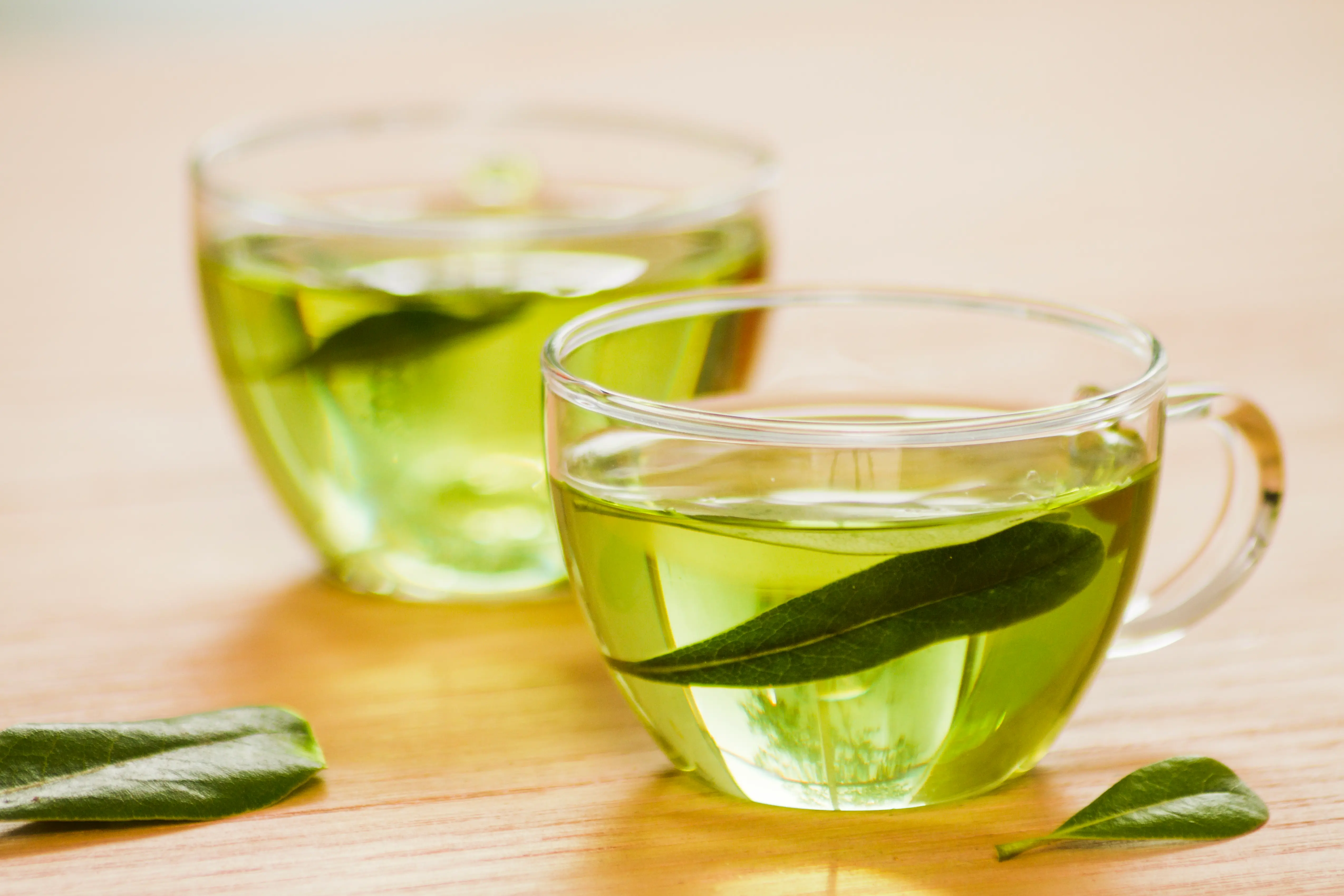
Green tea can still be a sensible, gentle companion for weight loss. Two ingredients make it particularly interesting:
Caffeine is one of the most well-researched substances for supporting fat burning. It increases the body's energy expenditure and can promote fat oxidation – especially in combination with physical activity. Green tea contains less caffeine than coffee, but enough to achieve a noticeable effect without overly burdening the nervous system.
Catechins – especially epigallocatechin gallate (EGCG) – are plant polyphenols that are particularly concentrated in green tea. Combined with caffeine, they stimulate thermogenesis (heat production in the body), slow down sugar absorption from the intestine, and thus counteract cravings. At the same time, they neutralize free radicals and protect skin, vessels, and metabolism from oxidative stress.
Studies show that the combination of caffeine and catechins can increase calorie burn at rest by 3–4%—equivalent to about 60–80 kcal per day for an average adult. Not a miracle cure, but a measurable effect.
Not all green teas are the same. The processing, origin, and preparation significantly affect the catechin and caffeine content.
Matcha is powdered green tea, where the whole leaf is consumed—not just the infusion. This means significantly more catechins and antioxidants than conventional tea. Matcha also contains L-theanine, an amino acid that tempers the stimulating effects of caffeine and encourages focused calm.
Gyokuro is one of the highest quality Japanese teas. Shading the tea plants before harvest stimulates the production of chlorophyll and L-theanine—and the catechin content is particularly high.
Sencha is the most consumed type of green tea in Japan and a good everyday option. It contains slightly fewer catechins than Matcha or Gyokuro, but it is well tolerated, affordable, and readily available.
To maximize the effects of green tea, proper application is essential. Here are the most important tips:
2 to 4 cups daily are considered optimal. More does not automatically mean more effect – with very high consumption, caffeine can cause sleep disturbances or stomach irritation. The effect builds up slowly; it is best to drink regularly over several weeks.
The timing of drinking plays a role:
• Before meals (about 30 minutes prior): may have a mild appetite-suppressing effect and dampen the insulin response.
• Morning & early afternoon: Caffeine acts as a stimulant without affecting sleep.
• Not in the evening: Caffeine can disrupt sleep – and poor sleep promotes weight gain.
• Water temperature 70–80 °C – water that is too hot (over 90 °C) destroys valuable catechins and makes the tea bitter.
• Brewing time: 2–3 minutes – longer makes the tea bitter and does not reduce the effect.
• Do not add milk – milk proteins bind catechins and inhibit their absorption in the body.
Green tea is not a miracle cure – but it does not fare so badly compared to other popular methods:
• Green tea vs. coffee: Both contain caffeine and can boost fat burning. Coffee contains more caffeine, but green tea also has catechins – an advantage for metabolic effects.
• Green tea vs. ginger tea: Ginger has anti-inflammatory properties and can also slightly boost metabolism. However, green tea scores with higher antioxidant content.
• Green tea + intermittent fasting: A promising combination. Green tea during the fasting phase does not disrupt ketosis and can curb hunger.
Honest expectations are important: Green tea alone does not make you slim. Those who only drink green tea without changing their diet or exercise habits will see hardly any measurable results.
In combination with a balanced, low-calorie diet and regular exercise, however, green tea can make a meaningful contribution. Studies suggest that long-term regular consumption of green tea extract can increase weight loss by an average of 0.5–1 kg over several weeks – compared to a control group without tea.
The fat-burning effect unfolds best in combination with moderate exercise and a protein-rich, low-sugar diet.
Green tea is most effective about 30 minutes before meals, as well as in the morning and early afternoon. It should be avoided in the evening due to caffeine.
The effect builds up slowly. Those who drink 2–4 cups daily and simultaneously pay attention to diet and exercise can notice first differences after 4–8 weeks.
Yes, generally speaking. Since the entire tea powder is consumed with Matcha, one absorbs significantly more catechins and antioxidants than with classic tea infusion.
No. The effect of green tea is significantly weaker and less reliable than that of Ozempic (Semaglutide). Green tea is a gentle supporter – not a medical weight loss drug.
Anyone sensitive to caffeine, suffering from stomach irritations, or with iron deficiency should consume green tea cautiously. Tannins in tea inhibit iron absorption – it's best not to drink tea directly with iron-rich meals.
Green tea is not a gamechanger for weight loss – but it is a scientifically proven, natural helper with real added value. Its combination of caffeine and catechins boosts metabolism, curbs cravings, and protects the body from oxidative stress.
Those who drink 2–4 cups of high-quality green tea per day, pay attention to proper preparation, and combine it with a healthy diet and exercise create a solid foundation for long-term weight loss – without side effects and without injections.