© Skyler Ewing
June 10, 2026
Marianne Waldenfels
Many people start the day with a spoonful of olive oil. Here's what research says about digestion, heart health, inflammation and the Mediterranean diet
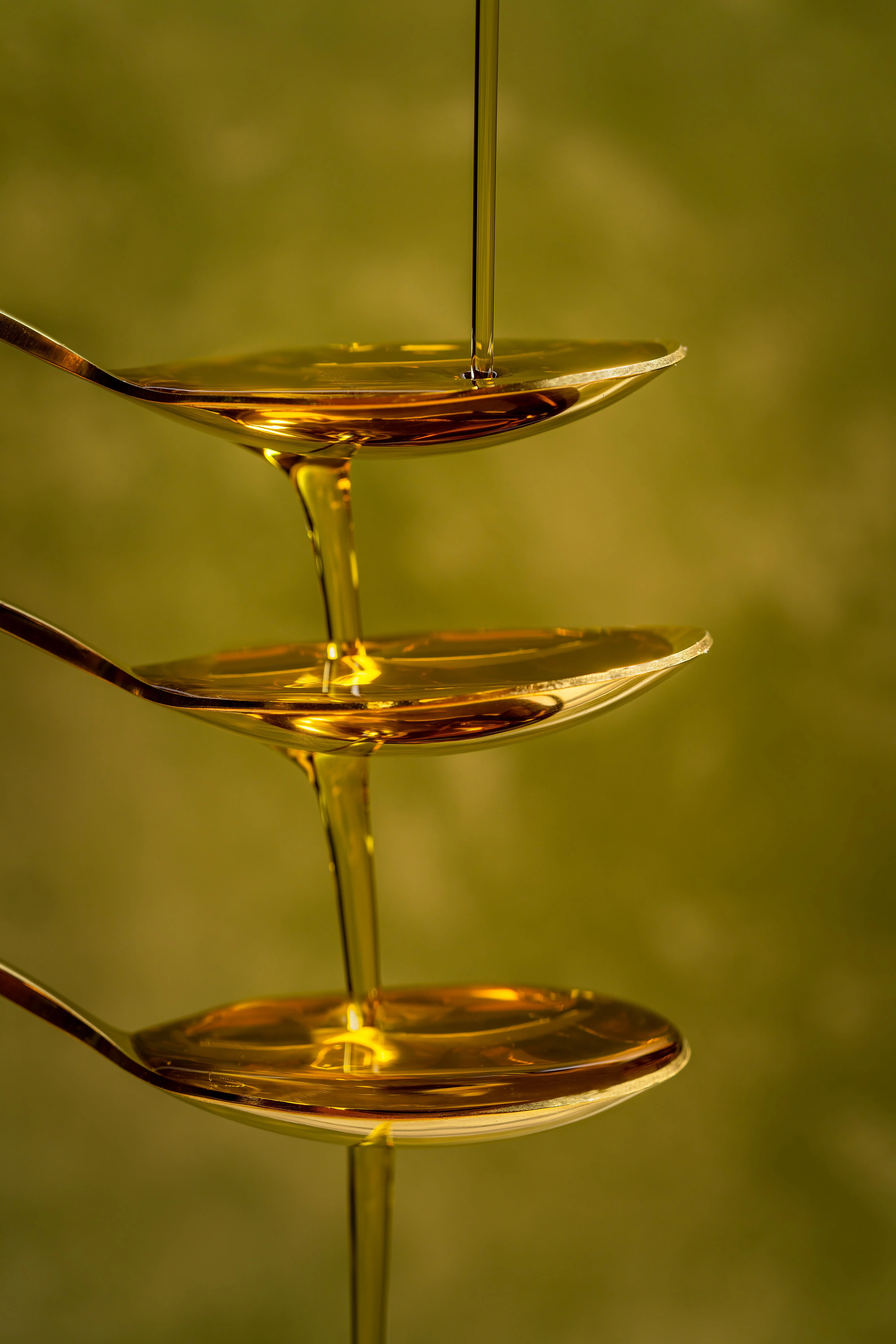
A spoonful of olive oil right after waking up has been part of the daily routine for many people in the Mediterranean region for decades. Now the trend is appearing more and more frequently in podcasts, fitness magazines, and social media. Even football professional Thomas Müller has mentioned that he likes to have walnuts and a few sips of olive oil for breakfast.
In this context, people often discuss better digestion, reduced inflammation, or a "healthier metabolism." But how much of this is actually scientifically proven?
In fact, large studies demonstrate that high-quality extra virgin olive oil can benefit heart health, blood vessels, and metabolism, particularly when consumed as part of a Mediterranean diet. However, whether consuming it on an empty stomach provides additional benefits has not yet been conclusively demonstrated.
That said, taking a teaspoon of high-quality olive oil in the morning can be a practical addition to your daily routine, as long as the oil is of good quality and you tolerate it well.
Extra virgin olive oil (EVOO) is composed primarily of monounsaturated fatty acids, particularly oleic acid, along with bioactive plant compounds like oleuropein and oleocanthal, as well as vitamin E.
In particular, researchers are focusing on polyphenols, compounds associated with antioxidant and anti-inflammatory effects that could play an important role in vascular health.
However, quality matters: only extra virgin olive oil contains these compounds in significant amounts. The content varies greatly depending on origin, processing, and storage.
Many high-quality, polyphenol-rich oils have a slightly bitter taste or cause a scratching sensation in the throat. This is often regarded as a sign of high oleocanthal content.
The most well-known study is the Spanish PREDIMED study, which examined people at high risk for cardiovascular disease over several years.
The result: Participants following a Mediterranean diet supplemented with extra virgin olive oil experienced significantly fewer serious cardiovascular events compared to the control group on a low-fat diet, with a risk reduction of approximately 30 percent.
Additionally, the study showed a lower risk for type 2 diabetes and cardiovascular mortality.
Importantly, the positive effects resulted from regular consumption as part of an overall diet, not from a single "health shot" in the morning.
Polyphenol-rich olive oils may positively affect various metabolic processes.
Studies suggest that they:
Particularly interesting is oleocanthal, a natural plant compound with anti-inflammatory properties that is frequently studied.
Some studies have also found evidence that polyphenol-rich olive oils can influence platelet aggregation, which is relevant for heart health.
The German Heart Foundation also confirms that olive oil has antioxidant, anti-inflammatory, and anticoagulant properties and can reduce the risk of heart disease.
However, the same principle applies: the available evidence primarily supports the long-term consumption of high-quality olive oils, rather than specifically consuming them on an empty stomach.
Many people report that a small spoonful of olive oil in the morning improves digestion. In fact, fat stimulates the release of bile, which supports fat digestion. Often just a small amount is sufficient for this effect.
There is no scientific evidence establishing whether olive oil must necessarily be consumed on an empty stomach.
For claims about "detox", fat burning, or purported intestinal cleansing with olive oil, there is currently no convincing scientific evidence.
A teaspoon of extra virgin olive oil in the morning is not a miracle cure – but it may be a meaningful addition to an overall healthy diet.
Scientific evidence particularly supports the regular consumption of high-quality, polyphenol-rich olive oils as part of the Mediterranean diet.
Whether taking it on an empty stomach provides additional benefits has not been clearly established.
If you tolerate olive oil well in the morning and it helps you maintain healthy routines, there's little reason to avoid it. Ultimately, what matters most is not the perfect timing but your long-term diet.
To get started, a teaspoon is usually sufficient. If you tolerate it well, you can later increase to a tablespoon.
Not necessarily. There is no clear scientific evidence that consuming it on an empty stomach offers any advantage.
High-quality extra virgin olive oil with high polyphenol content is best suited.
Olive oil is very satiating and can be part of a balanced diet. However, because of its high caloric density, portion size should be carefully considered.
High-quality oils often have a slightly bitter or sharp taste in the throat, which can indicate higher polyphenol content.