© Magnific
July 23, 2026
Christine Bürg & Marianne Waldenfels
The first GLP-1 weight-loss pill has been approved in the EU. Can it compete with Ozempic, Wegovy & Co.? Cardiologist Prof. Uwe Nixdorff explains the tablet's advantages and limitations compared with injections.

With
Prof. Dr. Uwe Nixdorff
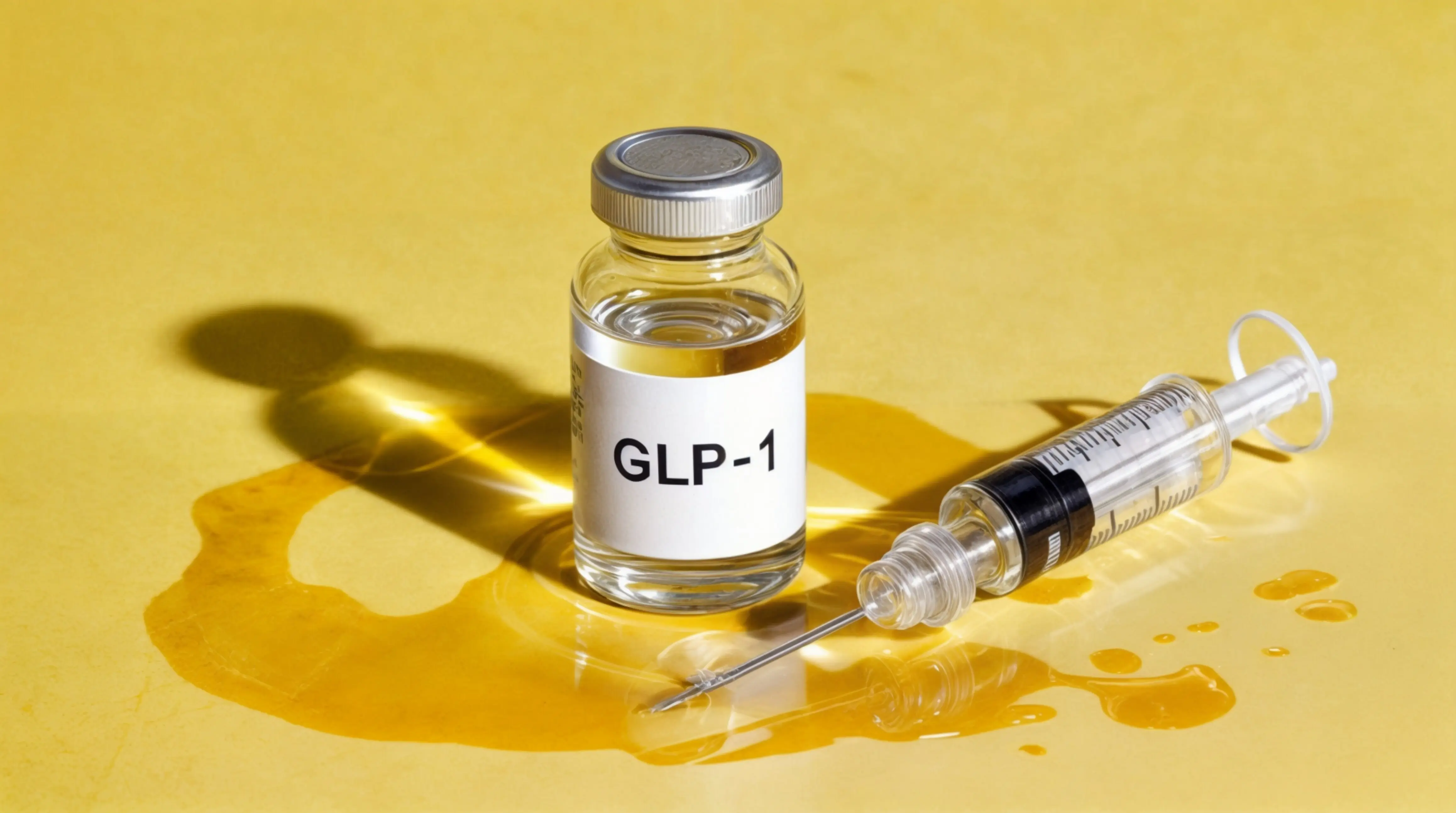
The success story of GLP-1 medications is entering its next chapter: in mid-July, the European Commission approved a weight loss pill based on the active ingredient semaglutide for the first time. People with obesity will now have an oral treatment option alongside the weekly injection.
For many, this may sound like the long-awaited breakthrough. After all, a tablet seems simpler and more convenient for everyday life than a regular injection. But can it match the efficacy of the well-established GLP-1 injections? And could it eventually replace them altogether?
Cardiologist and preventive medicine specialist Prof. Dr. Uwe Nixdorff sees great potential in the new dosage form, but does not expect it to replace the injection entirely.
Whether the new GLP-1 tablet will ultimately prevail over the established injections is something Prof. Uwe Nixdorff says cannot yet be reliably predicted. What is clear, however, is that a tablet is likely to appeal to far more people than an injection.
Nixdorff points to a survey by endocrinologist Prof. Jens Aberle from the University Medical Center Hamburg-Eppendorf to illustrate this. "If you ask people whether they would prefer to inject a medication or take it as a tablet, around 90 percent say: tablets," says Nixdorff.
Beyond the simpler administration, the psychological aspect also plays a role. "For many people, a tablet sounds less like a serious illness. This could help those for whom an injection has previously been a real barrier."
At the same time, the cardiologist observes in his own practice that most patients tolerate the weekly injection well. "In my experience, patients have no problems with the injection."
The new therapy is not quite as straightforward as a conventional tablet, however. While the injection is given just once a week, the GLP-1 tablet must be taken every morning on an empty stomach.
Based on the study data available so far, the key difference lies in efficacy. In Nixdorff's assessment, the tablet falls somewhat short of the effects achieved by the established GLP-1 injections.


The first GLP-1 weight-loss pill has been approved in the EU. Can it compete with Ozempic, Wegovy & Co.? Cardiologist Prof. Uwe Nixdorff explains the tablet's advantages and limitations compared with injections.
Christine Bürg & Marianne Waldenfels

With
Prof. Dr. Uwe Nixdorff

"Feel good, live better" – in this podcast episode, Dr. Alexander de Heinrich shares how he helps his patients achieve a body they feel truly comfortable in.
Christine Bürg

An interview with
Dr. Alexander de Heinrich

Many people start their day with a "half-empty battery," says sports medicine physician Dr. Lutz Graumann. He explains why recovery matters more than many people realize—and how sleep, nutrition, exercise, and simple habits can help restore your energy
Christine Bürg & Marianne Waldenfels

Walking is one of the healthiest forms of exercise, but small everyday habits can reduce its benefits. Here's why pace, posture, footwear, and smartphone use matter more than you might think.
Marianne Waldenfels

With
Univ.-Prof. Dr. med. Dominik Pförringer

Muscle building, fat burning, stronger bones – the vibration plate promises it all. Physiotherapist Nils Stützer breaks down what's scientifically proven, where the research falls short, and who actually benefits from this type of training
Christine Bürg & Marianne Waldenfels

With
Nils Stützer
"The pharmacokinetics are such that the tablet does not work quite as strongly as subcutaneous administration. That is why the dosage is also significantly higher."
For comparison: while Wegovy is administered as an injection at a maximum dose of 2.4 milligrams per week, the oral therapy involves considerably higher milligram doses. This does not mean it works more powerfully, however — the higher dosage simply compensates for the lower absorption of the active ingredient through the intestine.
The European approval is based in part on results from the international Phase III trial OASIS 1, published in the journal The Lancet. In that trial, adults with overweight or obesity who took oral semaglutide lost an average of 15.1 percent of their body weight over 68 weeks, compared with 2.4 percent in the placebo group.
More than half of participants achieved a weight loss of at least 15 percent. The side effect profile was similar to that of the established GLP-1 injections — most notably nausea, vomiting, diarrhea, and constipation.
The approval of the new tablet is based on the same criteria as the existing injection therapy. It is indicated for adults with obesity (BMI of 30 kg/m² or above) or for people with a BMI of 27 kg/m² or above who already have a weight-related comorbidity such as type 2 diabetes, high blood pressure, or sleep apnea.
There is, however, one difference when it comes to age. "It is only approved for adults, whereas the injections can already be used from the age of twelve."
Like the established GLP-1 medications, the tablet can also cause gastrointestinal complaints. Nausea, vomiting, and diarrhea are among the most common side effects of this drug class.
Whether the tablet is generally better tolerated than the injection cannot yet be determined with certainty, says Nixdorff. "We'll have to wait and see. The effect is somewhat lower, so it's possible it may also be slightly better tolerated."
In Nixdorff's view, oral GLP-1 therapy is likely just one more step in a rapidly evolving field. Several companies are already working on new active ingredients that simultaneously target multiple metabolic receptors.
"There will be triple agonists — compounds that simultaneously activate GLP-1, GIP, and glucagon receptors."
Early studies suggest this drug class could offer even greater weight loss potential than the GLP-1 medications currently available.
Prof. Nixdorff: "With the tablets, we achieve around 17 percent weight loss. With the triple agonists, we're seeing up to 30 percent. That is quite a difference."
In the cardiologist's view, this will drive competition among different drug classes. Depending on efficacy, tolerability, and cost, different therapies may ultimately become established for different patient groups.
Despite all the progress, Nixdorff cautions against viewing GLP-1 medications as a simple fix. "The therapy is pointless — and I would not support it — if it is not accompanied by proper counseling." He adds: "If you taper the medication without changing anything about your lifestyle, you get a yo-yo effect, and in my view it is stronger than with other therapies."
The reason: during weight loss, not only fat tissue is lost, but also muscle mass. If this is not subsequently maintained or rebuilt through strength training and adequate protein intake, it is primarily body fat that returns after stopping the medication.
"People absolutely must change their diet and get moving. Ideally, strength training should be part of that as well."
For this very reason, the cardiologist does not see these medications as a substitute for a healthy lifestyle, but rather as a tool that can make it easier for people with obesity to take the first steps toward a sustainably healthier life. Many of those affected have already been through countless diets and have been struggling with excess weight for years.
"There are people who simply cannot manage to lose weight — people who have been living with obesity for years or even decades. When they are ten or twenty kilograms lighter, they not only feel better. Their metabolism, cardiac function, and insulin resistance also improve significantly."
The new GLP-1 tablet expands the treatment options for obesity and is likely to be an attractive alternative to the injection for many people. Based on current knowledge, however, it is not a replacement for the existing injections — its efficacy is somewhat lower, and it must be taken daily under specific conditions.
For Prof. Uwe Nixdorff, the focus is therefore less on the dosage form than on long-term treatment success. And in his view, that depends not on the medication alone, but above all on whether people manage to permanently incorporate healthy eating, exercise, and muscle building into their daily lives.