© Eva Bronzini
July 22, 2026
Marianne Waldenfels
Briefly smelling dark chocolate before strength training? A new study suggests the scent may slightly improve workout performance. Here's why researchers find the findings intriguing — and why they should still be interpreted with caution
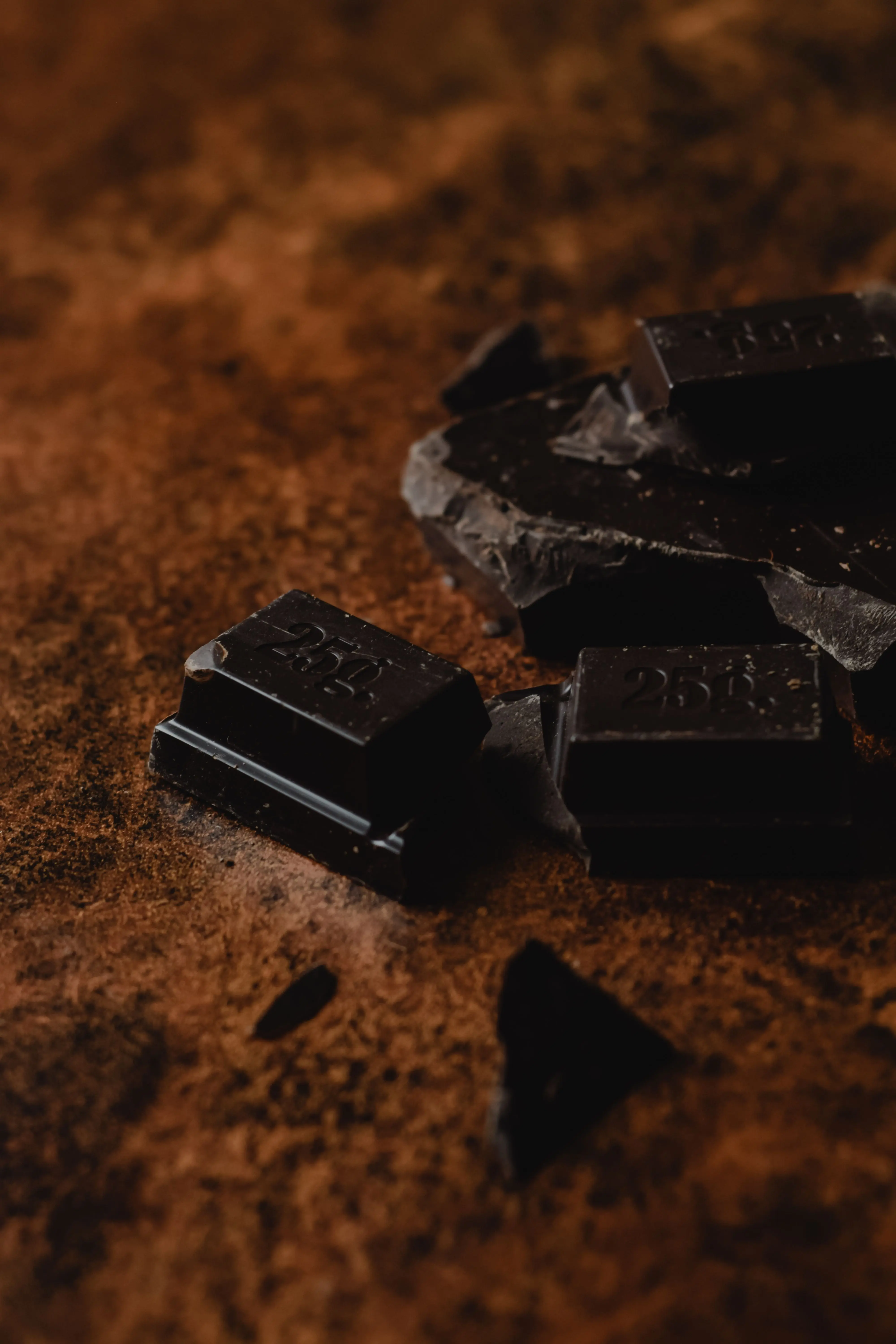
Dark chocolate has long been linked to positive effects on the heart, blood vessels, and metabolism, largely due to its flavanols — and that connection has been studied for years. Now scientists have turned to an unusual question: could the scent of chocolate alone be enough to influence physical performance?
For their study, published in the journal Frontiers in Physiology, the researchers had 23 healthy men who regularly strength trained smell three different scents: dark chocolate (90 percent cocoa), milk chocolate (60 percent cocoa), and a neutral-smelling water sample as a control condition.
All participants completed the three test sessions several days apart. Before training and before each new set, they inhaled the assigned scent sample for about 30 seconds, then performed leg extension exercises until muscle exhaustion.
The differences between the three conditions were striking. After smelling dark chocolate, participants managed an average of around 18 more repetitions than in the control condition and completed approximately one additional training set.
The scent of milk chocolate also showed a positive effect, but a considerably smaller one — an average gain of nine repetitions.
A second finding was equally interesting: even before training, participants reported less hunger, a reduced desire to eat, and a greater sense of fullness after inhaling the dark chocolate scent. With the milk chocolate scent, this effect was barely noticeable — instead, participants simply rated that scent as more pleasant.
The authors therefore suspect that dark and milk chocolate may work through different mechanisms. Dark chocolate may have had more of an effect on satiety, while milk chocolate seems to engage primarily the pleasurable perception of the scent.
Scents reach brain regions that govern emotions, motivation, and memory with particular speed. Unlike most other sensory input, they bypass the thalamus and go straight to the limbic system — which is why scents can trigger physical and psychological reactions within seconds.
The study's authors also suspect that the so-called cephalic phase may play a role. This refers to the body's early response to the sight, taste, or smell of food.
Even before any food is consumed, saliva flow, digestive enzymes, and various hormonal processes can be activated. Whether this mechanism actually influences training performance, however, has not yet been established.
The chocolate study is not unique in this respect. Sports scientists have been increasingly exploring whether certain scents can alter performance or subjective perceived exertion for several years now.
Peppermint, citrus scents, lavender, and ammonia have received particular attention. A review from 2024 summarized 19 studies and concluded that certain scents could indeed produce small positive effects, though these depended on the type of sport, exercise intensity, and study design.
Peppermint, for example, has been linked in multiple studies to improved sprinting and running performance as well as lower perceived exertion. Citrus scents may enhance well-being during physical activity. Lavender is more commonly studied for its relaxing properties, while ammonia — familiar from so-called smelling salts used in strength sports — can briefly heighten alertness.
On the whole, however, the observed effects tend to be fairly small and are not consistent across all studies.
Independent experts therefore find the results intriguing but do not yet see them as evidence that chocolate scent is a viable new tool for athletes.
The study was small and included only young, healthy men with strength training experience. In addition, all tests took place after a fasting period of at least ten hours and examined just a single strength exercise. Whether the findings apply to women, older individuals, endurance sports, or everyday training conditions remains entirely open.
The precise biological mechanism also remains unclear.
The scent of dark chocolate may do more than just whet the appetite. Early research suggests it could modestly improve training performance while also curbing hunger. That said, this is still a small, exploratory study, and no general recommendations can be drawn from it.
One thing is clear: the influence of scents on the brain and physical performance is emerging as a genuinely fascinating area of research. Whether chocolate scent will ever become a standard part of the warm-up routine is a question that only larger, higher-quality studies can answer.

Walking is one of the healthiest forms of exercise, but small everyday habits can reduce its benefits. Here's why pace, posture, footwear, and smartphone use matter more than you might think.
Marianne Waldenfels

With
Univ.-Prof. Dr. med. Dominik Pförringer

Muscle building, fat burning, stronger bones – the vibration plate promises it all. Physiotherapist Nils Stützer breaks down what's scientifically proven, where the research falls short, and who actually benefits from this type of training
Christine Bürg & Marianne Waldenfels

With
Nils Stützer

A new US study found an unusually high rate of colon polyps among marathon and ultramarathon runners. What do the findings really mean, and should endurance athletes be concerned? A gastroenterologist explains.
Christine Bürg & Marianne Waldenfels