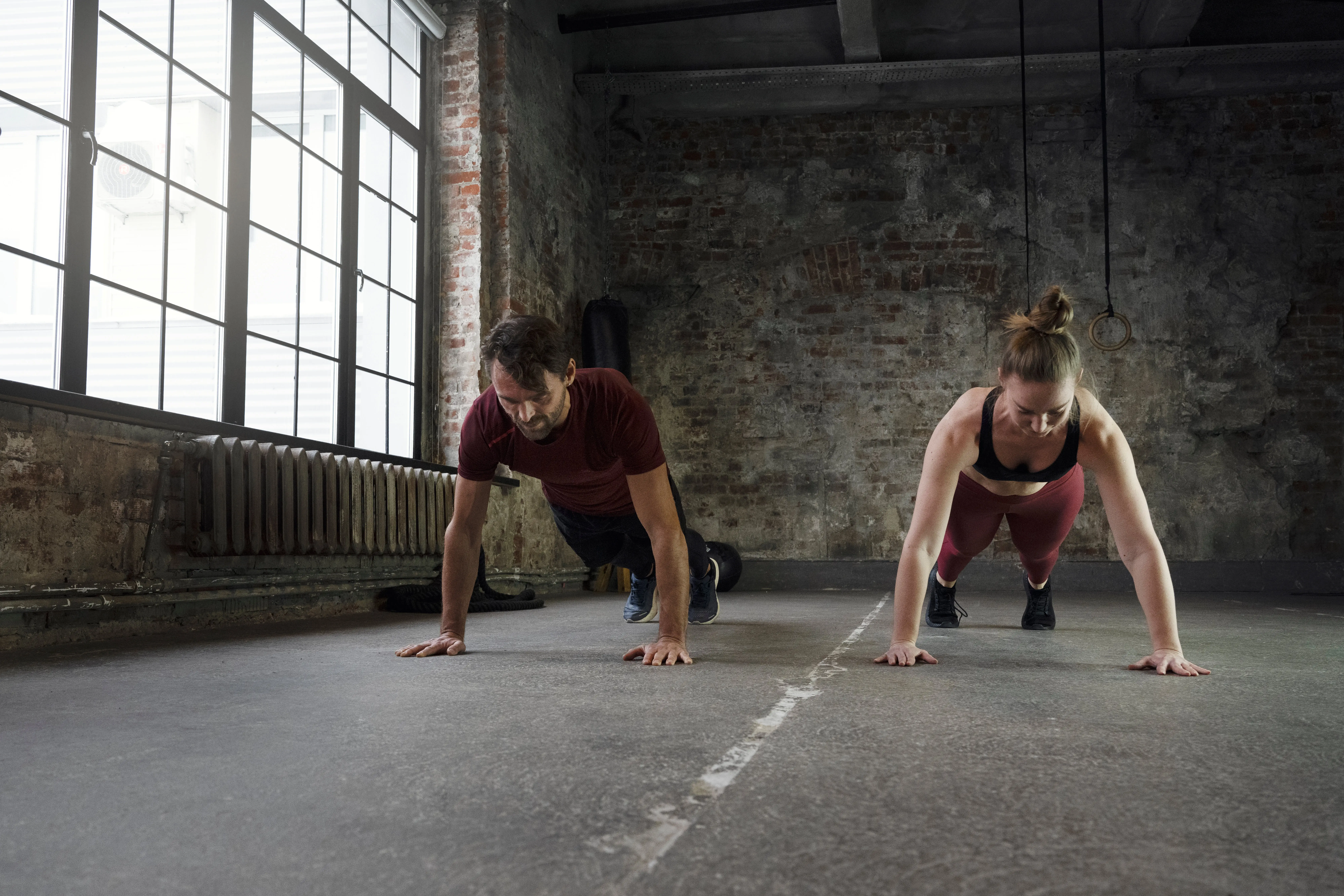
Many people start their day with a "half-empty battery," says sports medicine physician Dr. Lutz Graumann. He explains why recovery matters more than many people realize—and how sleep, nutrition, exercise, and simple habits can help restore your energy
Many people sleep too little, wake up exhausted, and try to compensate with coffee. For sports medicine physician Dr. Lutz Graumann, however, the real problem lies elsewhere: we underestimate the importance of regeneration. In this interview, he talks about sleep, nutrition, exercise, and simple steps that can help the body and mind recover more sustainably.
Why Regeneration Is More Important Than More Training
Dr. Graumann, you say: "In competitive sports, it's not always about being the loudest, but the most rested." Why is regeneration so crucial?
What most people haven't yet grasped is that training and competition don't actually make you better right away. The real magic of adaptation and growth only happens during regeneration.
Greater strength, speed, and endurance are built during that remarkable third of the night when recovery and sleep work their wonders. If the night is truly restorative, we can hope to wake up the next morning a little better than we were the day before.
Does that apply only to elite athletes, or equally to people living with a stressful daily life?
This applies to everyone, not just elite athletes who make their living from their performance. People with a stressful daily life especially need adequate regeneration, because we have to consider all the demands our bodies face every day.
These can be physical stressors such as work, movement, or sport, but also psychological pressures in professional life or emotional challenges in the personal sphere. All these factors determine how much sleep and recovery we need to maintain our performance capacity in the long term.
You regularly assess the recovery status of employees at large companies. What do you find?
The problem cuts across all industries — there is no single employer where the situation is particularly bad. We have been observing this trend for seven or eight years now.
We ask employees a simple question: "If you compare yourself to your smartphone — how much battery charge do you start the day with?" Last year, the answer was alarming: on average, people begin their day with just under 60 percent battery charge.
When you look at the causes, one thing stands out above all: many people still haven't understood the principle of regeneration. They continue to get by on six hours of sleep or less. For most people, that is simply too little. Sleep studies by DAK and Techniker Krankenkasse have shown for years that a large proportion of the population regularly sleeps no more than six hours. In the long run, that is simply not enough.
How problematic is it to sleep only six hours a night?
The probability that this will work out well in the long run is actually less than 1.5 percent. There are people with a genetic trait that allows them to fully regenerate within six hours — but I wouldn't count on being one of them.
For most adults, around seven and a half hours of sleep is sufficient to recover physically, emotionally, and cognitively. However, those going through a particularly stressful period in their lives often need even more.
Emotional and cognitive processing is often not yet complete after seven hours. People with depression or anxiety disorders therefore typically need around nine hours of sleep.
How Do I Know If My Body Has Recovered Sufficiently?
How can I actually tell whether I've recovered sufficiently? Do I need a sleep tracker for that?
First and foremost, we should relearn how to listen to our own bodies. We don't need a sleep lab or high-tech gadgets. The most important question to ask yourself in the morning is simply: how do I actually feel?
Those who have lost touch with that feeling over the years can help themselves with a simple tracker. An inexpensive wristband or ring with heart rate monitoring is perfectly sufficient. Optical heart rate measurement during sleep is now surprisingly reliable.
Resting pulse is particularly informative. If you're doing well, it remains stable over many days. If you train regularly, it often drops slightly. But if it suddenly rises — by around ten beats compared to the previous day, for example — that is often a sign that you've overexerted yourself or are coming down with something. In that case, you should adjust your training program rather than push through despite the warning signs.
What role does nutrition play in good regeneration?
Both proteins and carbohydrates can support regeneration — the key is your goal. Those who want to promote REM sleep can eat a few more carbohydrates in the evening. If the aim is to improve deep sleep, the literature suggests that a higher-protein, lower-carbohydrate diet in the evening may be beneficial.
Too much fat, on the other hand, has never been a good idea. It slows gastric emptying, and if the body is still digesting heavily during the night, sleep quality tends to suffer.
One particularly interesting approach we have used in elite sport for years: when people have trouble winding down after a stressful day, we recommend a small portion of warm semolina porridge or rice pudding in the evening. It should be a genuine comfort food experience.
Many people associate it with something pleasant, and on a physiological level, blood sugar first rises and then falls again. This makes us pleasantly drowsy, reduces the urge to doomscroll, and often makes it easier to fall asleep.
What Role Do Nutrition and Supplements Play?
Creatine, magnesium, melatonin — which dietary supplements do you consider genuinely useful?
One molecule that has proven its value for both physical and mental performance is creatine monohydrate. The body produces creatine naturally. It is one of the most important energy currencies for short-term exertion. Over the past five to seven years, however, we have seen that older people in particular can benefit from additional supplementation.
In elite sport, creatine has long been standard. Most athletes start with three to five grams per day and increase the amount — depending on body weight — to up to ten grams. Petite women tend to stay closer to five grams, while larger men tend toward ten grams.
As we age, the dosage, adjusted for body weight, can also move toward ten to twenty grams. We also frequently recommend a second dose in the evening, as subjective recovery the following morning often turns out to be somewhat better as a result.
What makes creatine particularly interesting, however, is not just its effect on muscle. Studies have shown that after an especially poor night, a one-time dose of 20 grams in the morning can help at least partially offset the cognitive deficits caused by sleep deprivation. Brain performance can often be partially restored as a result. That is why creatine is one of the dietary supplements we use on a regular basis.
Melatonin is currently experiencing a real boom. Is that justified?
Melatonin definitely has its place — but mainly for eastward travel involving a time difference of more than three hours.
However, many people expect too much from melatonin. It makes falling asleep easier, but it neither alters sleep architecture nor improves the ability to stay asleep.
That is why we always first try to support the body's own melatonin production: through daylight, time in nature, adequate exercise, and less stress. Better habits often achieve more than a pill.
What other supplements can support regeneration?
Magnesium has become one of the foundational supplements in the field of longevity.
Those experiencing muscle tension after intense training can use magnesium bisglycinate or magnesium citrate. Those suffering primarily from severe mental stress can try magnesium threonate, with the expectation that it may cross the blood-brain barrier more effectively and thus also support mental recovery.
Another interesting molecule is glycine. I was recently at a wellness hotel that offered its guests not only a morning wake-up smoothie, but also magnesium and glycine in the evening. I found that a genuinely clever approach, as it actively supports restful nights.
Is Light Exercise Enough to Stay Healthy?
Many experts today recommend so-called Zone 2 training — that is, easy endurance exercise. Is that sufficient?
Zone 2 training is useful because it gets people moving in the first place — and that is precisely where many people already struggle in everyday life.
However, to increase maximum oxygen uptake, keep blood vessels elastic, and truly build capacity, easy training alone is not enough.
The older we get, the more important fast movements become as well. With many women, for example, I reintroduce jump rope training. This simultaneously improves eye-hand coordination, delivers important stimuli for bone density, and trains the heart and brain.
The key is to start slowly. Nobody needs to immediately go full throttle with four-by-four-minute intervals. We often begin with four sprint intervals of 15 seconds each and gradually increase the intensity from there. We achieve excellent results with this approach. And of course, strength training and balance exercises also belong in every training program.
Balance also plays a major role for you. Why?
Because falls in old age are among the events that can most quickly rob people of their independence.
That is why we test the balance of all our clients — very simply, with a single-leg stand performed with eyes closed. Anyone who can't manage six seconds has a significantly increased risk of falling. Above eleven seconds, the risk is still roughly twice as high. And from 15 seconds onward, I award the seal of approval.
You work closely with Blackroll and recommend foam rollers for regeneration. What can they actually do?
Foam rollers and other myofascial techniques have one main goal: to relax muscles, tendons, and connective tissue. Most people are under stress in everyday life, sit for long periods, and then add sport on top of that. Very few people actually go to bed truly relaxed.
Self-massage can be used to specifically reduce muscle tension — particularly in the areas that tend to tighten with sedentary activity. These include the hip flexors, the neck, the upper back, and the chest muscles.
It doesn't take long at all. Even two minutes with a foam roller can prepare the body for a restful night.
Of course, this also works without fascia products. You can use vibration, do static stretching, or get a massage. However, static stretching requires significantly more time. To truly relax a muscle group, you should hold the stretch for about two minutes.
With self-massage or a massage from a therapist, we can often achieve a comparable effect in around 30 seconds. That is why we use these techniques specifically for relaxation and as preparation for a good night's sleep.
How to Recover Effectively After Sport and Stress
Does the ideal approach to regeneration after physical exertion differ from recovery after a stressful workday?
The more we have worked or trained, the further the body departs from its natural state of dynamic equilibrium — known as homeostasis. This encompasses a stable blood sugar level, a constant body temperature, a balanced energy supply, and the correct distribution of water and electrolytes in the body.
After physical exertion, the first step is therefore to restore fluid balance. The more sport you have done, the more water needs to go back into the tank.
Whether this is working can be checked surprisingly easily. Quality control always takes place in the ceramic department. By midday, a person should be able to produce truly clear urine. If that is not the case, more fluids need to be consumed.
Sometimes water alone is not enough, because the body is lacking electrolytes. In that case, an electrolyte powder can be a useful option. The good news is that in the EU, any product labelled "electrolyte powder" must meet certain quality standards. Ultimately, then, taste alone can be the deciding factor.
What do you recommend immediately after sport, or when dealing with mental stress?
After training, it's important to replenish carbohydrate stores and protein levels as quickly as possible, while also allowing the muscles to relax. A sauna session can be very helpful for this.
If, on the other hand, you're primarily dealing with stress and want to calm your body down, a cold bath or cold shower can also support recovery.
With significant psychological stress, however, the priority is first and foremost to unload the mind. I recommend writing down any loose ends from the day — the old-fashioned way, with paper and pen.
Don't reach for a glass of red wine to wind down; instead, tackle the real sleep stealers: cut back on alcohol, avoid caffeine after 2 p.m., and try a short journaling session in the evening.
Interestingly, writing thoughts down on paper has a more calming effect on the brain than typing them into a smartphone or tablet. Seeing everything captured in writing makes it much easier for many people to truly switch off mentally.
To wrap up: is there one simple habit that anyone can start right away to recover better?
We always send our clients home with a second exercise: a brief gratitude reflection in the evening.
I recommend deliberately identifying three things each day that you felt grateful for. As humans, we have a strong negativity bias — we tend to notice what went wrong before anything else. That's why it's worth making a conscious effort to shift your focus to the positive moments of the day, however small they might be.
This simple exercise helps many people drift off to sleep in a better frame of mind.