© Freepik
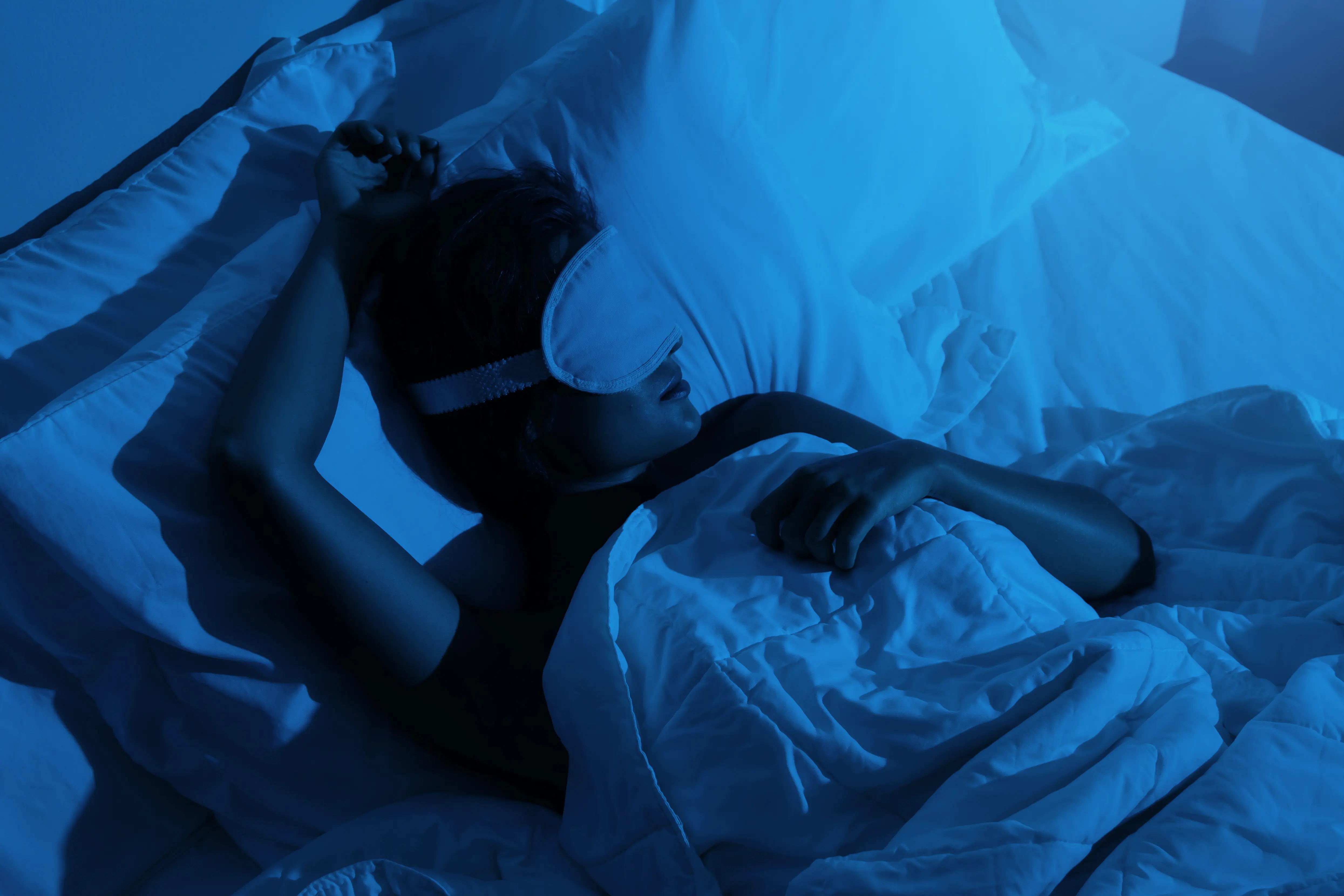
During sleep, the brain is highly active — processing everything learned during the day — while the immune system regenerates.
August 15, 2026
Sharon Burbat
Is eight hours of sleep really ideal? Research shows that our sleep needs are more individual than many people think — and that both too little and unusually long sleep can be worth paying attention to.
We spend about a third of our lives sleeping. Yet what seems like a simple question turns out to be surprisingly difficult to answer: how many hours of sleep does a person actually need?
The oft-cited eight hours is not a magic number. What matters is not only how long we sleep, but also whether we wake up feeling rested and remain alert and productive throughout the day. That said, there are scientific benchmarks that offer a useful guide.
For healthy adults, seven to nine hours of sleep per night is considered a sound guideline. This was the conclusion reached, among others, by an expert panel of the National Sleep Foundation after reviewing the scientific literature.
The American Academy of Sleep Medicine (AASM) and the Sleep Research Society likewise recommend that adults regularly get at least seven hours of sleep per night. How much beyond that is optimal depends on factors such as age, genetic predisposition, health status, and individual life circumstances.
The number of hours is therefore not the only deciding factor. People who wake up feeling rested, stay productive during the day, and don't constantly have to fight off drowsiness during quiet activities are probably getting enough sleep.
Sleep requirements change considerably, especially in the early years of life. According to recommendations from the National Sleep Foundation, newborns need around 14 to 17 hours of sleep per day, while teenagers need eight to ten hours.
Seven to nine hours are recommended for adults. For people aged 65 and over, the recommendation is approximately seven to eight hours.
These are reference values, not requirements that apply equally to every person. Sleep quality, illness, medications, and individual daily rhythms can all influence how rested we feel.
The occasional short night is not in itself cause for concern. It becomes problematic when sleep is regularly cut short over an extended period of time.

They promise longer, fuller lashes — but some eyelash serums contain potent prostaglandin derivatives. A new analysis by the CVUA Karlsruhe raises safety concerns. Ophthalmologist Dr. Tabitha Neuhann explains the risks — and why some changes to the eyes may be permanent.
Christine Bürg & Marianne Waldenfels

With
Dr. med. Tabitha Neuhann
In the short term, sleep deprivation manifests primarily as fatigue, difficulty concentrating, irritability, and reduced performance. Reaction time and coordination can suffer as well.
In the long term, too little sleep is associated with a range of health risks. A large systematic review drawing on data from more than five million people found that short sleep duration was associated with an increased risk of obesity, diabetes, high blood pressure, and cardiovascular disease, among other conditions. Depression and increased mortality have also been linked to short sleep durations in studies.
It is important to note that observational studies of this kind can identify associations but cannot prove that too little sleep alone causes these conditions.
Sleep is by no means a passive resting phase. While we sleep, numerous processes take place in the brain and throughout the body that are vital for memory, metabolism, immune function, and regeneration, among other things.
Just how significantly sleep deprivation can affect performance in the short term was demonstrated by a widely cited study published in the journal Nature. The researchers compared the effects of prolonged wakefulness on psychomotor performance with those of alcohol and found significant impairments.
The frequently repeated claim that 24 hours without sleep is equivalent to "a blood alcohol level of one per mille" is, however, an oversimplification. Sleep deprivation and alcohol affect the body in different ways and cannot be compared on a one-to-one basis.
In road traffic in particular, fatigue can nonetheless be dangerous: attention and reaction time decline, and the risk of microsleep increases.
Interestingly, large observational studies find an elevated health risk not only with very short sleep, but also with long sleep durations.
A meta-analysis from 2025 that pooled 79 cohort studies found, for example, that compared with seven to eight hours of sleep, a sleep duration of less than seven hours was associated with a 14 percent higher mortality rate, while nine hours or more was associated with a 34 percent higher rate. This does not mean, however, that sleeping long is automatically unhealthy.
Establishing the direction of cause and effect is particularly difficult with this association. People may sleep longer because of an illness, depression, or other health problems, for example. An unusually long sleep duration may therefore be more of an indicator of an underlying problem than a cause of one.
Those who occasionally sleep nine or ten hours — for example, after a period of sleep deprivation or during an illness — have no reason to worry.
It is worth paying attention when your own sleep need changes noticeably, or when you experience persistent fatigue despite getting a full night's sleep.
Anyone who regularly sleeps for very long periods yet still does not feel rested, experiences significant daytime drowsiness, or suddenly needs considerably more sleep than before should seek a medical evaluation for possible underlying causes. These could include sleep disorders, certain medications, or physical and mental health conditions.
A simple way to get a better sense of your own sleep needs is to spend an extended period without an alarm clock — for example, while on vacation.
Go to bed at roughly the same time each night and get up in the morning when you wake naturally and feel well-rested. Track how long you actually sleep over the course of several days.
The first few nights are of limited value: anyone who has been sleeping too little for an extended period may initially be catching up on sleep.
After a few days, it is often possible to identify the sleep duration at which you feel rested in the morning and alert throughout the day. This figure can serve as a better personal guide than the blanket assumption that everyone needs exactly eight hours of sleep.
The famous eight hours are not a hard requirement. For most adults, seven to nine hours of sleep per night is a sensible guideline — but how restorative that sleep is and how you feel during the day matters at least as much.
Chronically short sleep durations are associated with numerous health risks. Very long sleep durations also appear more frequently alongside health problems in studies — though it has not yet been sufficiently established that sleeping long is itself the cause.
Anyone who regularly sleeps significantly more or less than before, or who feels persistently tired despite getting enough sleep, should therefore look beyond the number of hours and consider whether an underlying cause may be at play.