© Magnific
November 14, 2026
Marianne Waldenfels
A spicy drink made from apple cider vinegar, ginger, and garlic is said to ward off colds. One study on garlic produced striking results — but how much of that actually applies to the drink itself?
Apple cider vinegar, ginger, garlic, and horseradish: Fire Cider is a drink that has been used as a home remedy in the United States for decades. On Instagram and TikTok, it is currently having a moment, promoted as a natural way to guard against infections.
A small sip in the morning is said to boost the immune system, reduce inflammation, and support digestion. Some of the plants used are also the subject of clinical research, and one small study on garlic even suggests it may help prevent colds.
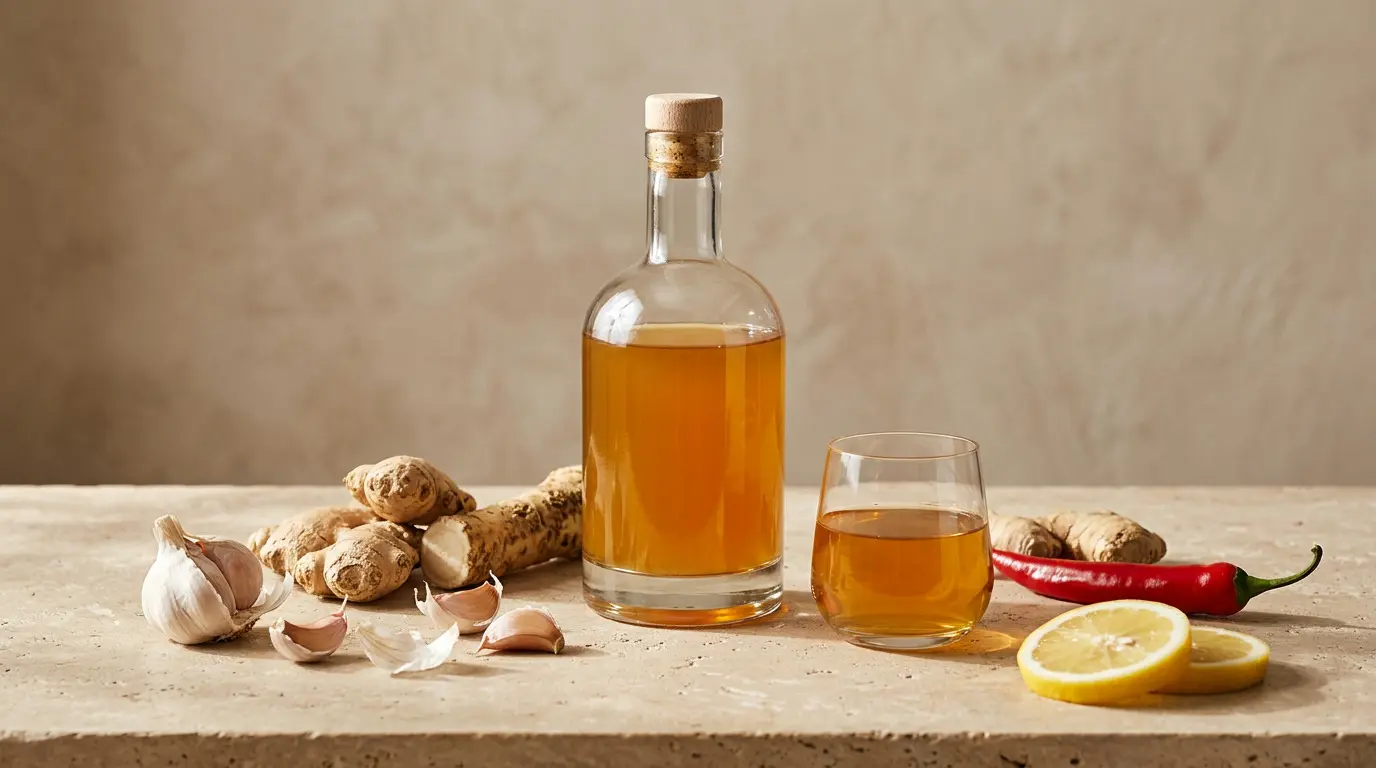
Fire Cider was popularized by American herbalist Rosemary Gladstar, who spread the recipe in the 1970s. The classic preparation involves chopping fresh ginger, horseradish, garlic, onions, and cayenne pepper and steeping them in apple cider vinegar for several weeks. The liquid is then strained and often sweetened with honey.
There are now countless variations — for example, with turmeric, lemon, or rosemary. Some people drink Fire Cider as a concentrated shot, while others dilute it with water or use it in salad dressings.
Despite the long steeping time, it is not a deliberately fermented drink like kombucha or kefir. Fire Cider is a vinegar extract into which compounds from the plants are transferred.
Garlic contains sulfur compounds, including allicin, which forms when the cloves are crushed and has demonstrated antimicrobial properties in the laboratory. Whether garlic can also protect humans against colds has so far been examined in only a handful of clinical studies.
A Cochrane review identified eight studies, of which only one met the scientific inclusion criteria.
That study involved 146 adults who received either a garlic supplement or a placebo for twelve weeks. In the garlic group, 24 cold episodes were recorded, compared to 65 in the placebo group.
The duration of illness, however, differed little between the two groups. The review authors judged the overall evidence to be insufficient. A single study with a relatively small number of participants is not enough to recommend garlic for cold prevention.
Clinical studies on the finished drink are lacking. Neither a preventive effect against colds nor a reduction in the duration of illness has been demonstrated.
Research focuses on individual plant compounds, some of which inhibit the growth of certain microorganisms under laboratory conditions or influence inflammatory processes. Whether these effects occur after consumption depends, among other things, on how the substances are absorbed and metabolized in the body.
There is also the matter of varying composition. Depending on the recipe, the quantities of ingredients, the steeping time, and the processing all differ. How much of the studied plant compounds actually ends up in the finished drink is largely unknown.
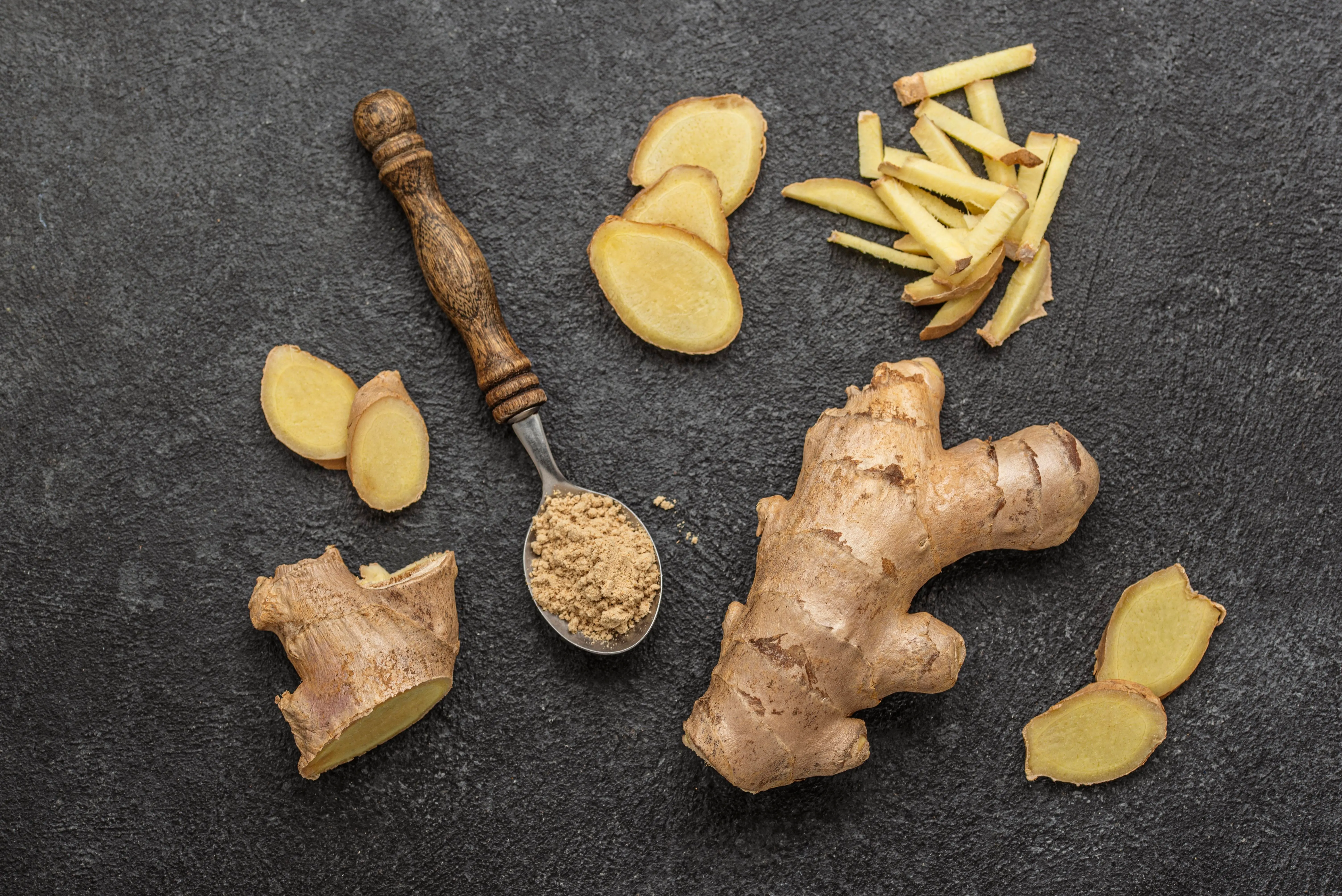
Ginger contains gingerols and shogaols, whose anti-inflammatory and antioxidant properties have been described in experimental studies.
Clinical studies are available primarily for the treatment of nausea. A 2026 systematic review found evidence that ginger preparations can be particularly effective at relieving pregnancy-related nausea.
For the prevention of colds, however, convincing clinical evidence is lacking. The sensation of warmth that ginger produces in the mouth and throat results from the activation of certain sensory receptors — it says nothing about immune function.
Horseradish contains glucosinolates, from which mustard oils are released when it is crushed. Some of these compounds can inhibit the growth of certain microorganisms in the laboratory.
Cayenne pepper provides capsaicin, a compound that activates receptors sensitive to heat and causes the characteristic burning sensation in the mouth. There is no sufficient clinical evidence that either of these ingredients protects against respiratory infections.
Apple cider vinegar forms the base of the drink. The acetic acid it contains is studied primarily for its possible effects on glucose metabolism.
A meta-analysis of clinical studies found that vinegar can, under certain conditions, blunt the rise in blood sugar after meals.
The studies vary in terms of dosage, participant groups, and experimental conditions, so a general recommendation for regular consumption cannot be drawn from them. No protection against colds has been demonstrated for apple cider vinegar.
The recipe originates from American herbalist Rosemary Gladstar and can be adapted to taste. The key is that the vinegar covers all the ingredients completely.
Ingredients:
Preparation:
When grating horseradish, it is a good idea to open a window: the mustard oils released can irritate the eyes and nose.
A definitive shelf life cannot be stated for homemade Fire Cider. If mold, unusual gas production, or any other signs of spoilage appear, the batch should be discarded.
Those who want to drink Fire Cider can, for example, stir a tablespoon into a glass of water. It can also be used as an ingredient in salad dressings or marinades. No medically effective daily dose is known.
Acetic acid combined with pungent plant compounds can irritate the stomach lining and mucous membranes. People prone to heartburn or reflux, or who have a sensitive stomach, may notice this quickly.
The teeth are also at risk, as regular contact with acetic acid erodes tooth enamel. Fire Cider is therefore better consumed diluted than as a daily straight shot.
Caution is also warranted with anticoagulant medications. High-dose garlic preparations can affect blood clotting, and whether homemade Fire Cider reaches such quantities has not yet been investigated. Anyone taking such medications should consult their doctor beforehand.
Used as a seasoning or consumed diluted, Fire Cider is harmless for most people. Even so, one should not expect reliable protection against colds from it.

Artificial intelligence, digital diagnostics, and new technologies are transforming medicine. At the Digital Health Summit 2026 in Munich, leading scientists, physicians, founders, and investors explored how to turn cutting-edge research into better patient care — and why collaboration among Munich's leading institutions is key to making it happen
PMC Redaktion

With
Univ.-Prof. Dr. med. Dominik Pförringer

An injection for osteoarthritis pain – but which treatments actually make a difference? Orthopedic specialist Dr. Ferzan Süzer explains why she rarely uses cortisone for degenerative joint disease, what research reveals about hyaluronic acid and platelet-rich plasma, and why injections alone are not enough.
Christine Bürg & Marianne Waldenfels

An interview with
Dr. med. Ferzan Süzer

"Feel Good, Live Better" – In this episode, Dr. Birgit Dinnewitzer explains why small intestinal bacterial overgrowth is so often mistaken for irritable bowel syndrome.
Christine Bürg

An interview with
Dr. Birgit Dinnewitzer