© Daryan Shamkhali/Unsplash
November 11, 2026
Marianne Waldenfels
The way we walk may reveal far more about our health than previously thought. A new AI study of more than 3,300 adults found links between movement patterns and abdominal fat, liver changes, diabetes, and depression.
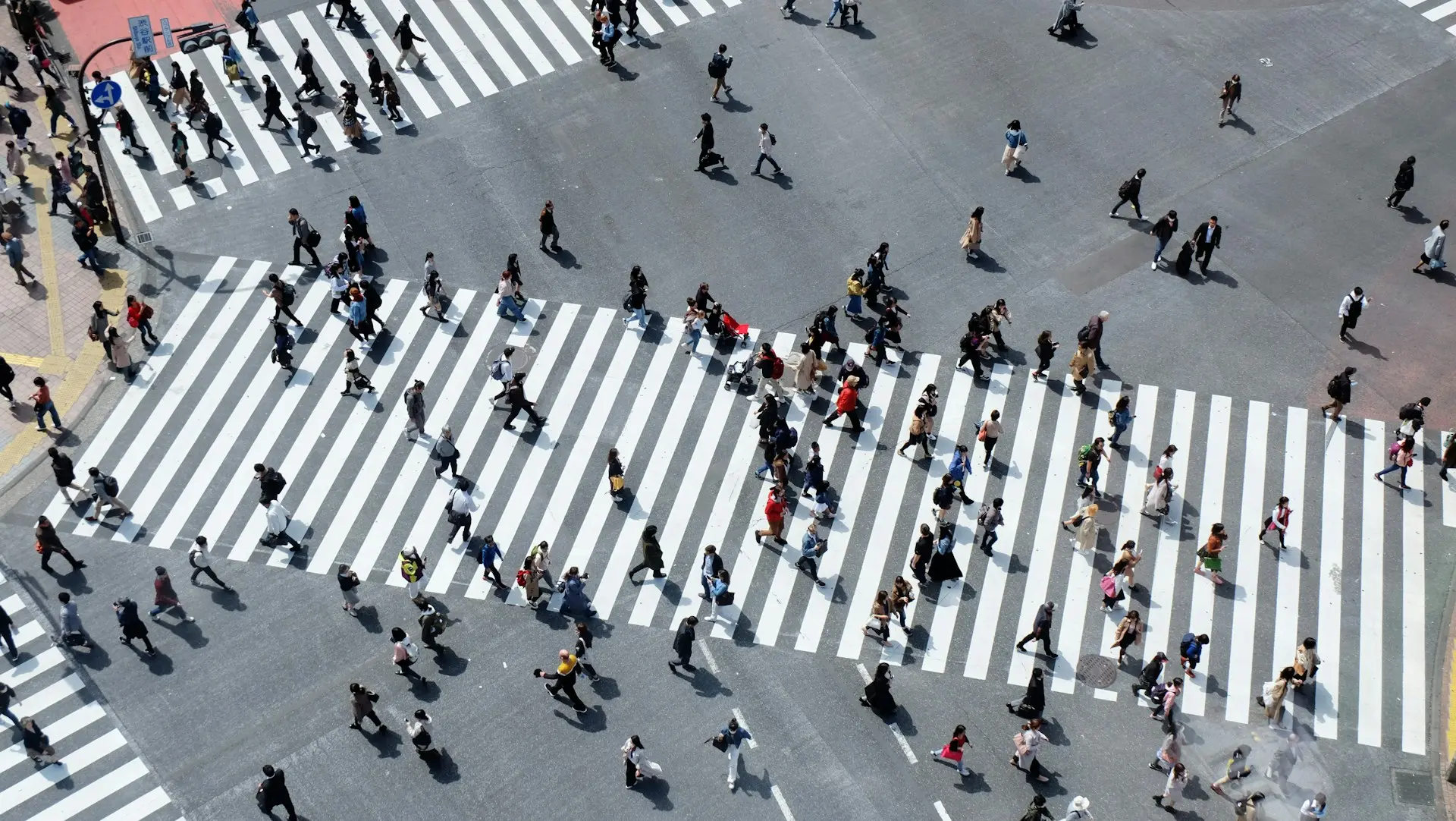
A few steps across the examination room, and some general practitioners already sense that something is wrong with a patient. Their movements seem sluggish, their steps shorter, their posture more stooped. What was once a matter of clinical intuition can apparently now be measured — and far more precisely than the human eye allows. A study published in November 2026 in Nature Medicine shows that movement patterns can even offer clues about liver health, metabolism, and mental health.
For the study, a team from the Weizmann Institute of Science in Israel analyzed the movements of 3,328 adults. The participants completed five standardized movement tasks in front of a depth camera that captured their body movements in three dimensions. An artificial intelligence then evaluated the recordings and compared the movement patterns against extensive health data — including blood values, imaging studies, sleep measurements, and mental health information.
In total, the researchers examined more than 3,200 health characteristics across 18 body systems. In 1,887 of these, they found statistically robust associations with the movement data.
Notably, the movement patterns provided additional information even after age, height, body mass index, and abdominal fat had already been taken into account. In men, they improved predictions across all 18 body systems examined; in women, across 17 out of 18. Gait therefore appears to reveal more than can be inferred from age or body weight alone.
The association with visceral fat was particularly pronounced. This fat accumulates between the internal organs and is considered especially harmful to metabolism. It raises the risk of insulin resistance, type 2 diabetes, and cardiovascular disease, among other conditions.
The values calculated from the movement patterns closely matched the actually measured amounts of visceral fat. The researchers found a correlation value of 0.83 — significantly higher than with classic gait characteristics such as speed or stride length alone.
With diabetes, the results were equally striking: in a screening analysis, 83 percent more diabetes cases were identified in men when movement data were included alongside the usual parameters. This figure reflects a relative improvement within the study. Whether diabetes can be reliably detected earlier using this approach remains to be seen.
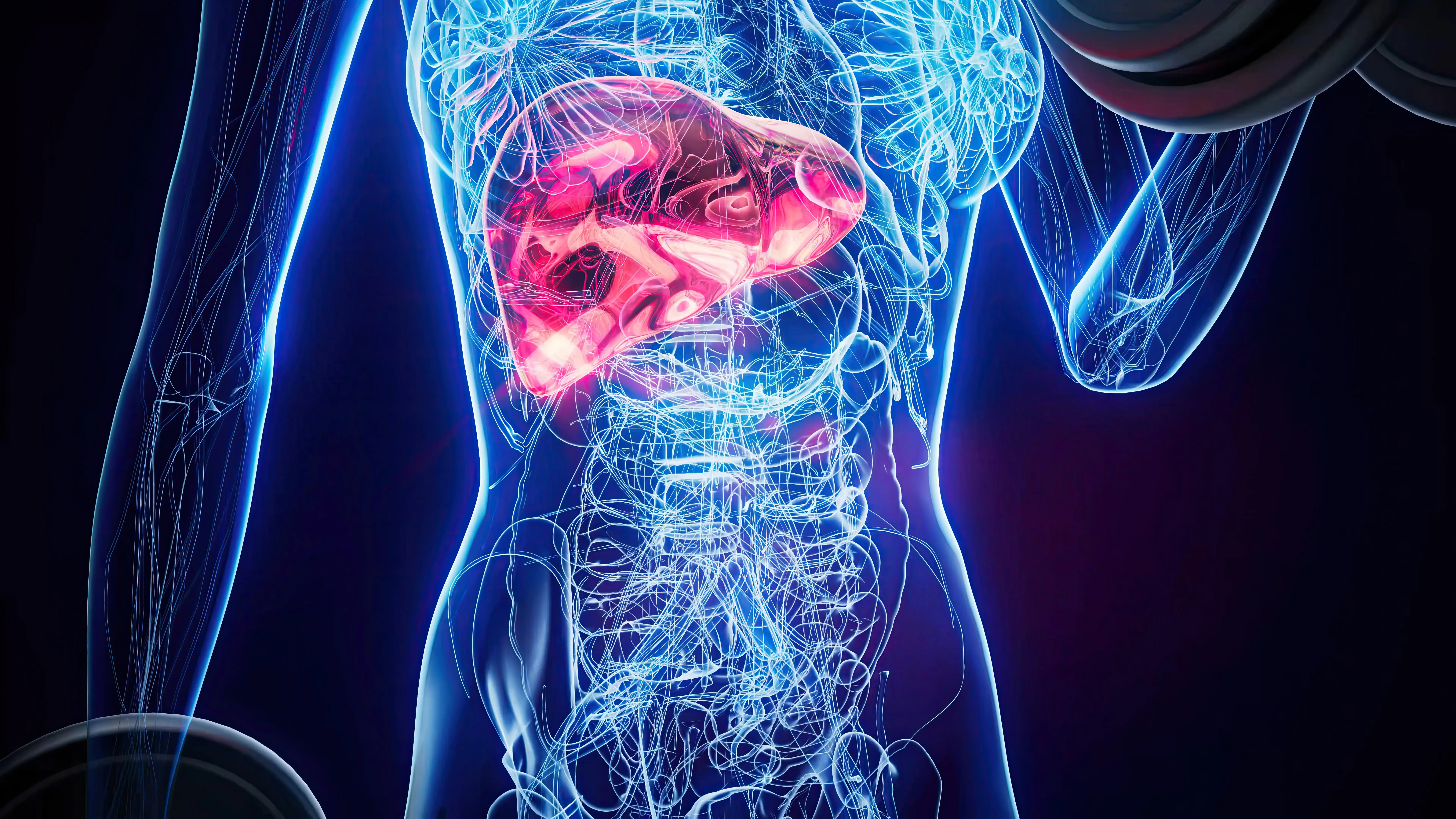
The most surprising finding involves the liver. The organ gives no warning when it is under strain, and liver fibrosis — in which healthy tissue gradually scars over — often goes undetected for years. Doctors can identify it, among other methods, by measuring liver stiffness: the more the tissue scars, the harder it becomes. This can be assessed using a specialized ultrasound examination.
That very stiffness, it turns out, can be read from a person's gait. And not merely as a rough approximation: the movement data revealed at least as much about the condition of the liver as standard liver values in the blood — and in some cases even more. This held true for both men and women.
Why this is the case remains unclear. Abdominal fat, declining muscle mass, or a disrupted metabolism may all play a role. The finding is remarkable nonetheless. Liver diseases are considered silent conditions — they often develop over years without those affected noticing anything. If they leave early traces in a person's gait, that could one day help identify at-risk individuals before it is too late.
Mental health also appears to leave its mark on the way we move. It has long been known that people with depression often walk more slowly, adopt an altered posture, or move less overall.
What is new is just how much gait can reveal. When the computational model had access only to the participants' age, weight, and body fat, many cases of depression went undetected. When it was also permitted to analyze gait, it identified 81 percent more affected individuals among men. This is not yet a test for depression. But it demonstrates how clearly the mind can manifest itself in the body.
Even the use of certain medications was reflected in the movement data — including antidepressants, proton pump inhibitors, and antihistamines.
It is also telling where in the body the signals originate. The legs convey information primarily about metabolism and frailty, while the upper body says more about sleep and lifestyle.
Doctors have known for a long time that walking and health are closely linked. A large analysis in the journal JAMA showed as far back as 2011 that walking speed in older adults is closely associated with life expectancy. The researchers analyzed data from 34,485 people over the age of 65. For every additional tenth of a meter per second of walking speed, the risk of death during the observation period was approximately twelve percent lower.
Remarkable as these findings are, they do not mean that diseases can be diagnosed from the way we walk alone.
The study identifies statistical associations, not causal relationships. Whether a disease itself alters movement patterns or whether both are influenced by underlying factors such as muscle strength, physical activity, or metabolic changes remains unclear.
The liver often shows few outward signs of disease, metabolic disorders can develop gradually, and depression is not always visible to others. The possibility that these conditions may leave traces in the way we walk opens up a new perspective for medicine.
No camera can yet reliably determine whether someone has liver disease or diabetes simply by analysing their movements. But this study reveals just how much information may be hidden in something as ordinary as the way we walk.

"Feel Good, Live Better" – In this episode, Dr. Birgit Dinnewitzer explains why small intestinal bacterial overgrowth is so often mistaken for irritable bowel syndrome.
Christine Bürg

An interview with
Dr. Birgit Dinnewitzer

The small button nose was long the ideal. For rhinoplasty surgeon Dr. Christian Jacobi, what matters today is a nose that suits the face and keeps its function. He explains how social media shapes what patients want and why nose fillers are riskier than many think.
Judith Cyriax

An interview with
Dr. med. Christian Jacobi

An upper eyelid lift is meant to make the eyes look more alert and youthful – but it isn’t always the right solution. Munich-based plastic surgeon Dr. Peter Neumann explains when he advises against surgery, which risks are often underestimated and why hooded eyelids can even impair vision.
Christine Bürg & Marianne Waldenfels

An interview with
Dr. med. Peter Neumann

A cold that isn't given enough time to heal can have serious consequences – even for young, athletic people. Cardiologist Prof. Dr. Uwe Nixdorff explains the warning signs of myocarditis, why exercising during an infection can be dangerous, and when it's safe to return to sports.
Christine Bürg & Marianne Waldenfels

An interview with
Prof. Dr. Uwe Nixdorff