© Magnific
November 16, 2026
Marianne Waldenfels
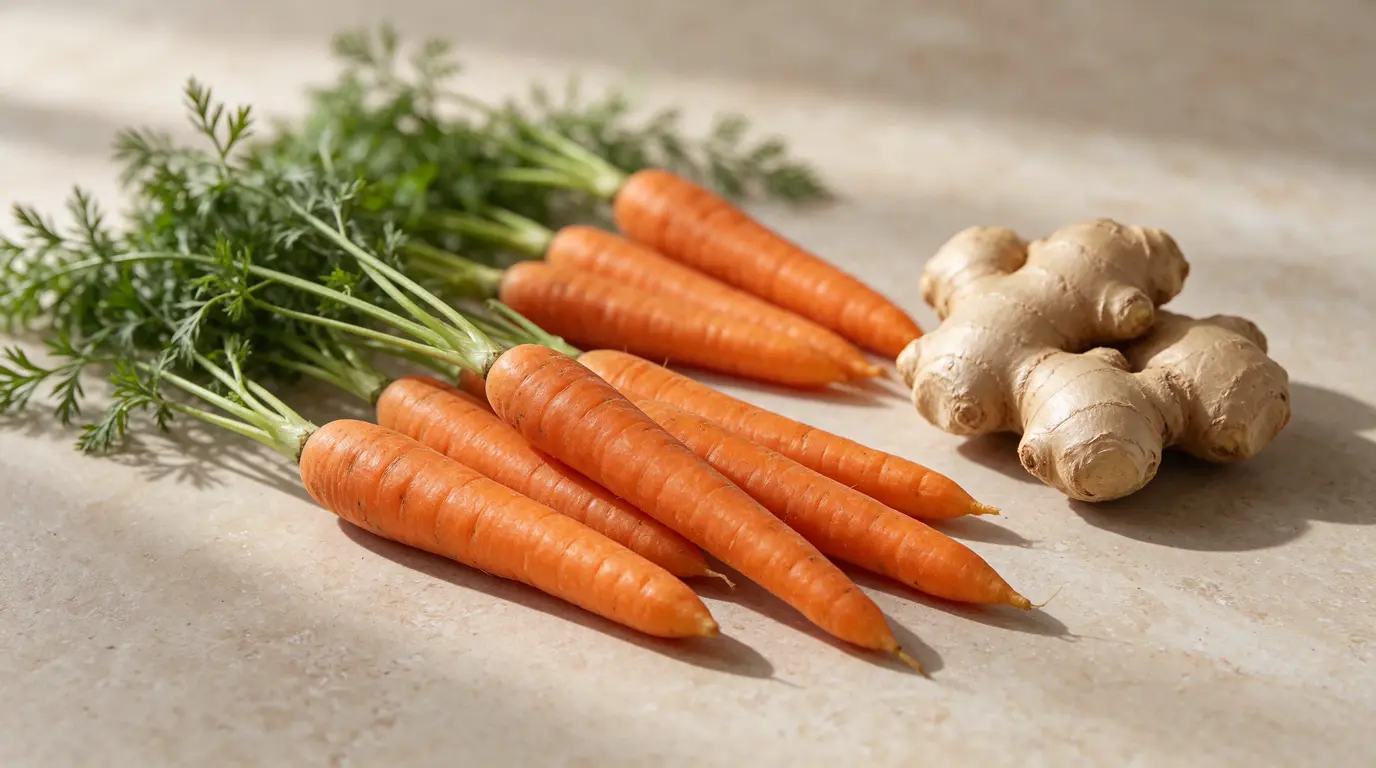
Ginger is a popular home remedy for colds, yet clinical evidence for its effectiveness is surprisingly scarce. A specific fiber extracted from carrots, however, reduced the severity and duration of cold symptoms in a clinical study. What does the science say about these two plants?
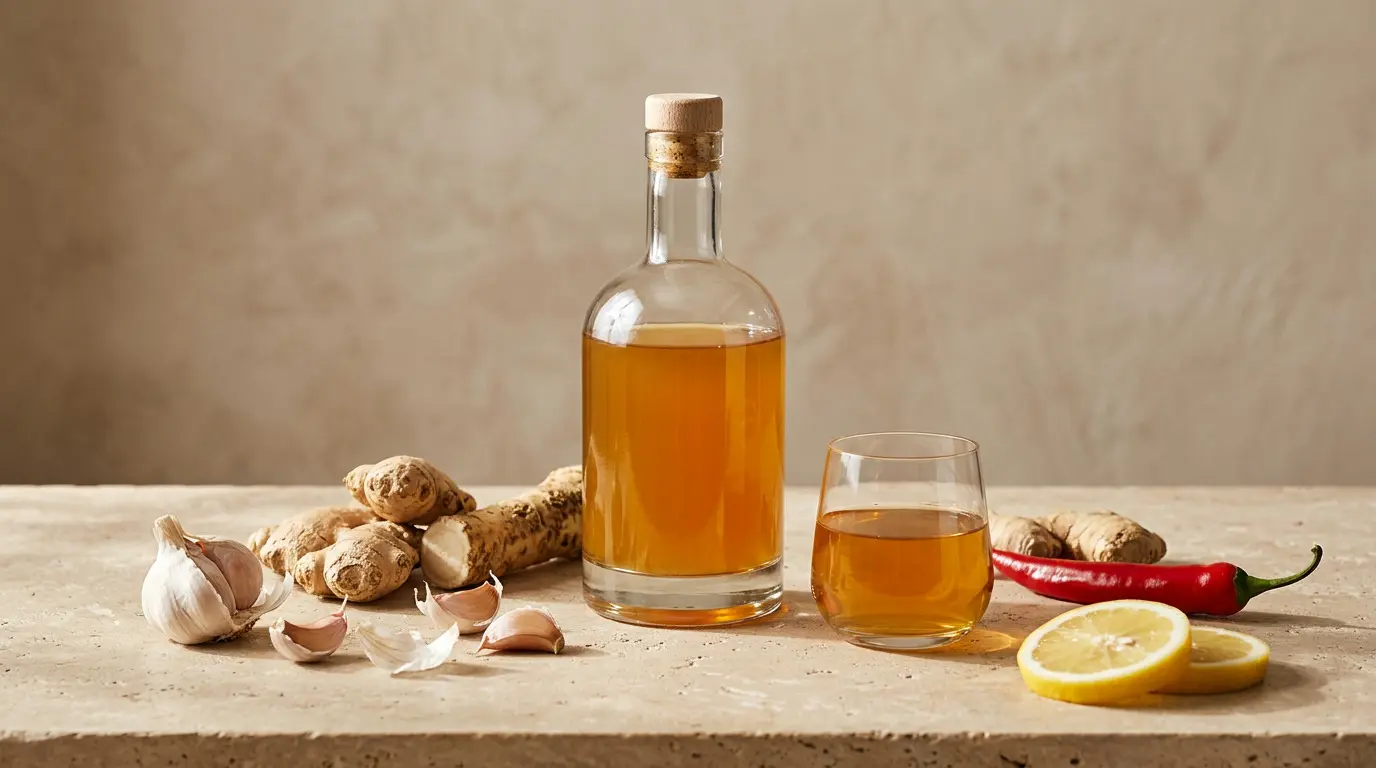
When a sore throat sets in and your nose starts to run, ginger is often the first thing people reach for. A few slices of the spicy root, hot water, a squeeze of lemon, and a little honey – the classic cold remedy is ready. Carrots, meanwhile, are more likely to end up in soup than in the medicine cabinet.
But Dutch researchers have investigated whether a particular fiber extracted from carrots could help fight colds. Participants took the extract for eight weeks before being deliberately exposed to a common cold virus. Those given the lower dose experienced milder symptoms that cleared up faster. Taking five times as much offered no additional benefit. An analysis published in April 2026 offers clues as to why.
For ginger, the scientific picture is far less convincing: there is remarkably little clinical evidence that it helps against the common cold.
At the center of attention is a compound with the unwieldy name rhamnogalacturonan-I, or RG-I for short. It belongs to the pectins found in plant cell walls. Pectins are best known as dietary fiber that aids digestion. Certain structures of these plant compounds, however, can also interact with the immune system.
For the studies, the researchers used a specially prepared extract containing precisely defined amounts of RG-I. It was developed by the Dutch company NutriLeads, which also provided financial support for the research. This supplement cannot be equated with simply eating an ordinary carrot.
The foundation is a randomized, placebo-controlled double-blind study published in 2021 in the journal Nutrients. 177 healthy adults between 18 and 65 years of age took either 0.3 grams or 1.5 grams of the carrot fiber daily for eight weeks; a third group received a placebo. Afterward, 146 participants were exposed under controlled conditions to rhinovirus 16, a typical cause of the common cold.
The most notable differences were seen in the group receiving the lower dose. Compared to the placebo group, symptoms were about 20 percent less severe and lasted around 25 percent less time. In addition, the antiviral defense in the nasal mucosa kicked in earlier, and the virus was cleared more quickly.
The results of the higher dose were striking. While it stimulated the immune system more strongly in some respects, symptoms did not decrease further. In a follow-up analysis from 2022, the researchers described a kind of inverted U-curve: more was not automatically better.
What actually happens in the nose during this process was examined by a team led by J. Mol. For a paper published in April 2026 in the Journal of Medical Virology, the researchers analyzed mucosal cells from 48 participants – before they took the supplement, after they took it, and in the days following infection.
With the small dose, the nose activated its defenses earlier than without the fiber, between days three and six. With the large dose, inflammatory genes were already active before any virus was present.
The researchers therefore suspect that what matters less is how vigorously the body responds, and more is when it does. Countering the virus early and in a targeted manner slows it down. Being in a state of alarm beforehand may confer no benefit – especially since many cold symptoms are themselves a product of inflammation.
This has not been proven. The data only show that both coincide in timing.
Ginger has a long history in traditional medicine. Its pungent compounds – primarily gingerols and shogaols – are being studied for anti-inflammatory and other biological effects.
The European Medicines Agency (EMA) now also lists ginger preparations in its revised monograph for the relief of cold symptoms. This classification is based on long-standing traditional use. Sufficient clinical evidence of efficacy for colds is not available.
Just how thin the evidence base is becomes clear from a systematic review by researchers at the University of Southampton led by Merlin Willcox, published in late 2025 in the European Journal of Integrative Medicine. The team searched more than 10,000 publications for randomized trials on ginger for acute respiratory infections. In the end, only one study remained – and it dealt with COVID-19 rather than the common cold, and carried a high risk of bias.
That does not make ginger useless. For other applications, such as nausea during pregnancy, the evidence is considerably stronger, as an analysis of 109 randomized trials shows. And a hot ginger tea can be comforting, provides fluids, and temporarily soothes an irritated throat. There is no evidence, however, that it shortens a cold.
The point goes to the carrot. For its fiber there is a carefully controlled study in which colds were milder and shorter. For ginger, nothing comparable exists yet.
There is a catch, though: what was tested was an extract, not the vegetable you buy at the supermarket. Whether eating a plate of carrots has the same effect is unknown. Moreover, participants took the powder weeks before infection – whether it also helps once your throat is already sore remains an open question.
The study was also small, used an artificially administered virus, and was co-funded by the manufacturer.
The extract studied in the trials is marketed under the name Benicaros. It is derived from pomace – the press residue left over from carrot juice production – which yields a powder that manufacturers can add to dietary supplements, beverages, or other food products. The brand now belongs to the US corporation Ingredion, which acquired the Dutch company NutriLeads in June 2026.
Since July 2, 2026, the extract has been authorized for sale in the European Union as a novel food. Official approval, however, only confirms its safety as a food ingredient – not its efficacy against colds. Dietary supplements containing the extract must also carry a notice stating that they are not intended for children under three years of age.
Anyone searching for relevant products should look in the ingredients list for the brand name Benicaros or the description "carrot extract enriched with rhamnogalacturonan-I." In the study, the low daily dose of 0.3 grams worked best. Ordinary carrot powder, carrot juice, or conventional pectin supplements cannot be equated with the extract that was studied.
Ginger tea remains a soothing home remedy, but no one should expect it to make a cold go away faster. Reaching for carrots instead of ginger is not a solution either: the effect was only observed with the isolated extract, not with the vegetable itself.
Carrot research nonetheless opens up a new avenue of inquiry. Certain plant fibers may specifically influence how the body responds to cold viruses. The clinical results and the new analysis offer a concrete lead that independent studies will now need to examine.
The key insight concerns the immune system itself: when it comes to colds, what may matter less is how powerfully the body responds, and more is how early it activates the right defense mechanisms.

Familiar names slip your mind, concentration fades, and everyday tasks feel increasingly draining. Hormonal changes may be behind this brain fog — often beginning before the final menstrual period. Endocrinologist Dr. Alexandra Schoeneich explains what happens in the brain and what role hormone replacement therapy can play.
Christine Bürg & Marianne Waldenfels

An interview with
Dr. med. Alexandra Schoeneich

Artificial intelligence, digital diagnostics, and new technologies are transforming medicine. At the Digital Health Summit 2026 in Munich, leading scientists, physicians, founders, and investors explored how to turn cutting-edge research into better patient care — and why collaboration among Munich's leading institutions is key to making it happen
PMC Redaktion

With
Univ.-Prof. Dr. med. Dominik Pförringer

An injection for osteoarthritis pain – but which treatments actually make a difference? Orthopedic specialist Dr. Ferzan Süzer explains why she rarely uses cortisone for degenerative joint disease, what research reveals about hyaluronic acid and platelet-rich plasma, and why injections alone are not enough.
Christine Bürg & Marianne Waldenfels

An interview with
Dr. med. Ferzan Süzer