© Kaboompics
November 21, 2026
Marianne Waldenfels
On TikTok, a raw clove of garlic a day is promoted as a gut-health booster. But research paints a more complicated picture. Scientists are now investigating who actually benefits.
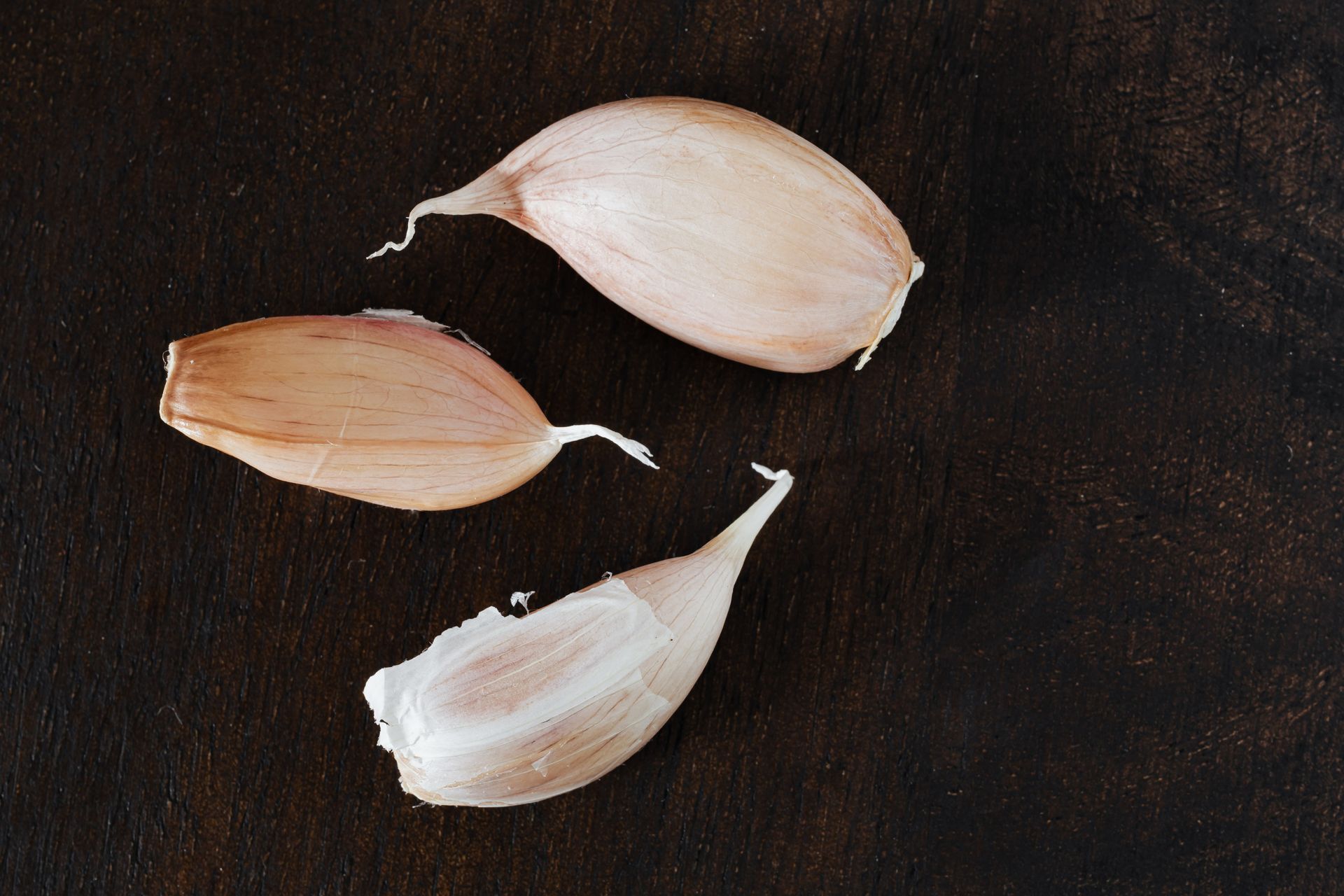
A raw clove of garlic a day is said to improve the gut microbiome, boost the immune system, and even detoxify the body. On TikTok, garlic is hailed as a miracle cure. And while it does contain compounds that may benefit gut health, the science tells a more complicated story.
Some people can eat garlic without any problems. Others experience bloating and abdominal pain after just a small amount. Ironically, the very fibers that feed beneficial gut bacteria can also trigger digestive discomfort. Researchers have investigated why the gut microbiome responds differently to garlic – and their findings point to a factor that has received little attention until now: the bacteria already living in our gut.
Garlic contains two groups of compounds that are of particular interest to researchers: sulfur compounds and so-called fructans.
Among the sulfur compounds is allicin, which is partly responsible for garlic's characteristic smell. It is only produced when a clove is cut, pressed, or chewed, bringing two previously separate components into contact with each other. Allicin acts against various bacteria in laboratory settings, but breaks down quickly into other compounds. Its role in the human gut has not yet been sufficiently clarified.
Of particular importance for the gut microbiome are the fructans. These carbohydrates cannot be digested by the human small intestine. Instead, they pass into the large intestine, where certain bacteria use them as food — which is why they are classified as prebiotics.
A Japanese study by Keyu Chen of Kagoshima University, published in 2020 in the journal Molecules, provided evidence of such an effect. In mice whose gut microbiome had been altered by a high-fat diet, a garlic extract without allicin influenced the composition of the gut bacteria. Whether these results can be transferred to humans remained unclear.
A South Korean study from 2024, published in the journal Microorganisms, examined how human gut bacteria respond to garlic. The team led by Jina Ha and Hakdong Shin added garlic to stool samples from healthy individuals under laboratory conditions.
The reactions varied considerably. In samples dominated by bacteria of the genus Bacteroides, microbial diversity changed more substantially. In samples predominantly associated with the Prevotella type, the effect was significantly smaller.
The scientists also observed an increase in bifidobacteria. In a further experiment, garlic promoted the growth of Bifidobacterium adolescentis, a bacterial species that is part of the normal human gut microbiome.
These findings suggest that the existing bacterial community helps determine how the microbiome responds to garlic. However, the study examined stool samples outside the body. Whether people with different microbiome types actually benefit from garlic to varying degrees cannot be concluded from these results alone.
Clinical studies have also examined the effects of garlic on gut health. The studies conducted so far are small and have produced mixed results.
In the GarGIC study by Australian researcher Karin Ried, published in 2018 in Frontiers in Nutrition, 49 people with poorly controlled high blood pressure received either aged garlic extract or a placebo for twelve weeks. Systolic blood pressure dropped by an average of 14.3 mmHg in the garlic group, compared to 4.3 mmHg in the placebo group — a statistically significant difference.
The scientists also examined the gut bacteria. In the garlic group, lactobacilli increased among other changes, and microbial diversity rose slightly. However, these changes were not statistically significant compared to placebo. The authors therefore characterized the microbiome findings as preliminary. The study was partly funded by a manufacturer of the preparation used.
Another randomized study from 2022, published by Fateme Ettehad-Marvasti and colleagues in Frontiers in Nutrition, looked at 43 women with obesity. They received either garlic supplements or a placebo for two months, while both groups simultaneously followed a calorie-reduced diet. Thirty-two women completed the study.
In the garlic group, the amount of bifidobacteria increased significantly. However, no statistically significant difference was found in direct comparison with the placebo group.
Iranian researchers led by Abbas Ali Sangouni investigated a different aspect. In their 2023 study published in Phytotherapy Researchpublished study, 90 people with metabolic syndrome received either 1,600 milligrams of garlic powder or a placebo daily for three months.
With garlic, intestinal transit time improved significantly compared to placebo, meaning that intestinal contents moved through the digestive tract more quickly. Whether this also reduced symptoms such as constipation or bloating cannot be determined from this result alone.
Taken together, the human studies conducted so far provide some indication that garlic supplements may influence gut motility and possibly the composition of the microbiome. However, a proven health benefit for the gut microbiome cannot be derived from these findings. It is also worth noting that all three studies used supplements rather than fresh garlic cloves.
The very fructans that make garlic a prebiotic are frequently problematic for people with a sensitive gut.
They belong to a group known as FODMAPs — certain carbohydrates that are poorly absorbed in the small intestine and fermented by bacteria in the large intestine. This process produces gases that can worsen bloating, abdominal pain, and changes in bowel habits in people with irritable bowel syndrome.
Garlic is one of the foods particularly high in fructans, and even small amounts can trigger symptoms in sensitive individuals. Australia's Monash University, which played a leading role in developing the low-FODMAP concept, therefore lists garlic as a food to avoid during the initial restriction phase of such a diet.
This does not mean that everyone with irritable bowel syndrome must avoid garlic permanently. Tolerability varies from person to person. After the first few weeks, avoided foods are gradually reintroduced in order to identify individual triggers and determine tolerable amounts.
The fact that gut bacteria can process a substance does not automatically mean it is well tolerated. In irritable bowel syndrome in particular, bacterial fermentation can worsen symptoms.
People who do not tolerate garlic well do not necessarily have to give up its flavor entirely.
Fructans are water-soluble but do not transfer into pure oil. This is why garlic-infused oil can be a good alternative for people with irritable bowel syndrome.
To make it, garlic cloves are heated in oil and then removed completely. The aromatic compounds remain in the oil, while the fructans stay behind in the cloves. It is important to remove the garlic before adding any ingredients that contain water.
Homemade garlic oil should be used as fresh as possible. Any leftovers should be refrigerated immediately and consumed within three days. Garlic in oil must never be stored at room temperature due to the risk of botulism. For longer storage, commercially produced, appropriately preserved products are the safer choice.
When it comes to gut health, raw garlic has not been proven to be healthier than cooked. While heat does alter certain sulfur compounds, the prebiotic fructans are largely preserved during normal cooking.
People who tolerate garlic well can therefore eat it cooked without missing out on these dietary fibers. In people with irritable bowel syndrome, however, both raw and cooked garlic can cause symptoms.
There is no scientifically established recommendation to eat a specific number of garlic cloves per day for gut health.
Those who tolerate garlic well can use it regularly in cooking. It provides prebiotic carbohydrates, but it is by no means the only source. Whole grain products, legumes, and various vegetables also contain dietary fiber that gut bacteria can benefit from.
Caution is especially warranted with high-dose garlic supplements. According to the MSD Manual, such supplements can increase the risk of bleeding, particularly when taken alongside anticoagulant medications. Interactions with other drugs are also possible. Their use should therefore be discussed with a physician before any surgery.
People with irritable bowel syndrome should above all be guided by their own tolerance. Those who regularly experience symptoms after eating garlic do not need to keep eating it solely for its potential prebiotic effects.
Garlic is a healthy food, but it is not a gut therapy. The evidence that its compounds can promote certain gut bacteria comes primarily from laboratory studies. Whether regular consumption measurably improves gut health in humans has not been sufficiently demonstrated. A daily raw garlic clove is certainly not necessary for that purpose.

Glucosamine is said to protect cartilage, collagen to strengthen joints. But how much do these supplements actually help with osteoarthritis? Orthopedic surgeon Dr. Florian Pfalzer explains what the research shows, which risks are often overlooked — and what works better than supplements.
Christine Bürg & Marianne Waldenfels

An interview with
Dr. med. Florian Pfalzer

Veneers promise flawless teeth – but not every treatment is as gentle as many people think. Dentist Dr. Oliver Brendel explains which risks are often underestimated, when he advises against a treatment and what really makes a beautiful smile.
Christine Bürg & Marianne Waldenfels

An interview with
Dr. med. dent. Oliver Brendel

Familiar names slip your mind, concentration fades, and everyday tasks feel increasingly draining. Hormonal changes may be behind this brain fog — often beginning before the final menstrual period. Endocrinologist Dr. Alexandra Schoeneich explains what happens in the brain and what role hormone replacement therapy can play.
Christine Bürg & Marianne Waldenfels

An interview with
Dr. med. Alexandra Schoeneich