After the Weight Loss Injection: What Happens to Excess Skin?
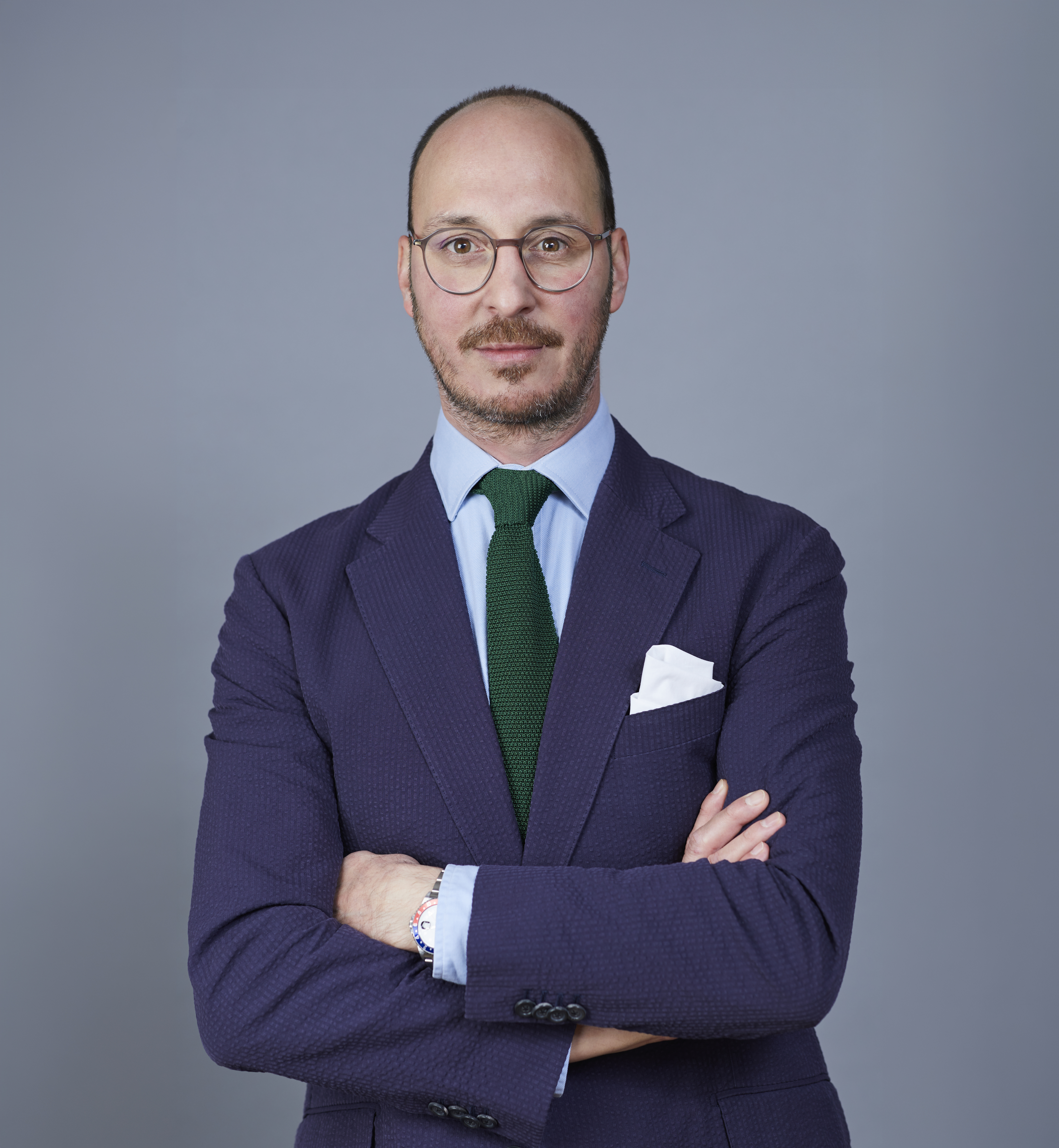
Significant weight loss changes the body – and the skin can't always keep up. Plastic surgeon Dr. Alexander Heinrich explains when body contouring makes sense, why he sees function and aesthetics as inseparable – and why he sometimes advises against surgery.
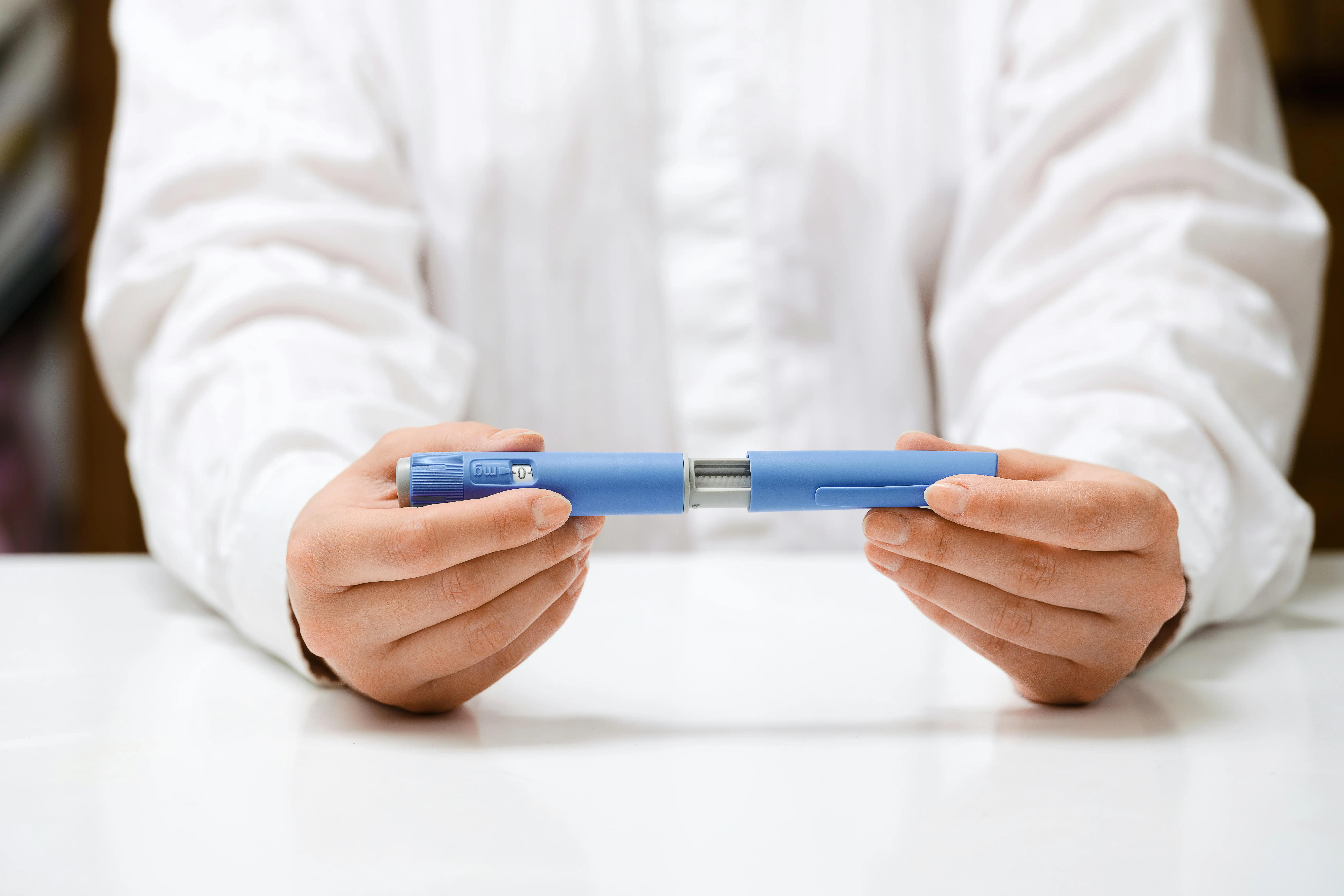
Weight loss injections like Ozempic and Wegovy are helping many people shed significant amounts of weight. But while the pounds disappear, excess skin can remain – on the abdomen, arms, or thighs, as well as on the breasts and face. For plastic surgeon Dr. Alexander de Heinrich, this is already a familiar topic in his practice.
A specialist in plastic and aesthetic surgery, Dr. de Heinrich has developed a particular focus on body contouring. For him, the goal isn't to make the most dramatic change possible, but to restore natural proportions. In this interview, he discusses what is achievable after significant weight loss, why he views function and aesthetics as two sides of the same coin – and when an honest "no" is the best advice he can give.
"Most People Just Want to Look the Way They Feel"
Dr. de Heinrich, you take considerable time with your patients at the outset because you feel it's important to understand what's really driving their desire for change. What are the most common reasons?
Very few people come to me simply because they want to look more attractive. Most come because something doesn't feel right. Because something has changed after a pregnancy, because significant weight loss has left skin that no longer matches their new body, or because their face looks more tired than they actually feel.
So it's less about perfection and more about the outer appearance matching their inner sense of self again. That's why, in the initial consultation, I'm not really focused on the operation itself – I'm more interested in the story behind it: Why now? What is really bothering you? How long have you been thinking about this? And above all: what are you hoping a change will bring?
Only once I understand that can we decide together whether surgery is even the right path. The operation itself is actually the smaller part of my work.
What are the most common requests you hear?
Interestingly, very few patients want the most dramatic change possible. Most simply want to look the way they feel again.
After significant weight loss, for example, excess skin becomes a source of frustration even when the real goal has already been reached. Or after a pregnancy and breastfeeding, it's often that the abdomen and breasts no longer seem to belong to the same body. Or when it comes to the face: "I always look tired, even though I feel perfectly fine." I hear that a lot.
Of course, people come in with specific requests – a tummy tuck, a breast lift, an eyelid lift. But behind that desire is almost always the same underlying thought: they want to feel like themselves again and recognize their own body.
How Weight Loss Injections Are Changing Plastic Surgery
Weight loss injections like Ozempic and similar drugs are helping more and more people lose significant amounts of weight. Is that changing your field as well?
Yes, significantly – though probably not in the way most people would expect. First of all, I think it's genuinely positive when people benefit health-wise and achieve lasting weight loss. That is a remarkable medical advancement.
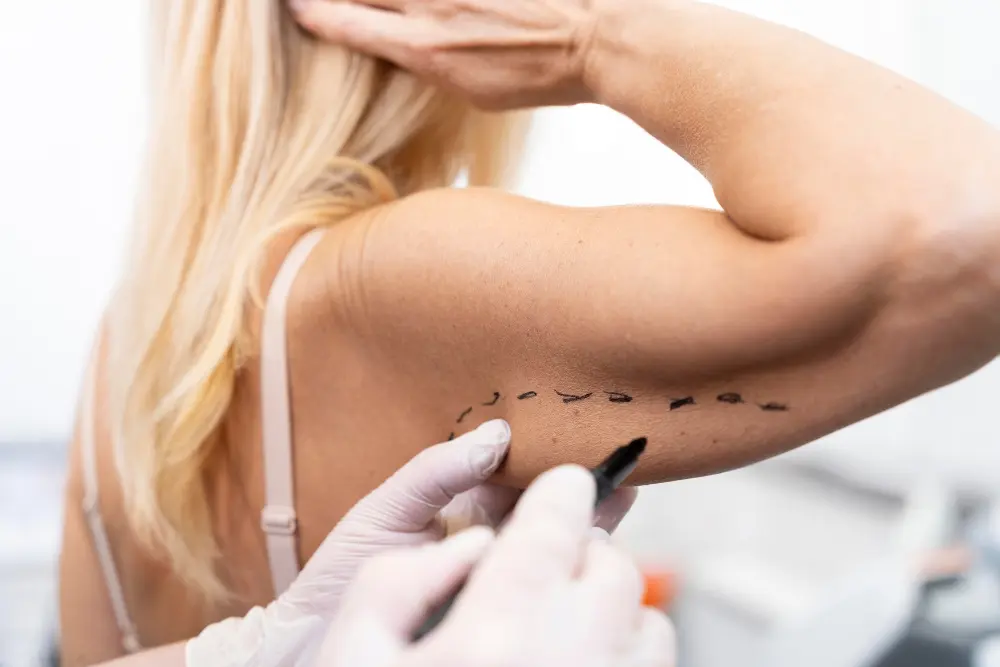
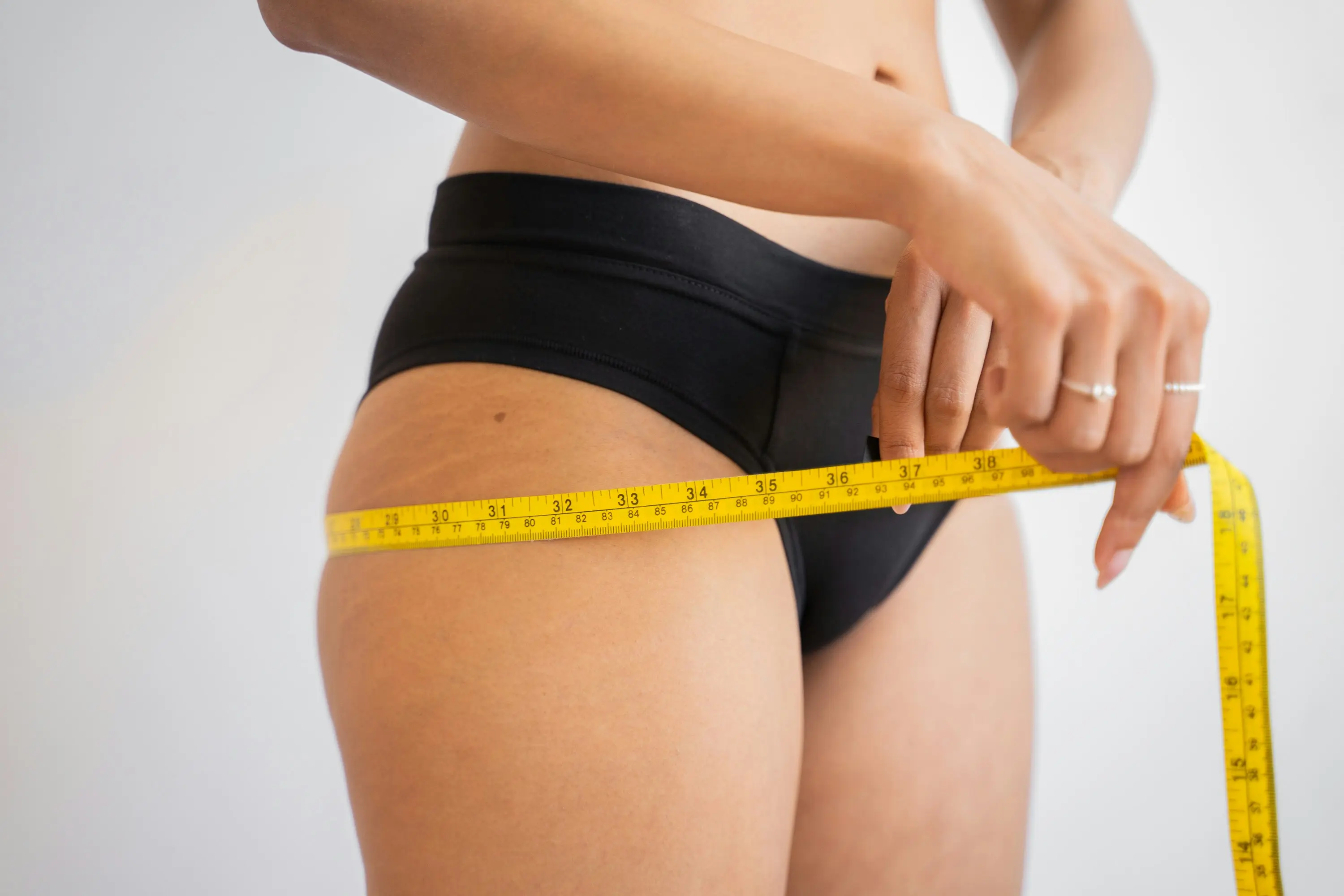
What we often see afterward, however, are the consequences of rapid weight loss. The skin – especially past a certain age or after more substantial weight loss – cannot fully retract. This affects the abdomen, the pubic region, the upper arms, the thighs, and sometimes the breasts or face as well.
I'm therefore seeing people who have already achieved their primary goal. They've lost the weight and feel healthier. And yet the excess skin is a daily reminder of where they started – and in some cases it creates genuine functional problems too.
That's exactly where plastic surgeons come in. It's not about losing more weight; it's about adapting the body to its new reality. That might mean a tummy tuck, body contouring, a breast lift, or – when it comes to the face – sometimes autologous fat transfer or a facelift to address hollowing caused by volume loss.
But one thing is essential: I don't operate on anyone immediately after weight loss. The weight needs to be stable – ideally for several months. Only then can we plan meaningfully and work toward a result that will last.
I don't complete the weight loss. I help the body match the new weight.
"An Honest No Can Be the Most Valuable Recommendation"
What do you do when a patient's expectations are unrealistic, or when you sense that a desired change simply doesn't fit the overall picture?
That does happen. And I don't see it as a problem – I see it as part of my responsibility. My role isn't to fulfill every request. It's to work with my patients to determine which procedure makes sense and which result will genuinely suit them long-term.
Sometimes people want a change that isn't anatomically sound or would disrupt their natural proportions. In those cases, I explain openly why I wouldn't recommend that approach and what I think would be a better alternative. Sometimes I conclude that surgery isn't the right solution at all. For me, that kind of honest assessment is just as much a part of good consultation as planning the procedure itself.
I genuinely believe that an honest "no" can sometimes be the most valuable recommendation a plastic surgeon can make. Because in the end, the goal isn't to operate as often as possible – it's to do the right thing. You could put it this way: I'm not paid to perform as many operations as possible. I'm paid to make the right decision.
Body Contouring: What's Behind the Term?
Your specialty is body contouring. What exactly does that term mean – and isn't it essentially the same as a mommy makeover?
Many people assume body contouring is just another word for liposuction. But body contouring isn't about removing as much fat as possible. Body contouring is about restoring proportions.
For me, body contouring means looking at the body as a whole: How do the thighs, abdomen, waist, hips, and breasts relate to one another? Where is volume lacking? Where is there excess tissue? And how do we ultimately restore a harmonious overall appearance?
That's why body contouring encompasses far more than liposuction alone – it also includes tummy tucks, correction of diastasis recti, autologous fat transfers, and skin tightening, for example after pregnancy or significant weight loss.
A mommy makeover, in turn, is a specific form of body contouring. It's aimed at women after pregnancy and breastfeeding and combines procedures on the abdomen, breasts, and body contour based on each individual's starting point.
The key difference, then, is the context. The mommy makeover addresses the physical changes that follow pregnancy and breastfeeding. Body contouring is the broader term, covering a wide range of different situations.
I don't shape individual body regions. I shape the silhouette.
Liposuction, tummy tuck, breast lift – which of these procedures is the most straightforward?
That's a bit like asking an architect which room in a house is the easiest to build. What matters isn't any single room – what matters is that the whole house works in the end. That's how I think about the body as well.
I don't treat individual body regions in isolation; I try to restore proportion and harmony across the whole. So the question doesn't have a simple answer. Liposuction is technically a completely different procedure from a tummy tuck or a breast lift, and each comes with its own set of challenges.
Far more important, though, is this question: which procedure is right for this particular person? A supposedly minor operation can be entirely the wrong choice, while a more extensive one can be exactly what's needed. That's why I don't think in terms of easy versus difficult – I focus on finding the right indication.
When do you combine procedures?
Whenever the overall result benefits from it. A good example is the mommy makeover mentioned earlier. If both the abdomen and the breasts have changed after a pregnancy, it would often make little sense to treat only one area. The body is perceived as a whole, so we frequently plan for it as a whole too.
At the same time, I don't combine procedures for the sake of it. Every additional step extends both the operation and the recovery. That's why every combination must be medically justified.
What Happens with a Later Pregnancy?
What happens if a woman becomes pregnant again after a tummy tuck or a mommy makeover?
Surgery doesn't put life on hold – and it shouldn't. If a woman becomes pregnant again afterward, the body will naturally change once more.
That's why I always ask explicitly about family planning in the initial consultation: Is your family complete? Some time should also have passed since the last birth and the end of breastfeeding. Ideally, we perform these procedures only once that chapter is closed. After weight loss, the weight should be stable for several months.
If a pregnancy does occur later, that is generally not a medical problem. The result may change again – as it may with aging. We can't stop the natural aging process, nor would we want to. What we can do is partially reset the clock to a new baseline. After that, the body continues to age quite normally.
I'm open about this with my patients. I don't promise results that last forever. I promise a result that holds up long-term and ages naturally alongside the person. In some cases, later corrections may make sense – but that is the exception rather than the rule.
Diastasis Recti: When Function and Aesthetics Come Together
Things can become more complex when diastasis recti is involved. What exactly does that mean, and what can be done about it?
Diastasis recti is, first and foremost, not a problem of the skin – it's a problem of the abdominal wall. During pregnancy, the rectus abdominis muscles separate to make room for the baby. In many women, this gap closes again afterward. In some, however, it persists – particularly after multiple pregnancies. The same can also occur with significant weight gain.
The result is that the abdominal wall loses stability. Many patients describe a feeling of lacking core tension, difficulty with physical exertion, or back pain. Some also struggle with pelvic floor issues. It's worth noting, however, that not every case of diastasis recti causes symptoms – which is why we always assess each situation individually.
That's precisely why I don't view a tummy tuck as a purely aesthetic procedure. When diastasis recti is present, the operation is genuinely also about restoring stability to the abdominal wall. I close the gap between the rectus abdominis muscles, re-establishing the function of the abdominal wall. Only then do we address the excess skin and the contour.
This reflects my broader philosophy very well: function and aesthetics are not opposites – they are interdependent. When the wall is stable again and the body contour becomes more harmonious at the same time, patients benefit on multiple levels, both functionally and aesthetically.
You could put it this way: the most beautiful abdominal surface is worth little if the wall beneath it is unstable.
Why Men and Women Often Want the Same Thing
Are most of your patients women, or do you see many men as well?
The majority of my patients are women, but the share of male patients has been steadily growing for years. What's interesting is that men and women often differ less in what they want than in how they talk about it.
Women often arrive with a very specific idea. They've been thinking about it for a long time, have researched online, consulted AI, and have a fairly clear sense of what's bothering them. Men tend to describe the problem rather than the procedure.
They say things like: "I constantly look tired" or "I look older than I feel." Or they're bothered by their chest, gynecomastia, or stubborn fat deposits that won't budge despite regular exercise and a healthy diet.
But both share one crucial thing in common: hardly anyone wants to look like they've had surgery. Both men and women want results that look natural and feel true to who they are. I think people are becoming increasingly aware of this.
With men in particular, subtlety is especially important. An eyelid lift or facelift must never alter the facial expression — that's a firm principle. The goal is often not to look younger, but fresher and more rested, without anyone being able to put their finger on why.
The biggest difference is probably this: women tend to talk more about aesthetics, men more about function. In the end, though, both want the same thing — for their outward appearance to once again reflect how they feel on the inside.
How Long Do the Results of Surgery Last?
What does it take to achieve a lasting result? Does it also require a stable weight, regular exercise, and a balanced diet?
Absolutely. I often tell my patients: the surgery is only one part of the journey and the outcome — the other part is up to them, both before and after.
A lasting result isn't created by my work alone — it also depends on how we treat our bodies. A stable weight, regular exercise and a balanced diet all have a significant influence. During wound healing in particular, avoiding nicotine also plays an important role in recovery and long-term results.
That doesn't mean everyone has to live perfectly. This isn't about restrictions or ideals. It's more about treating our own bodies with the same care we bring to surgery.
That's why I talk openly with my patients about their lifestyle habits before the procedure — not to lecture them, but because I want them to enjoy the results for many years to come.
Ultimately, surgery is not a substitute for a healthy lifestyle. It can complement one in a meaningful way. And when the two go hand in hand, the best and most lasting results follow.